
 -
- What Your Installer Should Do to Remove Air During Commissioning
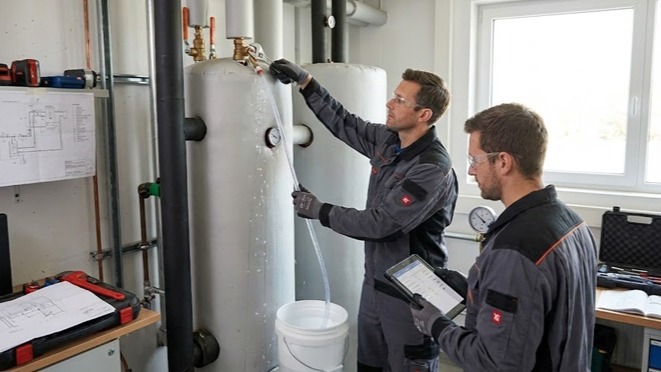
Air trapped in heating systems causes noise, reduces efficiency, and shortens equipment life. During air removal commissioning, systematic procedures separate professional installations from rushed jobs that lead to callbacks and warranty claims.
Heating engineers encounter air in systems from multiple sources: fresh water during filling contains dissolved gases, pipework joints trap pockets during installation, and thermal expansion creates vapour at high points. A properly commissioned system removes this air methodically, not by chance. Effective purging air heating system procedures ensure long-term reliability.
Why Air Removal During Commissioning Matters
Air pockets reduce circulation efficiency by creating resistance in pipework. A heating system with trapped air forces pumps to work harder, increases energy consumption by 15-25%, and creates uneven heat distribution across radiators or zones.
Trapped air accelerates corrosion. Oxygen combines with ferrous metals in radiators, pipework, and heat exchangers, forming magnetite sludge that blocks narrow passages and damages pump valves. Systems commissioned without proper air removal develop sludge problems within 2-3 years rather than the 8-10 years expected from protected systems.
Noise complaints follow poor air removal. Kettling, gurgling, and flow noise indicate air movement through circulators and pipework. These sounds frustrate homeowners and signal incomplete commissioning work.
Initial System Preparation Before Air Removal
Professional installers prepare systems before introducing water. This preparation determines how effectively air removal proceeds.
Pipework Configuration
Installers check that automatic air vents sit at genuine high points in the system. Air rises naturally to these locations, but only if pipework slopes correctly. Horizontal pipe runs should maintain a minimum 1:100 fall toward drainage points and rise toward air vents.
Radiators require proper orientation. The air vent end should sit 10-15mm higher than the opposite end to encourage air migration toward the bleed valve. Installers verify this with a spirit level during hanging.
Component Positioning
Grundfos pumps and other circulators should mount with shafts horizontal, never with the motor below the volute. This orientation prevents air accumulation in the pump body. Installers verify that automatic air vents on pump bodies face upward and remain accessible.
Expansion vessels require correct pre-charge pressure before filling. Installers check vessel pressure matches the static head at the vessel location plus 0.3-0.5 bar. Incorrect pre-charge prevents proper air separation and causes pressure fluctuations during commissioning.
The Systematic Filling Process
Rushed filling traps air throughout the system. Professional installers follow a controlled sequence that minimises air introduction.
Cold Fill Method
Installers close all radiator valves and manual air vents before connecting the filling loop. They open the lowest radiator first, introducing water slowly through the filling point while monitoring pressure. Flow rate should not exceed 10 litres per minute during initial fill to prevent turbulent air entrapment. This methodical approach forms the foundation of proper purging air heating system procedures.
As pressure reaches 0.5 bar, installers open the lowest radiator's bleed valve until water flows steadily without air. They then close this radiator's valves and repeat the process for the next lowest radiator, working upward through the building.
This sequential approach pushes air upward and outward rather than trapping it randomly throughout the system. Each radiator receives attention individually rather than filling all zones simultaneously.
Monitoring During Fill
Installers watch pressure gauges continuously. Rapid pressure rises indicate air pockets compressing rather than genuine water volume. Slow, steady pressure increase confirms proper filling.
The filling process for a typical domestic system takes 45-90 minutes when done correctly. Installers who complete this step in 10-15 minutes have not removed air effectively.
Hot Commissioning and Thermal Air Release
Cold water holds dissolved air that releases as temperature rises. The hot commissioning phase removes this thermal air release through controlled heating cycles.
First Heat Cycle
Installers set the boiler to maximum output and the system to full flow. They operate all zones simultaneously to heat the entire system quickly. As water temperature approaches 60-70°C, dissolved air comes out of solution and migrates to high points.
During this first cycle, installers bleed radiators in sequence every 15-20 minutes. Each radiator typically releases air 3-4 times during the initial heat-up. Automatic air vents on the system also release air audibly during this phase. Thorough commissioning requires patience during these thermal cycles.
Circulation Verification
Installers verify flow through all circuits by checking pipe temperatures. Supply and return pipes should show appropriate temperature differentials, typically 10-15°C for radiator circuits and 5-8°C for underfloor heating.
Cold spots indicate trapped air or circulation problems. Installers address these immediately by bleeding specific sections and verifying DHW pumps and zone valves operate correctly.
Advanced Air Removal Techniques
Stubborn air pockets require specific techniques beyond basic bleeding procedures.
Forced Circulation Flushing
Installers temporarily increase pump speed to maximum, creating turbulent flow that dislodges trapped air. They operate the system at high speed for 20-30 minutes while systematically bleeding all high points.
Some installers isolate problem zones and reverse flow direction temporarily by manipulating valves. This backward flow often releases air pockets that resist normal circulation direction.
Pressure Cycling
Raising system pressure to 2.5-3.0 bar compresses air bubbles, making them more mobile. Installers then reduce pressure to 1.0 bar, allowing compressed air to expand and migrate to vents. Repeating this cycle 3-4 times removes persistent air pockets.
This technique requires careful monitoring of expansion vessels and pressure relief valves. Installers verify relief valves remain closed during cycling and that expansion vessels accommodate pressure changes without water-logging.
Manual Vent Manipulation
Automatic air vents sometimes stick or fail to release air effectively. Installers test each automatic vent by gently loosening the cap while the system operates at temperature. Air should release audibly; if not, the vent requires cleaning or replacement.
Manual radiator bleed valves need proper technique. Installers open valves slowly, allowing air to escape without creating vacuum that draws more air into the system. They close valves as soon as water flows steadily, preventing excessive water loss. Proper bleeding technique prevents callbacks.
System Protection and Final Checks
Air removal connects directly to long-term system protection. Installers complete several tasks to ensure lasting air-free operation.
Inhibitor Dosing
After air removal, installers add corrosion inhibitor to the system. The inhibitor concentration should match manufacturer specifications, typically 1% by volume for domestic systems. Proper dosing requires calculating system volume accurately, including pipework, radiators, and boiler capacity.
Installers circulate inhibitor through all zones for at least 30 minutes, ensuring even distribution. They verify inhibitor concentration using test strips before commissioning completion.
Automatic Air Vent Verification
Each automatic air vent in the system requires individual testing. Installers verify vents release air during operation but seal properly when water reaches them. Faulty vents either fail to release air or weep water continuously.
Systems supplied by National Pumps and Boilers typically include high-quality automatic vents on circulator pumps and at system high points. Installers confirm these vents operate correctly and remain accessible for future maintenance.
Pressure Stabilisation
After air removal and inhibitor dosing, installers set final system pressure. For domestic systems, this typically sits at 1.2-1.5 bar cold, rising to 2.0-2.5 bar at operating temperature.
Installers document baseline pressure readings and explain normal pressure variation to homeowners. Systems that lose more than 0.3 bar monthly indicate ongoing air ingress or leaks requiring investigation.
Documentation and Handover Requirements
Professional commissioning includes complete documentation for homeowners and future service engineers.
Commissioning Records
Installers record initial fill pressure, hot operating pressure, and final cold pressure after air removal. They document inhibitor type, concentration, and dosing date. These records prove proper commissioning and support warranty claims if problems develop.
Flow rates, temperature differentials, and pump settings belong in commissioning documentation. Future engineers use this baseline data to diagnose problems and verify system performance.
Customer Education
Installers explain the radiator bleeding process to homeowners, demonstrating proper technique on one radiator. They clarify that minor air accumulation during the first heating season is normal as residual dissolved gases release.
Homeowners need clear guidance on when to seek professional help rather than attempting repeated bleeding. Persistent air accumulation indicates problems beyond homeowner maintenance capability.
Common Air Removal Mistakes
Even experienced installers sometimes rush commissioning, creating problems that surface weeks later.
Insufficient Time Allocation
Proper air removal requires 3-4 hours for typical domestic systems. Installers who allocate 30-60 minutes cannot complete systematic bleeding, thermal cycling, and verification checks.
Rushed commissioning leads to callbacks within the first heating season as trapped air causes noise and efficiency problems. These return visits cost more than allocating proper time initially.
Skipping Thermal Cycles
Some installers bleed systems cold and consider commissioning complete. This approach ignores thermal air release that occurs only when water heats. Systems commissioned without hot cycles accumulate air during the first weeks of operation.
Ignoring System Design Issues
Air removal cannot compensate for poor system design. Pipework without proper falls, undersized expansion vessels, and incorrectly positioned pumps create permanent air problems.
Professional installers identify design issues during commissioning and recommend corrections rather than attempting to work around fundamental problems. Thorough system flushing reveals underlying design flaws.
Long-Term Air Management
Air removal during commissioning establishes baseline performance, but systems require ongoing attention.
First Year Monitoring
Installers should schedule a follow-up visit 4-6 weeks after commissioning. This visit addresses any residual air release and verifies system performance under real operating conditions.
Annual servicing includes checking for air accumulation, verifying automatic vent operation, and testing inhibitor concentration. Systems that require frequent bleeding indicate problems needing investigation.
Identifying Air Ingress
Persistent air accumulation after proper commissioning signals ongoing air ingress. Common sources include perished pump seals, loose compression fittings, and failed automatic vents that allow air in during cooling cycles.
Installers use pressure testing and visual inspection to locate ingress points. Addressing these problems prevents the corrosion and efficiency loss that follows continuous air introduction.
Conclusion
Systematic air removal commissioning determines whether heating systems operate quietly, efficiently, and reliably for years or develop problems within months. Professional installers allocate sufficient time, follow methodical bleeding sequences, conduct thermal cycles, and verify results before considering commissioning complete.
The difference between adequate and excellent commissioning shows in system longevity, energy efficiency, and customer satisfaction. Installers who master air removal techniques reduce callbacks, build reputations for quality work, and deliver systems that perform as designed.
For heating engineers seeking reliable equipment and technical guidance on commissioning procedures, contact the technical team at National Pumps and Boilers to discuss specific system requirements and air removal challenges.