
 -
- The Role of Air Separators in Keeping Systems Running Efficiently
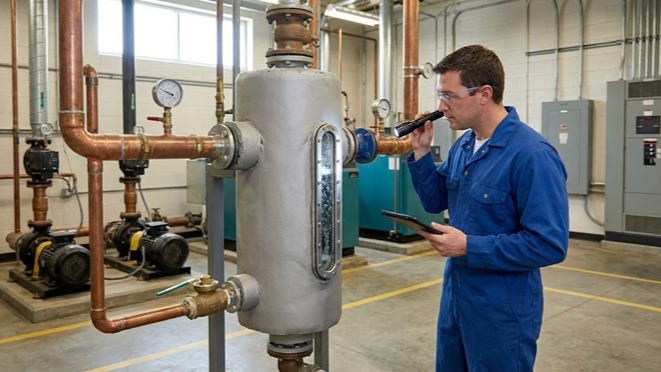
Air trapped in heating systems causes more breakdowns than any other single factor. When bubbles form in pipework and radiators, they create noise, reduce heat transfer, and accelerate corrosion. The solution sits quietly in plant rooms across the UK: air separators that continuously remove these problematic air pockets before damage occurs.
Modern heating systems face constant air ingress through multiple sources. Micro-leaks at valve stems, automatic air vents, and pump seals introduce small amounts continuously. Fresh water added during maintenance carries dissolved oxygen. Temperature changes cause air to come out of solution. Without proper removal, this air accumulates in high points, blocking flow and creating cold spots that frustrate building occupants.
How Air Separators Create System Efficiency
Air separators work on a simple principle: they slow water velocity and create conditions where air bubbles naturally separate and rise. Inside the separator vessel, water enters a chamber where flow speed drops dramatically. This velocity reduction allows even tiny microbubbles to coalesce and float upward to the automatic air vent at the top. Achieving optimal air separator efficiency depends on proper sizing and positioning within the system.
The most effective designs use internal mesh or coalescing media to enhance bubble formation. As water passes through these elements, microscopic air bubbles stick to surfaces and combine into larger bubbles that rise more readily. National Pumps and Boilers stocks separators using various coalescing technologies, from simple mesh screens to advanced polymer fibres that capture bubbles as small as 20 microns. This microbubble removal heating technology significantly improves system performance.
Temperature plays a crucial role in air removal efficiency. Hot water holds less dissolved air than cold water, which explains why air problems often appear when systems first heat up. Positioning air separators on the hottest part of the system, typically the flow pipe immediately after the boiler, maximises air release and removal. At 82°C flow temperature, water releases nearly three times more air than at 60°C. Understanding these principles helps engineers achieve maximum air separator efficiency in every installation.
The Hidden Costs of Air in Heating Systems
Air accumulation creates multiple problems that compound over time. In radiators, air pockets prevent hot water reaching the top sections, reducing heat output by up to 15%. Homeowners compensate by raising boiler temperatures, increasing gas consumption and carbon emissions unnecessarily.
Circulation pumps work harder when air is present. Air pockets create additional resistance that pumps must overcome, increasing electricity consumption. A Grundfos pump running against air-locked radiators can use 25% more power than one circulating through a properly vented system. Over a heating season, this translates to significant energy waste and higher running costs.
Corrosion accelerates dramatically when air contacts system water. Oxygen enables rust formation on steel radiators and pipework. This corrosion releases iron oxide particles that damage pump seals, block thermostatic radiator valves, and accumulate in boiler heat exchangers. Many boiler warranties become void if systems show evidence of excessive corrosion from poor air management.
Noise complaints multiply in air-affected systems. Gurgling radiators, whooshing pipes, and clicking expansion sounds disturb building occupants. In commercial buildings, these noises disrupt work environments and generate maintenance calls that strain facility budgets.
Sizing Air Separators for Maximum Performance
Correct sizing ensures air separators work effectively without creating excessive pressure drops. The primary sizing factor is system flow rate: separators must handle full pump capacity while maintaining low internal velocities for bubble separation. Proper sizing directly impacts system performance throughout the installation's lifespan.
For domestic systems, compact air separators handling 1-3 m³/h suit most applications. These units fit easily in airing cupboards or under boilers. Commercial systems require larger separators sized to match DHW pumps and heating circuits. A 100kW system typically needs a separator rated for 4-5 m³/h minimum.
Pressure drop across the separator affects pump selection and system efficiency. Quality separators create less than 0.5m head loss at rated flow. This minimal resistance ensures pumps operate efficiently without oversizing. Always check manufacturer pressure drop curves when selecting separators for retrofit projects where pump capacity is fixed.
Connection size does not always indicate separator capacity. A 22mm separator might handle the same flow as a 28mm model from another manufacturer. Focus on rated flow capacity and pressure drop data rather than pipe connections alone.
Installation Best Practices
Location determines air separator effectiveness. Install separators on horizontal pipework where possible, ensuring the automatic air vent points vertically upward. Position units high in the system where air naturally accumulates, typically the first floor plant room in commercial buildings. Proper installation maximises air removal performance.
Flow direction matters critically. Most separators require specific flow orientation to function properly. Arrow markings on the body indicate correct installation direction. Reversing flow reduces efficiency dramatically and may prevent air removal entirely.
Isolating valves on both sides enable maintenance without system drainage. Include a bypass line on larger commercial installations to maintain heating during separator servicing. Pump valves with memory function allow exact flow balancing restoration after maintenance.
Support pipework adequately around separators. The weight of water-filled separators stresses pipe joints if unsupported. Use bracket mounting for larger units, ensuring the separator body remains level for proper air venting.
Different Air Separator Technologies
Centrifugal separators spin water to create a vortex that forces air bubbles to the centre for removal. These units handle high flow rates effectively but require more pump head than other designs. They excel in large commercial systems where pump capacity is not constrained.
Mesh coalescence separators use fine wire or polymer mesh to capture microbubbles. Wilo pumps often pair with these separators in packaged plant rooms. The mesh creates low turbulence zones where bubbles combine and rise. Regular mesh cleaning maintains long-term performance and consistent air removal capability.
Expansion type separators combine air removal with system pressurisation. These units include integral expansion vessels that accommodate thermal expansion while removing air. Space-saving design suits domestic installations where plant room area is limited.
Magnetic separators add filtration to air removal. Strong magnets capture iron oxide particles from system corrosion while the main chamber removes air. This dual function protects modern high-efficiency boilers with narrow waterways susceptible to blockage.
Maintenance Requirements
Annual inspection keeps air separators functioning optimally. Check automatic air vents for leakage: failed vents allow air back into systems. Replace vent caps showing mineral deposits or corrosion. Quality vents from established manufacturers typically last 5-7 years before replacement.
Internal cleaning frequency depends on system water quality. Well-maintained sealed systems need separator cleaning every 3-5 years. Systems with frequent water additions or visible contamination require annual cleaning. Isolate and drain separators completely before removing inspection covers.
Pressure testing after maintenance confirms integrity. Re-pressurise slowly while checking all connections for leaks. Automatic air vents may discharge small amounts initially, which indicates proper function as trapped air escapes.
Document maintenance dates and findings. Recording pressure drops across separators reveals when cleaning is needed. Rising pressure drops indicate internal fouling that reduces flow capacity and removal performance over time.
System Design Considerations
New installations benefit from thoughtful air separator placement. Position units where maintenance access remains clear throughout building life. Avoid locations behind permanent fixtures or above suspended ceilings without access panels.
Multiple separators serve large systems better than single oversized units. Installing separators on each major circuit ensures effective air removal throughout complex pipework layouts. This approach also provides redundancy: one separator offline does not compromise the entire system.
Combine air separators with dirt separators for comprehensive system protection. Many manufacturers offer combination units that remove both air and debris. These dual-purpose units save space while protecting sensitive equipment like plate heat exchangers and variable speed pumps.
Consider future expansion when sizing separators. Oversizing by 20-30% accommodates additional radiators or system extensions without separator replacement. The minimal extra cost during initial installation avoids expensive retrofits later.
Performance Monitoring
System pressure provides the clearest indication of air separator performance. Stable pressure over time confirms effective air removal. Dropping pressure suggests air accumulation that automatic vents cannot handle, indicating separator problems.
Temperature differentials across radiators reveal air pockets. Infrared thermography quickly identifies partially air-locked radiators showing cool tops and warm bottoms. Regular thermal imaging creates performance baselines for comparison.
Pump power consumption tracking detects air-related inefficiencies. Modern Lowara pumps with integrated power monitoring reveal when air pockets increase system resistance. Rising power draw with unchanged heating loads indicates air accumulation.
Water quality testing supports air separator effectiveness. Dissolved oxygen levels below 0.1mg/l indicate good air removal. Higher levels suggest separators need attention or system water requires treatment to reduce air ingress.
Conclusion
Air separators prove their worth through reduced energy consumption, fewer breakdowns, and extended equipment life. The modest investment in quality air separation equipment pays back through lower heating bills and reduced maintenance costs. Systems running without proper air removal waste energy, generate complaints, and fail prematurely.
For technical guidance on selecting air separators for specific applications, contact the team at National Pumps and Boilers. Their heating specialists provide sizing calculations, installation advice, and equipment recommendations based on decades of industry experience.