

10 Common Root Causes of Premature Pump Failure in Commercial Buildings
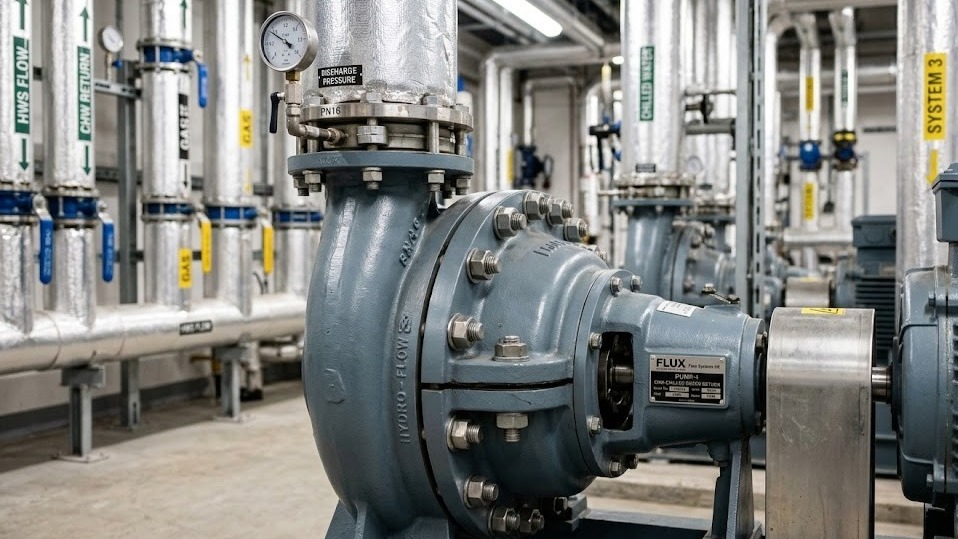
Circulation pumps in commercial heating systems rarely reach their expected 15-20 year service life. Most fail within 5-7 years, costing building managers thousands in emergency replacements, system downtime, and consequential damage. Understanding what drives premature pump failure transforms reactive maintenance into predictive system management.
Inadequate System Design and Pump Sizing
Incorrectly sized pumps represent the single largest contributor to early failure. Oversized pumps operate continuously at low load, whilst undersized units run beyond their design envelope, both scenarios accelerating component degradation.
Oversizing Problems
Oversized pumps create excessive flow velocities that erode impeller surfaces and generate cavitation at control valves. The pump operates left of its best efficiency point (BEP), where radial thrust loads increase dramatically, wearing bearings and seals prematurely. Variable speed drives partially mitigate this, but cannot eliminate the fundamental mismatch between pump capacity and system requirements.
Undersizing Consequences
Undersized pumps run continuously at maximum duty, generating excessive heat in motor windings and mechanical seals. The pump operates right of BEP, where flow recirculation within the volute creates hydraulic instability and vibration. This explains why pumps specified at 90-95% of calculated duty fail significantly faster than those with appropriate capacity margins.
Proper sizing requires accurate heat loss calculations, realistic diversity factors, and consideration of future system modifications. Grundfos pumps with integrated system analysis tools help engineers match pump performance curves precisely to actual system characteristics, eliminating the guesswork that leads to premature pump failure.
Poor Water Quality and Chemical Contamination
Water chemistry directly determines component service life. Commercial heating systems operating with untreated or contaminated water experience accelerated corrosion, scale formation, and abrasive wear that destroys pumps years before their design life.
Sludge and Corrosion
Black iron oxide sludge accumulates in systems without proper inhibitor treatment, creating an abrasive slurry that erodes impeller vanes, wears mechanical seals, and scores bearing surfaces. This magnetite suspension also reduces heat transfer efficiency, forcing pumps to work harder to maintain design temperatures.
Scale Formation
Scale deposits from hard water form on heat exchanger surfaces and within pump internals, restricting flow passages and creating localised hot spots. Calcium carbonate accumulation on impeller surfaces creates an imbalance, generating vibration that fatigues shaft materials and loosens mechanical connections.
Microbiological Issues
Microbiological contamination introduces another failure mechanism. Sulphate-reducing bacteria produce corrosive compounds that attack pump casings, whilst biofilm formation restricts flow and creates differential aeration cells that accelerate localised corrosion.
British Standard BS 7593 specifies water treatment requirements for hot water heating systems, including pH control between 8.5-10.0, oxygen scavenging, and appropriate corrosion inhibitor concentrations. Systems meeting these standards demonstrate 3-4 times longer pump service life compared to untreated installations.
Pump Cavitation and Suction Conditions
Cavitation destroys pump internals through a combination of mechanical erosion and chemical attack. When system pressure at the pump inlet drops below the vapour pressure of the water, bubbles form and subsequently collapse against metal surfaces with tremendous localised force.
Cavitation Damage Patterns
This phenomenon manifests as characteristic pitting on impeller surfaces, particularly at blade leading edges and tips. The damage progresses rapidly - a pump showing initial cavitation signs may fail completely within 6-12 months of continuous operation.
Common Triggers
Several conditions trigger pump cavitation in commercial installations. Insufficient net positive suction head available (NPSHa) occurs when pumps are mounted too high above system water level, when suction pipework creates excessive friction losses, or when inlet strainers become blocked. Each scenario reduces pressure at the pump inlet below critical thresholds.
Temperature Effects
High water temperatures exacerbate cavitation risk by increasing vapour pressure. A system operating at 82°C requires significantly more NPSHa than one at 60°C. This explains why DHW pumps handling domestic hot water circulation prove particularly vulnerable without proper suction arrangements.
Closed-loop systems must maintain adequate static pressure through correctly sized and pressurised expansion vessels. When expansion vessel pre-charge pressure drops or the vessel becomes waterlogged, system pressure fluctuates, creating transient cavitation events during pump start-up.
Bearing Wear and Lubrication Failures
National Pumps and Boilers analyses failure patterns across commercial installations to identify the specific conditions that compromise pump longevity. These ten root causes account for approximately 85% of commercial pump breakdowns in commercial building services.
Bearing failures account for approximately 40% of commercial pump breakdowns in commercial buildings. These precision components operate under demanding conditions - continuous rotation, axial and radial loads, and elevated temperatures - making them particularly sensitive to lubrication quality and contamination.
Lubrication Requirements
Grease-lubricated bearings require relubrication at intervals specified by manufacturers, typically 8,000-16,000 operating hours depending on bearing size and speed. Many commercial installations lack documented pump maintenance schedules, resulting in bearings running dry and failing prematurely.
Lubricant Selection
Incorrect lubricant selection accelerates wear. High-temperature applications require greases with appropriate dropping points and oxidation stability. Using standard lithium-based greases in pumps handling 80°C+ water leads to lubricant breakdown and bearing seizure.
Water Contamination
Water ingress represents another common bearing failure mechanism. Defective mechanical seals allow system water to contaminate bearing housings, washing away lubricant and corroding bearing races. The characteristic rust-coloured residue around bearing covers indicates this failure mode.
Over-greasing proves equally damaging. Excessive grease creates churning resistance that generates heat, whilst forcing grease past seals into motor windings. The correct approach involves adding specified quantities at defined intervals, not pumping grease until it extrudes from seals.
Modern Wilo pumps with sealed-for-life bearings eliminate relubrication requirements, though these units still require monitoring for seal integrity and abnormal temperature rise.
Mechanical Seal Deterioration
Mechanical seals create the critical barrier between pumped fluid and atmosphere, making their integrity essential for pump longevity. Seal failures cause immediate leakage, but the preceding deterioration often damages bearings, motor windings, and surrounding equipment.
Dry Running Damage
Dry running destroys mechanical seals within seconds. When pumps operate without water - during commissioning errors, air lock conditions, or system drainage - seal faces overheat and fracture. The carbon and ceramic mating surfaces require a continuous water film for both lubrication and cooling.
Abrasive Wear
Abrasive particles in system water act as a lapping compound between seal faces, accelerating wear and creating leakage paths. This explains why systems contaminated with installation debris or corrosion products experience significantly higher seal failure rates.
Installation and Pressure Issues
Incorrect seal face pressure, whether from improper installation or spring fatigue, allows excessive leakage or creates contact pressure that generates heat and accelerates wear. Replacement seals must match original specifications exactly - substituting alternative seal types without engineering assessment often introduces new failure mechanisms.
System pressure issues compound seal problems. Pressure surges from rapid valve closure or pump start-up create transient loads that exceed seal design limits. Inadequate system pressurisation allows flashing across seal faces, creating vapour pockets that eliminate the protective water film.
Temperature cycling causes differential expansion between seal components, particularly in installations with frequent on-off cycling. The repeated thermal stress fatigues elastomer components and loosens mechanical connections.
Electrical Supply Issues and Motor Damage
Electrical problems account for approximately 30% of pump motor failures in commercial installations. These issues range from obvious faults like phase loss to subtle problems like voltage imbalance that gradually degrade motor windings.
Phase-Related Problems
Single-phasing occurs when one phase of a three-phase supply fails, forcing the motor to draw excessive current on remaining phases. The resulting overheating destroys winding insulation within hours if thermal protection fails to trip. Loose connections, blown fuses, or failed contactors all create single-phase conditions.
Voltage imbalance between phases, even at 2-3%, creates significant current imbalance and additional heating in motor windings. This common condition in poorly balanced distribution systems reduces motor service life by 50% or more.
Harmonic Distortion
Harmonic distortion from variable speed drives and other non-linear loads creates additional heating and mechanical stress in motor windings. Total harmonic distortion (THD) above 5% requires derating motors or installing line reactors to prevent premature failure.
Cycling and Cooling
Frequent starting cycles generate thermal stress and inrush currents that fatigue winding insulation. Motors designed for continuous operation suffer accelerated aging when subjected to more than 10-15 starts per hour. Building management systems that cycle pumps excessively to save energy often achieve the opposite through increased maintenance costs.
Inadequate motor cooling from blocked ventilation openings, high ambient temperatures, or failed cooling fans allows winding temperatures to exceed Class F or H insulation ratings. Each 10°C temperature rise above rated limits halves expected insulation life.
Hydraulic Instability and System Pressure Issues
System pressure fluctuations create operating conditions that pumps were never designed to handle. These pressure transients generate cavitation, bearing loads, and mechanical stress that accumulate over thousands of cycles, eventually causing catastrophic failure.
Water Hammer Effects
Water hammer from rapid valve closure creates pressure spikes that can exceed normal operating pressure by 5-10 times. These shock loads stress pump casings, loosen mechanical connections, and damage seals and bearings. Check valves without slow-closing mechanisms prove particularly problematic on pump discharge lines.
Expansion Vessel Problems
Inadequate expansion vessel sizing or incorrect pre-charge pressure allows system pressure to fluctuate excessively during heating and cooling cycles. Pumps experience varying suction conditions that promote cavitation during low-pressure periods and excessive seal loading during high-pressure events.
Air Entrainment
Air entrainment creates compressible pockets within supposedly closed-loop systems. These air bubbles cause erratic pump performance, noise, and vibration whilst reducing effective system pressure. Automatic air vents at high points and proper commissioning procedures eliminate most air-related problems.
Parallel Pump Issues
Parallel pump installations without proper balancing create instability when multiple pumps operate simultaneously. Flow recirculation between pumps generates turbulence and pressure pulsations that accelerate component wear. Properly specified pump valves including non-return valves and balance valves ensure stable operation in multi-pump arrangements.
System modifications that alter pressure drop characteristics - adding radiators, extending pipe runs, or installing thermostatic radiator valves - change the operating point where pumps run. Without corresponding pump adjustments, these modifications push pumps away from their best efficiency point, reducing service life.
Inadequate Installation Practices
Poor installation practices introduce stresses and operating conditions that guarantee premature pump failure. These problems remain hidden until the pump fails, making proper installation supervision essential for commercial projects.
Alignment Issues
Misaligned couplings create radial loads that overload bearings and generate vibration. Even 0.5mm offset or 1° angular misalignment significantly reduces bearing life. Flexible couplings mask misalignment temporarily but cannot prevent the resulting bearing damage.
Pipe Support Problems
Inadequate pipe support transfers weight and thermal expansion forces to pump connections, stressing casings and flanges. Pumps should never support pipework weight - properly positioned pipe hangers and expansion loops eliminate these loads.
Installation Errors
Incorrect rotation direction, easily reversed during electrical connection, causes pumps to operate backwards with drastically reduced performance and increased power consumption. The resulting cavitation and overheating destroy seals and bearings rapidly.
Debris left in pipework during installation enters pumps during the first operation, damaging impellers, blocking clearances, and scoring mechanical seals. Thorough system flushing before pump installation and temporary strainer installation during commissioning prevent most debris-related failures.
Insufficient clearance around pumps prevents access for maintenance and restricts cooling airflow. Motor cooling depends on adequate ventilation - pumps installed in confined spaces without proper air circulation overheat and fail prematurely.
Lack of Preventive Maintenance
Deferred maintenance transforms minor issues into catastrophic failures. Commercial buildings often neglect pump maintenance until failure occurs, missing opportunities to address developing problems when repairs cost hundreds rather than thousands.
Maintenance Schedule Requirements
Effective pump maintenance schedules include monthly visual inspections, checking for leakage, unusual noise, and vibration. Quarterly checks should verify motor current draw, bearing temperatures, and seal condition. Annual maintenance includes lubrication, coupling inspection, and performance verification.
Diagnostic Techniques
Vibration analysis identifies developing problems before failure occurs. Baseline vibration signatures taken during commissioning provide reference points for comparison. Increasing vibration levels indicate bearing wear, imbalance, or misalignment requiring investigation.
Thermal imaging reveals hotspots indicating bearing problems, motor overload, or electrical connection issues. Regular thermal surveys identify problems invisible to visual inspection.
Performance Verification
Performance testing verifies pumps deliver design flow and pressure. Progressive performance degradation indicates wear, blockage, or system changes requiring attention. Simple pressure gauge installations enable quick performance checks without specialist equipment.
Documentation proves critical for effective maintenance. Recording pump operating hours, maintenance activities, and performance measurements enables trend analysis and predictive maintenance strategies. Contact us for guidance on establishing effective pump maintenance programmes.
Excessive Operating Hours and Duty Cycling
Continuous operation beyond design intent accelerates component aging through accumulated thermal cycles, mechanical wear, and material fatigue. Many commercial installations run pumps 24/7 when actual heating demand requires only 40-60% annual operating hours.
Duty Rating Mismatches
Pumps designed for intermittent duty suffer when operated continuously. Duty ratings specified by manufacturers (S1 for continuous, S3 for intermittent) must match actual operating patterns. Installing an S3-rated pump in continuous service guarantees premature pump failure.
Excessive Cycling
Conversely, excessive start-stop cycling creates thermal stress and inrush current damage. Building management systems that cycle pumps every 10-15 minutes to maintain precise temperature control impose hundreds of start events weekly, far exceeding design assumptions of 10-20 daily starts.
Variable Speed Solutions
Variable speed control offers an effective compromise, maintaining continuous operation whilst reducing mechanical and thermal stress during low-demand periods. Pumps operating at 60-70% speed experience significantly reduced bearing loads and seal wear compared to units cycling on and off.
Seasonal demand variations require consideration during pump selection. Oversized pumps handling winter peak loads operate inefficiently during spring and autumn. Multiple smaller pumps with lead-lag control provide better turndown capability and redundancy.
Conclusion
Premature pump failure in commercial buildings stems from predictable, preventable conditions rather than random component defects. System design errors, poor water quality, cavitation, bearing wear, seal deterioration, electrical problems, hydraulic instability, installation mistakes, maintenance neglect, and inappropriate duty cycles account for the vast majority of commercial pump breakdowns.
Addressing these root causes requires integrated thinking during design, specification, installation, and operation phases. Properly sized central heating pumps installed in well-maintained systems routinely achieve 15-20 year service lives, whilst poorly specified units in neglected installations fail within 3-5 years.
The financial case for addressing these issues proves compelling. A £2,000 pump replacement every 5 years costs significantly more over 20 years than proper initial specification and routine maintenance. Emergency failures introduce additional costs from system downtime, consequential damage, and premium-rate emergency service.
Building managers and facilities teams should prioritise documented maintenance schedules, water quality management, and regular performance monitoring. These relatively modest investments prevent the majority of premature failures whilst providing early warning of developing problems. For technical guidance on pump selection, system design, or maintenance programmes, contact our team for technical support to discuss specific commercial building requirements.