

3-Way vs. 4-Way Mixing Valves: Understanding the Differences
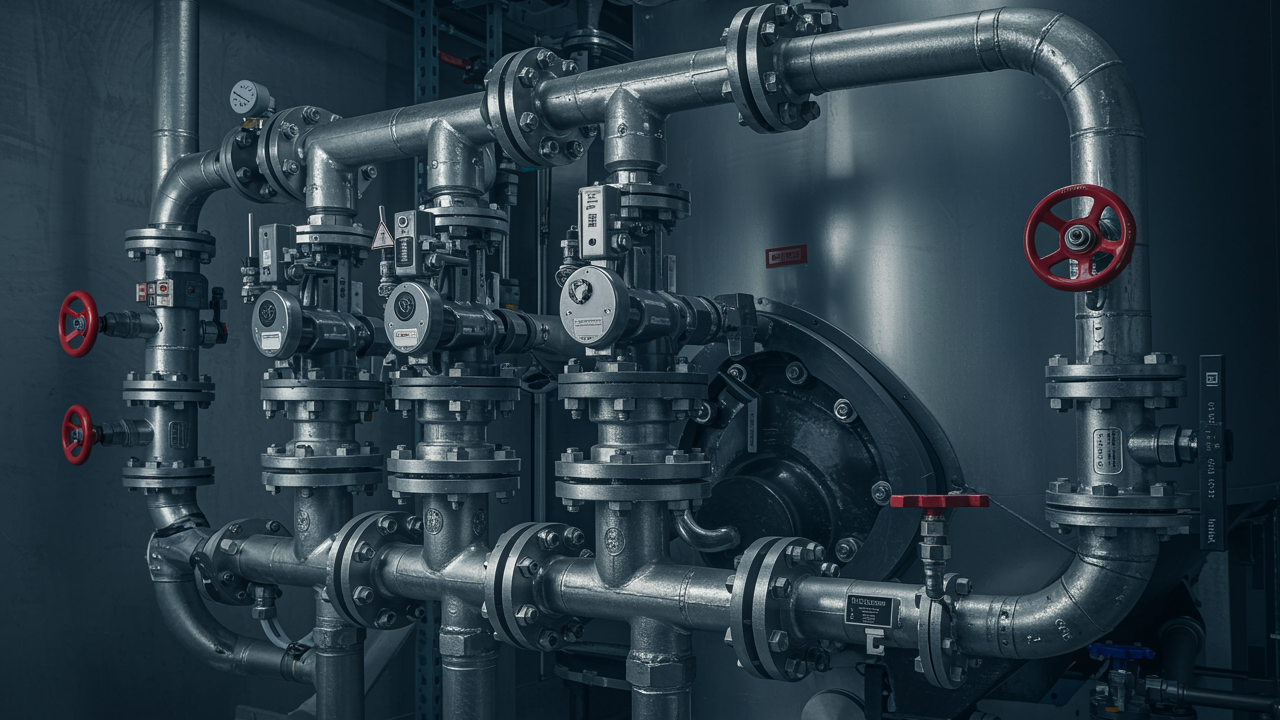
When properly sized and installed, both 3-way mixing valves and 4-way configurations deliver reliable temperature control in heating systems. The choice between these valve types depends primarily on system design requirements, flow characteristics, and control objectives rather than one being universally superior to the other.
3-way mixing valves excel in straightforward heating applications where variable flow is acceptable and system simplicity is valued. These valves suit residential central heating, underfloor heating circuits, and small commercial installations where cost-effectiveness and ease of installation are priorities. Their three-port configuration provides adequate control for most standard heating scenarios without unnecessary complexity.
4-way mixing valves become essential in systems requiring constant primary flow rates, such as installations with boiler protection requirements or complex multi-zone commercial heating. The additional port allows simultaneous mixing and diverting functions, maintaining stable flow through heat sources whilst delivering precise temperature control to secondary circuits. This capability justifies the higher cost in applications where system protection and advanced control are paramount.
What Are Mixing Valves and Why Do They Matter?
The Role of Mixing Valves in Heating Systems
Mixing valves regulate water temperature by blending hot water from a heat source with cooler water to achieve a target outlet temperature. The valve contains ports for hot inlet, cold inlet, and mixed outlet, with an internal mechanism that adjusts the proportion of each input based on temperature requirements. This fundamental function enables heating systems to deliver safe, comfortable temperatures throughout buildings whilst maintaining boiler efficiency.
Temperature control directly impacts both safety and comfort. Mixing valves prevent scalding by limiting domestic hot water delivery temperatures to safe levels, whilst simultaneously enabling boilers to operate at efficient temperatures. Without proper mixing valve selection and installation, heating systems cannot deliver the combination of safety, comfort, and efficiency that modern building standards demand.
The energy efficiency benefits of proper mixing valve selection extend beyond temperature control to include reduced cycling losses, minimised standby heat loss, and optimised boiler operation. A well-specified mixing valve working within a properly designed system can reduce annual heating costs by 15-25% compared to systems relying solely on boiler temperature control, with additional benefits from extended equipment lifespan and reduced maintenance requirements.
Comfort advantages include rapid hot water delivery, consistent shower temperatures despite other fixtures operating simultaneously, and the ability to maintain different temperatures in different building areas according to actual requirements. These capabilities depend not just on having a mixing valve installed, but on selecting the correct type for the specific application and system configuration.
Key Components and Basic Operation
All mixing valves share fundamental components including a valve body containing internal ports and chambers, an actuator mechanism that adjusts the hot and cold water ratio, and typically a control system responding to temperature sensors or mechanical elements. The valve body material - usually brass, bronze, or stainless steel - must resist corrosion whilst the internal mechanism components must respond precisely and reliably to changing conditions. National Pumps and Boilers supplies mixing valve systems from leading manufacturers, ensuring compatibility with various heating system designs across the UK.
The internal mechanism's response to temperature changes drives valve operation. Thermostatic mixing valves use a wax or liquid-filled element that expands and contracts directly in response to outlet water temperature, mechanically adjusting the valve position without external power. Motorised mixing valves employ electric actuators controlled by external temperature sensors and controllers, allowing integration with sophisticated building management systems and weather compensation strategies.
Grundfos mixing valve systems demonstrate how modern valve technology integrates with advanced controls and circulation equipment. The valve's ability to maintain precise target temperatures despite varying inlet conditions and demand changes determines whether a heating system achieves its design efficiency and comfort objectives.
Control system integration varies significantly between 3-way and 4-way configurations. Both types can employ thermostatic or motorised control, but the control objectives differ based on system requirements. Understanding these differences helps installers select valve types that suit specific heating system designs and control strategies.
Understanding 3-Way Mixing Valves
How 3-Way Mixing Valves Work
A 3-way mixing valve contains three ports: one for hot water inlet from the boiler or heat source, one for cooler water inlet (typically from the system return), and one outlet delivering mixed water at the target temperature. The internal valve mechanism modulates flow between the two inlets, adjusting their proportions continuously to maintain consistent output temperature.
The mixing action occurs inside the valve body as hot and cold water streams combine. The thermostatic element monitors the resulting mixed temperature and adjusts a shuttle or poppet valve to change the hot-to-cold ratio. If outlet temperature exceeds the setpoint, the element expands and mechanically repositions internal components to reduce hot water flow and increase cold water flow. When temperature drops below setpoint, the element contracts, allowing more hot water through.
This modulating control approach means that flow rate through the valve varies depending on heating demand. During high-demand periods when significant heat is required, the valve opens the hot water inlet wide whilst restricting the cold inlet, creating high overall flow. During lower-demand periods, both inlets restrict proportionally, reducing total flow through the system. This variable flow characteristic suits many heating applications but requires careful system design to ensure adequate pump capacity across the full operating range.
Actuator types for 3-way valves include manual handles for simple systems, thermostatic cartridges for self-regulating operation without power requirements, and motorised actuators for advanced control integration. Manual operation suits applications where operators actively adjust temperature requirements, whilst thermostatic operation provides set-and-forget reliability for constant temperature delivery. Motorised actuators enable complex control strategies including weather compensation and time-based temperature scheduling.
Common Applications for 3-Way Mixing Valves
Underfloor heating circuits almost universally use 3-way mixing valves, as floor surface temperatures must not exceed 27°C for comfort and safety. A 3-way valve allows the boiler to operate at higher efficiency temperatures whilst reducing the supplied water to underfloor-appropriate levels. The variable flow through the valve matches the heat output to circuit demand, with the valve automatically modulating to maintain consistent floor surface temperatures despite changing outdoor conditions or room occupancy.
Radiator circuits with weather compensation benefit from 3-way valve control, where outdoor temperature sensors feed data to motorised valves that continuously adjust flow temperatures. As outdoor temperatures moderate, the valve reduces flow temperature proportionally, capturing efficiency gains throughout changing weather conditions. This application demonstrates how 3-way valves' variable flow characteristic suits demand-responsive heating.
Domestic hot water temperature control frequently uses thermostatic 3-way mixing valves, protecting occupants from scalding whilst maintaining adequate sanitisation temperatures in storage cylinders. The valve maintains consistent outlet temperature regardless of demand changes, with automatic response to inlet temperature variations preventing dangerous temperature spikes.
Buffer tanks and thermal storage systems often employ 3-way valves to optimise heat transfer from storage to heating circuits. The valve's ability to vary flow rates suits applications where demand varies dramatically, from peak heat extraction during morning warm-up to minimal flow during mild weather. This flexibility in flow matching makes 3-way valves ideal for many storage-based heating strategies.
Small to medium commercial installations including office buildings, retail spaces, and modest educational facilities frequently use 3-way valves for individual zone control. Each zone receives a dedicated valve maintaining its target temperature, with the variable flow through each valve matching heat delivery to zone demand. This approach provides adequate control for most commercial applications without the complexity of 4-way valve configurations.
Advantages and Limitations of 3-Way Valves
Energy efficiency benefits emerge from the variable flow characteristic that reduces unnecessary circulation when demand is low. A 3-way valve naturally restricts flow during mild weather when less heat is required, reducing pump energy consumption and heat loss from distribution pipework. This demand-responsive flow control contributes to the overall system efficiency even before considering fuel savings from optimised boiler operation.
Installation simplicity represents another major advantage. 3-way valves require straightforward piping with one inlet from the heat source, one inlet from the return, and one outlet to the zone or circuit being heated. This simple configuration suits retrofit installations where space constraints or existing pipe layouts limit options. Professional installers can integrate 3-way valves into most existing systems with minimal modifications, reducing installation costs and disruption.
Cost-effectiveness positions 3-way valves as the standard choice for basic heating applications. Equipment costs for quality 3-way valves typically run 30-50% lower than equivalent 4-way units, with simpler installation reducing labour costs further. For applications where their capabilities prove adequate, 3-way valves deliver excellent value without unnecessary complexity or expense.
Limitations emerge in systems requiring constant flow rates through heat sources, particularly boilers requiring minimum circulation rates for safe operation. 3-way valves' variable flow characteristic can fall below these minimums during low-demand periods, potentially causing boiler issues or inefficient operation. Systems combining heating with cooling, or those with multiple heat sources requiring independent primary flow, often cannot accommodate 3-way valve limitations.
Multi-zone commercial systems with dozens of independent circuits sometimes struggle with cumulative pressure effects from multiple 3-way valves modulating simultaneously. As individual valves restrict flow during low-demand periods, system pressure rises, potentially exceeding pump capabilities or creating control instability. These scenarios often necessitate 4-way valve configurations that maintain constant primary flow despite secondary circuit modulation.
Understanding 4-Way Mixing Valves
How 4-Way Mixing Valves Work
A 4-way mixing valve adds complexity and capability through four ports: hot inlet from the heat source, cold inlet from the system return, mixed outlet to secondary circuits, and return outlet back to the primary circuit. This configuration allows the valve to simultaneously perform two functions - mixing for secondary circuits whilst diverting a controlled proportion of flow back to the primary circuit return.
The valve body contains internal chambers and ports arranged to maintain constant flow through the primary inlet port regardless of secondary circuit demand. As secondary circuits require less heat, the valve proportionally increases the amount of return water diverted back to the primary circuit return port, maintaining constant flow rate through the heat source. This constant primary flow characteristic protects boilers requiring minimum circulation rates whilst satisfying variable secondary circuit demands.
The internal mechanism can employ various designs including shuttle valves, rotary spool mechanisms, or combined thermostatic elements, each achieving the constant primary flow with simultaneous secondary temperature control. Motorised actuators position the internal elements based on temperature sensor feedback, enabling precise control of both primary flow rate and mixed outlet temperature.
Advanced control capabilities emerge from the independent control of primary flow and secondary temperature. Building management systems can optimise primary flow based on heat source requirements whilst secondary controllers maintain appropriate temperatures for each circuit. This separation of concerns allows sophisticated system operation impossible with simpler 3-way valve configurations.
Common Applications for 4-Way Mixing Valves
Commercial heating systems with multiple zones regularly employ 4-way valves, particularly when boiler protection requirements mandate minimum return temperatures. A central 4-way valve receives high-temperature water from the boiler at constant flow rate, diverts proportional flow back to the boiler return to maintain minimum return temperature, and delivers remaining flow to secondary circuits at temperatures controlled by the valve's modulating mechanism. Secondary circuits each maintain their target temperatures through individual zone valves or local mixing valves, creating a hierarchical temperature control system.
Boiler protection circuits specifically require 4-way valve configurations when preventing condensation damage or maintaining thermal efficiency requires minimum return temperatures. The valve ensures that sufficient high-temperature return water recirculates through the boiler, preventing the cool return temperatures that cause condensation and thermal shock. This application justifies 4-way valve cost through prevention of expensive boiler damage and extended equipment lifespan.
Wilo circulation systems frequently incorporate 4-way valve control in large commercial applications, with variable-speed pumps coordinating with constant-flow mixing valve characteristics for optimised energy consumption. The pump maintains appropriate primary flow through the 4-way valve's constant inlet requirement, whilst the valve manages temperature control across secondary circuits.
Combined heating and cooling systems use 4-way valves to manage heat transfer in both directions. The valve's ability to maintain constant primary flow whilst modulating secondary temperature suits applications where some circuits require heating whilst others need cooling. This dual-mode capability makes 4-way valves essential for facilities requiring year-round temperature control across diverse circuits.
Industrial process heating applications employing precise temperature control across multiple independent processes frequently utilise 4-way valves. The constant primary flow maintains stable heat source operation whilst each secondary circuit receives precisely controlled temperatures matched to process requirements. This capability enables centralised heat generation with distributed, independent process temperature control.
Advantages and Limitations of 4-Way Valves
Superior control in complex multi-zone systems emerges from the valve's ability to independently manage primary flow and secondary temperature. Facility managers can optimise primary circuit operation for boiler efficiency whilst secondary circuits maintain independent temperature control. This hierarchical approach enables sophisticated system operation responsive to complex building requirements.
Constant primary flow rate maintenance through boiler or other heat sources ensures safe, efficient operation regardless of secondary circuit demand. Boilers designed for minimum circulation rates receive reliable constant flow, preventing thermal damage and condensation issues. Heat pump systems similarly benefit from constant primary flow characteristics matching their operating requirements.
Enhanced boiler protection through control of return temperatures represents a major advantage in applications with condensing boilers or systems sensitive to thermal shock. The 4-way valve's ability to recirculate hot return water prevents the cool returns that damage equipment, extending boiler life and maintaining efficiency throughout the system's service period.
Higher initial cost compared to 3-way alternatives represents the primary limitation. Equipment cost typically runs 50-100% higher, with more complex installation and commissioning adding labour costs. For applications where 3-way valve capabilities prove adequate, this additional expense cannot be justified economically.
Increased complexity in installation, commissioning, and maintenance creates barriers to retrofit applications or situations where expertise is limited. Professional heating engineers must understand 4-way valve operation, system hydraulics, and complex control integration to specify and install these valves properly. Improper installation can create system problems that sophisticated equipment cannot overcome.
Technical Comparison: 3-Way vs. 4-Way Configurations
Flow Characteristics and System Design
3-way valves employ variable flow control where the total flow through the valve depends on secondary circuit demand. During high-demand periods, the valve opens to maximum flow; during low-demand periods, flow restricts proportionally. This characteristic suits heating systems where lower flow during mild weather provides natural energy savings through reduced circulation.
4-way valves maintain constant flow through their primary inlet port, with secondary outlet flow varying according to circuit demand. Return flow through the fourth port varies proportionally, maintaining constant total flow through the primary inlet. This approach suits systems requiring stable heat source operation regardless of secondary circuit conditions.
Pump sizing and system hydraulics differ significantly between valve types. Systems employing 3-way valves require pumps sized for peak flow conditions, with modulation naturally occurring as demand varies. Systems using 4-way valves must maintain constant flow at all times, requiring different pump curves and operational strategies. DAB pump systems demonstrate how pump selection must match valve characteristics for optimal performance.
Pressure drop considerations extend across all system components when selecting valve types. 3-way valves exhibit pressure drop proportional to flow rate - high flow creates high pressure drop, whilst low flow creates minimal loss. 4-way valves operate at more consistent pressure drops due to constant flow characteristics. System designers must account for these differences when sizing pumps and calculating pressure availability for terminal devices.
System efficiency and energy consumption patterns differ between configurations. 3-way systems naturally consume less pump energy during low-demand periods as flow restricts. 4-way systems maintain constant pump flow, though variable-speed pumps can reduce motor energy consumption while maintaining flow. The total system efficiency depends on how well valve selection matches heating load patterns and building requirements.
Control Strategies and Integration
3-way valves with thermostatic elements require no external power or controls, operating automatically to maintain target temperatures. Motorised 3-way valves accept control signals enabling integration with weather compensation, time-based scheduling, and building management systems. The simpler control requirements suit applications where basic temperature regulation suffices.
4-way valves typically employ motorised actuators controlled by sophisticated algorithms managing primary flow and secondary temperature independently. Building management system integration enables complex strategies coordinating boiler operation, secondary circuit temperatures, and pump speed for optimised efficiency across varying conditions.
Response times differ between valve types, with thermostatic 3-way valves responding within seconds to temperature changes, whilst motorised valves' response depends on actuator speed and control loop tuning. For applications requiring rapid response to demand changes, faster-responding valve types may be necessary.
Weather compensation integration suits both valve types but operates differently. With 3-way valves, outdoor temperature sensors feed data to motorised valve controllers that adjust setpoint temperatures. With 4-way valves, weather data drives both primary return temperature maintenance and secondary circuit temperature adjustments, creating more sophisticated optimisation.
Sensor placement and control loop configuration requirements differ between types. 3-way valves typically use single outlet temperature sensors, whilst 4-way systems may employ multiple sensors monitoring primary and secondary flows. Lowara flow management systems demonstrate how modern systems coordinate valve operation with sophisticated sensing and control.
Selecting the Right Mixing Valve for Your Application
Assessment Criteria for Valve Selection
System flow requirements and characteristics form the foundation of valve selection. Installers must calculate maximum and minimum flow rates throughout heating season variations, account for simultaneous usage of multiple circuits, and consider whether flow varies significantly or remains relatively constant. This analysis determines whether variable 3-way flow characteristics suit the system, or whether constant 4-way flow proves necessary.
Heat source type and protection needs critically influence valve selection. Boilers requiring minimum circulation rates demand 4-way valve characteristics, whilst systems with heat pumps or renewable sources may have different requirements. Vaillant boiler systems typically accommodate both valve types, but specific models may have preferences affecting selection decisions.
Zone control requirements assessment considers how many independent temperature zones the system must maintain, whether zones operate simultaneously or sequentially, and whether complex coordination between zones becomes necessary. Simple two or three-zone systems often work adequately with multiple 3-way valves, whilst complex commercial buildings with dozens of independent circuits typically require 4-way valve infrastructure.
Budget considerations including equipment cost, installation complexity, and commissioning requirements significantly influence valve selection, particularly in retrofit applications where labour costs dominate. New construction projects often justify 4-way valve investment through superior long-term performance, whilst budget-conscious retrofits frequently employ 3-way solutions adequate for existing system requirements.
Long-term maintenance and operational costs must be weighed against initial investment. More sophisticated 4-way valve systems may require specialised expertise for maintenance and troubleshooting, increasing lifecycle costs. Simpler 3-way configurations reduce ongoing costs through easier maintenance, though potentially at the expense of optimisation capabilities.
Installation and Commissioning Considerations
Professional installation by qualified heating engineers ensures proper integration regardless of valve type. 3-way valve installation requires straightforward piping with hot inlet, return inlet, and outlet connection. 4-way valve installation involves additional complexity in managing constant primary flow characteristics and ensuring proper pressure maintenance.
Armstrong heating systems installation guidance demonstrates professional standards for proper valve positioning, pipe sizing, and integration with existing components. Proper sizing and configuration of pipes, isolation valves, and strainers around mixing valves ensures reliable operation and maintenance accessibility throughout service life.
Commissioning procedures differ between valve types. 3-way valve commissioning verifies proper outlet temperature maintenance across varying loads, whilst 4-way valve commissioning confirms both constant primary flow and secondary outlet temperature control. Testing procedures must verify that the selected valve type performs as design specifications require.
Common installation mistakes including improper valve orientation, inadequate pipe preparation, and poor sensor placement affect both valve types. Additional mistakes with 4-way valves include failure to maintain constant primary flow through bypass arrangements, or improper return line configuration that prevents adequate recirculation. Avoiding these mistakes during installation prevents problems that expensive equipment cannot overcome.
Integration with existing heating infrastructure requires careful assessment of compatibility. Old radiator systems sometimes struggle with 4-way valve constant flow characteristics designed for modern, efficient heat distribution. Retrofit applications must consider whether system modifications prove necessary to fully accommodate new valve characteristics.
Maintenance and Troubleshooting
Routine Maintenance Requirements
Regular inspection schedules for 3-way valves focus on temperature control accuracy, listening for unusual sounds indicating internal wear, and confirming that the valve modulates smoothly across its operating range. Annual professional inspection typically suffices for most applications, with more frequent checks in demanding commercial environments.
4-way valve inspection must verify not only secondary outlet temperature but also confirm that primary inlet flow remains constant at design specification. This requires pressure measurement and flow verification equipment, making professional maintenance more critical for 4-way systems than simpler 3-way alternatives.
Actuator testing and calibration prove essential for motorised valves of both types. Professional engineers confirm that actuators respond to control signals appropriately and that valve positions accurately reflect setpoint requirements. Calibration adjustments may be necessary after years of service as mechanical linkages wear.
Remeha valve systems demonstrate how modern valve technology incorporates features supporting long-term reliability including sealed actuators resistant to corrosion and thermostatic cartridges designed for extended service life. Regular inspection and maintenance of these components extends overall system reliability.
Valve body inspection and cleaning removes mineral deposits and debris that could impair operation. Hard water areas particularly benefit from annual descaling treatments that restore valve responsiveness. Sensor verification and replacement as needed ensures that temperature feedback remains accurate throughout the valve's service life.
Common Issues and Solutions
Temperature control problems with 3-way valves often stem from thermostatic element wear or calibration drift, resolved through element replacement or recalibration. With 4-way valves, temperature issues may indicate improper primary flow maintenance or secondary outlet sensor malfunction. Systematic troubleshooting identifying root causes allows targeted repairs avoiding unnecessary component replacement.
Actuator failure symptoms in motorised valves include sluggish response, inability to reach full travel, or total failure to respond to control signals. Replacement actuators restore functionality for both valve types, though actuator accessibility and cost differ. Some motorised valves feature easily replaced actuators, whilst others require complete valve replacement when actuators fail.
Flow issues and hydraulic balancing challenges differ between valve types. 3-way valve flow restrictions often result from scale accumulation or debris blockage resolved through cleaning or replacement of restrictive components. 4-way valve flow problems may indicate improper return line configuration or bypass arrangement issues affecting constant primary flow maintenance.
Sensor calibration and accuracy concerns affect control performance for motorised valves. Temperature sensor drift or malposition causes control errors despite correctly functioning valve mechanisms. Sensor replacement or relocation during maintenance visits resolves these issues, improving control accuracy for months or years of subsequent operation.
Conclusion
Both 3-way and 4-way mixing valves deliver reliable temperature control when properly specified for application requirements and correctly installed by qualified professionals. The choice between configurations depends on system characteristics, control objectives, and operational requirements rather than inherent superiority of either type.
3-way valves suit residential heating, simple commercial installations, and applications where variable flow characteristics align with system requirements. Their cost-effectiveness and installation simplicity make them the standard choice for most heating applications, with proven performance across millions of installations worldwide.
4-way valves become essential in complex commercial systems, boiler-protection applications, and installations requiring constant primary flow. The additional investment justifies itself through superior control capabilities, enhanced system protection, and optimised performance in demanding applications.
Professional guidance ensures that valve selection matches specific heating system requirements, avoiding either unnecessary complexity or inadequate capabilities. Contact Us to discuss mixing valve selection for your specific heating application and ensure optimal system performance.