

Best Commercial Boiler Brands in the UK for 2026: An Honest Comparison
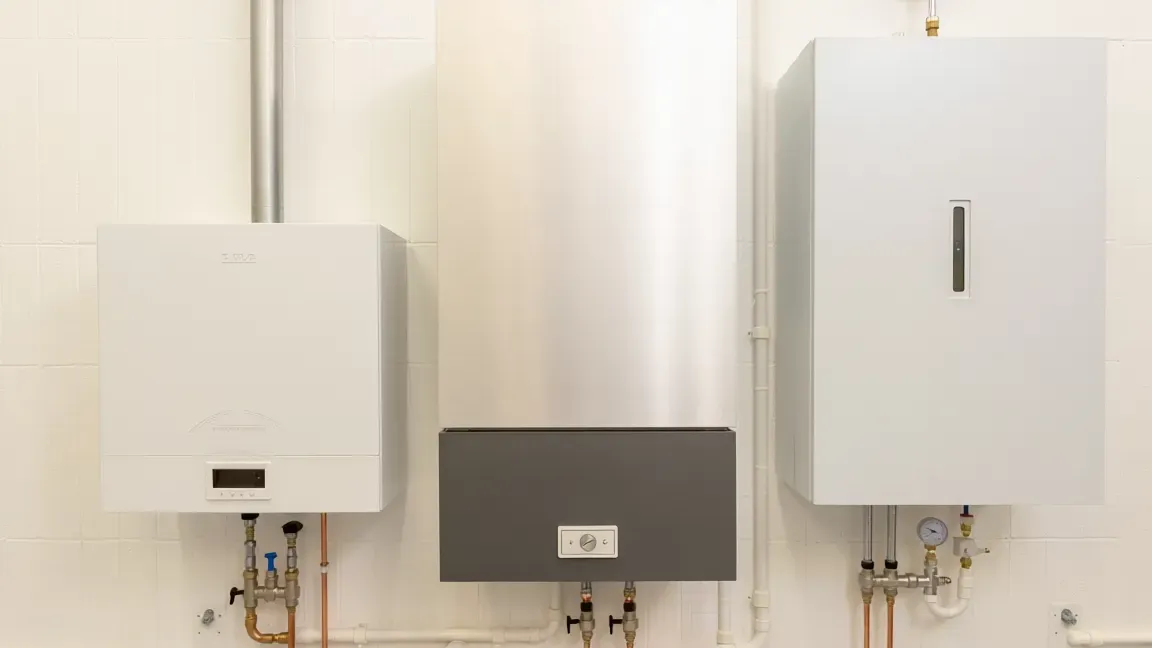
Commercial boiler selection determines operational costs and system reliability for the next 15-20 years. Yet many procurement decisions focus solely on initial capital expenditure, ignoring factors that ultimately cost far more - unplanned downtime, inefficient part-load operation, and premature replacement that arrives years ahead of schedule. Understanding the best commercial boiler brands UK 2026 market offers requires looking beyond published efficiency figures to the practical considerations that define real-world performance across thousands of installed systems.
The UK commercial heating market has consolidated around manufacturers that have proven their equipment under British operating conditions. Their position reflects decades of installations that continue operating efficiently, backed by parts networks, trained engineers, and technical support infrastructure across every region. Brand selection at the specification stage is therefore one of the most consequential decisions in any commercial heating project.
Why Brand Selection Matters More Than Price
A commercial boiler represents the central component of a building's heating infrastructure, and purchase price accounts for less than 30% of total lifetime costs. The remainder comprises fuel consumption, maintenance, repairs, and eventual replacement - costs that vary substantially between manufacturers and that price-focused tendering systematically undervalues.
Three factors separate brands that deliver genuine value from those that create persistent operational problems. Parts availability determines whether a breakdown means hours of downtime or weeks of heating loss. Manufacturers with established UK distribution networks stock common wear components at regional depots; lesser-known brands may require European shipment, leaving buildings without heating during critical winter periods when demand for engineer attendance peaks.
Engineer familiarity affects both installation quality and repair speed. Heating engineers naturally develop expertise with brands they have trained on and installed repeatedly. An unfamiliar boiler extends commissioning time and increases the likelihood of configuration errors that undermine performance from day one. When breakdowns occur, engineers diagnose and repair familiar equipment more efficiently than models they encounter infrequently.
Manufacturer backing proves decisive when problems arise. Established brands maintain technical support teams with deep product knowledge, process warranty claims efficiently, and stand behind their equipment when genuine defects emerge. Budget brands lacking this infrastructure leave building owners absorbing costs that should fall under warranty coverage - a hidden financial risk that purchase price comparisons never reveal.
The Leading Commercial Boiler Manufacturers
Remeha Commercial Solutions
Dutch engineering heritage defines Remeha commercial boilers, and the manufacturer's development of modular cascade systems has shaped how the UK market approaches commercial heating plant specification. The Gas series achieves modulation ratios up to 1:10, meaning a 100kW boiler can reduce output to 10kW - a range that maintains stable combustion and high efficiency across the full spectrum of commercial building heat demands.
This wide modulation range matters considerably in practice. Commercial buildings rarely operate at full capacity, spending the majority of operating hours below 50% load where modulation capability determines actual fuel consumption. Boilers that maintain efficiency at part load consistently deliver lower annual running costs than alternatives with identical full-load ratings but limited modulation ranges.
The manufacturer's UK service network covers all regions with factory-trained engineers and regional parts distribution, supported by a dedicated training centre in Kidderminster that ensures consistent installation standards. Cascade control systems integrate with building management systems through BACnet and Modbus protocols, enabling automated response to occupancy patterns and weather conditions without manual intervention.
Vaillant Commercial Range
German manufacturing precision characterises Vaillant commercial boilers, with the ecoTEC plus range achieving ErP A-rated efficiency through advanced heat exchanger design and intelligent controls. Stainless steel heat exchangers resist the corrosion associated with condensing operation in variable water quality conditions common across UK commercial installations - a specification detail that affects long-term reliability as much as initial performance ratings.
Modular configurations deliver outputs from 30kW to 960kW through cascade arrangements with CASCADE-Manager controls that optimise boiler sequencing and rotate lead units to equalise running hours. This automated management reduces maintenance requirements and prevents the premature failure of continuously operating lead boilers that affects installations without proper sequencing rotation.
The VRC 700 controller provides touchscreen operation with seven-day programming and remote access via connected interfaces. Building managers can monitor performance and adjust parameters without requiring engineer attendance for routine modifications - a capability that reduces operational costs in buildings without dedicated facilities management resource.
Andrews Water Heaters
British manufacturing heritage distinguishes Andrews from continental competitors. The company has manufactured commercial water heating equipment at its UK facility since 1972, developing expertise in high-output applications and industrial processes that demand continuous operation under conditions that commercial space heating boilers are not designed to sustain.
Cast iron heat exchangers in Andrews boilers provide exceptional durability in applications with elevated return temperatures or aggressive water chemistry. Whilst stainless steel dominates modern condensing applications, cast iron retains superiority for non-condensing installations and systems where water treatment standards prove difficult to maintain consistently - conditions common in industrial settings where process requirements preclude the water quality management that condensing boiler warranty conditions typically require.
The MAXXflo range delivers outputs from 90kW to 3MW through modular configurations, suiting applications requiring constant high-temperature water for industrial processes, large-scale DHW generation, or district heating primary circuits. UK-manufactured parts availability and British Standard compliance documentation support specifications that require domestically manufactured equipment or demonstrate compliance with specific UK regulatory frameworks.
Grundfos Integration Systems
Grundfos approaches commercial heating from a whole-systems perspective rather than focusing solely on heat generation. The manufacturer's expertise in pump technology enables optimised integration between boiler output and distribution performance - coordination that delivers efficiency gains impossible to achieve through separate component selection.
The MAGNA3 variable speed pump range incorporates integrated pressure sensors and intelligent controls that adjust flow rates automatically to match instantaneous system demand. Combined with modulating boilers, these pumps eliminate the fixed-speed circulation waste that accounts for a significant proportion of distribution system energy consumption in commercial buildings.
Selectric control systems coordinate boiler firing rates, pump speeds, and mixing valve positions to maintain optimal efficiency across all operating conditions, reducing electrical consumption by 40-60% compared with fixed-speed alternatives. For commercial installations prioritising whole-system efficiency, the integration between heat generation and distribution that Grundfos coordination enables represents a meaningful performance advantage over selecting boiler and pump specifications in isolation.
What Separates Premium from Budget Options
Heat exchanger material represents the most critical specification differentiating premium from budget commercial boilers. Stainless steel grade 316L resists corrosion in condensing applications where acidic condensate forms continuously. Lower grades and unspecified stainless steel corrode prematurely when exposed to condensate, leading to heat exchanger failures within 5-7 years that necessitate either major repairs costing thousands of pounds or complete boiler replacement. Premium brands specify 316L as standard; budget options frequently use inferior grades that cost less initially but fail early.
Control system sophistication affects both operational efficiency and serviceability throughout the equipment's life. Advanced controllers with diagnostic capabilities enable engineers to identify faults rapidly through fault codes and operational data logs. Basic controls with minimal feedback require time-consuming manual testing to diagnose issues, extending repair times and increasing labour costs for every maintenance intervention across the boiler's operational life.
Modulation capability directly determines efficiency and comfort. Premium brands achieve 6:1 to 10:1 modulation ranges that maintain stable operation across varying loads without cycling. Budget options typically manage 3:1 or less, forcing frequent cycling that reduces seasonal efficiency, increases component wear, and creates temperature fluctuations that building occupants notice. This specification difference represents one of the clearest value distinctions between tiers.
For commercial central heating systems where boiler quality must extend to distribution components to deliver the seasonal efficiency that Part L compliance requires, equipment from established manufacturers throughout the system ensures that premium boiler performance is not undermined by inferior pipework, controls, or ancillary components that fail ahead of schedule.
Efficiency Ratings and Real-World Performance
ErP directive compliance establishes minimum efficiency standards across the best commercial boiler brands UK 2026 market, but ratings alone do not reveal real-world performance across the conditions that commercial buildings actually experience. Seasonal efficiency calculations account for part-load operation, standby losses, and cycling behaviour - factors that laboratory full-load tests cannot capture.
Commercial boilers operate at full rated output perhaps 5% of annual runtime. The remaining 95% involves part-load conditions where modulation capability and minimum firing rates determine actual fuel consumption and running costs. National Pumps and Boilers supplies commercial boiler equipment from all the leading manufacturers, providing the technical guidance that helps specifiers match modulation capability and system design to the specific load profiles of each building rather than relying on headline efficiency figures that reflect laboratory conditions.
Premium manufacturers provide detailed guidance on achieving rated efficiency through appropriate system design - return temperature management, emitter sizing, and hydraulic balance that condensing boilers require to perform as their specifications promise.
Standby losses occur between firing cycles when poorly insulated boilers with high thermal mass maintain temperature unnecessarily. Well-insulated boilers with low thermal mass minimise these losses. Budget equipment with inadequate insulation and heavy heat exchangers waste energy maintaining temperature while idle, reducing effective seasonal efficiency below the combustion efficiency figures that headline ratings report.
For DHW pumps that must support the high seasonal efficiency of premium boiler plant by delivering precise flow rates without excessive electrical consumption, variable speed pump technology from established manufacturers reduces distribution system energy costs in ways that improve overall installation performance beyond boiler-only efficiency gains.
Parts Availability and Engineer Support
Parts availability determines the duration and cost of heating system failures when they occur. Manufacturers with UK warehouse networks ship common components for next-day delivery, limiting downtime to the hours required for engineer attendance and repair. Brands relying on continental distribution face 5-10 working day lead times for parts shipment - an unacceptable delay during winter heating periods in buildings where occupant welfare or business operations depend on uninterrupted heating.
Technical helplines staffed by qualified heating engineers rather than general customer service operators resolve complex commissioning and diagnostic challenges efficiently. Access to manufacturer technical specialists during fault diagnosis prevents extended downtime and avoids the incorrect repairs that create additional problems by addressing symptoms rather than root causes.
For projects where pump installation quality and long-term support must match the premium boiler specification throughout the system, Wilo provides comprehensive UK installer training and technical support that ensures pump selection, installation, and commissioning meets the standards that premium boiler manufacturers require to maintain system warranty validity.
Warranty claim processes reveal manufacturer confidence in their product quality. Brands processing claims efficiently without excessive documentation requirements demonstrate commitment to customer satisfaction. Manufacturers that dispute claims aggressively or impose unreasonable conditions signal awareness of quality issues that their marketing materials do not acknowledge.
Matching Boiler Brand to Application Type
Hotels and Hospitality
Hotels and hospitality venues require modular cascade systems that provide redundancy and part-load efficiency under highly variable demand patterns. The combination of space heating and substantial DHW requirements creates load profiles that single large boilers cannot serve efficiently across the daily cycle from early morning occupancy peaks through quieter afternoon periods.
For reliable DHW circulation in hotel and leisure applications where consistent hot water supply directly affects guest satisfaction, Lowara DHW circulation pumps deliver the consistent flow rates and pressure performance that high-occupancy DHW systems require during simultaneous demand peaks - ensuring hot water availability throughout the building regardless of how many guests are drawing simultaneously.
Educational Facilities
Educational establishments require reliable operation throughout academic terms with servicing scheduled during the holiday periods when the building is unoccupied. Robust construction and proven reliability from established manufacturers matter more to facilities managers in this sector than cutting-edge features that introduce unfamiliar technology and potential commissioning complexity.
Conservative brand selection from manufacturers with strong UK service networks and high engineer familiarity reduces the risk of mid-term breakdowns that disrupt building operation at the precisely the moments - during term time, in cold weather - when heating failure has the greatest impact on occupants.
Industrial Processes
Industrial processes often require non-condensing boilers operating continuously at high temperatures. Attempting to use condensing boilers in non-condensing applications creates maintenance problems and voids warranties - Andrews cast iron commercial equipment handles these conditions reliably where condensing technology would operate outside its design parameters and incur premature deterioration.
For industrial installations where pump valves must control high-temperature process flows reliably over extended continuous operation, specifying valve assemblies rated for the full operating temperature and pressure range of the process prevents the valve failures that disrupt production and create costly unplanned downtime in manufacturing environments.
Multi-Residential Developments
Multi-residential developments need heating equipment that operates efficiently across unpredictable occupancy patterns. Individual apartments create variable and difficult-to-predict heat demands that cascade systems with wide modulation ranges accommodate more effectively than single-boiler installations sized for calculated maximum demand.
For multi-residential sites requiring energy-efficient pump management that supports cascade boiler sequencing as apartment demand fluctuates through the day, Ebara commercial pump systems provide the reliable hydraulic performance that ensures consistent heat delivery across all apartments regardless of which combination of boilers is operating at any given time.
Conclusion
Commercial boiler brand selection requires balancing initial capital cost against lifetime operational performance and reliability risk. The manufacturers examined in this comparison of the best commercial boiler brands UK 2026 market - Remeha, Vaillant, Andrews, and Grundfos - dominate UK installations because their equipment performs reliably under British operating conditions whilst delivering efficient part-load performance across the varying demands that commercial buildings impose throughout the heating season.
Premium brands justify higher purchase prices through superior component quality, comprehensive parts networks, and manufacturer support that reduces lifetime costs substantially below budget alternatives. Parts availability, engineer familiarity, and warranty backing prove more financially valuable than marginal capital cost savings that disappear during the first breakdown. Application requirements should drive brand selection - hotels need different characteristics than industrial facilities, and educational buildings impose different demands than multi-residential developments.
For guidance on selecting appropriate commercial heating equipment for specific applications, Contact Us to discuss project requirements with experienced heating engineers who understand both equipment capabilities and the real-world installation demands that determine whether specification choices deliver their promised value.