

Best Practices for Maintaining a Safe and Efficient Boiler Room Environment
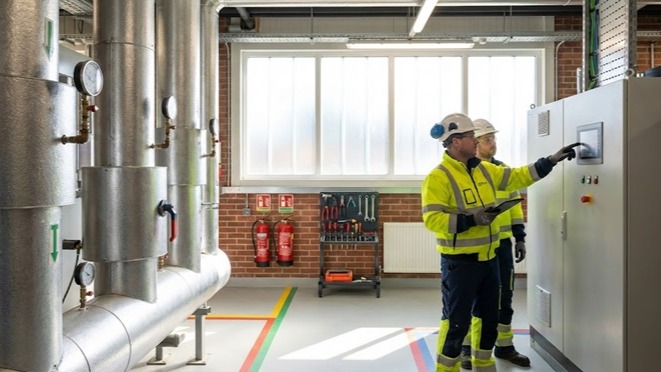
Achieving excellence in boiler room maintenance requires integrating safety, efficiency, reliability, and environmental stewardship into cohesive management approaches. The most successful commercial facilities recognize that safety and efficiency complement rather than compete with each other - well-maintained systems operate both more safely and more efficiently. Implementing comprehensive boiler safety tips alongside operational optimization strategies creates sustainable high-performance operations delivering value to organizations whilst protecting personnel.
Modern best practices emphasize proactive rather than reactive approaches. Rather than responding to problems after they occur, leading facilities anticipate issues through condition monitoring, systematic preventive maintenance, and continuous improvement methodologies. This forward-looking approach prevents incidents, avoids unplanned downtime, reduces maintenance costs, and extends equipment life whilst maintaining optimal efficiency throughout operational lifecycles.
Foundations of Safe and Efficient Boiler Room Operations
Integration of Safety and Efficiency
Safety and efficiency share fundamental commonalities often overlooked in traditional management approaches. Both depend on proper equipment maintenance, trained competent personnel, systematic procedures, adequate resources, and management commitment. Well-maintained equipment operates more efficiently whilst presenting fewer safety hazards. Properly trained personnel work both more safely and more productively. Organizations recognizing these synergies achieve superior results in both domains simultaneously.
Avoiding false dichotomies between safety and efficiency prevents counterproductive choices. Some managers perceive trade-offs forcing choices favouring one over the other. However, genuine analysis typically reveals that unsafe operations prove inefficient through higher incident costs, equipment damage, and disruption. Conversely, neglected efficiency ultimately compromises safety through equipment deterioration and operational stress. Framing safety and efficiency as complementary objectives enables better decision-making.
Economic cases for integrated approaches prove compelling. Comprehensive maintenance programmes preventing both safety incidents and efficiency losses generate returns substantially exceeding costs. Insurance premium reductions, avoided incident expenses, reduced energy costs, and extended equipment life all contribute to positive returns. Organizations viewing safety and efficiency investments as complementary rather than competing optimize resource allocation.
Assessing Current Boiler Room Performance
Safety performance metrics provide objective baselines for improvement. Lagging indicators including incident rates, lost-time injury frequency, and near-miss reports reveal historical performance. Leading indicators including hazard reports, safety observation completion, and training hours predict future performance. Comprehensive metrics covering multiple dimensions provide complete pictures enabling informed improvement targeting.
Efficiency measurements establish operational performance baselines. Combustion efficiency, overall thermal efficiency, fuel consumption rates, and energy costs per unit output all quantify efficiency. Comparing actual performance against design specifications, manufacturer ratings, or industry benchmarks identifies efficiency gaps warranting attention. Efficiency trending over time reveals whether performance improves, declines, or remains stable.
Reliability and availability statistics measure how consistently systems meet demand. Forced outage rates, mean time between failures, and availability percentages quantify reliability. High reliability indicates effective maintenance whilst poor reliability suggests systematic problems. Commercial heating systems with comprehensive maintenance achieve superior reliability reducing business disruption.
Cost analysis examines total ownership costs including energy, maintenance, labour, consumables, and capital expenditures. Comparing costs against budgets, historical trends, and industry benchmarks identifies opportunities. Understanding cost drivers enables targeted improvement initiatives addressing highest-impact areas. Some organizations implement activity-based costing providing granular cost visibility.
Proactive Maintenance Programmes
Preventive Maintenance Fundamentals
Daily inspection requirements establish frontline defense against developing problems. Operators should conduct visual inspections checking for leaks, unusual noises or vibrations, proper gauge readings, combustion quality, and general condition. Brief daily attention identifies problems at earliest stages when corrections prove straightforward and inexpensive. Systematic daily logs document observations creating historical records.
Weekly maintenance tasks extend beyond daily visual checks to include hands-on assessments. Testing safety controls and alarms, examining water treatment effectiveness, checking pump performance, inspecting visible piping, and verifying ventilation adequacy all warrant weekly attention. Consistent weekly effort prevents gradual degradation accumulating into serious problems.
Monthly service activities provide opportunities for more involved tasks. Water quality comprehensive testing, burner inspection and cleaning, checking expansion vessel pressures, lubricating motors and bearings, and examining control system operation all fit monthly schedules. Monthly tasks address items requiring attention but not weekly effort.
Annual comprehensive servicing by qualified technicians provides thorough examinations and adjustments. Complete combustion equipment servicing, detailed safety system testing, comprehensive inspections of all components, efficiency testing and optimization, and documentation of system condition should occur annually at minimum. Annual boiler servicing by qualified engineers maintains optimal safety and performance.
Predictive Maintenance Approaches
Condition monitoring technologies enable maintenance based on actual equipment condition rather than arbitrary schedules. Vibration analysis detects bearing wear and mechanical problems, thermal imaging identifies hot spots and electrical issues, oil analysis reveals internal wear, and ultrasonic testing finds leaks and electrical arcing. Condition monitoring optimizes maintenance timing - neither too early wasting component life nor too late risking failures.
Water quality trending provides early warning of treatment programme problems. Gradual increases in hardness, iron, or copper content suggest treatment inadequacy requiring attention before scale or corrosion become severe. Declining pH trends indicate treatment consumption exceeding replenishment. Early identification prevents damage requiring expensive repairs.
Performance parameter analysis identifies deteriorating efficiency. Gradual increases in flue gas temperatures, stack losses, or fuel consumption for equivalent loads all signal developing problems. Trending enables detection of gradual changes difficult to notice day-to-day. Early intervention when degradation begins proves more cost-effective than addressing severely deteriorated performance.
Water Treatment Excellence
Comprehensive Water Quality Management
Target parameter ranges for commercial boiler systems depend on operating pressures and boiler types. Low-pressure hot water systems typically target pH 10.5-11.5, whilst high-pressure steam systems require tighter control. Hardness should be essentially zero in treated systems preventing scale formation. Dissolved oxygen must be minimized preventing corrosion. Specific parameters depend on treatment programme chemistry and manufacturer requirements.
Testing frequencies balance thoroughness against resource demands. Daily testing of treatment chemical levels and pH ensures proper ongoing control. Weekly comprehensive testing including alkalinity, hardness, conductivity, and treatment residuals verifies programme effectiveness. Monthly laboratory analysis provides detailed assessment including trace metals indicating corrosion. Frequent testing enables rapid problem detection and correction.
Trend analysis and interpretation transforms raw test data into actionable insights. Plotting parameters over time reveals patterns including seasonal variations, treatment programme effectiveness, and developing problems. Statistical process control techniques identify significant deviations warranting investigation. Many organizations use software automating trend analysis and generating alerts when parameters exceed acceptable ranges.
Treatment Programme Optimization
Chemical selection criteria should consider effectiveness for specific water chemistry, compatibility with system materials, environmental characteristics, handling safety, and cost-effectiveness. Modern treatment formulations often provide multiple functions in single products simplifying programmes. Some facilities conduct trials comparing alternative programmes identifying optimal solutions for their specific conditions.
Dosing accuracy and control significantly impacts treatment effectiveness. Manual dosing proves adequate for small systems with stable demand but larger installations benefit from automated proportional dosing. Controllers measuring key parameters (conductivity, pH) and adjusting chemical feed accordingly maintain consistent treatment despite varying conditions. Water treatment equipment automation improves consistency whilst reducing labour requirements.
Combustion Optimization
Achieving Efficient Combustion
Air-fuel ratio fundamentals require balancing adequate combustion air preventing incomplete combustion whilst minimizing excess air reducing efficiency. Theoretical perfect combustion requires precise stoichiometric ratios. Practical systems require excess air accounting for imperfect mixing and varying conditions. Optimal excess air typically ranges 10-20% depending on fuel type and burner design. Regular testing and adjustment maintain optimal ratios.
Oxygen trim control benefits include continuous automatic adjustment maintaining optimal excess air across varying loads. These systems measure flue gas oxygen content and modulate combustion air accordingly. Properly calibrated oxygen trim controls improve average efficiency 2-5% compared to fixed air settings. Investment often pays back within 1-3 years purely from fuel savings.
Minimizing excess air whilst ensuring complete combustion requires careful tuning. Carbon monoxide monitoring provides essential safety verification ensuring adequate combustion. If CO rises above acceptable levels (typically 50-100 ppm), additional combustion air proves necessary regardless of efficiency impacts. Safety always takes priority over efficiency optimization.
Energy Efficiency Optimization
Minimizing Heat Losses
Insulation inspection and improvement addresses one of the easiest efficiency gains. Damaged or missing insulation wastes substantial energy whilst creating burn hazards. Systematic inspection identifying deficiencies combined with prompt repairs improves both safety and efficiency. Modern insulation materials provide superior performance compared to older installations. Some facilities use thermal imaging identifying insulation problems invisible to visual inspection.
Leak detection and repair prevents wasted energy and water. Even small leaks waste significant resources over time. Steam leaks prove particularly wasteful given energy required for steam generation. Ultrasonic leak detectors enable identification of leaks difficult to hear in noisy environments. Systematic leak surveys followed by prompt repairs pay for themselves quickly through eliminated waste.
Blowdown optimization balances removing dissolved solids against wasting heat and water. Excessive blowdown wastes energy whilst inadequate blowdown allows concentration buildup risking scale and corrosion. Conductivity-based automatic blowdown controls minimize waste whilst maintaining proper concentration. Some systems recover blowdown heat through flash steam recovery or heat exchangers.
Load Management Strategies
Multiple boiler sequencing optimizes efficiency by matching operating equipment to actual demand. Single boilers operating at 70-80% capacity prove more efficient than multiple boilers at low loads. Sequencing controllers stage boilers on and off automatically maintaining optimal loading. Rotation between multiple boilers equalizes operating hours extending equipment life.
Avoiding short cycling extends equipment life whilst improving efficiency. Minimum run times and adequate deadband settings prevent rapid on-off cycling. Short cycling increases starts per hour accelerating wear on igniters, valves, and controls. Efficiency suffers from repeated purge cycles and thermal cycling losses. Proper control programming and adjustment eliminates unnecessary cycling.
Safety Culture Development
Leadership Safety Commitment
Visible leadership engagement demonstrates genuine commitment rather than mere lip service. Leaders should participate in safety inspections, attend training sessions, recognize safety achievements, respond seriously to concerns, and discuss safety performance regularly. When workforce observes leadership prioritizing safety through actions not just words, cultural influence proves substantial.
Resource allocation for safety includes adequate budgets for equipment, training, and programme administration. Insufficient resources undermine programmes regardless of stated intentions. Organizations demonstrating willingness to invest in safety signal genuine commitment. Conversely, organizations consistently deferring safety expenditures send clear messages that safety remains lower priority than cost control.
Employee Safety Participation
Hazard identification involvement taps frontline knowledge about actual working conditions. Personnel performing tasks daily often recognize hazards invisible to occasional observers. Formal programmes encouraging hazard reporting, providing feedback on reports, and implementing improvements demonstrate that organizations value employee input. High participation rates indicate engaged workforces feeling psychological safety raising concerns.
Documentation and Record Systems
Essential Documentation
Operating logs documenting key parameters, observations, and events create historical records supporting multiple purposes. Logs enable performance trending, provide evidence of proper operation, support troubleshooting when problems occur, and demonstrate compliance during audits. Consistent logging creates valuable information assets. Modern digital systems simplify logging whilst providing analysis capabilities unavailable with paper logs.
Maintenance records tracking all servicing, repairs, and parts replacements support reliability improvement efforts. Records enable identification of recurring problems, inform replacement timing decisions, support warranty claims, and demonstrate compliance with manufacturer requirements. Comprehensive maintenance documentation represents best practice regardless of specific regulatory requirements.
Technology Adoption for Improvement
Automation and Control Upgrades
Modern control system benefits include improved efficiency, enhanced reliability, reduced labour requirements, better documentation, and predictive capabilities. Older pneumatic or basic electronic controls typically offer upgrade opportunities substantially improving performance. Advanced boiler controls provide optimization capabilities impossible with legacy systems.
Retrofit vs. replacement decisions depend on existing system age, remaining useful life, available budget, and improvement opportunities. Sometimes retrofits provide adequate solutions at lower cost than replacement. Other situations warrant complete system replacement addressing multiple limitations simultaneously. Comprehensive analysis weighing costs against benefits informs optimal approaches.
Continuous Improvement Methodologies
Plan-Do-Check-Act Cycles
Problem identification begins improvement cycles. Problems may emerge from incidents, near-misses, efficiency losses, reliability issues, or comparison against benchmarks. Systematic problem identification prevents selective attention focusing only on obvious issues whilst ignoring subtle but important concerns.
Root cause analysis determines underlying factors enabling problems rather than merely identifying symptoms. Superficial analysis blaming "operator error" without examining why errors occurred misses opportunities for meaningful improvement. Effective analysis considers multiple contributing factors including equipment design, procedures, training, supervision, and organizational systems.
Solution implementation translates analysis into action. Well-designed solutions address root causes preventing recurrence rather than merely treating symptoms. Implementation requires adequate resources, clear accountabilities, defined timelines, and follow-up verification. National Pumps and Boilers supports comprehensive improvement implementation through equipment supply, technical guidance, and training.
Sustaining Excellence Long-Term
Avoiding Performance Decay
Maintaining focus and discipline prevents gradual erosion of standards. Initial enthusiasm for new programmes often wanes over time. Organizations must actively combat this natural tendency through sustained leadership attention, regular programme reviews, ongoing communication, and continuous reinforcement. Celebrating milestones and successes maintains engagement.
Preventing complacency proves challenging after extended periods without incidents. Success paradoxically creates risk when personnel assume "we've solved safety problems." Organizations must emphasize that sustained good performance results from continued vigilance rather than problem elimination. Never declaring victory prevents premature relaxation of efforts.
For expert guidance on implementing comprehensive boiler safety tips and maintenance excellence programmes, optimizing system efficiency, and building sustainable high-performance operations, contact us at National Pumps and Boilers. Our experienced team can assess your current performance, identify improvement opportunities, and provide solutions enabling you to achieve and sustain operational excellence in your commercial boiler operations.