

Blending Stations for Multi-Temperature Commercial Systems
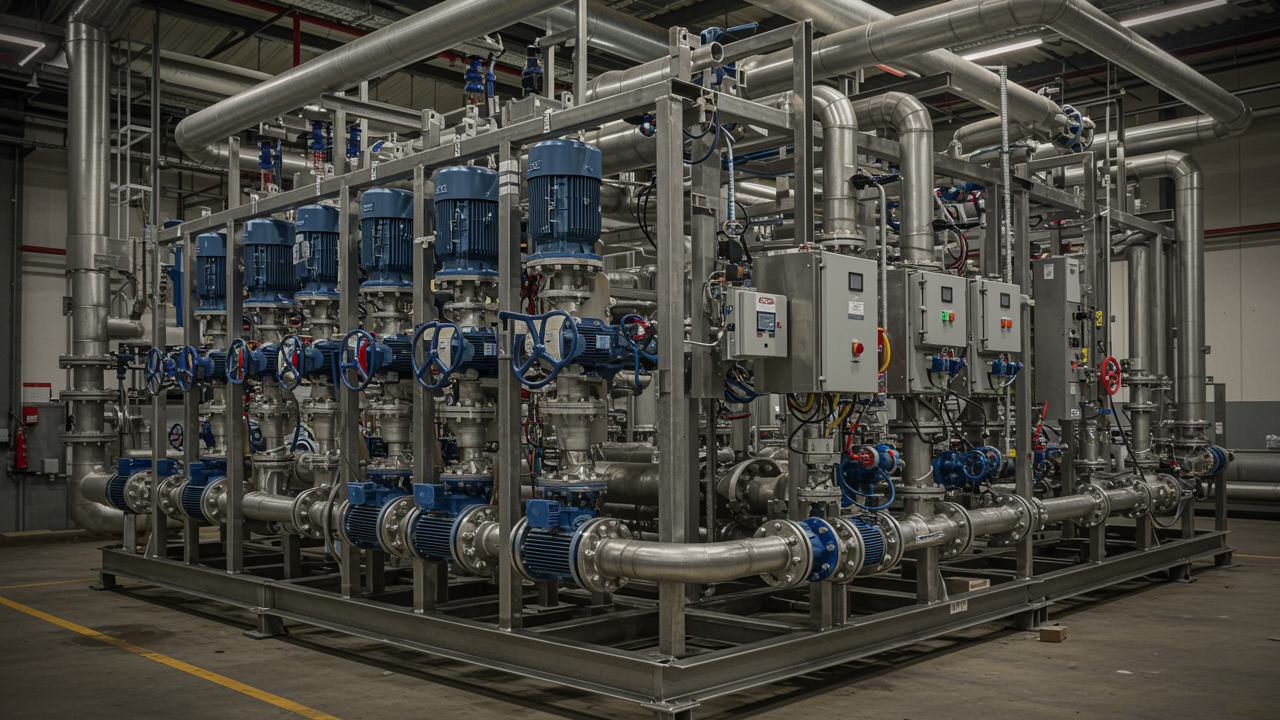
Modern commercial heating systems face a fundamental challenge: different areas of a building require different water temperatures to operate efficiently. Radiators typically need 70-80°C water, underfloor heating works best at 35-45°C, and domestic hot water systems demand temperatures above 60°C for Legionella control. Running an entire building at the highest required temperature wastes enormous amounts of energy and money. Blending stations solve this problem by creating multiple temperature zones from a single primary heating source, delivering precisely controlled water temperatures to each circuit based on actual requirements.
These systems represent one of the most effective energy-saving technologies available for multi-zone buildings, yet many facility managers remain unaware of their potential. Commercial properties across the UK - from office complexes and hospitals to hotels and educational institutions - benefit significantly from blending station installations that can reduce heating costs by 15-30%. This article explains how blending stations work, where they deliver the greatest benefits, and what building operators need to know about specification, installation, and maintenance. With proper design and implementation, multi-temperature systems transform inefficient single-temperature networks into responsive, economical heating infrastructure that meets the demands of contemporary commercial environments.
What Are Blending Stations and Why Commercial Systems Need Them
The Role of Blending Stations in Modern Heating Infrastructure
A blending station (also called a mixing station) combines hot water from primary boilers with cooler return water to achieve a specific target temperature for a secondary circuit. The station typically includes a thermostatic or motorised mixing valve, a circulation pump, temperature sensors, and control equipment housed in a compact assembly. This arrangement allows a single high-temperature primary system to serve multiple secondary circuits operating at different temperatures, eliminating the need for separate boiler installations for each temperature requirement.
Consider a typical office building with radiators in perimeter zones, underfloor heating in the entrance lobby, and hot water for washrooms. Without blending stations, the entire building would need to operate at 70-80°C to satisfy the radiators - forcing the underfloor heating system to run at dangerously high temperatures whilst wasting energy. With three separate blending stations, each circuit receives exactly the temperature it needs: 75°C for radiators, 40°C for underfloor heating, and 65°C for domestic hot water. Specialist suppliers like Wilo manufacture circulation pumps specifically designed for integration within these temperature-controlled assemblies.
The control precision offered by modern blending stations extends beyond simple temperature mixing. Advanced models integrate with building management systems, respond to outdoor temperature changes through weather compensation, and adjust flow temperatures based on time schedules and occupancy patterns. This level of control was previously only achievable through multiple boiler installations, each dedicated to a specific temperature requirement - an approach that costs significantly more in both capital expenditure and plant room space.
Multi-Temperature Demands in Commercial Buildings
Commercial buildings present complex heating challenges that residential properties rarely encounter. A hotel might need 35°C for underfloor heating in guest bathrooms, 55°C for towel rails, 70°C for radiators in function rooms, and 65°C for bulk domestic hot water storage. Manufacturing facilities often require process heating at specific temperatures alongside space heating. Educational buildings need rapid warm-up capability in classrooms whilst maintaining consistent lower temperatures in sports halls with underfloor heating.
Operating all circuits at the highest required temperature creates multiple problems. Pump valves and control equipment designed for lower-temperature systems can fail prematurely when exposed to excessive heat. Underfloor heating systems risk damaging floor finishes and creating uncomfortable hot spots. Energy losses from distribution pipework increase dramatically with temperature - a 70°C pipe loses approximately twice as much heat as a 40°C pipe in the same environment. Most significantly, boilers operate less efficiently when maintaining unnecessarily high flow temperatures throughout the building.
The financial impact of single-temperature operation becomes clear when examining actual energy consumption data. A 5,000 square metre office building in Birmingham reduced annual gas consumption by 23% after installing blending stations to create separate temperature zones for perimeter radiators and core underfloor heating. The system paid for itself within 28 months through energy savings alone, with additional benefits including improved comfort control and reduced maintenance costs on the underfloor heating manifolds.
How Blending Stations Work in Commercial Applications
Core Components and Operating Principles
The heart of any blending station is the mixing valve, which proportions hot primary water with cooler return water to achieve the target temperature. Thermostatic mixing valves use a wax-filled element that expands and contracts with temperature changes, mechanically adjusting the valve position. These self-regulating devices require no external power but offer limited control precision. Motorised mixing valves employ an electric actuator controlled by temperature sensors, providing more accurate regulation and the ability to integrate with building management systems.
Circulation pumps within the blending station maintain consistent flow through the secondary circuit regardless of individual zone valve positions. This ensures even heat distribution and prevents short-cycling of the mixing valve. The pump must be sized to overcome the resistance of the entire secondary circuit whilst providing sufficient flow rate to meet the heat demand. Variable speed commercial circulators from Grundfos offer significant energy savings by adjusting pump speed based on actual system requirements rather than running continuously at full capacity.
Temperature sensors provide essential feedback to the control system. A sensor on the blended outlet monitors the temperature being delivered to the secondary circuit, whilst sensors on the primary flow and return connections verify adequate temperature differential. Advanced systems include outdoor temperature sensors for weather compensation, adjusting the blended temperature based on external conditions. A building might require 75°C radiator temperatures during cold weather but only 60°C during milder periods - weather compensation delivers these adjustments automatically.
The control system processes sensor inputs and adjusts the mixing valve position to maintain the target temperature. Simple systems use a basic proportional controller, whilst sophisticated installations employ PID (Proportional-Integral-Derivative) control algorithms that anticipate temperature changes and adjust proactively rather than reactively. This prevents the temperature oscillations that can occur with basic on-off control, maintaining stable conditions in the heated spaces.
Integration with Primary Heating Systems
Blending stations connect to the primary heating system through dedicated flow and return connections, typically incorporating isolation valves for maintenance purposes. The primary system operates at maximum temperature (usually 75-82°C for condensing boilers), providing a consistent heat source regardless of individual blending station demands. Each blending station draws hot water as needed and returns cooler water to the primary return, creating a temperature differential that signals the boiler to fire.
Hydraulic separation between primary and secondary circuits is crucial for system stability. Without proper separation, the different flow rates and pressures in multiple circuits can interfere with each other, causing control problems and inefficient operation. Low-loss headers or hydraulic separators create this separation, allowing the primary circuit to operate independently of secondary circuit demands. This arrangement also simplifies system balancing and prevents one circuit from "robbing" flow from others.
Expansion vessels and pressurisation units maintain adequate system pressure throughout the primary circuit, compensating for thermal expansion and minor leaks. When multiple blending stations operate from a single primary system, the pressurisation equipment must account for the total system volume and the highest static height. Undersized pressurisation causes low-pressure alarms and potential pump cavitation, whilst oversized equipment leads to excessive pressure relief valve discharge and water waste.
Control system communication between boilers and blending stations optimises overall system efficiency. When no blending stations are calling for heat, the primary boilers can shut down completely rather than maintaining standby temperatures. Conversely, when multiple stations demand heat simultaneously, the boiler sequence controller can bring additional boilers online to meet the load. This coordination prevents the temperature drop that would occur if blending stations drew more heat than the boilers could supply.
Design Considerations for Commercial Blending Station Systems
Sizing and Capacity Planning
Accurate heat load calculations form the foundation of effective blending station sizing. Each zone served by a blending station requires detailed assessment of heat losses, occupancy patterns, and temperature requirements. Undersized stations cannot meet peak demands, leading to comfort complaints and extended warm-up times. Oversized equipment costs more initially and may operate inefficiently during partial load conditions, which represent the majority of operating hours in most commercial buildings.
Flow rate calculations must account for the temperature differential between flow and return in the secondary circuit. A circuit requiring 50kW of heat with a 10°C differential needs approximately 1,200 litres per hour flow rate. The same heat load with a 20°C differential requires only 600 litres per hour. Wider temperature differentials reduce pump energy consumption but may require larger heat emitters to transfer the same amount of heat. The optimal balance depends on the specific application and existing system constraints.
Mixing valve capacity must match both the flow rate and the control requirements of the application. A valve that is too small creates excessive pressure drop and limits flow, whilst an oversized valve may hunt (oscillate between positions) when trying to maintain stable temperatures at low loads. Manufacturers provide detailed selection tables based on flow rate, pressure drop, and valve authority - the ratio between pressure drop across the valve and total circuit pressure drop. Valve authority above 0.5 generally ensures stable control.
Pump selection within the blending station requires careful consideration of system resistance and required flow rate. Equipment from manufacturers such as Lowara must overcome the pressure drop through the mixing valve, all distribution pipework, zone valves, heat emitters, and any other components in the secondary circuit. Adding 20-30% safety margin accounts for future system modifications and gradual increase in resistance as systems age. However, excessive oversizing leads to energy waste and potential noise issues from high flow velocities.
Zone Configuration and Distribution Strategy
Grouping zones with similar temperature requirements under a single blending station simplifies system design and reduces equipment costs. A typical office building might use one station for all perimeter radiators (70-75°C), another for underfloor heating in entrance areas and corridors (35-40°C), and a third for domestic hot water circulation (60-65°C). This arrangement requires three stations rather than separate equipment for each individual zone, whilst still providing the temperature precision needed for efficient operation.
Distribution pipework from blending stations to individual zones must be sized to deliver adequate flow without excessive pressure drop or flow velocity. Velocity above 1.5 metres per second in copper pipe creates noise and accelerates erosion, whilst undersized pipes increase pump energy consumption. Insulation becomes particularly important on high-temperature circuits, where bare copper pipe can lose 50-80 watts per metre of length. Even circuits operating at moderate temperatures benefit from insulation, both for energy efficiency and to prevent unwanted heat gain in spaces like plant rooms.
Balancing valves at each zone allow the system to be commissioned properly, ensuring each circuit receives its design flow rate. Without balancing, the path of least resistance receives excessive flow whilst more distant or restrictive circuits are starved. This creates comfort problems and wastes energy by circulating more water than necessary through some areas. National Pumps and Boilers supplies the commissioning sets and balancing valves needed to distribute flow according to design intent.
Manifolds simplify distribution when a single blending station serves multiple small circuits, particularly common in underfloor heating applications. The manifold provides individual flow and return connections for each circuit, typically with integrated balancing valves and often with zone valves for independent control. This arrangement concentrates all the control equipment in an accessible location rather than distributing it throughout the building, simplifying both installation and future maintenance.
Energy Efficiency Benefits of Blending Stations
Reducing Operating Costs Through Precise Temperature Control
The most significant energy saving from blending stations comes from operating each circuit at its optimal temperature rather than the maximum temperature required by any single zone. Real UK examples from commercial buildings demonstrate 15-30% reductions in heating energy consumption after implementing multi-temperature systems. A distribution centre in Manchester reduced annual heating costs by £18,000 through installing blending stations that allowed office areas to operate at 70°C whilst warehouse heating ran at 45°C - adequate for the lower comfort temperatures required in industrial spaces.
Lower distribution temperatures reduce heat losses from pipework, even when pipes are insulated. A 70°C flow pipe in a 20°C plant room loses approximately 35 watts per metre with standard insulation. Reducing the flow temperature to 45°C cuts losses to about 18 watts per metre - nearly 50% reduction. In a building with 500 metres of distribution pipework, this represents approximately 8.5kW of continuous heat loss eliminated, equivalent to over 74,000kWh annually in a system operating 8,760 hours per year.
Boiler efficiency improves when return temperatures are lower, particularly with condensing boilers that achieve maximum efficiency when return water temperature drops below 55°C. A system operating entirely at 75°C flow typically returns water at 65°C, preventing condensing operation. With blending stations, low-temperature circuits return water at 30-45°C, mixing with higher-temperature returns to bring the overall primary return temperature into the condensing range. This can improve seasonal boiler efficiency by 5-10 percentage points.
Pump energy consumption decreases when systems operate with wider temperature differentials, requiring lower flow rates to deliver the same heat output. A circuit delivering 100kW with a 10°C differential requires 2,400 litres per hour, whilst the same heat load with a 20°C differential needs only 1,200 litres per hour. Since pump power consumption relates to the cube of flow rate, halving the flow rate reduces pump energy consumption to approximately one-eighth. For a system with pumps consuming 5kW continuously, this represents over 30,000kWh annual savings.
Environmental Impact and Carbon Reduction
Lower energy consumption directly translates to reduced carbon emissions, particularly important as UK building regulations increasingly focus on operational carbon rather than just design-stage calculations. A commercial building reducing heating energy by 20% through blending station installation typically cuts carbon emissions by 15-25 tonnes annually, depending on building size and fuel type. Over a 20-year equipment lifespan, this represents 300-500 tonnes of carbon dioxide equivalent - roughly equal to the emissions from 1.2-2 million miles of car travel.
Blending stations facilitate integration with renewable heat sources and heat pumps, which operate most efficiently when producing lower flow temperatures. A heat pump producing 45°C flow operates with a coefficient of performance (COP) of 3.5-4.0, meaning it delivers 3.5-4 units of heat for each unit of electricity consumed. The same heat pump forced to produce 70°C operates with a COP of only 2.0-2.5, nearly halving its efficiency. Blending stations allow heat pumps to serve low-temperature circuits directly whilst mixing with supplementary heating for higher-temperature requirements.
Meeting Building Regulations Part L requirements becomes easier with multi-temperature systems that demonstrate improved energy performance. Projects seeking BREEAM certification or other sustainability credentials benefit from the measurable efficiency improvements that blending stations provide. As the UK moves toward net-zero carbon targets, buildings with flexible, efficient heating systems will be better positioned for future regulatory requirements and potential carbon taxation.
Common Applications in Commercial Settings
Office Buildings and Business Parks
Office buildings represent ideal candidates for blending station installation due to their varied heating requirements. Perimeter zones with large glazed areas need higher-temperature radiator heating to combat cold downdrafts, whilst core areas with lower heat losses can operate with underfloor heating at reduced temperatures. Meeting rooms and reception areas often require rapid response heating for intermittent use, whilst back-of-house areas like storage and plant rooms need only frost protection.
Integration with air handling units and ventilation systems adds another temperature requirement. Heating coils in air handling equipment typically operate at 60-70°C to provide adequate heat output without excessive coil size. Blending stations serving AHU circuits can adjust temperatures based on outdoor conditions and ventilation demand, reducing energy consumption during mild weather whilst ensuring adequate heating capacity during cold spells. DHW pumps serve the domestic hot water requirements for kitchens and washrooms, operating at the higher temperatures needed for Legionella control.
Multi-tenant office buildings benefit particularly from blending stations that enable independent zone control. Each tenant space can maintain preferred temperatures without affecting neighbours, whilst the landlord retains central control over primary system operation. Night setback reduces temperatures throughout unoccupied periods, with optimum start controllers calculating the required warm-up time to achieve comfort conditions by the start of occupancy. A business park in Reading achieved 27% energy reduction across twelve office units through centralized blending station installation with individual tenant metering.
Healthcare and Educational Facilities
Healthcare facilities demand stringent temperature control for patient comfort and clinical requirements. Operating theatres require precise temperature maintenance within narrow tolerances, whilst patient wards need reliable heating at comfortable levels. Isolation rooms may need different pressurisation and temperature conditions. Blending stations enable each area to receive exactly the temperature required without compromise, supporting clinical outcomes and patient comfort.
Domestic hot water temperature management in healthcare settings must comply with Health Technical Memorandum (HTM) guidance on Legionella prevention. Storage and distribution temperatures above 60°C are mandatory, but point-of-use temperatures must be controlled to prevent scalding. Blending stations can maintain high-temperature circulation in risers whilst providing thermostatically controlled lower temperatures at outlets. Equipment from Andrews provides reliable commercial water heating solutions that integrate seamlessly with blending station systems.
Educational facilities face similar challenges with varied occupancy patterns and temperature requirements. Classrooms need rapid warm-up capability for the start of the school day, whilst sports halls with underfloor heating operate at lower temperatures. Laboratories may require specific temperature conditions for equipment and experiments. Schools operating 24/7 for community use need flexible heating systems that can respond to booking schedules. BB101 guidance on ventilation and thermal comfort in schools increasingly emphasises energy efficiency alongside occupant comfort, making blending stations an attractive solution.
Hospitality and Leisure Facilities
Hotels present diverse heating challenges across guest rooms, public areas, and back-of-house facilities. Guest room comfort control increasingly offers individual temperature preferences, requiring systems that can respond quickly to changes. Underfloor heating in bathrooms operates at low temperatures whilst towel rails need higher temperatures for effective drying. Public areas with variable occupancy benefit from responsive heating that adjusts to actual conditions rather than fixed schedules.
Pool and spa areas demand precise temperature maintenance at elevated levels - pool halls typically require 28-30°C air temperatures whilst the pool water operates at similar temperatures. Blending stations serving these areas must maintain consistent conditions regardless of external weather or building load variations. Kitchen and laundry facilities need high-temperature hot water for hygiene compliance, often at temperatures above 65°C. These varied requirements make blending stations essential for efficient hospitality heating.
Energy management in hospitality directly impacts competitiveness, with heating costs representing a significant portion of operational expenditure. A 150-room hotel in Edinburgh reduced annual heating costs by £31,000 through comprehensive blending station installation, improving guest comfort scores whilst cutting carbon emissions. The investment paid back within 30 months, demonstrating the financial viability of multi-temperature systems in competitive hospitality markets.
Installation Best Practices and Technical Requirements
Site Preparation and System Integration
Blending station installation requires adequate plant room space for the equipment assembly plus access for maintenance and future replacement. Typical pre-assembled stations occupy 600-1000mm of wall space depending on capacity, with clearance needed for valve operation and pump removal. Floor-standing units require stable foundations capable of supporting the filled weight plus vibration isolation to prevent noise transmission through the building structure.
Pipe connections must accommodate the flow rates and temperatures specified in the design, with isolation valves positioned for maintenance access without draining the entire system. Strainers protect mixing valves and pumps from debris, particularly important in older systems where corrosion products may circulate. Flushing the primary system before connecting blending stations removes installation debris that could damage precision components.
Electrical supply requirements include three-phase power for larger pump motors plus control voltage for actuators and instrumentation. Modern central heating systems increasingly integrate blending stations with building management systems, requiring network connections for communication. Commissioning procedures must verify correct control response, pump operation, and mixing valve function before handover. System balancing ensures each zone receives design flow rates, with commissioning records documenting settings for future reference.
Control System Configuration
Temperature setpoint programming requires understanding of each zone's requirements throughout the operating cycle. Daytime setpoints for occupied periods differ from night setback temperatures during unoccupied hours. Weekend schedules may differ from weekday patterns, and seasonal adjustments accommodate changing heat loads. Modern controllers store multiple schedules and can switch automatically based on calendar programming or building management system commands.
Weather compensation adjusts blended water temperature based on outdoor conditions, reducing flow temperatures during mild weather when heat demand is lower. A well-configured compensation curve delivers energy savings of 5-10% compared to fixed-temperature operation whilst maintaining comfort. The compensation curve must be tuned to the building's characteristics - highly insulated buildings respond differently to poorly insulated structures. Trial-and-error adjustment during the first heating season optimises performance.
Building management system integration enables centralised monitoring and control of all blending stations from a single interface. Operators can view current temperatures, adjust setpoints, and receive alarm notifications for fault conditions. Trend logging records operating data for energy analysis and fault diagnosis. Communication protocols such as BACnet and Modbus enable integration with diverse BMS platforms, though compatibility verification during specification prevents integration problems during commissioning.
Maintenance and Operational Considerations
Routine Inspection and Servicing Requirements
Annual maintenance schedules ensure blending stations continue operating efficiently throughout their service life. Mixing valve inspection verifies smooth actuator operation and correct temperature response. Debris accumulation in the valve can cause sticking or inaccurate control - cleaning or replacement addresses these issues before they affect building comfort. Actuator testing confirms correct stroke length and response time, identifying worn components before failure occurs.
Pump performance checks verify that circulation pumps deliver design flow rates at acceptable energy consumption. Bearing noise or increased vibration indicates developing problems requiring attention. Variable speed pumps require controller verification to confirm correct operation across the speed range. Equipment from trusted manufacturers like DAB typically provides years of reliable service when maintained according to manufacturer schedules.
Temperature sensor calibration verification ensures control accuracy. Sensors drift over time, causing the control system to deliver incorrect temperatures. Comparison with calibrated test instruments identifies drift requiring recalibration or sensor replacement. Control system software updates may address bugs or add functionality - firmware updates should be applied according to manufacturer recommendations with configuration backup before any changes.
Troubleshooting Common Issues
Inconsistent zone temperatures often indicate mixing valve problems or sensor faults. If the blended temperature hunts (oscillates around the setpoint), the control parameters may need adjustment or the valve may be oversized for the application. Temperature readings that differ significantly from actual conditions suggest sensor drift or incorrect sensor installation. Comparing controller readings with independent measurement identifies which sensor requires attention.
Pump failure symptoms include no flow despite motor operation (impeller failure or air lock), excessive noise (bearing failure or cavitation), and tripped overload protection (electrical fault or mechanical seizure). Some issues can be resolved through simple interventions such as venting air from pump housings, whilst others require pump replacement. Keeping spare pumps in stock minimises downtime for critical systems.
Air in the system causes circulation problems, noise, and potential pump damage through cavitation. Automatic air vents at high points release accumulated air, but manual venting may be required after maintenance activities that introduce air. Persistent air problems suggest inadequate pressurisation, leaks allowing air ingress, or microbubble generation from high-velocity flow. Professional service engineers can diagnose underlying causes and implement appropriate solutions.
Selecting the Right Blending Station Equipment
Manufacturer Options and Product Ranges
Leading blending station manufacturers offer ranges spanning compact residential units to large commercial installations. Pre-assembled stations provide tested, matched components in compact housings ready for connection to primary and secondary pipework. These factory-built units reduce installation time and ensure component compatibility. Custom-built solutions address unusual requirements or constraints that standard products cannot accommodate.
Quality considerations extend beyond initial purchase price to long-term reliability and support availability. Established manufacturers like Ebara provide comprehensive warranty coverage, technical documentation, and spare parts availability throughout equipment life. Cheaper alternatives may lack adequate support infrastructure, leaving building operators struggling to source replacement components when problems occur.
Compatibility with existing system components requires verification during specification. Mixing valves designed for one control system may not communicate correctly with another manufacturer's controller. Pump electrical requirements must match available supply. Physical dimensions must fit available space with adequate clearance for maintenance. Thorough specification prevents costly modifications during installation or replacement with compatible alternatives.
Working with Specialist Suppliers
Expert specification and design support proves invaluable for complex applications where standard product selection may not deliver optimal results. Specialist suppliers understand the interactions between components and can identify potential problems before they manifest during commissioning. Technical consultation during the design phase prevents expensive corrections later in the project timeline.
Installation support from experienced suppliers helps contractors unfamiliar with blending station systems complete installations correctly. Commissioning services ensure systems operate as designed, with adjustments made to optimise performance for actual building conditions. Ongoing maintenance contracts provide scheduled servicing plus emergency response when unexpected problems occur. Training for building management staff enables effective day-to-day operation and early identification of developing issues.
Parts availability throughout equipment life ensures systems can be maintained economically for decades. Suppliers with comprehensive stockholding can despatch replacement components for next-day delivery, minimising downtime during critical heating periods. Long-term relationships with specialist suppliers provide access to technical expertise and product knowledge that general distributors cannot match.
Making the Right Choice for Multi-Temperature Heating
Blending stations represent a proven, cost-effective solution for commercial buildings requiring multiple temperature zones from a single primary heating system. The technology delivers measurable energy savings of 15-30%, reduces carbon emissions, and improves occupant comfort through precise temperature control. From office buildings and hospitals to hotels and schools, multi-temperature systems address the varied heating requirements of modern commercial properties whilst positioning buildings favourably for increasingly stringent energy regulations.
Successful implementation requires careful attention to system design, component selection, and commissioning quality. Working with experienced suppliers who understand both the equipment and its application ensures systems perform as intended from day one. Proper maintenance sustains efficiency and reliability throughout equipment life, protecting the investment and continuing to deliver benefits year after year.
Building operators and facility managers considering blending station installation should seek expert guidance on system design and equipment selection. Contact Us to discuss specific project requirements and discover how multi-temperature systems can transform heating efficiency in commercial properties.