

Boiler Flow and Return Temperatures: What They Are and Why They Matter
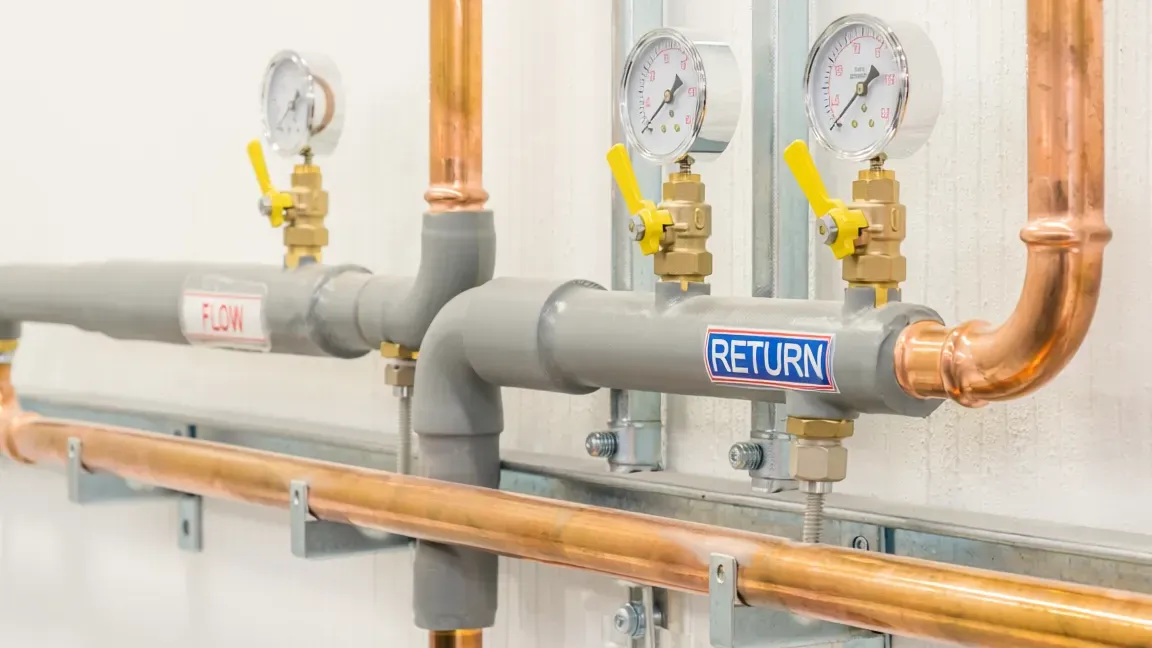
Every heating engineer knows that boiler performance depends on more than the appliance specification alone. Boiler flow and return temperature determines whether a system operates efficiently or wastes fuel through inadequate heat extraction. These two measurements reveal how effectively a heating system transfers heat from the boiler to the building, yet many installations run with suboptimal temperature differentials that increase running costs by 15-30% annually without any visible sign that something is wrong.
Flow temperature refers to the water temperature leaving the boiler and entering the heating circuit. Return temperature measures the water temperature arriving back at the boiler after circulating through radiators or other heat emitters. The difference between these two values - the temperature differential or ΔT - indicates how much heat the system has extracted from the water during each circuit. A wide differential indicates effective heat transfer; a narrow one reveals that water is returning with most of its thermal energy undelivered.
Understanding Flow and Return Temperatures
The flow temperature represents the thermal energy the boiler adds to the system water before it enters the distribution circuit. Modern condensing boilers typically operate with flow temperatures between 50-70°C, though this varies based on system design, emitter sizing, and the external conditions at any given moment. The boiler's heat exchanger transfers combustion energy to the circulating water, raising its temperature to the setpoint determined by the system controls and any weather compensation strategy in operation.
Return temperature depends entirely on how much heat the radiators, underfloor circuits, or other emitters extract from the water as it passes through. When radiators transfer heat effectively to the room, water returns significantly cooler than it left. A well-designed and balanced system typically achieves a 10-20°C temperature drop across the heating circuit, delivering the heat load calculated at the design stage to the spaces it serves.
The temperature differential reveals system performance in a single measurement. A 70°C flow with a 50°C return indicates that radiators have extracted 20°C worth of thermal energy from the water - the kind of performance that enables condensing operation and delivers genuine seasonal efficiency. A 70°C flow with a 65°C return, by contrast, shows only 5°C extraction, revealing that water circulates too quickly or the emitters cannot release sufficient heat at these conditions.
How Flow and Return Temperatures Work in Heating Systems
Central heating systems operate on a continuous circulation principle. The boiler heats water to the target flow temperature, then the system pump drives this heated water through pipework to emitters throughout the building. As water passes through each radiator, heat transfers through the metal surface into the room air, cooling the water progressively as it moves through the circuit.
Heat transfer efficiency depends on the temperature difference between the radiator surface and room air temperature. A radiator at 60°C in a 20°C room creates a 40°C driving differential, transferring substantial heat output. As radiator temperature approaches room temperature, output diminishes - which explains why oversized radiators or excessive pump speeds prevent the adequate temperature drops that characterise efficient system operation.
The cooled water collects in the return pipework and flows back to the boiler to be reheated. For commercial systems where maintaining consistent flow rates across multiple circuits determines whether heat reaches all zones as designed, Grundfos circulation pumps provide the precision flow control that ensures water spends appropriate time in each emitter before returning to the boiler - a fundamental requirement for achieving and maintaining the target temperature differential across all building zones.
Typical Temperature Ranges for Different Boiler Types
Traditional non-condensing boilers operated with flow temperatures of 75-82°C and return temperatures of 60-70°C. These high-temperature designs prioritised compact radiator sizing and rapid warm-up over efficiency, accepting the energy losses inherent in discharging flue gases at 120-180°C. Many existing commercial and domestic installations still operate at these temperatures despite using modern condensing boilers - sacrificing 15-20% efficiency through poor system design rather than any limitation of the boiler itself.
Modern condensing system design targets 70/50°C or lower for radiator circuits. This 20°C differential enables sustained condensing operation whilst maintaining comfortable heat output from standard radiators. Systems with oversized radiators achieve equivalent heating at 60/40°C or even 55/45°C, maximising condensing duration and minimising fuel consumption throughout the heating season.
Low-temperature heating systems, particularly underfloor installations, operate with flow temperatures of 35-50°C and returns of 25-35°C. The large surface area of floor heating compensates for lower water temperatures, delivering 60-80 W/m² heat output whilst maintaining return temperatures well below the condensing threshold. For these low-temperature systems where DHW circulation must be maintained separately at higher temperatures for Legionella compliance, correctly specified DHW pumps provide the independent circulation that prevents the low-temperature distribution system from compromising hot water safety temperatures.
Why Temperature Differential Matters
The Effect on Condensing Efficiency
System efficiency correlates directly and decisively with return temperature. Condensing boilers extract maximum energy when return water enters below 54°C - the dew point where water vapour in flue gases condenses, releasing latent heat that non-condensing operation discards. Return temperatures above this threshold prevent condensing operation regardless of the boiler specification, reducing efficiency from 92-94% to 78-82%.
A heating system with 70°C flow and 65°C return operates entirely in non-condensing mode despite using a condensing boiler. The minimal 5°C temperature drop indicates inadequate heat extraction, forcing the boiler to consume more fuel for identical heat output. Redesigning or rebalancing the system to achieve a 50°C return activates full condensing mode, cutting fuel consumption by 12-18% for the same delivered heat - a saving that compounds throughout every heating season for the remaining equipment lifespan.
The efficiency gain is not a gradual improvement but a meaningful step change at the condensing threshold. A system with 56°C return operates entirely in non-condensing mode; reducing that figure to 52°C activates consistent condensing operation and delivers an immediate efficiency jump that manifests directly in reduced fuel bills. National Pumps and Boilers technical specifications detail the condensing thresholds for different boiler models, enabling precise system optimisation when commissioning or upgrading existing installations.
The Effect on Pump Energy Consumption
Temperature differential also affects pump energy consumption in a relationship that many system designers overlook. Systems with poor heat extraction require much higher flow rates to deliver adequate heat output - a 5°C differential demands approximately four times the water volume of a 20°C differential for equivalent heat delivery. This elevated flow rate increases pump energy consumption significantly and can generate audible system noise in buildings where occupants notice it.
For commercial installations where variable speed pump technology can reduce electrical consumption whilst simultaneously improving return temperatures, Wilo variable speed pumps offer the precise flow rate adjustment needed to optimise temperature differential - reducing pump energy by 40-60% compared with fixed-speed alternatives whilst improving the heat extraction that lowers return temperatures and sustains condensing operation.
The Impact on Boiler Efficiency
Condensing operation transforms boiler economics throughout the system's service life. When return temperatures drop below 54°C, the secondary heat exchanger recovers heat from flue gases that would otherwise exhaust to atmosphere. This process increases net efficiency from approximately 80% to 92-94%, reducing fuel consumption by 15-20% for identical heat output - a difference that accumulates substantially across thousands of operating hours annually.
The efficiency gain compounds over heating seasons. A property consuming £1,200 annually in heating costs with non-condensing operation reduces that expenditure to £960-1,020 when the same boiler operates consistently in condensing mode. Over a 15-year boiler lifespan, this represents £2,700-3,600 in fuel savings per installation - far exceeding the cost of controls upgrades or system modifications needed to achieve consistently lower return temperatures.
For commercial central heating systems where low return temperatures must be maintained across multiple zones with varying demand, central heating system design that incorporates appropriately sized emitters and correct hydraulic balancing ensures condensing operation is not confined to ideal conditions but sustained throughout the daily and seasonal range of building demand.
Common Flow and Return Temperature Settings
Traditional radiator systems designed before 2005 typically specified 75/60°C or 82/71°C flow and return temperatures. Many existing installations still operate at these temperatures despite using condensing boilers installed during subsequent replacement projects - a common and costly oversight that sacrifices 15-20% efficiency year on year without any operational symptom making it obvious.
Modern condensing system design targets 70/50°C or lower for radiator circuits. This 20°C differential enables condensing operation whilst maintaining comfortable heat output from standard-sized radiators. Systems with oversized emitters achieve effective heating at 60/40°C, maximising condensing duration and minimising fuel consumption across varying weather conditions throughout the UK heating season.
Mixed systems serving both radiators and underfloor heating use blending valves to supply appropriate temperatures to each circuit simultaneously. The blending arrangement protects underfloor circuits from flow temperatures that would cause discomfort through excessively warm floor surfaces whilst maintaining the higher temperatures that radiator circuits require for adequate output.
Factors That Affect Temperature Differential
Radiator Sizing and Circuit Design
Radiator sizing determines achievable temperature differentials more than any other single system variable. Oversized radiators - sized at 150% or more of room heat loss - release heat readily, cooling the circulating water substantially as it passes through each emitter. Undersized radiators struggle to extract sufficient heat, returning water at temperatures only 5-10°C below flow temperature regardless of how slowly the water circulates.
Single-pipe systems where radiators connect sequentially experience progressive temperature drops as water moves through the circuit - the first radiator receives full flow temperature whilst the last receives water that has already released heat to upstream emitters. Two-pipe systems supply all radiators with consistent flow temperature, enabling uniform heat output and predictable temperature differentials across all zones.
Pump Speed and System Balancing
Pump speed dramatically influences temperature differential in ways that are easily tested and corrected. Excessive pump speeds circulate water too rapidly for effective heat extraction - water passes through radiators before sufficient heat transfers to the room air. Reducing pump speed from maximum to medium settings frequently increases temperature differential from 8°C to 15°C whilst simultaneously reducing pump energy consumption by 40-60%.
Radiator balancing establishes correct flow rates through each emitter systematically. Starting with radiators nearest the boiler, lockshield valves restrict flow until the temperature drop across each radiator matches the target differential - typically 10-12°C per radiator. This process prevents short-circuiting where water bypasses distant radiators through the path of least resistance, concentrating flow in nearby emitters and starving those furthest from the pump of adequate circulation.
For systems where pump valve adjustment is critical to achieving the balanced flow distribution that correct temperature differentials require, pump valves from established manufacturers provide the precise flow control needed at each circuit connection - enabling the systematic balancing that transforms an unbalanced installation into a correctly operating heating system.
Weather Compensation and Control Strategies
Weather compensation controls adjust flow temperature based on outdoor conditions, dynamically matching boiler output to actual building demand. During mild weather, the system reduces flow temperature to 50-55°C, maintaining comfortable indoor temperatures whilst maximising condensing operation. Cold weather increases flow temperature to 65-70°C for higher heat output. This continuous adjustment maintains optimal temperature differentials across varying conditions rather than relying on fixed setpoints designed for worst-case weather.
For installations where weather compensation controls must coordinate with variable speed pumps to maintain consistent differentials as outdoor conditions change, Armstrong control and pump solutions provide the integrated management that adjusts both flow temperature and circulation rate simultaneously - delivering the stable temperature differentials that maximise condensing operation throughout the full range of UK heating season conditions.
Measuring and Monitoring Temperatures
Digital contact thermometers provide accurate flow and return temperature measurements during commissioning and diagnostic assessments. Placing probes on flow and return pipes near the boiler reveals actual operating temperatures, with temporary removal of pipe insulation required for accurate surface contact readings. Surface-mounted thermometers offer permanent monitoring capability but require calibration against contact measurements to ensure reading accuracy.
Smart heating controls with integrated temperature sensors monitor flow and return temperatures continuously throughout operation. These systems display real-time data and historical trends via connected interfaces, enabling identification of efficiency degradation patterns before they cause significant fuel waste. Some advanced controls automatically adjust pump speeds and flow temperatures to maintain target differentials as system characteristics change with seasonal conditions and building occupancy patterns.
Thermal imaging cameras identify temperature distribution across heating circuits during detailed assessments. Scanning radiators reveals uneven heat distribution indicating balancing deficiencies, whilst pipework surveys show temperature drops that highlight circulation restrictions or poorly insulated pipe sections losing heat before reaching distant emitters.
Optimising Flow and Return Temperatures
Radiator balancing establishes correct flow rates through each emitter, ensuring consistent temperature drops across all radiators in the system. The process proceeds from the nearest radiator to the boiler outward, restricting lockshield valves progressively until each emitter achieves the target 10-12°C differential. This systematic approach prevents the short-circuiting that concentrates flow in nearby radiators whilst starving distant ones of adequate circulation.
Pump speed reduction matches circulation rate to actual system requirements. Many engineers leave commercial pumps on maximum speed unnecessarily, circulating water too rapidly for effective heat extraction. Reducing speed until the boiler maintains stable operation without cycling improves temperature differential whilst cutting pump energy consumption - a simple adjustment that frequently delivers immediate measurable efficiency improvements without any equipment expenditure.
For DAB variable speed pumps installed in commercial heating systems, automatic differential pressure control adjusts flow rates as zone demand changes throughout the day - maintaining the target temperature differential across varying loads without manual intervention and ensuring condensing operation persists even as building occupancy patterns shift between peak and off-peak periods.
System upgrades deliver substantial and lasting efficiency improvements. Replacing undersized radiators enables lower flow temperatures whilst maintaining heat output. Installing thermostatic radiator valves prevents individual rooms from overheating and demanding excessive flow, improving overall system differential. Combining these measures with weather compensation controls and variable speed pumps creates an optimised system where theoretical condensing efficiency translates consistently to real-world fuel cost reduction.
Troubleshooting Temperature Issues
High return temperatures indicate insufficient heat extraction from the system and represent the most common cause of condensing boilers operating in non-condensing mode. Common causes include excessive pump speed, undersized radiators, or unbalanced circuits where water short-circuits through some emitters whilst bypassing others. Measuring temperature drops across individual radiators quickly identifies which emitters fail to extract adequate heat, directing diagnostic effort to specific problem areas.
Boiler cycling indicates flow and return temperature problems operating as a feedback loop. When return temperature approaches flow temperature too rapidly, the boiler satisfies its target quickly and shuts down, only to restart minutes later as the system cools. This cycling pattern wastes fuel through repeated ignition sequences, creates temperature fluctuations noticed by building occupants, and indicates fundamental system design or commissioning issues requiring professional assessment.
For Lowara pump installations where circulation issues are suspected of contributing to poor temperature differentials, the manufacturer's diagnostic support and variable speed pump data provide the flow rate information needed to distinguish between hydraulic balance problems, undersized emitters, and control strategy issues - enabling targeted remediation rather than speculative component replacement.
Conclusion
Understanding boiler flow and return temperature transforms heating system performance from adequate to genuinely efficient. Systems designed and operated to achieve appropriate temperature differentials deliver occupant comfort whilst minimising fuel consumption, typically reducing heating costs by 15-25% compared with poorly configured installations running at the same rated boiler output.
Heating engineers and system designers who prioritise temperature differential alongside heat output create installations that satisfy Building Regulations Part L requirements whilst delivering real efficiency gains that appear directly in reduced energy bills. Monitoring these temperatures during commissioning and maintenance ensures systems continue performing as designed rather than gradually degrading into inefficient operation as components wear and system balance shifts over time.
For heating system assessments, efficiency upgrades, or technical guidance on optimising boiler flow and return temperature across commercial and domestic installations, Contact Us to discuss specific requirements and identify the system modifications that deliver measurable and lasting efficiency improvements.