

Boiler Modulation and Turndown Ratio: Why They Matter for Running Costs
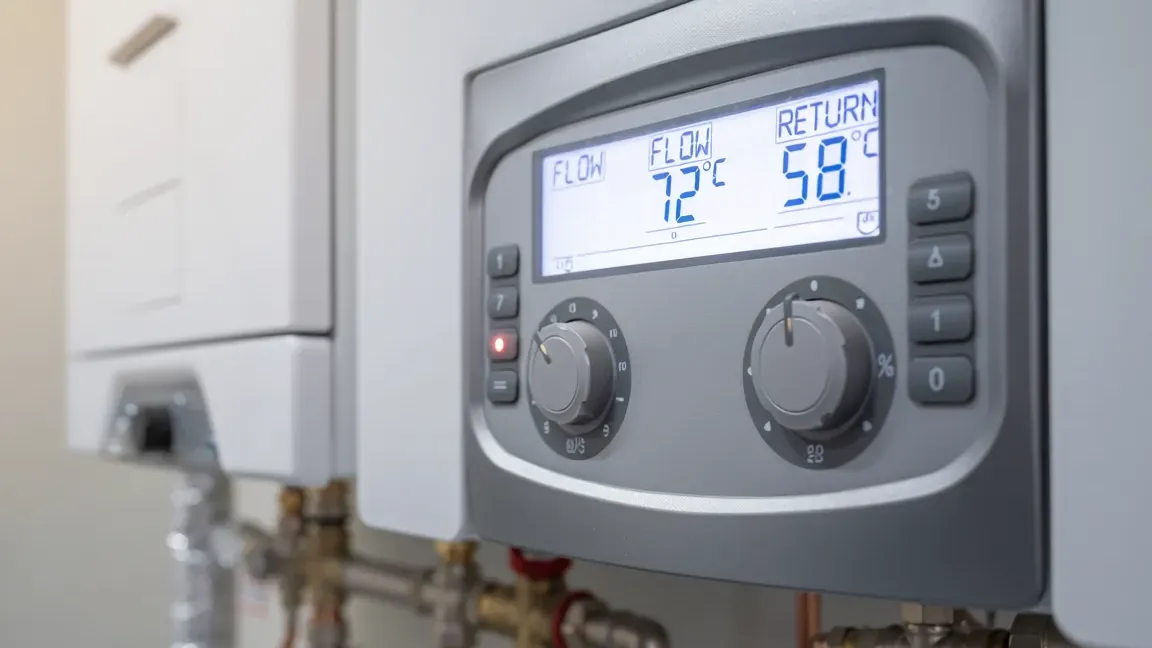
Modern heating systems rarely operate at full capacity. A boiler sized for the coldest winter day spends the majority of its operational life meeting far lower heat demands - spring mornings, autumn evenings, and mild winter days when buildings need background warmth rather than maximum output. How efficiently a boiler handles these part-load conditions determines the bulk of annual running costs, making boiler modulation turndown ratio two of the most financially significant specifications that heating engineers frequently underestimate during equipment selection.
A boiler with poor turndown characteristics cycles on and off repeatedly, wasting fuel through heat loss during standby periods and generating unnecessary wear on components. Each firing cycle consumes energy warming the heat exchanger and flue, energy that leaves through the chimney rather than heating the building. Conversely, a boiler with excellent modulation capability maintains continuous operation at reduced output, eliminating cycling losses whilst matching heat delivery precisely to instantaneous demand. Over a 15-20 year service life, this difference in part-load efficiency represents tens of thousands of pounds in avoidable fuel expenditure.
Understanding Boiler Modulation
Boiler modulation refers to the ability of a heating appliance to adjust its heat output continuously between minimum and maximum levels. Traditional fixed-output boilers operate in binary fashion - firing at full capacity or switched off completely. Modulating boilers vary their firing rate across a range of outputs, reducing fuel input and heat production to match the actual heating load at any given moment rather than forcing the building to accept full output or nothing.
The modulation mechanism differs between boiler types. Gas-fired modulating burners adjust the gas valve position and combustion air supply simultaneously, maintaining optimal fuel-air ratios across the entire firing range. Modern burner controls use oxygen trim sensing or ionisation feedback to ensure complete combustion at all modulation levels, preventing efficiency losses or emissions increases at reduced outputs - a critical performance requirement for compliance with current emissions standards.
Commercial Remeha boilers achieve modulation through sophisticated burner management systems that coordinate gas pressure, air damper position, and fan speed in controlled sequences. The system monitors flue gas temperature, return water temperature, and oxygen content simultaneously to optimise combustion parameters continuously. This level of control enables wide modulation ranges whilst maintaining emissions compliance across the entire firing spectrum - from maximum winter output to minimum summer domestic hot water production.
The practical benefit becomes apparent during typical operation. A building requiring 400kW on the coldest design day might need only 100kW during a mild autumn morning. A fixed-output 500kW boiler would cycle on and off repeatedly to serve that 100kW demand, whilst a modulating boiler would simply reduce output to 100kW and run continuously, avoiding all the losses associated with repeated start-stop operation.
Turndown Ratio Explained
Turndown ratio expresses the relationship between maximum and minimum stable firing rates as a numerical ratio. A boiler with 500kW maximum output and 100kW minimum output has a turndown ratio of 5:1. The higher the first number in that ratio, the wider the modulation range and the greater the operational flexibility across the full range of seasonal and daily load variations.
Calculating turndown ratio involves dividing maximum output by minimum output. A Vaillant commercial boiler rated at 650kW maximum with a minimum stable output of 130kW delivers a 5:1 turndown ratio. Some premium condensing boilers achieve 10:1 or even 15:1 turndown ratios, enabling minimum outputs as low as 6-10% of maximum capacity - a range that eliminates cycling under almost all real-world load conditions.
Turndown ratio directly impacts how often a boiler must cycle to meet varying loads. Consider a 400kW boiler with 4:1 turndown - minimum output 100kW - serving a building with an 80kW heat demand. The boiler cannot modulate below 100kW, forcing it to cycle on and off. The same building served by a boiler with 10:1 turndown, giving a minimum output of 40kW, would operate continuously at 80kW, eliminating cycling losses entirely and delivering consistent supply temperatures throughout.
Commercial heating systems experience dramatic load variations that intensify this challenge. A hotel might require 800kW on a January morning but only 150kW during summer for domestic hot water production. Without adequate turndown, the primary boiler cycles excessively or requires sophisticated sequencing controls to bring multiple boilers online and offline as demand fluctuates through the daily and seasonal cycle.
The Connection Between Modulation and Efficiency
Boiler cycling represents one of the largest sources of efficiency loss in real-world commercial installations, yet it receives insufficient attention compared with headline full-load efficiency ratings that rarely reflect actual operating conditions. Each time a boiler shuts down, residual heat in the heat exchanger and flue dissipates to the plant room environment rather than transferring to the heating system. Upon restart, energy must be expended warming these components back to operating temperature before useful heat delivery resumes.
Research demonstrates that cycling losses can reduce seasonal efficiency by 10-15% compared with continuous modulating operation. A boiler cycling six times per hour wastes approximately 2-3 minutes of fuel consumption per cycle purely on warm-up procedures, totalling 12-18 minutes of wasted firing per hour. This wasted firing produces no useful heat output, representing up to 30% of runtime generating cost with no corresponding building benefit.
Flue gas losses increase substantially during cycling operation. A condensing boiler achieves maximum efficiency when return temperatures remain below 55°C, enabling flue gas condensation and latent heat recovery. Cycling operation elevates average return temperatures as the system overshoots setpoint repeatedly, reducing the periods of condensing operation and increasing flue losses per unit of heat delivered. The combination of cycling losses and reduced condensing operation creates compounding efficiency penalties that widen the gap between rated and actual seasonal efficiency.
The efficiency advantage of wide turndown becomes most pronounced during shoulder seasons. Spring and autumn represent approximately 40% of the heating season in the UK, yet heat demands during these periods typically run at 20-30% of design capacity. A boiler capable of stable modulation down to 10-15% of maximum output operates continuously and efficiently throughout these extended periods, whilst limited-turndown boilers cycle constantly and accumulate disproportionate wear relative to the heating they deliver.
Impact on Running Costs
Fuel consumption differences between cycling and modulating operation translate directly to measurable annual cost variations that compound across the equipment lifespan. A 500kW commercial installation operating 2,000 hours annually at an average 40% load consumes approximately 400,000kWh of gas. Cycling losses of 12% represent 48,000kWh of wasted fuel - roughly £2,400 annually at typical commercial gas rates, and approximately £36,000 over a 15-year service life from one boiler alone.
Maintenance costs increase significantly with cycling frequency. Burner ignition components, gas valves, and fan bearings all experience accelerated wear with repeated start-stop operation. Commercial boiler service intervals typically specify maximum start counts between servicing interventions. A boiler cycling eight times per hour accumulates 16,000 starts annually, whilst continuous modulating operation might record only 2,000-3,000 starts - potentially extending service intervals and substantially reducing component replacement frequency and associated labour costs.
National Pumps and Boilers provides technical support for load profiling and equipment selection, helping specifiers identify minimum and maximum heat demands across the full annual cycle to inform appropriate turndown ratio selection and avoid the compounding costs that arise from mismatched equipment specification.
The cost differential becomes more pronounced in multi-boiler installations. Three 300kW boilers with 4:1 turndown serving a building with 100kW base load must operate one boiler in cycling mode, as its minimum output of 75kW still exceeds demand. The same installation using boilers with 10:1 turndown would meet base load with one boiler modulating continuously at 100kW, eliminating cycling losses entirely whilst keeping two boilers in standby for demand increases.
System Sizing and Turndown Considerations
Boiler oversizing remains a persistent problem, with many installations featuring 20-30% excess capacity as a precautionary margin. This safety margin becomes operationally problematic without corresponding turndown capability. A 30% oversized boiler with 4:1 turndown effectively has only 5.2:1 turndown relative to the actual building load - barely adequate for efficient part-load operation and likely to cycle during all but the coldest weather.
Seasonal load variations in UK commercial buildings typically span a 6:1 to 10:1 range between peak winter demand and summer domestic hot water loads. Educational facilities might require 800kW in January but only 80kW during summer holidays - a 10:1 variation driven entirely by the difference between full occupancy heating and minimal caretaker DHW provision. Healthcare facilities with year-round hot water demands might see 5:1 variations, whilst leisure centres with swimming pools experience 6:1 to 8:1 ranges throughout the year.
Matching turndown ratio to actual load profiles requires careful analysis of building heat demands across the full annual cycle rather than simply sizing for the design day. Part-load operation dominates most commercial heating systems - analysis of UK degree-day data demonstrates that buildings operate below 50% of design load for approximately 75% of the heating season, with below 30% design load accounting for roughly 40% of total operating hours.
For central heating systems in commercial buildings where demand shifts significantly between occupied and unoccupied periods, appropriate turndown ratio selection at the design stage prevents the cycling penalties that undermine seasonal efficiency and inflate both fuel and maintenance costs throughout the equipment's operational life.
Building Regulations and Efficiency Standards
Part L of the Building Regulations addresses energy efficiency in buildings with requirements that effectively reward systems with better part-load performance. Whilst Part L does not mandate specific turndown ratios, the calculation methodology for demonstrating compliance credits systems that operate efficiently across the full load range rather than only at rated output - effectively incentivising wide-turndown equipment selection.
ErP (Energy-related Products) regulations require part-load efficiency declarations at 30% output, formally recognising the significance of modulation capability in real-world performance. This regulatory requirement means specifiers can directly compare part-load performance data between competing products rather than relying solely on full-load efficiency figures that tell only part of the operational story.
Boilers with turndown ratios below 4:1 struggle to achieve the highest efficiency bands under current assessment methodologies. Wide-turndown boilers rated at 8:1 or better typically rate 2-4 percentage points higher in seasonal efficiency calculations compared with equivalent full-load efficiency boilers with limited modulation ranges - a difference that directly influences Part L compliance calculations for commercial building projects.
Selecting the Right Modulation Range
Commercial Applications
Commercial applications generally benefit from the widest available turndown ratios, particularly in buildings with variable occupancy or significant seasonal load variations. Office buildings, educational facilities, and hospitality venues all experience substantial load fluctuations that make 8:1 or 10:1 turndown ratios worthwhile investments when analysed against lifetime running costs rather than purchase price alone.
Multiple boiler installations benefit from individual boiler turndown combined with intelligent sequencing. Four 200kW boilers with 10:1 turndown provide system turndown of 40:1 when properly controlled - 800kW maximum to 20kW minimum - delivering exceptional part-load efficiency whilst maintaining redundancy and capacity for peak demand periods. For installations where pump performance must support this sequencing strategy, Armstrong offers commercial pump solutions designed to match variable flow requirements as boilers cycle in and out of operation according to building demand.
Brand Comparisons and Specification Guidance
Brand comparisons reveal significant variation in turndown capabilities across the commercial boiler market. Budget commercial boilers might offer only 4:1 or 5:1 turndown, saving initial capital cost but increasing lifetime running expenses through cycling losses that accumulate across thousands of operating hours. Premium equipment from established manufacturers delivers 8:1 to 10:1 turndown as standard in commercial sizes.
For installations where pump selection must support modulating boiler operation, DAB pumps provide the variable speed capability needed to complement boiler modulation - adjusting flow rates as output changes and maintaining the return temperatures that maximise condensing efficiency across the full operating range.
Practical Installation Considerations
Control integration determines whether theoretical turndown capabilities translate to real-world efficiency gains in practice. Modulating boilers require controls capable of proportional output adjustment rather than simple on-off thermostatic control. Weather compensation controls enhance modulation benefits further by adjusting flow temperatures based on outdoor conditions, reducing return temperatures and extending condensing operation periods throughout the heating season.
System balancing becomes more critical with modulating boilers. Unbalanced systems with excessive flow rates through some circuits and insufficient flow through others prevent stable modulation, causing boilers to hunt between firing rates or revert to cycling operation. Properly set pump valves ensure stable modulation across the full output range by controlling flow distribution throughout the heating circuit - a commissioning detail that directly affects whether wide turndown capability delivers its theoretical efficiency benefits in practice.
Correctly specified DHW pumps with variable speed capability complement boiler modulation by adjusting circulation to match hot water demand, preventing fixed-speed pumping from elevating return temperatures and compromising the condensing operation that wide-turndown boilers are designed to maintain.
Boiler sequencing in multi-unit installations should prioritise running the minimum number of boilers at higher modulation levels rather than distributing load across multiple boilers at very low outputs. A single boiler operating at 60% output typically delivers better efficiency than two boilers at 30% output, as most commercial condensing boilers achieve peak efficiency in the 40-70% output range where combustion conditions and heat exchanger performance combine most effectively.
Conclusion
Boiler modulation and turndown ratio represent critical specifications that directly determine heating system running costs across the equipment's operational life, yet these parameters often receive insufficient attention during selection. The majority of operational hours occur at part-load conditions where wide turndown ratios eliminate cycling losses, reduce maintenance wear, and maximise condensing efficiency that headline efficiency ratings never fully capture.
Commercial installations benefit most dramatically from high turndown ratios. Buildings with significant seasonal variations or variable occupancy patterns demand wider modulation ranges to maintain efficient operation year-round. Integration with weather compensation controls, variable speed pumps, and intelligent sequencing systems ensures theoretical efficiency advantages translate consistently to real-world performance and measurable fuel savings.
For technical guidance on selecting appropriate modulation characteristics for specific applications, Contact Us to discuss load profiling and equipment recommendations tailored to individual project requirements and building operational profiles.