

Boiler System Mistakes That Make Repairs Slower Than Necessary
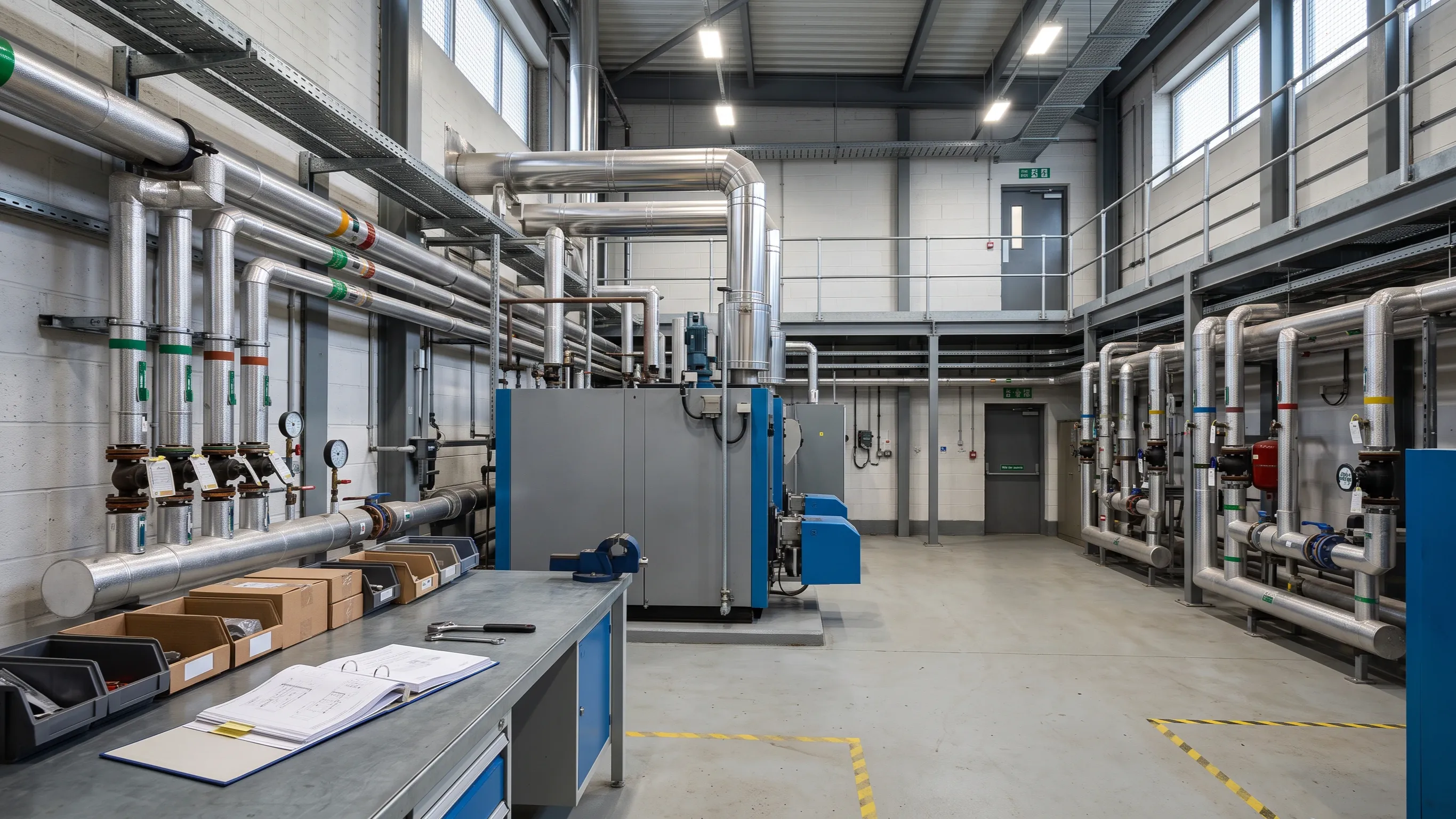
Boiler repairs rarely become slow for one reason. The visible fault may arrive suddenly, but the delay often builds across the hours and days before it: missing appliance details, unclear accessory history, scattered service records, uncertain isolation, poor photographs and incomplete parts requests. When those gaps meet a failed commercial boiler, the first visit can become an information-gathering exercise instead of a focused repair response.
A commercial boiler parts checklist helps change the first question from “what can we buy quickly?” to “what information will help prevent the wrong item being ordered?” That matters even more when obsolete boiler parts, superseded accessories or model-specific flue components are involved. The aim is not to turn facilities teams into boiler engineers. It is to make the parts request complete enough for competent engineers, maintenance teams and procurement teams to work from the same information.
The delay starts before the fault is reported
The weakest repair timeline usually begins with an incomplete asset record. A fault note that says “boiler down” does not confirm the manufacturer, full model, output, serial number, GC number, fuel, flue arrangement, control platform, cascade position or previous fault history. If that information has to be gathered during the first attendance, time can be lost before the parts requirement is even established.
Maintenance evidence also affects how efficiently a repair can be assessed. The HSE's maintenance guidance explains the importance of maintaining work equipment in an efficient state and planning maintenance so it can be carried out safely. For workplaces in Great Britain, the Provision and Use of Work Equipment Regulations (PUWER) also require work equipment to be maintained in an efficient state, in efficient working order and in good repair. Where a maintenance log is used, it must be kept up to date.
For boiler plant, this reinforces the value of accurate maintenance records. Service dates, fault-code history, water treatment notes, previous parts references and technical readings recorded by competent personnel can help establish whether a failure is isolated or part of a repeated pattern.
A strong record does not diagnose the appliance by itself. It simply removes avoidable information gaps. It shows what was fitted, what has already been tried, which conditions were present before failure, and which parts or settings changed during earlier visits.
Those gaps can affect the repair process in practical ways. If a model plate photograph is missing, the first call may become a request for access rather than a parts check. If the previous accessory reference is buried in an old invoice, procurement may spend time tracing a discontinued number before anyone confirms whether a current alternative exists. If the flue route or cascade position is unknown, the site may also need to establish which equipment is affected before planning the work. These administrative details can lead to further questions, additional visits or an increased risk of ordering the wrong item.
The first hour needs appliance identity, not vague symptoms
The first repair assessment should establish the appliance identity and preserve relevant information about the condition at failure. Repeated resets, temporary overrides and manual control changes can remove useful evidence. A boiler that has locked out after a circulation problem, low pressure, flue interruption, condensate restriction or control conflict may present differently once the immediate alarm has been cleared.
The information worth recording includes:
- Boiler manufacturer, full model, output and serial number.
- Data plate, control panel and component-label photographs.
- Fault code, lockout text and time of occurrence.
- Combustion, pressure and temperature readings where available and recorded by competent personnel.
- Water treatment, make-up water and recent service notes.
- Flue, condensate, ventilation and access observations.
- Whether the appliance is one of several boilers in a cascade or lead-lag arrangement.
This is where parts requests can become unclear. A sensor, fan, PCB, gas valve, pump, header or flue kit may have more than one variant. A broad description can direct procurement towards an item that appears suitable but has not been checked against the actual appliance and installation.
The checklist is intended to capture information for the people assessing the fault and confirming the required part. It should not encourage unqualified personnel to open, adjust or work on boiler components.
Parts requests fail when model variants are not separated
Commercial boiler accessories are often specific to the appliance model, output and installation arrangement. The same appliance family can include different outputs, generations, flue routes, control arrangements and hydraulic layouts. Obsolete boiler parts add another complication because the original reference may have been replaced, withdrawn or superseded.
A useful request separates four questions. First, what exactly is fitted? Second, what function has failed or what accessory is required? Third, what information confirms the variant? Fourth, what timing, access or shutdown constraint affects the order? If one of those answers is missing, the risk of a wrong part or repeated query increases.
For Remeha plant, keep the appliance identity and output alongside the request before checking Remeha commercial boiler accessories. This makes it easier to review the listed products against the details already established for the appliance, rather than relying on a broad brand match.
The same discipline applies when checking Vaillant commercial boiler accessories. A manufacturer match alone is not enough if the output, generation, control arrangement or flue route has not been confirmed.
Obsolete parts create a repair-versus-replacement pause
The slowest parts enquiries can occur when an item is no longer a straightforward reorder. If the original part is obsolete, the site needs to establish whether a suitable supported alternative exists, whether associated components are affected, whether the boiler remains practical to support and whether the likely repair cost is justified.
That decision should not be made on age alone. An older appliance with clear records, available accessories, stable water quality and manageable access may still have a practical repair route. A newer boiler with repeated water quality problems, poor isolation and unresolved control issues may continue to experience disruption. The decision is better informed by evidence covering supportability, safety, relevant compliance records, component availability and the consequences of another failure.
The useful outcome is a clear stop, proceed or investigate decision. Proceed may mean ordering a confirmed part and retaining the previous reference for future enquiries. Investigate may mean checking whether the proposed replacement requires a matching sensor, gasket, harness, flue section or control update. Stop may mean that further expenditure should be reconsidered because the part's availability does not resolve the wider supportability issue.
That judgement belongs with the responsible duty holders and competent engineers. A more complete parts record can, however, make the commercial decision less reactive.
Record the outcome against the appliance, not only against the current purchase order. Include the old reference, any confirmed supersession, the evidence used to accept the replacement, associated items that must remain compatible and the person who approved the decision. The next enquiry can then start from a documented supportability position instead of repeating the same search through emails, photographs and supplier replies.
For Hamworthy sites, include the confirmed appliance details and the required function when reviewing Hamworthy boiler accessories. The important question is not simply whether a Hamworthy part is listed. It is whether the specific appliance and arrangement have a suitable listed item for the requirement.
A shorter checklist that still protects the order
A boiler-parts request does not need to become a long form that nobody completes. It needs the details that help prevent common identification and ordering delays:
- Site, plant room and appliance reference.
- Manufacturer, full model, output and serial number.
- Existing part number, data plate photograph and component photograph.
- Fault code or reason the part is required.
- Gas, combustion, hydraulic, electrical, control or flue function.
- Flue, cascade or accessory arrangement where relevant.
- Recent service date and relevant technical readings.
- Water treatment notes where relevant to the component or reported fault.
- Access, isolation, shutdown and delivery constraints.
- Any superseded reference or previous purchase record.
This is the practical core of a commercial boiler parts checklist. It is concise enough for site teams to complete while capturing the details that help engineers and procurement staff assess the request.
Product checks should come after the requirement is known
Product sourcing works best after the responsible competent person has identified the appliance, required function, variant and relevant installation constraints. For example, the Remeha Quinta ACE 55/65/90/115/160 Horizontal Flue Kit is listed for the stated Quinta ACE outputs. That product-specific description illustrates why a flue component should not be treated as a general answer when the boiler model and installation details are unknown.
Once the site has a defined requirement, National Pumps and Boilers can be approached for product availability, published specification checks, pricing, ordering and delivery information. This is a supplier route, not a substitute for fault diagnosis or installation and commissioning by competent personnel. Any gas work must be carried out by an appropriately qualified Gas Safe registered engineer.
The repair process is better prepared when the parts enquiry arrives with the relevant information already attached. A clear request helps the supplier identify the product being asked about and reduces the likelihood of an order being based on an incomplete description.