

Buffer Tank Installation Requirements: What to Expect
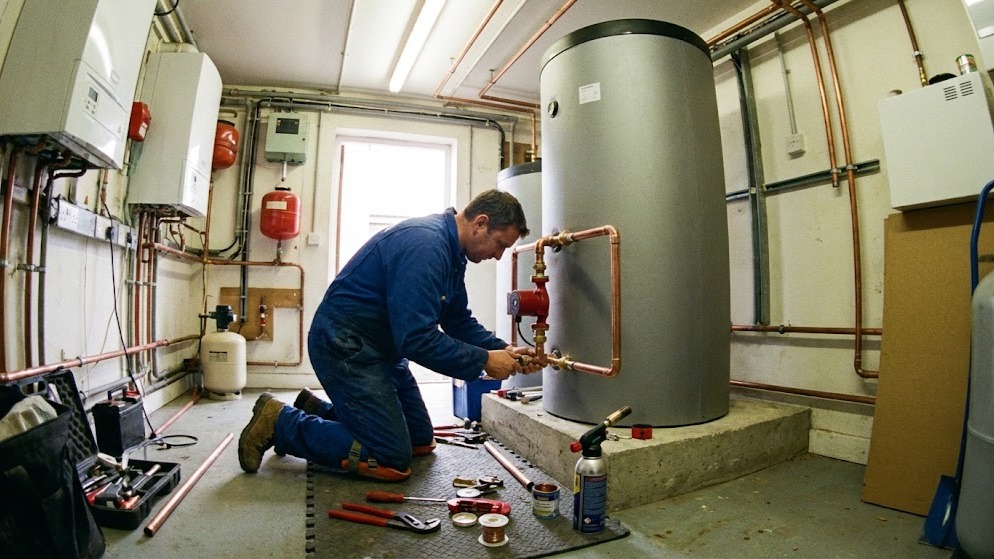
Installing buffer tanks in commercial heating systems involves more than simply placing a vessel and connecting pipes. Successful installation requires attention to structural requirements, hydraulic integration, control system configuration, and commissioning procedures that ensure the installed system performs as intended. Understanding buffer tank installation requirements helps building owners and facilities managers prepare for installation projects and evaluate contractor competence.
The complexity of buffer installation varies with vessel size, system configuration, and integration requirements. Small buffers in simple systems may install within a day, whilst large vessels in complex multi-source systems may require weeks of coordinated work. Meeting all buffer tank installation requirements through proper planning ensures that installations proceed efficiently without unexpected delays or complications.
Planning for Buffer Tank Installation
Effective installation begins with thorough planning that addresses all requirements before work commences. Planning failures that emerge during installation cause delays, cost overruns, and potentially compromised outcomes.
Understanding buffer tank installation requirements during the planning phase enables realistic scheduling and budgeting. Site-specific constraints, access limitations, and integration complexity all affect installation duration and cost. Early identification of potential problems enables proactive solutions.
Thermal vessel specifications must be finalised before procurement to ensure that delivered equipment suits the intended application. Reviewing thermal vessel specifications early prevents changes after delivery that create delays and additional costs, whilst installation of unsuitable equipment compromises system performance.
Professional design input during planning ensures that installation requirements are fully identified and addressed. Experienced heating engineers anticipate issues that less experienced planners might overlook, reducing the risk of installation-phase surprises.
Pre-Installation Requirements
Preparation before buffer delivery ensures that installation can proceed efficiently once equipment arrives.
Site Assessment
Site surveys identify installation location characteristics affecting buffer placement and connection. Physical dimensions, access routes, structural capacity, and service positions all require assessment before finalising equipment selection and installation approach.
Access route evaluation determines how vessels will travel from delivery vehicle to final position. Doorway dimensions, corridor widths, lift capacities, and stairwell clearances all constrain maximum deliverable vessel size. Large buffers may require crane access or specialist moving equipment.
Structural assessment confirms that proposed installation locations can support filled vessel weights. Water adds approximately one kilogram per litre to vessel weight, meaning a one-thousand-litre buffer weighs over a tonne when filled. Floor loadings must accommodate this weight with appropriate safety margins.
Space requirements extend beyond vessel dimensions to include clearances for insulation, access for maintenance, and routes for pipe connections. Minimum clearances specified in thermal vessel specifications documentation ensure adequate access throughout service life.
Equipment Selection and Procurement
Specification finalisation converts design requirements into specific equipment orders. Vessel capacity, connection positions, insulation grade, and pressure rating must all match application requirements.
Lead time considerations affect project scheduling. Standard buffer sizes may be available from stock, whilst custom specifications require manufacturing time. Large vessels may need extended lead times for production and delivery coordination.
Thermal vessel specifications verification before delivery confirms that ordered equipment matches requirements. Checking delivery against specifications identifies any discrepancies before installation commences, enabling resolution without delaying installation work.
Delivery coordination ensures that vessels arrive when installation teams are ready to receive them. Premature delivery creates storage problems, whilst late delivery delays installation progress. Coordinated scheduling optimises installation efficiency.
Quality equipment from National Pumps and Boilers arrives with comprehensive documentation supporting specification verification and installation planning.
Physical Installation Requirements
Physical installation encompasses structural preparation, vessel positioning, and securing for permanent operation.
Structural Support
Floor loading requirements for buffer tanks depend on filled weight and floor construction capacity. Reinforced concrete floors typically accommodate commercial buffer weights, but suspended floors, raised access floors, or older construction may require assessment and potentially strengthening.
Foundation and base requirements ensure level, stable support for vessels throughout their service life. Concrete plinths, steel frames, or purpose-designed supports distribute loads appropriately whilst enabling drainage and access beneath vessels.
Buffer tank installation requirements for structural adequacy include consideration of seismic loads where applicable, thermal expansion effects, and maintenance activities that might impose additional loads. Conservative structural design prevents problems throughout extended service lives.
Vibration isolation may be necessary where pumps or other vibrating equipment connect directly to buffers. Isolation mounts prevent vibration transmission through vessels to building structures where this might cause noise or damage.
Positioning and Clearances
Minimum clearances around buffer tanks enable access for valve operation, sensor maintenance, and eventual vessel replacement. Typical requirements specify five hundred to one thousand millimetres clearance on accessible sides, with greater clearances at connection ends.
Insulation and cladding add to external dimensions beyond bare vessel sizes. Positioning must accommodate these additions within available space whilst maintaining required clearances from walls and other equipment.
Valve and fitting access requirements ensure that components requiring periodic service remain reachable after installation. Buried or inaccessible valves create maintenance difficulties that proper positioning avoids.
Future maintenance access planning considers how major maintenance or eventual replacement might proceed. Clear routes for vessel removal simplify future work that cramped positions would complicate.
Lifting and Handling
Lifting equipment requirements depend on vessel weight and installation location. Overhead cranes, mobile cranes, chain blocks, or specialist moving equipment may all prove necessary depending on circumstances.
Safe lifting procedures protect both personnel and equipment during positioning. Vessels should lift from designated lifting points using appropriate slings or spreader bars. Improper lifting risks dropping vessels or damaging shells.
Protection during handling prevents damage to connections, insulation, and cladding. Temporary covers and careful handling procedures avoid the cosmetic and functional damage that careless handling causes.
Final positioning and levelling ensure proper drainage and stratification within vessels. Level installation maintains designed flow patterns, whilst slight tilts toward drain points enable complete emptying for maintenance.
Hydraulic Integration
Hydraulic connections integrate buffer tanks with heating system circuits, enabling the heat storage and release functions that justify installation.
Pipework Connections
Connection sizing must accommodate maximum anticipated flow rates without excessive pressure drop. Undersized connections restrict flow and compromise buffer effectiveness regardless of adequate vessel capacity.
Thermal vessel specifications define connection positions, sizes, and orientations for each vessel model. Installation must accommodate these fixed characteristics through appropriate pipework routing.
Isolation valve requirements enable buffer isolation for maintenance without draining entire systems. Full-bore ball valves or gate valves at all buffer connections provide positive isolation capability.
Flow and return arrangements depend on system configuration and buffer function. Connections enabling stratification maintenance improve thermal performance compared to arrangements that promote mixing.
System Integration
Primary and secondary circuit connections through buffers require careful hydraulic design. Buffer integration should provide hydraulic separation whilst enabling effective heat transfer between circuits.
Integration with existing systems demands attention to compatibility. Flow rates, temperatures, and pressures in existing circuits constrain how new buffers can connect. Modification of existing systems may prove necessary for effective integration.
Pump and valve arrangements around buffers depend on control strategy and system configuration. Variable speed pumps, mixing valves, and diverting valves may all contribute to effective buffer management.
Hydraulic balancing ensures that flow distributes correctly between buffer charging, buffer discharge, and bypass routes. Commissioning valves and flow measurement provisions enable accurate balancing during commissioning.
Circulation equipment from Grundfos and Wilo provides reliable flow control for buffer-equipped systems.
Expansion and Pressure Systems
Expansion provision must accommodate the additional system volume that buffers introduce. Existing expansion vessels may prove inadequate after buffer installation, requiring upgrade or supplementation.
Pressure relief requirements ensure safe response to overpressure conditions. Relief valve sizing must consider potential upset conditions including runaway heat input and isolation with heat sources active.
Buffer tank installation requirements for pressure systems include verification that all components rate for system design pressure. Buffers, connections, and associated fittings must all withstand maximum anticipated pressures.
Filling and pressurisation procedures establish initial system conditions after installation. Proper filling minimises air entrainment whilst pressurisation confirms system integrity before operation commences.
Systems benefit from properly sized expansion vessels that accommodate total system volume including buffer capacity.
Electrical and Control Integration
Control system integration enables intelligent buffer management that maximises installation benefits.
Sensor Installation
Temperature sensor requirements include multiple sensors at different buffer heights to monitor stratification and stored heat quantity. Sensor pockets or direct immersion fittings provide measurement access at required positions.
Control system connections link sensors to controllers managing buffer charging and discharge. Wiring installation must comply with electrical regulations and manufacturer requirements for signal integrity.
Building management system integration enables coordination between buffer control and wider building energy management. Communication protocols and network connections require specification during design.
Monitoring and alarm provisions alert operators to abnormal conditions including high temperatures, sensor failures, and control faults. Appropriate alarming enables rapid response to developing problems.
Control Strategy Implementation
Control logic for buffer-equipped systems differs from conventional arrangements. Sequences for charging, discharge, and source coordination require careful configuration to achieve intended operation.
Charging and discharging control sequences manage heat generator operation and distribution valve positions. Time-based, temperature-based, or combination strategies suit different applications and objectives.
Optimisation parameter configuration tunes control response to actual system characteristics. Initial settings from design may require adjustment based on observed performance during commissioning and early operation.
Operator interface requirements ensure that building staff can monitor and adjust buffer operation as needed. Clear displays, intuitive controls, and appropriate access restrictions support effective system management.
Commissioning and Handover
Commissioning verifies that installed systems function correctly before handover to building operators.
System Testing
Pressure testing and leak checking confirm hydraulic integrity before filling and operation. Test pressures exceeding normal operating pressure verify joint integrity throughout the system.
Thermal performance verification confirms that buffers achieve expected heat retention. Temperature decay tests measure standing losses against specification, identifying any insulation deficiencies.
Control sequence testing verifies that charging, discharge, and protection sequences operate as designed. Simulated conditions trigger each sequence whilst observers confirm correct response.
Documentation requirements include test records demonstrating compliance with specifications, commissioning certificates, and as-built drawings reflecting actual installation.
Handover Requirements
Operating and maintenance documentation enables building staff to manage buffer systems effectively. Manuals, maintenance schedules, and spare parts information support ongoing reliable operation.
Training requirements ensure that operators understand system function and can perform routine monitoring and adjustment. Practical demonstration during handover builds competence and confidence.
Warranty registration and support arrangements establish manufacturer backup for installed equipment. Prompt registration protects warranty rights whilst identifying support contacts for future needs.
Ongoing maintenance scheduling establishes routine inspection and service intervals. Calendar-based reminders ensure that maintenance occurs as required regardless of staff changes.
Conclusion
Buffer tank installation requirements encompass structural, hydraulic, electrical, and commissioning considerations that all require attention for successful outcomes. Understanding these requirements helps building owners prepare for installation projects and evaluate completed work.
Attention to thermal vessel specifications throughout planning, procurement, and installation ensures that delivered systems match design intent. Departures from specification or installation requirements risk compromised performance.
Professional installation by experienced heating contractors delivers systems that perform reliably throughout their service lives. The investment in quality installation protects the value of buffer equipment investment.
For guidance on buffer installation and quality heating equipment, contact the National Pumps and Boilers team for expert technical support.