

Building a Heating Outage Response Plan: Roles, Access and Procurement
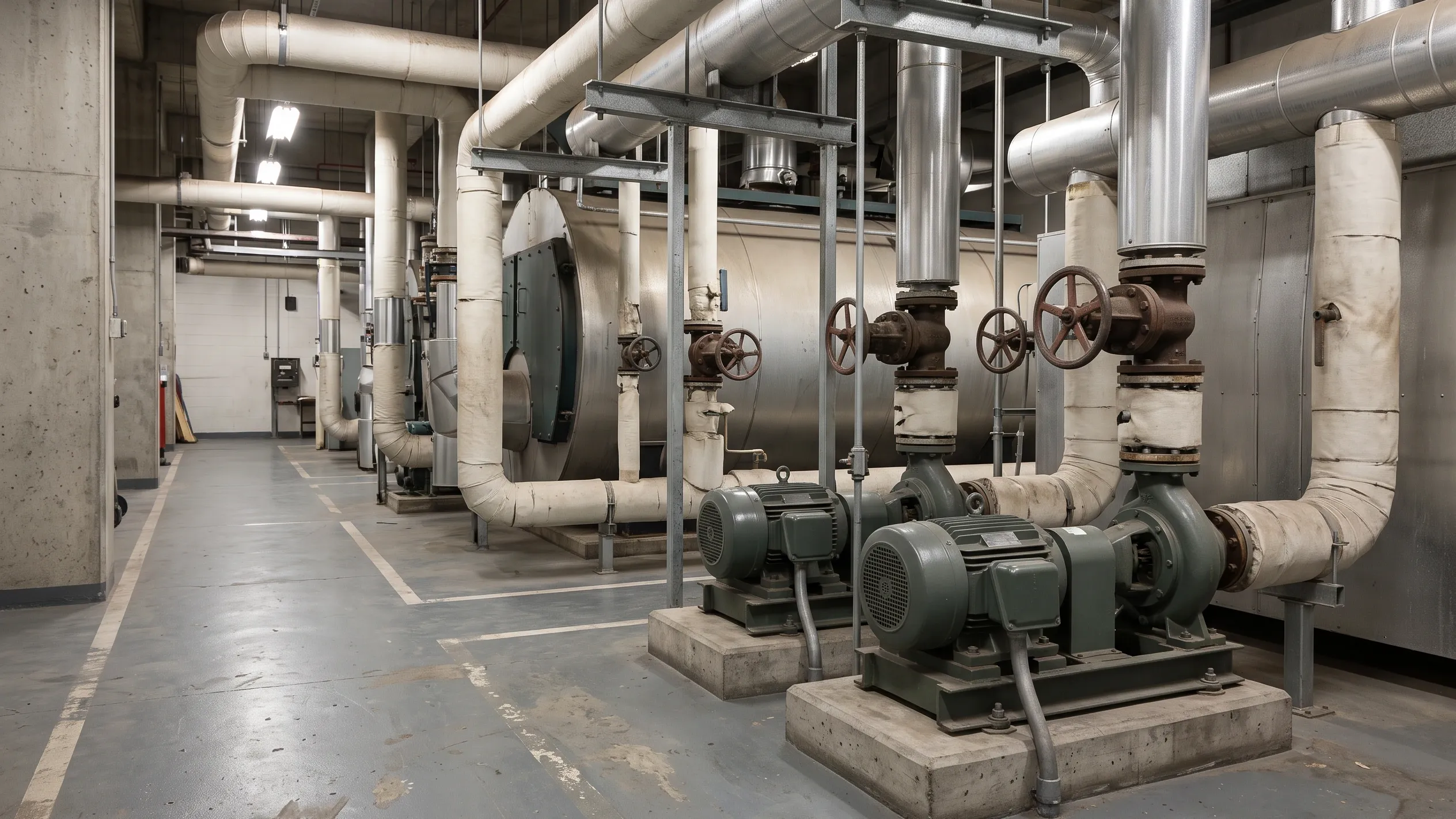
Commercial heating business continuity is tested when a site loses control of the response sequence: first the affected service is unclear, then safe access is delayed, then product information is incomplete, and finally the buying decision is made under pressure. A heating outage response plan should help interrupt that chain before one failed or unavailable item becomes a wider operational problem.
The first response is not to diagnose from symptoms or choose a replacement from a catalogue. It is to contain the service impact, appoint the right owner for each decision and preserve the evidence a competent person or buyer will need later. Product sourcing comes after the technical requirement is known.
First: Name the Lost Service
The first escalation risk is vague language. "Heating down" may be true, but it does not say enough. The response record should name the service affected: space heating, domestic hot water circulation, boiler firing, pressure support, a pump serving a defined circuit, or a control dependency that has stopped plant from operating as intended.
The service name sets the boundary. It tells the site who is affected, whether the issue threatens occupants, tenants, welfare facilities, production, stored materials or frost protection, and how quickly the next update is needed. It also prevents a visible component from being blamed before a competent person has assessed the system.
If a pump is suspected, the record should still say which circuit is affected and what evidence exists. A noisy unit, alarm, trip, loss of circulation or failed changeover is a symptom. It is not a complete replacement brief.
Separate Containment From Diagnosis
Containment is the act of limiting impact while the technical route is confirmed. Diagnosis is the competent assessment of why the issue has happened. Confusing those jobs wastes time because people start arguing about cause before the service boundary is under control.
The containment note should answer three questions:
- Which area or service is affected now?
- Which area or service may be affected next?
- What decision is needed before the next operating period, tenant update or production window?
The diagnostic route should sit with competent people who can inspect, test and decide what is safe. HSE guidance on work equipment maintenance explains that maintenance activities can expose people to risk, need planning and should be carried out by competent people with suitable information and instruction. That is the boundary a downtime plan should respect.
Where paired equipment is installed, competent personnel should confirm whether the second head can provide the required duty and whether changeover has been tested. The DAB Evoplus D 40/220.32 M twin pump set is a twin-head circulator option, but the installed valves, controls and isolation arrangement determine whether a standby route is usable during an outage.
Confirm Access and Isolation Dependencies
The third escalation risk is assuming a product order can solve a delay caused by access or isolation. A pump, boiler accessory or valve may be identifiable, available and fairly priced, but the site may still be unable to act because plant cannot be isolated or reached safely.
The downtime record should capture the dependencies that control the next step: plant-room access, keys, permits, electrical isolation, valve positions, drain points, stored energy, hot surfaces, lifting clearance and any adjacent work area that could be affected. This is not a method statement. It is a decision map so the right owner can remove blockers early.
Isolation deserves particular care because heating and hot water systems often share routes that are poorly understood by people outside the plant room. A local pump may be connected to a wider circuit. A boiler component may require a broader shutdown than the visible part suggests. A seized or passing valve can turn a short task into a wider interruption.
If the site cannot confirm access and isolation, the heating outage response plan should not pretend procurement is the bottleneck. The next owner is the person responsible for safe assessment and work planning.
Prepare the Replacement-Product Question
Product sourcing becomes useful when the confirmed requirement can be stated. The buyer should not be handed only a symptom. They need existing equipment identity, the service it supports, duty information where known, connection details, electrical supply, control interface, model and serial information, photographs, required timescale and any delivery or access constraints.
For pump-related requirements, compare commercial circulators once the duty and interface details have been narrowed. Record the existing pump identity, required flow and head, connection dimensions and control method so that the buyer can check relevant options rather than guess from the symptom.
For boiler-related requirements, compare commercial boilers only after the responsible team has confirmed the required output, fuel, appliance identity, flue arrangement and controls. Keep accessory references with the appliance details: a compatible boiler alone does not establish that the existing flue or connection arrangement can be reused.
Control Communication
Communication during downtime should follow decisions, not rumours. Occupants, tenants, operational managers or service users need to know the affected service, the current boundary, the next decision owner and the next update time. They do not need speculative explanations of failure cause.
A practical update rhythm is:
- State the affected service and current boundary.
- Say whether safe access or isolation is blocking the next step.
- Confirm whether competent assessment is under way or still awaiting access.
- Confirm whether any product enquiry is based on verified data.
- Give the next update point, even if the answer may be "no change".
That rhythm prevents a common escalation problem: too many people asking procurement for a product update when the real blocker is still technical assessment, access or authority.
Give Procurement a Defined Role
Procurement should enter with a defined role. The buyer checks availability, price, ordering route, delivery timing and published product information. The buyer should not be asked to decide system suitability, safe isolation, diagnosis, repair method, installation approach or commissioning requirements.
Vaillant commercial boiler accessories include flue kits, extensions, elbows, support clips, a shunt pump kit and plate heat exchanger components. These are model- and range-specific. Record the exact appliance and accessory reference, and obtain competent confirmation of flue and control requirements before ordering.
National Pumps and Boilers can check product availability, price and ordering information once the requirement is defined. Include the existing make and model, product or part reference, service affected, delivery destination and required timescale. Identify any unresolved compatibility question rather than presenting a suspected replacement as an approved choice.
If the requirement is not confirmed, the product enquiry should say that. A supplier can often provide useful published information about options, but product capability never proves site suitability. A fast but vague order can extend downtime if it delivers the wrong item or gives the technical team another assumption to unwind.
After Stabilisation: Remove One Delay
Once the site is stable, the review should identify the delay that allowed the heating system failure to escalate. The answer may be missing asset identity, unclear ownership, weak isolation records, poor standby proof, inaccessible plant, uncertain approval authority or a product enquiry sent before the requirement was verified.
Do not turn the review into a general wish list. Choose one improvement that will shorten the next event. Add a deputy for approval. Photograph nameplates. Record isolation dependencies. Confirm which services rely on a standby arrangement. Add model and accessory data for boiler plant. Create a product enquiry template that separates confirmed requirements from suspected causes.
A useful heating outage playbook ends each stage with a named owner and a clear next question. The service owner identifies what must be protected; the technical owner decides what can be assessed and isolated safely; and procurement checks a confirmed product requirement. Keep current model and accessory records with that handoff so the next enquiry starts with usable equipment information.
That handoff is the control point. If it is clear, the next outage starts with boundaries, owners and evidence. If it is missing, the site risks repeating the same escalation sequence: service impact, access delay, unclear diagnosis, hurried product search and avoidable downtime