

Cast Iron vs. Bronze vs. Stainless Steel Pumps: Material Selection Guide
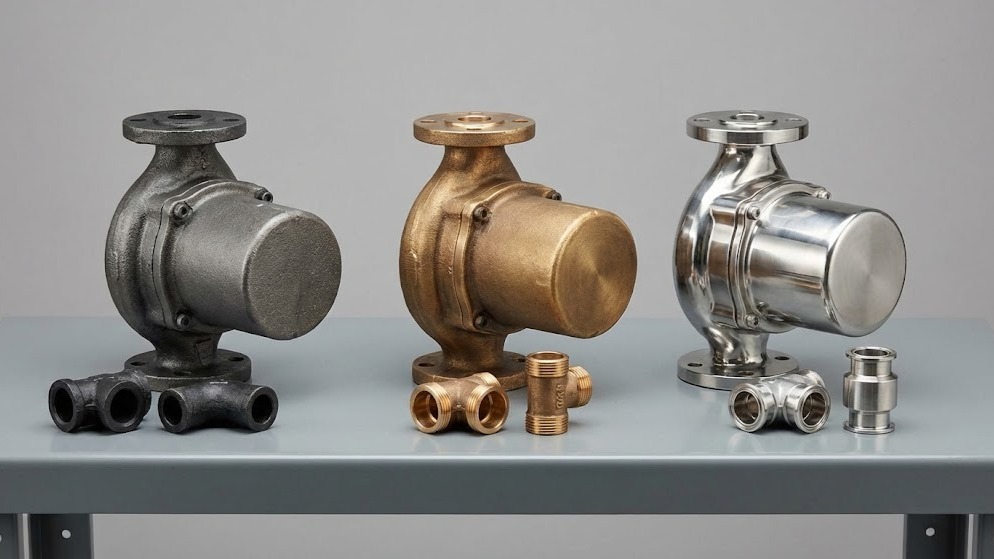
Selecting the correct pump housing material determines service life, maintenance costs, and system reliability across commercial heating, DHW circulation, and industrial applications. Cast iron, bronze, and stainless steel each deliver distinct performance characteristics that match specific operating conditions - temperature ranges, fluid chemistry, pressure demands, and installation environments.
Understanding these material properties prevents premature pump failure, reduces unplanned downtime, and optimises lifecycle costs. National Pumps and Boilers supplies pumps across all three material categories, with technical guidance matching equipment specifications to real-world system requirements.
Cast Iron Pump Housings: Durability and Cost-Effectiveness
Cast iron remains the most widely specified pump housing material in UK commercial heating systems, offering exceptional strength at competitive pricing. The material's thermal stability and pressure tolerance suit the majority of closed-loop heating applications operating below 110°C.
Performance Characteristics
Cast iron housings withstand working pressures up to 10 bar in standard grades, with ductile iron variants rated to 16 bar for high-pressure commercial systems. The material exhibits excellent dimensional stability across temperature cycling, maintaining seal integrity and bearing alignment throughout seasonal heating demands.
Thermal conductivity sits at 50 W/m·K, providing adequate heat dissipation for continuous-duty circulation pumps without requiring external cooling. This property proves particularly valuable in plantroom installations where ambient temperatures regularly exceed 30°C during summer months.
Application Suitability
Cast iron pumps dominate central heating circulation, serving radiator circuits, underfloor heating manifolds, and low-temperature heat networks. The material performs reliably in closed systems with treated water containing corrosion inhibitors meeting BS 7593 requirements.
Grundfos pumps frequently specify cast iron housings for Alpha2 and Magna3 circulators, balancing material costs against the performance demands of domestic and light commercial installations. The material's compatibility with standard system fluids - glycol mixtures up to 50% concentration, inhibited water, and conditioned heating circuits - covers 85% of UK heating applications.
Limitations and Considerations
Cast iron demonstrates poor corrosion resistance in open systems exposed to continuous fresh water ingress. Oxygen penetration accelerates oxidation, forming iron oxide deposits that contaminate system water and damage mechanical seals. Applications involving untreated water, frequent makeup water addition, or aggressive fluid chemistry require alternative materials.
The material's brittleness increases failure risk in installations subject to water hammer, thermal shock, or mechanical impact. Pump housings crack rather than deform under stress, necessitating complete replacement rather than repair. Proper system design - including expansion vessels, pressure relief valves, and controlled fill procedures - mitigates these risks.
Bronze Pump Components: Corrosion Resistance for Challenging Fluids
Bronze alloys, particularly gunmetal (85% copper, 5% tin, 5% zinc, 5% lead) and leaded tin bronze, provide superior corrosion resistance in applications where cast iron proves inadequate. The material's dezincification resistance and compatibility with aggressive water chemistry justify premium pricing in specific installations.
Material Properties
Bronze maintains structural integrity in contact with chlorinated water, seawater, and fluids with pH levels between 6.5 and 9.5. The copper content creates a protective patina that self-limits corrosion progression, extending service life in environments that rapidly degrade ferrous materials.
Tensile strength ranges from 240-310 MPa depending on alloy composition, providing adequate pressure containment for pumps rated to 10 bar. Bronze's ductility - approximately 15% elongation before failure - offers greater impact resistance than cast iron, reducing housing damage from installation handling or system transients.
DHW and Potable Water Applications
Bronze pump housings serve DHW pumps handling potable water circulation, where material compliance with BS 6920 and Water Supply (Water Fittings) Regulations 1999 mandates low-lead alloys. The material resists scaling from hard water, maintaining hydraulic performance in areas with calcium carbonate concentrations exceeding 200 mg/L.
Secondary return circuits, instantaneous hot water systems, and thermal disinfection loops benefit from bronze's stability at temperatures up to 95°C. The material tolerates temperature fluctuations inherent in demand-driven DHW systems without degradation, supporting 20-year service intervals when properly maintained.
Cost-Performance Trade-Offs
Bronze pumps command 40-60% price premiums over equivalent cast iron models, justified primarily in open systems, potable water applications, and installations with aggressive water chemistry. Specifying bronze for standard closed-loop heating systems represents unnecessary expenditure unless specific corrosion risks exist.
When performing a cast iron vs bronze pumps evaluation, system water quality determines material selection more than operating pressure or temperature. Closed systems with properly maintained inhibitor concentrations achieve comparable service life with cast iron at significantly lower capital cost.
Stainless Steel: Premium Performance for Demanding Environments
Stainless steel pump housings - typically AISI 304 or 316 grades - deliver maximum corrosion resistance, pressure capability, and temperature tolerance. The material suits high-performance commercial applications, aggressive fluid handling, and installations where contamination prevention justifies premium investment.
Technical Advantages
Grade 316 stainless steel withstands continuous exposure to chlorides, achieving dezincification resistance superior to bronze alloys. The material maintains structural integrity in contact with seawater, brine solutions, and industrial process fluids that rapidly corrode alternative materials.
Pressure ratings reach 25 bar in standard pump designs, with specialist models rated to 40 bar for high-rise building services and industrial process applications. Temperature tolerance extends to 140°C continuous operation, accommodating high-temperature hot water systems, thermal storage circuits, and process heating loops.
Hygiene-Critical Applications
Stainless steel's non-porous surface prevents bacterial colonisation, making the material mandatory for pharmaceutical manufacturing, food processing, and healthcare DHW systems. The material's compatibility with aggressive cleaning agents - including chlorine dioxide, hydrogen peroxide, and peracetic acid - supports thermal and chemical disinfection protocols without material degradation.
Wilo pumps specify stainless steel housings for Stratos GIGA commercial circulators serving district heating networks, where fluid temperatures exceed 110°C and pressure demands surpass cast iron capabilities. The material eliminates contamination risks in systems requiring British Standard compliance for potable water contact.
Economic Considerations
Stainless steel pumps cost 80-120% more than cast iron equivalents, positioning the material for applications where cast iron or bronze prove inadequate. Lifecycle cost analysis frequently justifies stainless steel in aggressive environments, where extended service intervals and reduced maintenance offset initial capital premiums.
Pump material comparison should prioritise system requirements over material prestige. Specifying stainless steel for standard heating applications delivers no performance benefit over properly selected cast iron, unnecessarily inflating project costs.
Pump Material Selection Criteria
Systematic evaluation of operating conditions, fluid properties, and performance requirements determines optimal pump housing material. The following decision framework matches material characteristics to application demands.
Fluid Chemistry Assessment
Water treatment quality governs material compatibility more than any other factor. Closed-loop systems maintaining inhibitor concentrations per BS 7593 - minimum 1,500 mg/L for ferrous systems - achieve 15-20 year service life with cast iron housings. Systems lacking proper treatment, experiencing frequent makeup water addition, or containing aggressive chemicals require bronze or stainless steel.
Chloride concentration above 250 mg/L accelerates cast iron corrosion, indicating bronze or stainless steel specification. pH levels below 6.5 or above 9.5 similarly necessitate corrosion-resistant materials regardless of system type.
Temperature and Pressure Requirements
Operating temperatures below 110°C and pressures under 10 bar fall within cast iron capabilities for closed systems. Applications exceeding these parameters - high-temperature hot water networks, pressurised DHW systems, or district heating connections - benefit from bronze or stainless steel's enhanced thermal and pressure tolerance.
Temperature cycling severity influences material selection. Systems experiencing rapid temperature changes - such as weather-compensated heating or intermittent DHW demand - benefit from bronze's thermal shock resistance over cast iron's brittleness.
Environmental Exposure
Installation location affects material longevity independent of fluid contact. Plantrooms with high humidity, coastal installations experiencing salt-laden atmospheres, and outdoor pump stations accelerate external corrosion on cast iron housings. Bronze and stainless steel resist atmospheric corrosion, maintaining aesthetic appearance and structural integrity in challenging environments.
Condensation risk on cold surfaces - common in chilled water systems and ground-source heat pump installations - favours stainless steel's corrosion resistance over cast iron's susceptibility to external oxidation.
Material Compatibility With System Components
Pump housing material must complement system pipework, valves, and heat exchangers to prevent galvanic corrosion. Dissimilar metals in electrical contact create electrochemical cells that accelerate material degradation when immersed in conductive fluids.
Galvanic Series Considerations
Cast iron pumps integrate seamlessly with steel pipework, cast iron radiators, and ferrous system components. Copper pipework creates minimal galvanic potential difference, particularly in inhibited closed systems where electrolyte conductivity remains low.
Bronze pumps suit copper pipework installations, eliminating galvanic corrosion risks in DHW systems. The material's position in the galvanic series - between copper and stainless steel - provides compatibility with most common plumbing materials.
Stainless steel's nobility in the galvanic series requires careful system design. Direct contact with aluminium or zinc-coated components accelerates corrosion on the less noble material. Proper system design includes dielectric unions, non-conductive gaskets, and appropriate inhibitor selection to manage galvanic potential.
Seal and Bearing Compatibility
Pump housing material influences mechanical seal and bearing selection. Cast iron's thermal expansion characteristics match standard carbon-ceramic seals and ceramic bearings specified for heating circulators. Bronze's thermal properties suit elastomer seals and bronze-backed bearings common in DHW applications.
Stainless steel's lower thermal conductivity compared to cast iron affects bearing cooling, occasionally necessitating upgraded bearing materials or external cooling provisions in high-temperature applications. Lowara pumps address this through engineered bearing selections matched to housing materials.
Maintenance Requirements by Material Type
Service intervals, spare parts availability, and maintenance procedures vary significantly between pump housing materials. Understanding these differences informs lifecycle cost calculations and maintenance planning.
Cast Iron Maintenance Protocols
Annual inspection verifies system inhibitor concentration, checking for iron oxide contamination indicating housing corrosion. Magnetic system filters require quarterly cleaning to remove circulating iron particles that accelerate mechanical seal wear.
Seal replacement typically occurs at 5-7 year intervals in properly maintained systems. Housing inspection during seal replacement identifies pitting, erosion, or crack development requiring pump replacement. Bearing replacement coincides with seal service, extending operational life to 15-20 years.
Bronze and Stainless Steel Service Life
Bronze pumps demonstrate extended seal life - 8-10 years - due to reduced abrasive particle generation. The material's corrosion resistance eliminates iron oxide contamination, reducing filter maintenance and extending component life.
Stainless steel pumps achieve maximum service intervals, with seal replacement at 10-15 year intervals and bearing replacement at 20+ years. The material's corrosion resistance and dimensional stability minimise wear on rotating components, justifying premium costs through reduced maintenance expenditure.
Specification Recommendations for Common Applications
Matching pump material to application type optimises performance and cost-effectiveness across commercial and industrial installations. This pump material comparison provides guidance for typical scenarios.
Standard Closed-Loop Heating Systems
Cast iron pumps serve radiator circuits, underfloor heating, and low-temperature heat networks where system water receives proper inhibitor treatment. The material delivers reliable performance at minimum capital cost, with 15-20 year service life when maintained per manufacturer specifications.
DHW Circulation and Potable Water
Bronze pumps suit secondary return circuits, instantaneous hot water systems, and applications requiring Water Regulations compliance. The material's corrosion resistance and low-lead alloy composition meet potable water standards whilst providing adequate pressure and temperature capability.
High-Temperature and High-Pressure Systems
Stainless steel pumps serve district heating connections, pressurised DHW systems, and commercial installations operating above 110°C or 10 bar. The material's enhanced capabilities justify premium pricing where cast iron and bronze prove inadequate.
Aggressive Fluid Handling
Stainless steel specification becomes mandatory for glycol concentrations exceeding 50%, industrial process fluids, and applications involving chemical additives beyond standard corrosion inhibitors. Material compatibility testing per BS EN 1717 confirms suitability for specific fluid compositions.
Conclusion
Pump housing material selection balances performance requirements, operating conditions, and lifecycle costs across diverse heating and plumbing applications. When comparing cast iron vs bronze pumps, cast iron delivers cost-effective reliability in standard closed-loop systems with proper water treatment, whilst bronze provides corrosion resistance for DHW and challenging water chemistry. Stainless steel offers maximum capability for demanding environments justifying premium investment.
Evaluating fluid chemistry, temperature and pressure demands, and environmental exposure identifies optimal material specifications through systematic pump material comparison. Proper system design - including water treatment, galvanic corrosion management, and maintenance protocols - maximises service life regardless of housing material.
National Pumps and Boilers supplies pumps across all material categories, with technical expertise matching equipment specifications to application requirements. For guidance selecting appropriate pump materials for specific installations, contact us for technical support and equipment recommendations.