

Choosing Pump Materials for Aggressive or Corrosive Water Chemistry
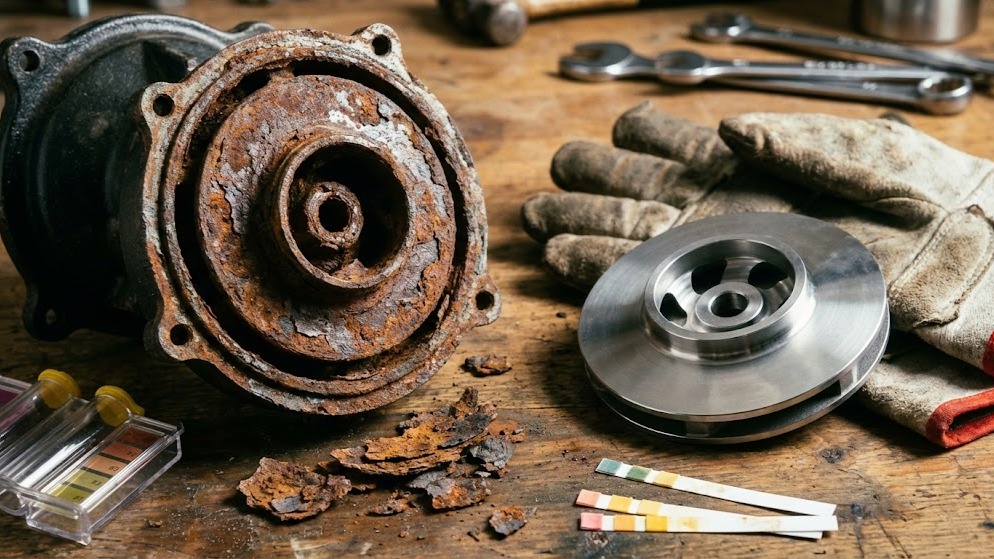
Selecting the right pump materials isn't just about durability - it determines whether a system operates reliably for 15 years or fails within months when exposed to challenging water chemistry. Aggressive or corrosive conditions accelerate material degradation, causing premature seal failure, impeller erosion, and costly system downtime that affects building operations and maintenance budgets.
National Pumps and Boilers supplies chemical resistant pumps engineered for demanding water conditions across commercial heating, cooling, and process applications. The pump material selection process requires matching specific water chemistry parameters to component materials that resist corrosion, erosion, and chemical attack whilst maintaining hydraulic efficiency throughout the pump's service life.
Understanding Aggressive Water Chemistry
Water chemistry becomes aggressive when specific parameters fall outside normal ranges that standard pump materials tolerate. pH levels below 6.5 or above 9.5 accelerate corrosion rates in ferrous materials. Chloride concentrations exceeding 250 mg/L attack stainless steel grades, causing pitting and crevice corrosion that compromises structural integrity.
Dissolved Oxygen and TDS
Dissolved oxygen content drives electrochemical corrosion in most metallic components. Systems operating above 60°C with high oxygen levels experience accelerated attack on cast iron and bronze materials. Total dissolved solids (TDS) above 500 mg/L increase conductivity, intensifying galvanic corrosion between dissimilar metals in pump assemblies.
Chemical Additive Challenges
Chemical additives introduce additional challenges. Glycol concentrations above 40% soften certain elastomer seals. Biocides and water treatment chemicals react with specific materials, causing swelling, hardening, or chemical breakdown. Industrial process water containing acids, alkalis, or organic solvents requires specialised material compatibility analysis before pump specification.
Material Selection for Pump Housings and Casings
Cast iron remains the standard housing material for neutral water chemistry applications, offering cost-effectiveness and adequate corrosion resistance in pH ranges between 6.5 and 8.5. However, acidic conditions below pH 6.0 cause rapid surface degradation, leading to wall thinning and eventual perforation. Oxygen-rich water accelerates this process, particularly in systems with frequent air ingress.
Bronze Construction
Bronze housings provide superior corrosion resistance compared to cast iron, particularly in mildly acidic conditions and chlorinated water systems. The copper-tin alloy composition resists dezincification in most domestic and commercial applications. Bronze performs effectively in pH ranges from 6.0 to 9.0 with chloride levels up to 400 mg/L, making it suitable for many DHW circulation applications where water treatment isn't rigorously maintained.
Stainless Steel Grade 304
Stainless steel grade 304 offers excellent general corrosion resistance across wider pH ranges (4.5 to 10.5) and elevated temperatures. This austenitic grade resists oxidation and maintains structural integrity in clean water systems. However, chloride concentrations above 200 mg/L initiate pitting corrosion, particularly in crevices and heat-affected zones near welds. Grade 304 suits heating systems with treated water and controlled chemistry.
Stainless Steel Grade 316
Stainless steel grade 316 provides enhanced chloride resistance through molybdenum additions, tolerating concentrations up to 1,000 mg/L without significant pitting. This grade performs reliably in coastal installations, swimming pool applications, and systems using seawater for heat rejection. The material cost premium of 30-50% over grade 304 delivers extended service life in aggressive chloride environments that would destroy lower grades within 2-3 years.
Duplex Stainless Steels
Duplex stainless steels combine austenitic and ferritic microstructures, delivering twice the yield strength of standard austenitic grades with superior chloride stress corrosion cracking resistance. These materials suit high-pressure applications with aggressive chemistry, including desalination plant pumps and industrial process systems handling brackish water or chemical solutions.
Impeller Material Considerations
Impeller material selection directly affects hydraulic efficiency retention over time. Surface roughness increases from corrosion or erosion reduce efficiency by 5-15%, raising operating costs throughout the pump's service life. Material hardness, corrosion resistance, and erosion resistance must balance against cost and manufacturing considerations.
Cast Iron and Coated Options
Cast iron impellers suit standard heating applications with treated water, offering adequate durability at minimal cost. Surface coatings extend service life in mildly aggressive conditions. Epoxy or ceramic coatings provide barrier protection, preventing direct water contact with the base material. These coatings require careful handling during installation to prevent damage that creates corrosion initiation sites.
Bronze Impellers
Bronze impellers deliver superior performance in DHW systems and applications with variable water quality. The material resists corrosion from dissolved oxygen and maintains smooth surfaces that preserve hydraulic efficiency. Bronze withstands erosion from suspended particles better than cast iron, making it suitable for systems where filtration may be inadequate or water quality fluctuates seasonally.
Stainless Steel Impellers
Grundfos pumps frequently specify stainless steel impellers for commercial applications requiring long-term reliability. Grade 304 provides excellent general service performance, whilst grade 316 suits systems with elevated chloride levels or coastal installations. The material's corrosion resistance maintains smooth hydraulic surfaces, preserving efficiency ratings throughout 15-20 year service intervals.
Engineered Polymer Impellers
Engineered polymers including noryl, PVDF, and reinforced polypropylene offer complete immunity to electrochemical corrosion. These materials suit highly aggressive chemical environments, including pH extremes (2.0 to 12.0) and concentrated chemical solutions. Polymer impellers eliminate galvanic corrosion concerns when paired with stainless steel housings. Temperature limitations (typically 90-110°C maximum) restrict applications to moderate temperature systems.
Shaft and Bearing Material Selection
Pump shafts transmit torque whilst withstanding radial loads from impeller operation and axial thrust from hydraulic forces. Pump material selection must address corrosion resistance, fatigue strength, and bearing compatibility. Shaft deflection under load affects seal life and bearing wear rates, making material stiffness an important consideration.
Carbon Steel and Protective Coatings
Carbon steel shafts with protective coatings suit standard applications with neutral water chemistry. Chrome plating or ceramic coating in the seal area prevents corrosion where shaft surfaces contact water. These coatings require minimum thickness of 50 microns to provide adequate protection without compromising dimensional tolerances that affect seal performance.
Stainless Steel Shafts
Stainless steel grade 316 shafts eliminate coating concerns, providing inherent corrosion resistance throughout the component. The material's lower yield strength compared to carbon steel requires larger diameter shafts to achieve equivalent stiffness. This affects bearing selection and housing design but delivers maintenance-free performance in aggressive water conditions.
Ceramic Shaft Sleeves
Ceramic shaft sleeves protect carbon or stainless steel shafts in the seal area, providing exceptional hardness and corrosion resistance. Silicon carbide and alumina ceramics resist erosion from abrasive particles whilst maintaining precise surface finish that maximises seal life. The brittle nature of ceramics requires careful handling during installation and protection from impact loads.
Bearing Materials
Bearing materials must suit both the operating environment and shaft material. Carbon-graphite bearings operate directly in the pumped fluid, providing self-lubrication whilst resisting chemical attack. These bearings suit clean water applications with adequate filtration. Silicon carbide bearings deliver superior hardness and wear resistance in abrasive conditions or systems with marginal lubrication.
Seal Material Compatibility
Mechanical seal performance determines pump reliability in aggressive water chemistry applications. Seal face materials, secondary seal elastomers, and spring materials must all resist chemical attack whilst maintaining sealing effectiveness across operating temperature ranges. Material incompatibility causes premature failure, leading to leakage and system downtime.
Carbon and Ceramic Seal Faces
Carbon versus ceramic represents the standard seal face pairing for heating and cooling applications. The carbon face (typically resin-impregnated graphite) runs against a ceramic seat (alumina or silicon carbide). This combination provides reliable sealing with minimal wear in clean water systems. Aggressive chemistry requires upgraded materials to prevent premature degradation.
Silicon Carbide Seal Faces
Silicon carbide seal faces offer superior chemical resistance and hardness compared to standard ceramics. The material resists erosion from abrasive particles and maintains sealing surfaces in aggressive pH conditions (2.0 to 14.0). Silicon carbide versus silicon carbide pairings suit highly abrasive or chemically aggressive applications, though they require adequate lubrication to prevent face damage from dry running.
Tungsten Carbide Options
Tungsten carbide provides maximum hardness and wear resistance for extreme service conditions. The material suits applications with significant abrasive content or systems where seal face loading is high. Cost considerations typically limit tungsten carbide to industrial process pumps or critical applications where seal reliability justifies the material premium.
Elastomer Selection
Elastomer selection affects seal reliability as significantly as face materials. EPDM suits standard heating and cooling applications, resisting water, glycol solutions, and moderate chemical exposure across -40°C to 120°C. The material degrades rapidly in petroleum-based fluids or concentrated acids. Wilo pumps commonly specify EPDM seals for commercial heating applications with treated water.
Viton and PTFE Seals
Viton (FKM) fluoroelastomer provides superior chemical resistance, tolerating petroleum products, acids, and high-temperature conditions up to 200°C. The material suits DHW systems operating above 80°C or applications with chemical water treatment. Viton costs 3-4 times more than EPDM but delivers extended service life in demanding conditions.
PTFE and PTFE composites offer universal chemical resistance across virtually all pH ranges and chemical exposures. These materials suit process applications with aggressive chemistry where elastomer compatibility is uncertain. PTFE's low elasticity requires specific seal designs to maintain sealing force across pressure and temperature variations.
System Design Factors Affecting Material Selection
Water velocity through pump components influences erosion rates and material performance. Velocities exceeding 3 m/s in bronze components or 4 m/s in stainless steel accelerate erosion-corrosion, particularly in elbows and impeller inlet areas. Proper system design limits velocities to ranges that specific materials tolerate without excessive wear.
Temperature Effects
Operating temperature affects corrosion rates and material degradation mechanisms. Each 10°C temperature increase approximately doubles electrochemical corrosion rates in metallic components. Systems operating above 80°C require materials that maintain mechanical properties and corrosion resistance at elevated temperatures. Elastomer seals particularly suffer from thermal degradation, requiring material selection based on maximum sustained operating temperature rather than occasional peak conditions.
Pressure Cycling
Pressure cycling induces fatigue stresses in pump components, particularly in variable-speed applications where pressure fluctuates with flow demand. Material fatigue strength becomes critical in these applications. Stainless steels offer superior fatigue resistance compared to cast iron, justifying material upgrades in systems with frequent start-stop cycles or variable flow operation.
Galvanic Corrosion Prevention
Galvanic corrosion occurs when dissimilar metals contact in conductive solutions. The potential difference between materials drives electrochemical current, accelerating corrosion of the more anodic material. Chemical resistant pumps material selection should minimise galvanic couples or isolate dissimilar metals using gaskets and insulating washers. Common problematic pairings include bronze impellers with stainless steel housings or aluminium components with copper piping.
Water Treatment and Material Longevity
Proper water treatment extends pump component life regardless of pump material selection. Maintaining pH between 7.0 and 8.5 minimises corrosion rates in ferrous and copper alloy materials. Oxygen scavenging chemicals reduce dissolved oxygen below 0.1 mg/L, dramatically slowing corrosion in closed heating systems. These treatments allow standard materials to achieve design service life in systems that would otherwise require upgraded materials.
Inhibitor Packages
Inhibitor packages protect specific materials from corrosion attack. Filming amines coat metal surfaces, creating barriers that prevent direct water contact. Nitrite-based inhibitors protect ferrous materials in closed systems, maintaining pH and providing electrochemical corrosion protection. Compatibility between inhibitors and pump seal materials requires verification - some inhibitor chemistries attack specific elastomers.
Filtration Benefits
Filtration removes abrasive particles that cause erosion damage to impellers and seal faces. Systems handling water with suspended solids above 50 mg/L benefit from filtration to 100 microns or finer. This simple measure extends seal life by 2-3 times and maintains impeller hydraulic efficiency, reducing operating costs throughout the system's service life.
Water Quality Monitoring
Water quality monitoring identifies chemistry changes before they cause component damage. Regular testing of pH, conductivity, chloride content, and inhibitor concentration allows corrective action when parameters drift outside acceptable ranges. This proactive approach prevents corrosion damage that material upgrades alone cannot address if water chemistry deteriorates significantly.
Specifying Pumps for Aggressive Conditions
Complete water chemistry analysis should precede pump specification for applications with known or suspected aggressive conditions. Testing should include pH, conductivity, TDS, chloride content, sulphate content, dissolved oxygen, temperature, and any chemical additives. This data allows accurate pump material selection that matches specific corrosive mechanisms present in the water.
Standards Compliance
British Standard BS EN 12502 provides guidance on corrosion protection of metals in contact with water. The standard addresses material selection, protective coatings, and cathodic protection for water systems. Compliance with BS EN 12502 recommendations ensures pump materials suit the intended application and meet regulatory requirements for building services installations.
Manufacturer Documentation
Manufacturer technical documentation specifies material compatibility for specific pump models. Chemical resistance charts indicate which materials resist particular chemicals and pH ranges. These charts guide material selection but should be verified against actual water chemistry data rather than assumed conditions. Conservative material selection prevents premature failures when water chemistry proves more aggressive than initially anticipated.
Whole-Life Cost Analysis
Whole-life cost analysis justifies material upgrades in aggressive applications. A stainless steel pump costing 60% more than cast iron delivers 3-4 times longer service life in corrosive conditions. Eliminating premature replacement costs, installation labour, and system downtime makes the upgraded material more cost-effective over 15-20 year building services lifecycles.
Material Selection for Specific Applications
Chilled Water Systems
Chilled water systems typically operate at pH 7.0-8.5 with low oxygen content in closed loops. Standard cast iron or bronze materials provide adequate service life with proper water treatment. Open systems with cooling towers experience higher oxygen levels and potential biological growth, favouring bronze or stainless steel materials that resist microbiologically influenced corrosion.
DHW Circulation Systems
DHW circulation systems encounter elevated temperatures (60-65°C) and potential chloride contamination from mains water makeup. Bronze housings and impellers deliver reliable performance in most domestic installations. Commercial systems with high makeup water rates benefit from stainless steel grade 316 construction, particularly in coastal areas where chloride levels exceed 200 mg/L.
Swimming Pool Applications
Swimming pool applications present severe corrosive conditions from chlorine, pH fluctuations, and elevated chloride levels. Stainless steel grade 316 construction provides minimum acceptable corrosion resistance. Duplex stainless steels or titanium suit high-chlorine applications including competition pools or systems using salt chlorination that generates chloride concentrations above 3,000 mg/L.
Industrial Process Applications
Industrial process applications require case-by-case material evaluation based on specific chemical exposure. Polymer-lined pumps or all-polymer construction suits highly acidic or alkaline conditions. Specialist alloys including Hastelloy or titanium address extreme chemical environments where standard stainless steels fail rapidly.
Making Informed Chemical Resistant Pumps Decisions
Pump material selection for aggressive or corrosive water chemistry directly determines system reliability and lifecycle costs. Matching housing materials, impeller construction, shaft materials, and seal components to specific water chemistry parameters prevents premature failures that compromise building operations and generate unexpected maintenance expenses.
Comprehensive water analysis identifies corrosive mechanisms before specification, allowing accurate pump material selection that addresses pH extremes, chloride attack, oxygen corrosion, and chemical incompatibilities. Stainless steel grades 304 and 316 suit most commercial applications with treated water, whilst bronze provides cost-effective performance in DHW systems with moderate water quality. Specialist materials including duplex stainless steels, engineered polymers, and exotic alloys address extreme conditions where standard materials prove inadequate.
Proper water treatment extends component life regardless of material selection, making chemistry control essential even when upgraded materials are specified. Regular monitoring and maintenance preserve pump performance whilst preventing corrosion damage that material selection alone cannot prevent if water quality deteriorates significantly.
National Pumps and Boilers supplies chemical resistant pumps engineered for demanding water chemistry applications across commercial heating, cooling, and process systems from manufacturers including DAB and Lowara. The technical team provides material selection guidance based on specific water chemistry data and application requirements. For assistance specifying pumps for aggressive or corrosive conditions, contact us for expert advice on material compatibility and system design.