

Choosing Pumps for Greywater Recycling in Sustainable Buildings
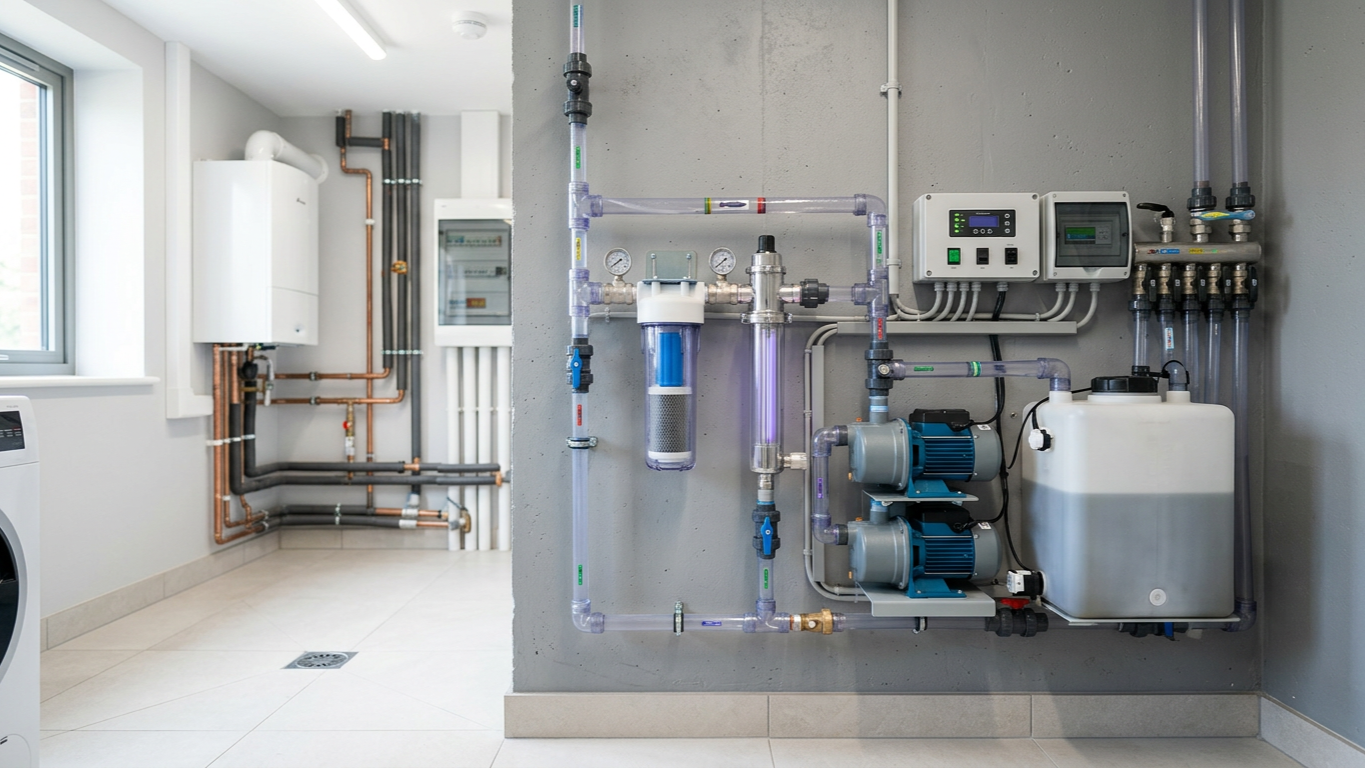
Sustainable buildings now recycle up to 40% of their water consumption through greywater systems - a figure that transforms operational costs and environmental impact. Yet the performance of these systems hinges entirely on selecting pumps that can handle the unique challenges of recycled water: variable flow rates, suspended particles, and intermittent operation patterns that differ fundamentally from clean water applications.
Greywater recycling pumps must transfer partially treated water from showers, basins, and washing machines to storage tanks, filtration systems, and reuse points like toilet flushing and irrigation. The wrong pump selection leads to blockages within weeks, excessive energy consumption, and system failures that undermine the entire sustainability strategy.
Understanding Greywater Characteristics and Pump Requirements
Greywater differs significantly from both clean water and sewage, creating specific challenges for pump selection. This recycled water contains soap residues, hair, lint, skin particles, and organic matter - enough contamination to require robust pump design, but not the heavy solids found in sewage applications.
The suspended solids content typically ranges from 50-300 mg/l, depending on the source and pre-filtration level. Hair and fibrous materials present particular challenges, wrapping around conventional impellers and causing blockages within days of operation. Temperature variations also affect pump selection - greywater from showers and washing machines can reach 40-60°C, requiring pumps rated for elevated temperatures.
Flow Patterns and Chemical Composition
Flow patterns in greywater systems differ from standard water supply applications. Rather than continuous operation, these pumps experience intermittent duty cycles with sudden surges when multiple fixtures discharge simultaneously. A commercial building might generate minimal greywater for hours, then receive 500 litres within 15 minutes during peak usage periods. Pumps must handle these variations without overheating or excessive cycling.
Chemical composition varies throughout the day as different cleaning products enter the system. Alkaline detergents, acidic cleaning agents, and chlorine-based products all pass through greywater recycling pumps, requiring corrosion-resistant materials that maintain performance despite chemical exposure. Standard cast iron pumps deteriorate rapidly in these conditions - stainless steel or composite materials prove essential for longevity.
Pump Types Suitable for Greywater Applications
Submersible drainage pumps with vortex impellers provide the most reliable solution for greywater pump applications. The vortex design creates a whirlpool effect that moves water without direct impeller contact with solids, reducing blockage risk by approximately 70% compared to conventional closed impellers. These pumps handle particles up to 10mm and fibrous materials that would jam standard circulators.
Submersible and Centrifugal Options
DAB pumps manufacture submersible greywater models specifically designed for building services applications, with stainless steel construction and automatic float switches for unmanned operation. The FEKA range handles flows from 0.3-1.8 m³/h with heads up to 12 metres, suitable for most commercial greywater systems.
Centrifugal pumps with open or semi-open impellers offer another option for cleaner greywater pump applications with effective pre-filtration. These pumps provide higher efficiency than vortex designs - typically 5-8% better - but require more stringent upstream filtration to prevent blockages. The trade-off between efficiency and reliability determines which approach suits specific installations.
Positive Displacement and Progressive Cavity Pumps
Positive displacement pumps rarely suit greywater pump applications despite their ability to handle solids. The pulsating flow creates pressure variations that stress pipework and fittings, whilst the close tolerances between rotating elements and pump housing suffer accelerated wear from abrasive particles. The higher capital cost and maintenance requirements make these pumps uneconomical for most building services applications.
Progressive cavity pumps occasionally appear in larger commercial systems where greywater contains higher solids concentrations. These pumps handle suspended solids up to 50mm and maintain consistent flow regardless of discharge pressure variations. However, the elastomer stator requires replacement every 2-3 years in greywater service, creating ongoing maintenance costs that often exceed the benefits.
Critical Specification Parameters for Greywater Pumps
Flow Rate and Head Pressure
Flow rate calculations must account for peak demand rather than average daily consumption. A 50-room hotel might recycle 5,000 litres daily, but morning shower periods could generate 800 litres within one hour. Undersized pumps run continuously during peak periods, overheating and failing prematurely. Sizing pumps for 150-200% of calculated average flow provides the headroom needed for real-world operation patterns.
Head pressure requirements depend on the vertical lift from the collection tank to the reuse points, plus friction losses throughthe filtration equipment and pipework. A typical system lifting water 8 metres vertically through a 50-micron filter with 20 metres of horizontal pipework requires approximately 12-14 metres total head. Underestimating head pressure results in inadequate flow rates and system underperformance.
Materials and Motor Protection
Material selection determines pump longevity in greywater service. Stainless steel 304 provides adequate corrosion resistance for most applications, whilst 316 grade offers superior performance in chemically aggressive environments. Pump housings, impellers, and shafts should all use corrosion-resistant materials - mixed material construction with cast iron components fails within 18-24 months in greywater pump applications.
Motor protection becomes critical in unmanned systems where pumps operate automatically based on tank levels. Thermal overload protection prevents motor burnout during dry-running or blockage conditions, whilst IP68 waterproof ratings ensure submersible motors withstand continuous immersion. Lowara pumps incorporate comprehensive motor protection in their DOC drainage range, reducing service callouts by approximately 60% compared to basic models.
Electrical Requirements
Electrical requirements must suit building services installations. Single-phase 230V supply suits smaller systems up to 1.5 kW, whilst three-phase 400V proves more economical for larger installations. Soft-start or variable speed drives reduce inrush current and enable flow modulation, though the additional cost justifies itself only in systems above 3 kW.
System Integration and Control Strategies
Level Control and Backup Systems
Level control determines when greywater recycling pumps operate, with float switches providing the simplest and most reliable solution. A typical configuration uses three switches - low level for pump-off, mid-level for pump-on, and high level for alarm or backup pump activation. This arrangement prevents dry-running whilst ensuring storage capacity never exceeds safe limits.
Pressure transducers enable more sophisticated control strategies in larger systems, providing continuous level monitoring rather than discrete switching points. This allows variable speed drives to modulate pump speed based on actual demand, reducing energy consumption by 20-30% compared to fixed-speed operation. However, the additional complexity and cost only suit commercial installations above 10 m³ daily capacity.
Backup pump provision prevents system failure during maintenance or primary pump faults. Duty-assist configurations run both pumps during peak demand periods, then alternate between pumps for normal operation to equalise wear. This approach extends equipment life whilst maintaining redundancy - critical in buildings where greywater recycling provides a significant proportion of non-potable water demand.
Filtration and Monitoring Integration
Filtration integration affects pump selection significantly. Systems with upstream filtration to 50 microns or finer can use more efficient closed impeller pumps, whilst coarser filtration requires vortex or open impeller designs. The trade-off between filtration costs and pump efficiency determines the optimal configuration for specific applications.
Monitoring and alarm systems alert building managers to pump failures, blockages, or tank overflows before these conditions cause system shutdowns. Simple installations might use a single high-level alarm, whilst sophisticated systems monitor pump current draw, run hours, and flow rates to predict maintenance requirements. Grundfos pumps offer integrated monitoring through their Grundfos GO system, enabling remote diagnostics and predictive maintenance.
Energy Efficiency and Operating Cost Considerations
Pump efficiency directly impacts operating costs in continuously operating systems. A greywater pump running 6 hours daily at 1.1 kW with 60% efficiency consumes approximately 1,200 kWh annually. Upgrading to a 70% efficient model reduces consumption to 1,030 kWh - a saving of £45 annually at current commercial electricity rates. Over a 10-year service life, this efficiency improvement saves £450, often exceeding the price difference between basic and premium pumps.
Variable Speed Operation and Maintenance Costs
Variable speed operation reduces energy consumption in systems with fluctuating demand. Rather than cycling on-off repeatedly, variable speed drives modulate pump output to match actual requirements. This approach cuts energy consumption by 25-35% in typical building services applications whilst reducing mechanical stress from frequent starts.
Standby losses from control systems and monitoring equipment add to total energy consumption. Basic float switch systems consume negligible standby power, whilst sophisticated controllers with displays and communication modules might draw 5-15 watts continuously. Over one year, this represents 44-131 kWh - a small but measurable cost in large installations with multiple pump stations.
Maintenance costs often exceed energy costs over the pump service life. Vortex impeller pumps require servicing every 18-24 months in greywater pump applications, typically costing £150-250 per service. Closed impeller pumps with inadequate pre-filtration might require quarterly servicing at similar costs - adding £600-1,000 annually to operating expenses. Correct pump selection and filtration design minimise these ongoing costs.
Installation Requirements and Best Practices
Pump Chamber Design and Access Provisions
Pump chamber design affects reliability and maintenance accessibility significantly. The chamber must provide adequate volume to prevent excessive pump cycling - typically 150-200 litres minimum storage below the pump-on level. Insufficient volume causes pumps to cycle every 2-3 minutes during moderate demand, reducing motor life by 40-50% compared to properly sized installations.
Access provisions for maintenance determine how easily technicians can service or replace pumps. Submersible installations with guide rail systems enable pump removal without entering the chamber - critical for health and safety compliance. Fixed installations require adequate chamber dimensions for technician access, typically 1,200mm diameter minimum for confined space entry.
Pipework and Electrical Installation
Pipework design must accommodate greywater characteristics. Minimum pipe velocities of 0.7 m/s prevent particle settlement and biofilm formation, whilst maximum velocities below 2.0 m/s reduce erosion and noise. Gentle bends with radii of at least 5 times the pipe diameter prevent particle accumulation at direction changes.
Isolation valves enable pump removal without draining the entire system. Gate valves provide better flow characteristics than ball valves for larger pipe sizes, though both prove suitable for building services applications. Non-return valves prevent backflow when pumps stop, maintaining system pressure and preventing reverse rotation.
Electrical installation must comply with BS 7671 wiring regulations, with particular attention to earthing and bonding requirements for equipment in wet locations. RCD protection proves essential for submersible pump installations, providing additional safety against earth faults. Control panels should be located above flood level with IP65 minimum ingress protection.
Regulatory Compliance and Water Quality Standards
Building Regulations Part G addresses water efficiency in new buildings, with greywater recycling contributing toward compliance with consumption targets. The regulations require appropriate backflow prevention to protect potable water supplies - typically Type AA air gaps or Type AB air breaks, depending on system configuration.
Water Supply (Water Fittings) Regulations 1999 mandate complete separation between greywater and potable water systems. Cross-connections represent serious health risks, requiring distinct pipework identification and physical separation of systems. Purple pipework marking identifies greywater distribution throughout buildings.
British Standard BS 8525 provides detailed guidance for greywater recycling systems, covering treatment requirements, system design, and installation practices. The standard specifies minimum treatment levels for different reuse applications - toilet flushing requires turbidity below 10 NTU and bacterial counts below 1,000 cfu/100ml.
Health and safety considerations during maintenance require risk assessments addressing biological hazards from greywater exposure. Whilst less hazardous than sewage, greywater contains bacteria and pathogens requiring appropriate PPE and hygiene procedures. Pump chambers must have adequate ventilation to prevent hazardous gas accumulation.
Conclusion
Selecting appropriate greywater recycling pumps requires balancing multiple factors - suspended solids handling, corrosion resistance, energy efficiency, and maintenance accessibility. Vortex impeller submersible pumps provide the most reliable solution for typical building services applications, handling the variable flow patterns and contamination levels characteristic of recycled water systems.
Proper system design proves as important as pump selection. Adequate storage volume prevents excessive cycling, whilst appropriate filtration protects pumps without creating maintenance burdens. Control strategies should suit building occupancy patterns, with backup provisions preventing system failures during maintenance periods.
The long-term success of greywater recycling systems depends on selecting pumps designed specifically for these applications rather than adapting clean water equipment. The marginal additional cost of purpose-designed greywater recycling pumps - typically 15-25% above standard drainage pumps - delivers substantially improved reliability and reduced maintenance costs over 10-15 year service lives.
National Pumps and Boilers supplies commercial greywater pump solutions with technical expertise in diverse greywater pump applications. For guidance on pump selection and system design, contact us for expert advice tailored to specific building services requirements.