

Choosing Quality Strainers in 2026: What to Look for When Buying
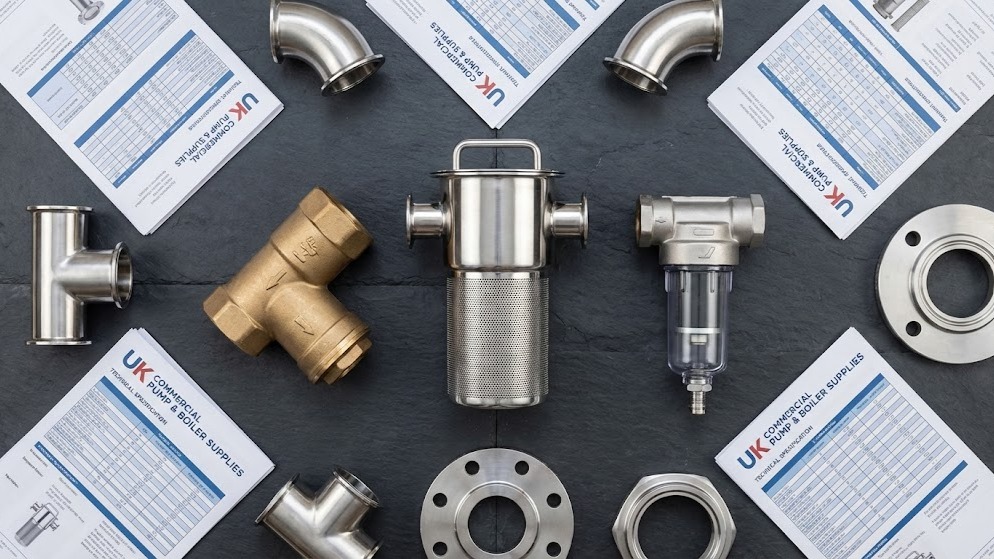
Strainers protect heating systems, pumps, and boilers from debris that causes valve failures, impeller damage, and heat exchanger blockages. A properly specified strainer prevents 80% of premature pump failures in commercial heating installations, yet many engineers select strainers based on price rather than performance criteria. This quality strainer guide 2026 examines the technical specifications that determine strainer reliability.
Material Selection and Corrosion Resistance
The strainer body material determines service life in heating and plumbing systems. Bronze strainers suit domestic installations with temperatures below 110°C and pressures under 16 bar, whilst cast iron variants handle commercial systems operating at higher pressures. Stainless steel strainers (typically 316 grade) provide superior corrosion resistance in systems with glycol mixtures or where water quality presents challenges.
Dezincification-resistant brass (DZR) has become the minimum standard for strainers in potable water systems following updates to BS EN 12165. This specification prevents the selective leaching that causes premature failure in standard brass components. Engineers specifying strainers for systems containing treated water should verify DZR compliance, particularly in soft water areas where dezincification accelerates.
The mesh material requires equal attention. Stainless steel mesh (typically 304 or 316 grade) resists corrosion better than brass alternatives, whilst perforated stainless steel baskets offer higher flow rates where coarse filtration suffices. Grundfos pumps and other premium circulators specify minimum mesh grades in their installation requirements; ignoring these recommendations voids warranties. This strainer selection criteria affects long-term reliability.
Mesh Size and Filtration Efficiency
Mesh size determines which particles the strainer captures. The designation uses mesh number (openings per linear inch) or micron rating (actual opening size). A 40-mesh strainer captures particles larger than 400 microns, whilst an 80-mesh variant stops debris above 180 microns.
Commercial heating systems typically require 40-60 mesh strainers to protect pumps and valves without excessive pressure drop. Finer mesh increases filtration but reduces flow capacity and requires more frequent cleaning. Systems with DHW pumps handling domestic hot water benefit from 60-80 mesh strainers to protect shower valves and tap cartridges from scale particles.
The mesh area matters as much as opening size. Quality strainer baskets provide 3-4 times the pipe cross-sectional area to prevent excessive pressure drop when the mesh loads with debris. Undersized strainers create flow restrictions that reduce pump performance and increase energy consumption; a 0.2 bar pressure drop across a strainer can reduce circulator efficiency by 15% in variable-speed systems. Understanding this strainer selection criteria ensures proper specification.
Pressure Drop Characteristics and Flow Capacity
Clean pressure drop specifications reveal strainer design quality. Premium strainers generate pressure drops below 0.1 bar at rated flow when clean, whilst budget variants may exceed 0.3 bar. This difference compounds as the mesh loads with debris: a strainer starting at 0.3 bar clean pressure drop might reach 0.8 bar after moderate fouling, significantly impacting system performance.
The relationship between flow rate and pressure drop follows a square law; doubling flow rate quadruples pressure drop. Engineers must verify strainer capacity at actual system flow rates, not nominal pipe sizes. A 50mm strainer rated for 50 litres per minute might seem adequate for a 50mm pipe, but if system flow reaches 80 litres per minute, pressure drop increases 2.5 times.
Y-pattern strainers generally offer lower pressure drop than basket strainers of equivalent size because the angled basket allows smoother flow patterns. However, basket strainers provide larger mesh areas and easier maintenance access. The choice depends on installation orientation, maintenance access, and acceptable pressure drop. Systems with Wilo pumps operating near maximum duty benefit from Y-pattern strainers to minimise system resistance.
Temperature and Pressure Ratings
Operating conditions determine strainer specification requirements. Domestic heating systems rarely exceed 90°C and 6 bar, but commercial installations may reach 120°C and 16 bar. The strainer must handle not just normal operating conditions but also fault scenarios; a failed expansion vessel can briefly spike system pressure to safety valve setting, typically 3 bar for domestic systems and 6-10 bar for commercial installations.
Temperature ratings affect seal materials as much as body construction. EPDM seals suit heating systems with glycol mixtures, whilst NBR (nitrile) seals handle petroleum-based fluids. Viton seals provide the widest temperature and chemical resistance but increase component cost. Quality strainers specify seal materials clearly; vague "suitable for heating systems" descriptions often indicate inferior seal compounds that harden and leak within 3-5 years.
Pressure testing standards matter for system integrity. Strainers meeting BS EN 13774 undergo hydraulic testing at 1.5 times maximum working pressure, providing assurance for commercial installations. Budget strainers may lack third-party certification, creating liability concerns if failures cause system damage. Central heating equipment specifications increasingly require documented pressure testing compliance.
Maintenance Access and Cleaning Requirements
Strainer cleaning frequency depends on system cleanliness, water quality, and mesh size. New installations require weekly inspection for the first month as construction debris and flux residues clear from pipework. Established systems need quarterly inspection initially, extending to annual checks once debris levels stabilise.
Blow-down valves allow partial cleaning without system shutdown, useful in commercial installations where downtime costs exceed maintenance labour. The valve connects to the strainer base, allowing debris flushing whilst maintaining system pressure. However, blow-down cleaning only removes loose debris; annual basket removal remains necessary to clear compacted material and inspect mesh condition.
Basket removal design separates quality from budget strainers. Premium variants use large hex nuts or hand-wheels that allow tool-free basket extraction, whilst budget models require multiple spanners and often damage threads during removal. Engineers should physically test basket removal before specifying strainers for difficult-access locations; a strainer requiring 30 minutes and two engineers to service costs more over its lifetime than a premium unit with five-minute basket access.
Magnetic inserts capture ferrous debris that passes through mesh openings, particularly useful in older systems with corroding steel pipework. The magnet requires periodic cleaning but significantly reduces the ferrous oxide accumulation that damages pump seals. Systems with Lowara pumps in commercial applications benefit from magnetic strainers to protect mechanical seals from abrasive particles. This quality strainer guide 2026 emphasises maintenance accessibility.
Installation Orientation and Positioning
Strainer orientation affects performance and maintenance. Y-pattern strainers require specific installation angles, typically 45° below horizontal for horizontal pipes or in any orientation for vertical pipes with downward flow. Incorrect orientation prevents debris settling in the basket, allowing particles to recirculate through the system.
The strainer position in the system determines what it protects. Installing strainers immediately before pumps provides maximum protection but concentrates debris at a single point. Distributed strainer placement, before pumps, boilers, and control valves, reduces individual strainer loading and protects multiple components. However, multiple strainers increase pressure drop and maintenance requirements.
Adequate clearance below the strainer basket allows removal without draining large pipe sections. The minimum clearance equals basket length plus 50mm for handling, typically 200-300mm for domestic strainers and 400-600mm for commercial variants. Insufficient clearance forces engineers to drain systems or cut pipes for maintenance, converting a 10-minute basket cleaning into a two-hour job.
Isolation valves before and after the strainer allow maintenance without system shutdown. Full-bore ball valves provide minimal flow restriction, whilst gate valves cost less but create turbulence that reduces strainer efficiency. The valve specification should match system pressure rating; using 6-bar valves in a 10-bar system creates failure points that compromise safety.
Compliance With British Standards and Building Regulations
Building Regulations Part L requires heating systems to meet efficiency standards that include minimising pressure drops. Oversized or poorly specified strainers increase pump energy consumption, potentially affecting ErP compliance for the complete system. Engineers must document strainer pressure drop calculations to demonstrate regulatory compliance, particularly in commercial installations.
BS EN 806 (specifications for installations inside buildings conveying water for human consumption) requires strainers in potable water systems to prevent debris entering taps and appliances. The standard specifies minimum mesh sizes and materials for different applications. Systems serving multiple properties need strainers meeting BS EN 13959 for communal installations.
Water Supply (Water Fittings) Regulations 1999 prohibit fittings that cause contamination or waste. Strainers with inadequate drainage or blow-down valves lacking backflow prevention can create compliance issues during water authority inspections. Quality strainers include documentation proving regulatory compliance; budget variants often lack certification, creating approval difficulties. Following proper strainer selection criteria ensures regulatory compliance.
Sizing Calculations and Flow Verification
Strainer sizing requires actual flow rate data, not assumptions based on pipe diameter. A 50mm pipe might carry 30 litres per minute in one system and 80 litres per minute in another depending on pump selection and system resistance. Undersized strainers create bottlenecks that increase energy consumption and reduce system performance.
The velocity through the strainer mesh should not exceed 2 metres per second to prevent erosion and excessive pressure drop. This limits flow capacity regardless of pipe size; a strainer with 0.002 square metres of mesh area should not handle flows exceeding 14 litres per minute to maintain acceptable velocity. Engineers must verify mesh area specifications, not just connection size.
Safety factors account for mesh fouling between maintenance intervals. Specifying strainers for 150% of maximum system flow ensures adequate capacity even when debris partially blocks the mesh. Systems with poor water quality or frequent maintenance access issues benefit from 200% safety factors, accepting higher initial cost to prevent flow restrictions.
Manufacturer Reputation and Technical Support
Strainer failures cause system damage that exceeds component cost by orders of magnitude. A £200 strainer failure that damages a £3,000 pump and requires emergency callout creates £5,000+ in total costs. Specifying strainers from manufacturers with documented reliability reduces these risks.
Technical support availability matters when problems occur. Quality manufacturers provide pressure drop calculations, material compatibility guidance, and installation recommendations. Budget suppliers often lack technical staff, leaving engineers to resolve specification questions through trial and error. National Pumps and Boilers provides technical support for strainer selection, ensuring compatibility with pumps and system requirements.
Spare parts availability determines long-term ownership costs. Strainers using standard mesh sizes and seal dimensions allow replacement from multiple suppliers, whilst proprietary designs force engineers to wait for manufacturer parts. Systems requiring high availability should specify strainers with readily available consumables.
Warranty terms reveal manufacturer confidence in product quality. Premium strainers typically include 5-10 year warranties covering materials and workmanship, whilst budget variants offer 1-2 years. The warranty should cover consequential damage; a strainer failure that damages a pump should not leave the customer liable for pump replacement costs. This quality strainer guide 2026 emphasises total cost of ownership over initial price.
Conclusion
Quality strainer specification in 2026 requires evaluating material construction, filtration efficiency, pressure drop characteristics, and maintenance accessibility rather than selecting based on initial cost. Engineers must verify that strainers meet British Standards, provide adequate flow capacity with safety margins, and include documentation proving regulatory compliance. The strainer material should suit system chemistry, mesh size should balance filtration against pressure drop, and installation design should allow maintenance without extensive system shutdown.
Strainer failures create costs far exceeding component prices through pump damage, system downtime, and emergency repairs. Specifying quality strainers from manufacturers with proven reliability and technical support capabilities protects system integrity whilst meeting Building Regulations requirements. Engineers seeking guidance on strainer selection for specific applications can contact the team for technical support and product recommendations.