
 -
- Closed-Loop vs. Open Systems: Different Water Treatment Requirements
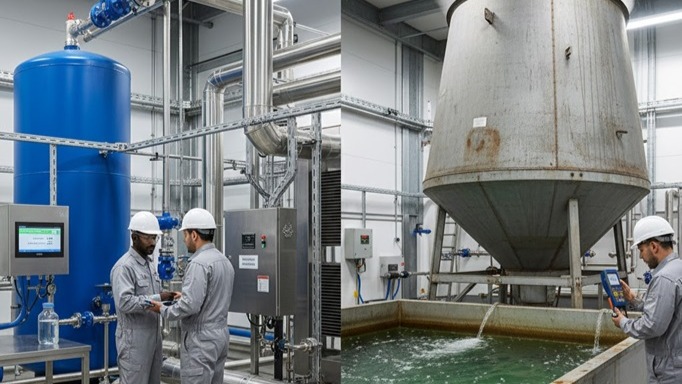
Treatment requirements for closed loops differ fundamentally from approaches suitable for open vented systems. Understanding these distinctions enables facilities managers and heating engineers to specify appropriate protection strategies matching actual system configurations. The treatment approach optimised for modern pressurised installations would prove inadequate for traditional open vented arrangements, whilst treatment designed for atmospheric exposure would represent unnecessary expense and complexity for properly sealed circuits.
The distinction between closed and open systems centres on atmospheric exposure. Closed-loop systems operate under pressure with expansion vessels absorbing volume changes, maintaining isolation from external air. Open systems employ feed and expansion tanks exposed to the atmosphere, with water surfaces open to air and evaporative losses requiring continuous makeup. These fundamental differences drive divergent treatment requirements affecting chemical selection, dosing frequency, monitoring intensity, and overall programme design.
Characteristics of Closed-Loop Systems
Modern heating installations predominantly employ closed-loop configurations. Expansion vessels pre-charged with air or nitrogen absorb water volume changes as temperature varies, maintaining system pressure without atmospheric exposure. Fill and commissioning valves permit initial charging and occasional makeup additions, but normal operation proceeds without external water introduction.
This sealed system treatment context offers significant advantages for water quality management. The closed configuration minimises ongoing oxygen introduction, reducing the primary driver of ferrous corrosion in heating systems. Treatment chemicals added during commissioning or maintenance remain concentrated, without dilution from continuous makeup water. Biological contamination risks reduce substantially without atmospheric exposure, providing continuous inoculation.
National Pumps and Boilers supplies expansion vessels, pressurisation equipment, and related components supporting sealed system operation. These products enable the closed loop configurations that simplify water treatment whilst protecting valuable heating equipment from water quality related damage.
Properly sealed systems may sustain inhibitor protection for extended periods between maintenance interventions. Annual testing typically confirms that treatment remains effective, with top-up dosing required only when testing indicates concentration decline. This reduced intervention frequency translates to lower ongoing treatment costs compared with open systems requiring continuous attention.
Challenges of Open Vented Systems
Traditional open vented heating systems operate with feed and expansion tanks mounted at high points within buildings, typically in loft spaces or dedicated tank rooms. These tanks maintain water surfaces exposed to atmosphere, with air able to dissolve into system water continuously. Ball valve arrangements permit automatic makeup when evaporation or minor leakage reduces water levels.
The atmospheric exposure fundamental to open vented operation creates persistent water treatment challenges. Oxygen dissolves continuously into tank water, maintaining conditions favouring active corrosion throughout the system. Evaporative losses concentrate dissolved solids whilst requiring fresh makeup introduction. Airborne contaminants including dust, biological material, and pollutants enter freely through tank openings.
Treatment formulations prove inadequate for open system applications. Oxygen scavenging compounds intended to consume residual dissolved gases exhaust rapidly against continuous oxygen introduction. Inhibitor concentrations decline through combination with atmospheric oxygen whilst makeup water dilutes remaining protection. Treatment programmes for open systems must acknowledge these dynamics and incorporate compensating measures.
Grundfos pumps installed in open vented systems face increased stress from water quality variations inherent to atmospheric exposure. Whilst quality pumps demonstrate resilience under challenging conditions, optimising water treatment within the constraints of open system operation extends service life and maintains performance.
Treatment Approaches for Closed-Loop Systems
Sealed system treatment programmes begin with proper initial dosing during commissioning or following system cleaning. Inhibitor chemicals dosed at manufacturer-recommended concentrations establish protective conditions that properly sealed systems then maintain with minimal intervention. Multi-metal formulations protect the range of materials commonly present in heating installations, including steel, cast iron, copper, brass, and increasingly aluminium.
pH buffering agents maintain water alkalinity within optimal ranges, typically 8.0 to 10.0 for systems without significant aluminium content. These compounds resist pH drift that would otherwise occur as system water interacts with metal surfaces and absorbed carbon dioxide. Stable pH supports continued inhibitor effectiveness whilst minimising corrosion rates at metal-water interfaces.
Oxygen scavenging compounds address residual dissolved gases present after initial filling or introduced through minor makeup additions. Catalysed sulphite formulations consume dissolved oxygen preferentially, preventing its participation in corrosion reactions. In genuinely sealed systems with minimal oxygen ingress, scavenger consumption remains low, extending treatment effectiveness between maintenance interventions.
Wilo pumps and other quality circulators benefit from the stable, protective conditions that closed loop water treatment maintains. Proper treatment prevents magnetite formation, protects bearing surfaces from debris damage, and maintains hydraulic efficiency throughout intended service life.
Treatment Approaches for Open Systems
Open vented systems require treatment programmes acknowledging continuous oxygen availability and makeup water introduction. Higher inhibitor dosing may prove necessary to compensate for accelerated consumption. More frequent testing and replenishment ensures that protective concentrations remain adequate between scheduled maintenance visits.
Sealed system treatment chemicals often prove unsuitable for open applications. Oxygen scavengers exhaust rapidly against atmospheric exposure, providing little sustained benefit. Volatile inhibitor components may escape through evaporation. Formulations specifically designed for open system challenges provide more appropriate protection, though at typically higher ongoing cost.
Tank treatment deserves specific attention in open system programmes. Lidded tanks reduce but cannot eliminate atmospheric exposure. Screened overflow and vent connections reduce contamination ingress whilst permitting necessary air exchange. Float valve arrangements should maintain adequate water depth without excessive surface area increasing oxygen dissolution rates.
DAB pumps installed in open vented heating systems require particular attention to water quality management. The inherent challenges of open system operation increase treatment requirements, but properly designed programmes maintain conditions supporting reliable pump performance.
Makeup water quality significantly impacts open system treatment effectiveness. Hard makeup water introduces scaling potential with each replenishment. Softened or treated makeup reduces this burden whilst still requiring inhibitor adjustment. Systems in hard water areas may require water softening or treatment for optimal results.
Glycol Systems and Freeze Protection
Closed systems incorporating glycol for freeze protection introduce additional treatment considerations. Glycol solutions require compatible inhibitor packages, as some treatment chemicals interact unfavourably with antifreeze compounds. Premixed glycol products typically include integrated inhibitor packages designed for specific concentration ranges.
Glycol concentration monitoring becomes an essential component of treatment programmes for protected systems. Refractometer testing verifies that antifreeze levels remain adequate for freeze protection whilst not exceeding levels that impair heat transfer. Annual glycol testing should accompany water quality assessment, with both parameters requiring maintenance within specified ranges.
Dilution from makeup water reduces glycol concentration over time, potentially compromising freeze protection. Systems experiencing significant water loss require investigation to identify and rectify leakage points, with glycol replenishment following makeup additions. Treatment programmes should specify makeup procedures maintaining both glycol and inhibitor concentrations.
Expansion vessels sized appropriately for glycol system operation accommodate the different expansion characteristics of antifreeze solutions compared with plain water. Glycol mixtures expand more than water for equivalent temperature increases, requiring larger vessels or higher pre-charge pressures. Proper vessel specification supports stable sealed system treatment conditions.
District and Community Heating Applications
Large-scale heating networks present unique treatment challenges for closed systems. Water volumes measured in thousands of litres require substantial initial dosing investment and precise concentration calculations. Extended pipe runs create multiple potential leakage points, with makeup requirements varying across network sections.
Continuous monitoring suits critical district heating infrastructure where failures impact multiple properties. Automated conductivity, pH, and inhibitor concentration monitoring provides real-time visibility of water quality parameters. Alert thresholds trigger investigation and response before problems develop into service-affecting failures.
Zone isolation capability enables partial network treatment when sections require maintenance or remediation. Isolation valves and treatment injection points distributed across networks support targeted interventions without disrupting entire systems. Treatment programme design should accommodate partial operation and zone-specific requirements.
Lowara pumps suitable for commercial and district heating applications operate within demanding hydraulic and water quality environments. Premium pump investments in large-scale systems justify comprehensive water treatment programmes protecting equipment across extended networks.
System Assessment and Treatment Selection
Proper treatment programme design begins with accurate system characterisation. Assessment should confirm whether systems operate as truly sealed closed loops or incorporate atmospheric exposure through open tanks, air separators, or other pathways. Hybrid configurations combining elements of both types require treatment approaches addressing all identified exposure routes.
System metallurgy surveys identify all metals present within circuits, enabling selection of multi-metal compatible inhibitors. Aluminium components, increasingly common in modern condensing boilers, require specific protection from alkaline conditions that benefit steel and iron. Mixed-metal systems demand carefully balanced formulations providing protection across all materials.
Water volume determination supports accurate dosing calculations. Component-based calculations using radiator sizes, pipe lengths, and boiler water contents provide volume estimates. Dilution testing using tracer compounds offers more precise measurement when accurate dosing proves critical for large or complex installations.
Sealed system treatment programmes should specify commissioning procedures, testing schedules, acceptable parameter ranges, and response protocols for out-of-specification results. Documentation supports consistency across maintenance personnel whilst demonstrating due diligence in equipment protection. Records enable trend analysis identifying gradual parameter drift before problems become serious.
Treatment approaches for sealed and open systems require matching to actual system configurations. Open systems inappropriately treated as closed experience accelerated deterioration despite treatment investment. Closed systems receiving open-system treatment incur unnecessary expense without proportional benefit. Accurate assessment enables cost-effective protection matched to actual requirements.
For guidance on assessing system configurations and selecting appropriate treatment programmes, contact the technical specialists for expert recommendations based on specific installation characteristics.