

Commercial Boiler Buying Guide 2026: What to Look for Before You Invest
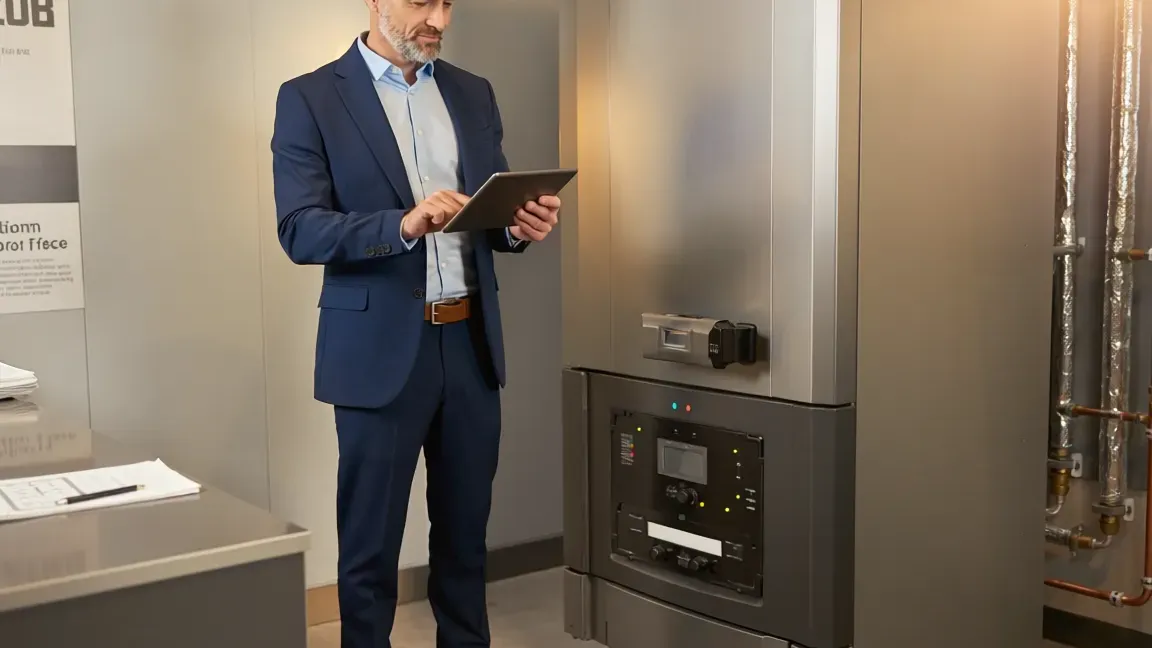
Selecting a commercial boiler represents one of the most significant capital investments a facility manager will authorise, yet many purchasing decisions focus disproportionately on initial equipment cost whilst overlooking factors that determine actual performance across a 15-20 year operational lifespan. This commercial boiler buying guide 2026 examines the technical and commercial considerations that separate sound investments from costly mistakes - from accurate heat load calculations to fuel type selection, efficiency metrics to control integration.
The commercial heating landscape has shifted considerably. Tightened emission regulations, hydrogen-readiness requirements, and evolving Building Regulations Part L standards mean specifications that seemed adequate three years ago now fall short of current compliance thresholds. Buildings procuring heating equipment in 2026 must account for these changes at the specification stage rather than retrofitting compliance after installation.
Understanding Commercial Boiler Capacity Requirements
Undersized boilers struggle during peak demand periods and force continuous full-output operation that accelerates component wear. Oversized units cycle excessively and operate inefficiently during partial load conditions that represent the majority of annual runtime. Getting capacity right requires proper heat load calculation rather than guesswork based on existing equipment or generic floor area estimates that ignore building-specific variables.
Accurate heat load calculations account for building fabric, occupancy patterns, ventilation requirements, and DHW demand. Many existing commercial buildings operate with boilers sized using outdated rules of thumb - often 20-30% oversized compared to actual requirements when properly calculated to current standards. A competent heating engineer conducts room-by-room heat loss calculations conforming to CIBSE guidelines, factoring U-values for walls, glazing, roofs, and floors alongside ventilation rates appropriate to building use.
Process heating loads require separate consideration from space heating calculations. Facilities with commercial kitchens, laundries, or industrial processes need DHW capacity factored independently, as peak hot water demand rarely coincides with maximum space heating load. Sizing must accommodate both requirements without double-counting peak conditions that cannot physically occur simultaneously.
For commercial applications where circulation pump selection must support the heat distribution system that calculated loads determine, Grundfos offers a comprehensive range of commercial pumping solutions engineered to deliver calculated flow rates against actual system resistance - ensuring the capacity sized at the design stage reaches every zone reliably throughout the building.
Allowing for Future Expansion
Commercial properties change substantially over operational lifespans. Building extensions, occupancy increases, or process modifications affect heating requirements in ways that original calculations cannot predict. Specifying boilers with 10-15% capacity margin accommodates reasonable expansion without the substantial oversizing that compromises efficiency and increases cycling losses throughout the system's service life.
Modular boiler configurations offer superior flexibility compared with single large units. Adding another boiler module to a cascade system proves simpler and more cost-effective than replacing an entire heating plant when capacity proves insufficient - an important consideration for buildings with documented expansion plans within the equipment's design life.
Fuel Type Selection and Long-Term Operating Costs
Fuel choice affects operational expenditure more significantly than any other specification decision. Current fuel prices represent only part of the equation - infrastructure requirements, maintenance implications, and regulatory trajectory all influence total cost of ownership across the commercial boiler buying guide 2026 planning horizon.
Natural Gas vs Oil-Fired Systems
Natural gas remains the predominant fuel for commercial heating across the UK, offering lower carbon emissions and reduced maintenance compared with oil-fired alternatives. Gas boilers require no on-site fuel storage, eliminating tank inspection requirements, bunding costs, and the spillage risks associated with bulk fuel storage in commercial locations. Combustion characteristics produce cleaner operation with extended service intervals compared with oil equivalents.
Oil-fired systems suit locations without mains gas connection, though infrastructure costs include storage tanks, bunding, and regular inspections under pollution prevention regulations. Kerosene and gas oil prices fluctuate more dramatically than natural gas tariffs, introducing budgetary uncertainty that compounds over the boiler's 15-20 year lifespan. Oil combustion also deposits more residue on heat exchanger surfaces, requiring annual cleaning to maintain rated efficiency.
Where oil-fired installations require robust DHW circulation systems handling the temperature and flow characteristics of high-output commercial applications, Andrews commercial water heating equipment - manufactured in the UK with a track record in demanding continuous-operation environments - provides the reliability and output capacity that oil-fired commercial sites require for consistent hot water delivery.
Hydrogen-Ready Boilers and Future-Proofing
Government policy increasingly emphasises hydrogen as a potential replacement for natural gas in existing networks. Hydrogen-ready boilers operate on natural gas currently but can convert to 100% hydrogen with component modifications when supply infrastructure develops. Specifying hydrogen-ready equipment adds 5-10% to initial capital cost but provides meaningful protection against premature obsolescence if hydrogen conversion proceeds in commercial areas.
Major manufacturers including Remeha now offer hydrogen-ready commercial ranges tested for dual-fuel capability, providing a credible specification pathway for facilities with 15-year planning horizons where hydrogen-readiness represents genuine risk mitigation rather than speculative investment. The hydrogen timeline remains uncertain, with pilot projects ongoing but no confirmed national rollout schedule, making this a risk-management decision rather than an immediate operational requirement.
Efficiency Ratings and What They Actually Mean
Boiler efficiency figures quoted in manufacturer literature often represent peak performance under laboratory conditions. Real-world efficiency depends on operating patterns, system design, and maintenance standards - factors that headline ratings cannot capture.
Gross efficiency figures measured at full load tell only part of the performance story. Seasonal efficiency accounts for part-load operation, cycling losses, and varying return temperatures that reflect actual commercial building operation. Commercial boilers reference net seasonal efficiency calculated per EN 15502, with condensing boilers achieving rated efficiency only when return temperatures fall below approximately 54°C - conditions requiring specific system design to achieve in practice.
Condensing boilers cost 15-25% more than non-condensing equivalents but deliver fuel savings of 15-20% in properly designed systems, with payback periods typically ranging from 3-5 years. Building Regulations Part L now mandates condensing technology for most commercial applications, making efficiency comparison between condensing models the relevant consideration rather than the condensing versus non-condensing decision that faced specifiers in earlier eras.
For commercial heating systems requiring condensing boiler performance with high modulation capability, Vaillant commercial boilers provide stainless steel heat exchangers that resist the corrosion associated with continuous condensing operation - particularly valuable in installations where water treatment consistency cannot always be guaranteed throughout the equipment's service life.
Compliance with Current Building Regulations
Regulatory compliance represents a minimum threshold rather than an aspiration. Specifications must satisfy current standards and anticipate foreseeable tightening during the equipment's operational life - a consideration that distinguishes forward-looking commercial boiler buying guide 2026 thinking from short-term compliance-focused procurement.
Part L Requirements for Commercial Buildings
Building Regulations Part L (Conservation of Fuel and Power) sets minimum efficiency standards, system controls, and commissioning requirements for commercial heating installations. The 2021 update introduced more stringent efficiency thresholds and expanded control requirements. New commercial boiler installations must achieve minimum seasonal efficiency levels, typically 92% or higher for gas-fired condensing boilers, alongside weather compensation, optimum start controls, and zoning appropriate to the building's usage patterns.
Replacement boiler projects in existing buildings face slightly relaxed requirements compared with new construction but still require substantial controls upgrades when replacing older equipment. Planning for controls infrastructure costs prevents budget surprises during installation - a detail that many competitive tenders omit until the project reaches site and compliance requirements become unavoidable.
The correct central heating system design from the outset ensures that condensing boilers achieve the return temperatures that deliver their rated seasonal efficiency under Part L assessment - not merely on paper at the specification stage, but consistently throughout real-world commercial building operation.
Emission Standards and Environmental Legislation
NOx (nitrogen oxide) emissions face increasingly strict limits under environmental legislation. Low-NOx burners reduce nitrogen oxide production through modified combustion techniques, achieving Class 5 or Class 6 emissions ratings under EN 15502 classification. Urban areas with air quality management zones impose particularly stringent limits, and facilities in these locations require ultra-low NOx equipment - an additional capital cost of 10-15% that ensures planning compliance and avoids future retrofit requirements as air quality regulations tighten.
For installations requiring precisely specified DHW system components that comply with current Part L controls requirements, DHW pumps from established manufacturers provide the variable speed and temperature management capabilities that modern commercial DHW systems require to demonstrate regulatory compliance alongside reliable hot water delivery.
System Configuration: Modular vs Single Boiler
Single large boilers suit constant high-load applications with minimal seasonal variation. Modular configurations offer clear advantages for buildings with variable demand patterns or critical reliability requirements - conditions that describe the majority of commercial buildings in the UK market.
Cascade Systems for Variable Demand
Cascade systems employ multiple smaller boilers rather than one large unit, with controls sequencing operation to match instantaneous demand. A four-boiler cascade operates one unit during low demand, two at medium load, three at higher demand, and all four during peak conditions. This staging maintains individual boilers closer to optimal efficiency points compared with a single large unit cycling or operating at low fire rates during partial load conditions that represent the majority of annual runtime.
For cascade systems requiring reliable flow control and balanced distribution across multiple circuits, pump valves correctly specified and commissioned ensure each boiler module receives appropriate water flow - preventing the hydraulic imbalances that compromise cascade efficiency and create temperature inconsistencies across different building zones.
Redundancy and Business Continuity
Single boiler configurations create single points of failure. A breakdown during heating season leaves buildings without heating until repairs complete - potentially days or weeks depending on component availability and specialist attendance. Modular systems provide inherent resilience: a four-boiler cascade continues operating at 75% capacity if one unit fails, maintaining partial heating whilst repairs proceed without the emergency urgency that single-boiler failures create.
For pressurisation and expansion management within cascade boiler installations, Mikrofill pressurisation units engineered for commercial multi-boiler systems provide the stable operating pressure control that protects boiler plant and distribution components when individual units cycle in and out of service according to building load.
Specifying N+1 capacity - four 250kW boilers for a 750kW load rather than three - provides full redundancy at modest additional capital cost. For healthcare facilities, hotels, and buildings where heating interruption causes serious operational or welfare consequences, this modest premium represents straightforward risk management.
Control Systems and Integration Capabilities
BMS Compatibility Requirements
Building Management Systems coordinate HVAC, lighting, and access control across commercial properties. Boiler integration allows centralised monitoring, remote adjustment, and data logging for energy analysis. BACnet, Modbus, and established open protocols enable communication between boilers and BMS platforms - specifying open standards rather than proprietary systems prevents vendor lock-in and simplifies future upgrades when control technology evolves.
National Pumps and Boilers supplies equipment from manufacturers supporting industry-standard communication protocols, providing the integration flexibility that modern commercial buildings require when coordinating heating plant with wider building services management systems and energy monitoring platforms.
Remote monitoring capabilities alert maintenance teams to developing faults before failures occur. Tracking parameters such as firing rates, flue temperatures, and burner cycle counts identifies inefficient operation or component degradation requiring attention, enabling proactive maintenance that reduces emergency callout costs and unplanned downtime.
Weather Compensation and Load Optimisation
Weather compensation adjusts flow temperatures based on outdoor conditions, reducing boiler output during milder weather when lower temperatures satisfy heating requirements. This automatic adjustment cuts fuel consumption by 10-15% compared with fixed temperature control - a saving that accumulates throughout the heating season without any manual intervention.
Load optimisation algorithms coordinate multiple boilers in cascade systems, selecting operating combinations that maximise overall system efficiency. Advanced controls account for individual boiler efficiency curves, selecting the most efficient combination for current demand levels rather than simply sequencing units on and off at fixed thresholds. Optimum start controls calculate the latest moment to commence heating before occupancy, avoiding unnecessary operation whilst ensuring comfort upon arrival.
Manufacturer Support and Parts Availability
Service network coverage varies significantly between manufacturers. Network density determines response times during heating season, which proves critical for business continuity in buildings where heating interruption has immediate operational consequences. Manufacturers with comprehensive UK coverage maintain regional parts distribution and factory-trained engineers across all areas - a practical specification requirement alongside technical performance data.
Parts availability determines repair timescales. Common components - pumps, expansion vessels, controls - should stock at regional depots for next-day availability. Warranty terms deserve careful examination: conditions requiring annual servicing by authorised engineers, specific water quality standards, and system cleanliness requirements are standard, but exclusions relating to water quality or installation standards can undermine warranty protection if not addressed at commissioning.
Total Cost of Ownership Beyond Purchase Price
Capital cost represents roughly 30-40% of total ownership cost over a commercial boiler's operational life. A boiler consuming £20,000 annually in fuel costs £300,000 over 15 years. A 5% efficiency improvement saves £15,000 over that period - substantially more than typical price differences between efficiency tiers. Maintenance contracts, repair costs, and replacement parts add further operational expenditure that price-focused tendering systematically undervalues.
Pumping equipment quality affects system reliability and operating costs across the full ownership period. For DHW circulation requiring equipment that maintains consistent performance under continuous commercial demand, Lowara DHW pump solutions provide the durability that reduces both emergency callout frequency and the cumulative replacement costs that inferior ancillary components generate over a 15-20 year system lifespan.
Lifecycle cost analysis comparing options should include capital cost, annual fuel consumption at projected usage levels, maintenance contract costs, expected component replacement schedules, downtime costs, and eventual decommissioning expenses. This comprehensive assessment consistently favours higher-efficiency equipment despite elevated capital costs - the calculation changes only when fuel costs remain unusually low or usage hours prove minimal, conditions that rarely apply to mainstream commercial heating applications.
Conclusion
Commercial boiler procurement demands rigorous technical evaluation rather than price-focused tendering. Accurate capacity calculations, appropriate fuel selection, realistic efficiency assessment, and lifecycle cost analysis separate sound investments from expensive mistakes that reveal themselves gradually over years of suboptimal operation.
Regulatory compliance under Building Regulations Part L represents a baseline, with hydrogen-readiness and ultra-low NOx emissions providing future-proofing against standards that will continue tightening throughout the equipment's operational life. System configuration choices between modular and single boiler approaches should reflect actual demand profiles, redundancy requirements, and the efficiency optimisation opportunities that variable-load commercial buildings present.
For detailed technical guidance on commercial boiler selection and system design suited to specific facility requirements, Contact Us to discuss project specifications with experienced heating engineers who understand the full range of technical, commercial, and regulatory considerations that 2026 installations must address.