

Common Hazards in Commercial Boiler Rooms and How to Avoid Them
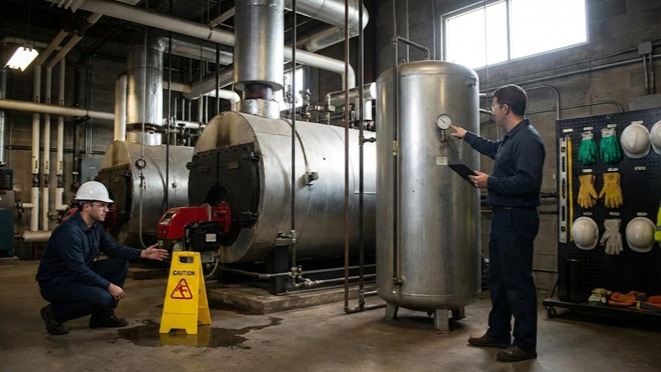
for buildings across the UK. However, these critical spaces present unique challenges that demand constant vigilance and comprehensive safety measures. Understanding boiler hazards and implementing proper safety in boilers protocols can prevent serious injuries, costly downtime, and regulatory violations.
The confined nature of boiler rooms, combined with high temperatures, elevated pressures, and chemical treatments, creates an environment where multiple risks converge. Facility managers and maintenance personnel must recognise these dangers and establish robust prevention strategies. National Pumps and Boilers specialises in commercial boiler systems and understands the critical importance of maintaining safe operating environments.
Understanding the Unique Risks of Commercial Boiler Rooms
Why Commercial Boiler Rooms Require Enhanced Safety Protocols
Commercial boiler installations differ significantly from domestic systems in scale, complexity, and risk profile. These facilities typically operate at higher pressures and temperatures, with larger volumes of water and fuel creating greater potential consequences from failures. The Pressure Systems Safety Regulations 2000 recognise these enhanced risks, requiring written schemes of examination and competent person inspections for commercial installations.
Multiple systems operating in proximity compound the hazards. A single commercial boiler room might contain several boilers, pumps, expansion vessels, chemical dosing equipment, and control systems - each presenting distinct safety considerations. The concentration of these elements in often-limited spaces increases the likelihood of accidents if proper precautions aren't maintained.
UK health and safety legislation places clear obligations on employers and facility managers. The Health and Safety at Work Act 1974 requires organisations to ensure the health, safety, and welfare of employees and others affected by their operations. For commercial boiler rooms, this extends to regular inspections, proper training, and documented safety procedures. Insurance companies frequently audit these facilities, with premium rates reflecting the organisation's demonstrated commitment to safety in boilers.
The Cost of Inadequate Safety Measures
The financial implications of boiler room incidents extend far beyond immediate repair costs. Production or service interruptions from boiler failures can cost businesses thousands of pounds daily, whilst legal liabilities from employee injuries may result in substantial compensation claims and prosecution fines. The Health and Safety Executive (HSE) actively prosecutes organisations following serious incidents, with penalties reaching hundreds of thousands of pounds for severe breaches.
Insurance considerations become increasingly important as risk levels rise. Insurers may increase premiums substantially following incidents or refuse coverage entirely if organisations fail to demonstrate adequate safety measures. Some policies explicitly require documented maintenance schedules, staff training records, and regular professional inspections as conditions of coverage.
Reputational damage from safety incidents can prove equally costly. News of serious boiler room accidents spreads quickly through industry networks and may deter potential clients, employees, and business partners. Organisations known for strong safety cultures, conversely, often find recruitment easier and enjoy enhanced business reputations.
Primary Hazard Categories in Commercial Boiler Rooms
High-Temperature Surfaces and Thermal Burn Risks
Boiler hazards related to extreme temperatures represent one of the most prevalent dangers in commercial installations. Boiler shells, flue pipes, and steam lines regularly exceed 100°C, with some surfaces reaching temperatures above 200°C during normal operation. Contact with these surfaces causes immediate, severe burns requiring medical treatment.
Proper insulation serves dual purposes: improving energy efficiency whilst protecting personnel from accidental contact. British Standards specify minimum insulation requirements for various temperature ranges, with additional protective barriers required in areas where personnel regularly work. High-temperature surfaces that cannot be adequately insulated should be clearly marked with warning signs conforming to BS EN ISO 7010 standards.
Modern commercial boilers incorporate safety features including cool-to-touch exteriors and guarded hot components. However, associated pipework, heat exchangers, and ancillary equipment often remain exposed. Facility managers must conduct regular audits identifying all high-temperature surfaces and ensuring appropriate protection measures remain effective.
Personal protective equipment (PPE) provides essential protection when working near hot surfaces. Heat-resistant gloves rated for temperatures encountered in specific tasks, along with appropriate clothing and footwear, should be readily available. Training must emphasise that PPE supplements - rather than replaces - proper engineering controls and safe working procedures.
Pressure System Failures and Explosion Risks
Commercial boilers operate under significant pressure, with even "low-pressure" systems exceeding atmospheric pressure by substantial margins. Pressure vessel failures release tremendous energy instantaneously, potentially causing catastrophic damage and fatal injuries. The Pressure Systems Safety Regulations 2000 mandate written schemes of examination by competent persons, specifically addressing these risks.
Multiple factors contribute to pressure system failures. Corrosion weakens vessel walls over time, particularly in areas experiencing thermal stress or chemical attack. Inadequate water treatment accelerates this degradation, whilst blocked safety valves or pressure relief devices prevent systems from safely venting excess pressure. Manufacturing defects, improper installation, or unauthorised modifications also compromise pressure vessel integrity.
Pressure relief valves represent the primary safety device preventing over-pressurisation. These valves must be correctly sized for the system, regularly tested, and never blocked, isolated, or tampered with. The written scheme of examination should specify inspection and testing frequencies based on the specific installation's risk profile, typically requiring annual or more frequent inspections.
Regular testing schedules verify that pressure control systems function correctly. This includes checking pressure switches, limit controllers, and automated shutdown systems. Documentation of these tests provides evidence of compliance and helps identify deteriorating components before failures occur. Pressurisation units require particular attention, as failures in these systems can affect multiple connected boilers simultaneously.
Chemical Exposure and Water Treatment Hazards
Water treatment chemicals essential for boiler operation present significant health risks if improperly handled. Alkaline treatment compounds can cause severe chemical burns, whilst some biocides and oxygen scavengers pose inhalation hazards or toxic exposure risks. The Control of Substances Hazardous to Health (COSHH) Regulations 2002 require formal risk assessments and control measures for all chemicals used.
Proper storage facilities for water treatment chemicals should include secure, well-ventilated areas away from incompatible substances. Chemicals must remain in original containers with intact labels, and Safety Data Sheets (SDS) should be immediately accessible to personnel. Spill kits appropriate for the specific chemicals used should be positioned nearby, with staff trained in their deployment.
Handling procedures must minimise exposure risks. This includes wearing appropriate PPE such as chemical-resistant gloves, eye protection, and aprons when handling concentrated chemicals. Dosing equipment should prevent direct contact, with automatic systems preferred where feasible. Never mix water treatment chemicals unless specifically directed by manufacturer instructions, as dangerous reactions may occur.
Respiratory protection becomes necessary when working with certain boiler chemicals, particularly in confined spaces where vapours may accumulate. Fit-tested respirators appropriate for the specific chemical hazards should be provided, along with training in proper use and maintenance. Ventilation systems must operate continuously when chemicals are handled or added to systems.
Confined Space Dangers and Ventilation Issues
Many commercial boiler rooms meet the legal definition of confined spaces under the Confined Spaces Regulations 1997. These regulations apply to spaces that are substantially enclosed, where serious injury could occur from hazardous substances or conditions. Even large boiler rooms may qualify if ventilation proves inadequate or emergency egress becomes difficult.
Oxygen depletion represents a serious risk in boiler rooms. Combustion processes consume oxygen, whilst leaks from central heating pumps and other sealed systems may displace oxygen with nitrogen or other gases. Carbon monoxide from incomplete combustion poses particular danger, as this odourless gas causes unconsciousness and death without warning.
Adequate ventilation systems must provide continuous fresh air supply based on the total heat input of installed boilers. Building Regulations Approved Document J specifies minimum ventilation requirements, though additional capacity may be necessary for larger installations. Ventilation systems should include both high-level and low-level openings to ensure effective air circulation, as different gases have varying densities.
Gas detection systems provide essential warning of dangerous atmospheres. Fixed detectors for carbon monoxide, oxygen levels, and combustible gases should be installed with audible and visual alarms positioned where they'll alert personnel immediately. Portable gas detectors should be used when entering after extended closures or when conducting maintenance that might affect atmospheric conditions.
Electrical Hazards and Control System Risks
Modern commercial boilers incorporate sophisticated electrical control systems managing combustion, water levels, temperatures, and safety interlocks. These systems operate at both mains voltage and low voltage, with exposed components potentially causing electric shock or electrocution. The Electricity at Work Regulations 1989 require that electrical systems are maintained to prevent danger.
Moisture and electrical systems create particularly hazardous combinations. Boiler rooms inevitably experience elevated humidity from steam leaks, condensation, and occasional water system maintenance. Electrical installations must meet appropriate IP (Ingress Protection) ratings for the environment, with regular inspections ensuring seals, gaskets, and enclosures remain intact.
Lockout/tagout (LOTO) procedures prevent accidental energisation during maintenance work. Before servicing electrical components, qualified personnel must isolate power supplies, verify de-energisation, and apply locks preventing inadvertent reconnection. Tags clearly indicate who applied the locks and why systems remain isolated. Multiple workers performing concurrent maintenance each apply individual locks, ensuring systems cannot be energised until everyone completes work safely.
Only Gas Safe registered engineers should perform work on gas-fired boilers, whilst qualified electricians must handle electrical system modifications or repairs. The complexity of modern boiler controls demands specialised knowledge, with manufacturers often providing or recommending specific training programmes for service personnel. Attempting repairs without proper qualifications not only violates regulations but significantly increases accident risks.
Implementing Comprehensive Prevention Strategies
Establishing Robust Maintenance Schedules
Preventive maintenance represents the foundation of safety in boilers, identifying potential hazards before they cause incidents. Daily visual inspections should check for visible leaks, unusual noises, or odours, pressure and temperature gauge readings, and proper burner operation. Weekly checks might include testing safety controls, examining water treatment chemical levels, and inspecting combustion air and flue gas pathways.
Monthly maintenance tasks typically involve more detailed component inspections. This includes examining pump operations, checking expansion vessels for proper pressurisation, testing safety valves, and reviewing control system logs for anomalies. Quarterly tasks often add water quality testing, detailed electrical system checks, and combustion efficiency analysis.
Documentation proves critical both for regulatory compliance and operational safety. Maintenance logs should record all inspections, tests, repairs, and component replacements with dates, findings, and personnel involved. This creates audit trails demonstrating compliance whilst helping identify recurring problems indicating underlying issues requiring attention.
Manufacturer maintenance guidelines provide system-specific requirements based on design characteristics and operational parameters. Remeha commercial boilers, for example, specify particular service intervals and procedures validated through extensive testing. Following these guidelines ensures warranty coverage whilst optimising safety and reliability.
Training Personnel for Hazard Recognition and Response
Comprehensive training programmes equip personnel to recognise boiler hazards and respond appropriately. Initial training should cover boiler operating principles, specific hazards present in the facility, emergency procedures, and proper use of safety equipment. This establishes foundational knowledge essential for safe operations.
Hazard recognition skills develop through both formal instruction and practical experience. Training should teach personnel to identify warning signs including unusual noises, vibrations, smells, or visual indicators like water leaks, steam escapes, or flame pattern changes. Encouraging proactive hazard reporting without fear of blame creates safety cultures where potential problems surface early.
Emergency response training prepares personnel for various scenarios including fires, gas leaks, pressure system failures, and chemical spills. Practical drills reinforce theoretical knowledge, building muscle memory for emergency situations where stress and urgency might impair decision-making. Evacuation routes, assembly points, and emergency contact procedures should be rehearsed regularly.
Gas Safe registration remains legally mandatory for anyone working on gas appliances, including commercial boilers. This qualification ensures personnel understand gas safety fundamentals and remain current with evolving standards. Additional specialist qualifications may be necessary for larger commercial installations, pressure vessels, or specific boiler technologies.
Installing Proper Safety Equipment and Monitoring Systems
Modern safety equipment dramatically reduces risks in commercial boiler rooms. Fixed gas detection systems continuously monitor for carbon monoxide, combustible gases, and oxygen levels, providing early warning of dangerous conditions. These systems should integrate with building management systems and emergency lighting, triggering automatic responses when hazardous conditions develop.
Fire suppression systems designed specifically for boiler room applications protect against combustion-related fires. Automatic systems detect fires in their early stages, suppressing flames before significant damage occurs. These systems must consider the types of fires likely in boiler environments, with some designs addressing electrical fires, fuel fires, or general combustion.
Emergency shut-off controls positioned at room exits allow personnel to quickly isolate systems whilst evacuating. These "scram" switches should be clearly marked, readily accessible even in limited visibility, and regularly tested to ensure functionality. Control systems should be programmed to achieve safe shutdown sequences rather than simply cutting power, preventing secondary hazards from improper shutdown procedures.
Temperature and pressure monitoring equipment provides real-time data about system operation. Digital displays, trending capabilities, and alarm functions alert personnel to developing problems before they become critical. Historical data helps identify gradual deterioration in component performance, enabling proactive maintenance interventions. Grundfos commercial circulators often include integrated monitoring capabilities that interface with building management systems.
Creating Clear Standard Operating Procedures
Written procedures document safe methods for all regular tasks and emergency situations. Operating procedures should detail startup and shutdown sequences, normal operation monitoring, routine adjustments, and proper responses to common fault conditions. These documents should be readily accessible in the boiler room, with key procedures posted near relevant equipment.
Emergency response plans address specific scenarios based on risk assessments. Plans should identify potential emergencies, describe immediate response actions, specify who needs notification, outline evacuation procedures, and define recovery operations. Regular reviews ensure plans remain current as equipment, personnel, or operating conditions change.
Communication protocols for hazard reporting ensure that identified concerns reach appropriate decision-makers quickly. Simple reporting systems encouraging frontline staff to flag potential issues prove more effective than complex bureaucratic processes. Investigation procedures should focus on understanding root causes and implementing improvements rather than assigning blame.
Incident investigation procedures help organisations learn from accidents, near-misses, and hazardous conditions. Structured investigation methodologies identify both immediate causes and underlying system failures contributing to incidents. Implementing recommendations from investigations prevents recurrence and demonstrates commitment to continuous safety improvement.
Regulatory Compliance and Industry Standards
UK Health and Safety Requirements for Boiler Rooms
The Pressure Systems Safety Regulations 2000 establish the primary legal framework for commercial boiler safety. These regulations require written schemes of examination developed by competent persons, specifying inspection frequencies and scope based on risk assessment. Boilers must be examined before initial use and periodically thereafter, with examination reports retained and made available to inspectors.
The Health and Safety at Work Act 1974 establishes broad employer duties to ensure workplace safety. This includes providing safe equipment, safe systems of work, adequate information and training, and proper supervision. Facility managers must conduct suitable risk assessments under the Management of Health and Safety at Work Regulations 1999, implementing control measures proportionate to identified risks.
The Dangerous Substances and Explosive Atmospheres Regulations (DSEAR) apply to boiler rooms where flammable gases or vapours may be present. These regulations require hazardous area classification, ignition source control, and explosion protection measures appropriate to the specific risks. Natural gas systems, oil storage, and certain water treatment chemicals trigger DSEAR obligations.
Gas Safety (Installation and Use) Regulations mandate that gas work be carried out by competent, Gas Safe registered persons. Annual servicing of gas boilers is strongly recommended and often required by insurance policies. Documentation from these inspections demonstrates regulatory compliance whilst providing records valuable for maintenance planning.
Insurance and Risk Assessment Obligations
Employer's liability insurance remains compulsory for businesses employing staff, covering compensation claims from workplace injuries. Insurance companies scrutinise boiler room safety given the potential for serious incidents, with premiums reflecting demonstrated risk management. Some insurers require specific safety measures as policy conditions, such as minimum inspection frequencies or monitoring systems.
Risk assessment documentation under the Management of Health and Safety at Work Regulations must be suitable and sufficient, identifying hazards, evaluating risks, and specifying control measures. For boiler rooms, assessments should address all identified boiler hazards including thermal burns, pressure systems, confined spaces, and chemical exposures. Control hierarchies should prioritise elimination or substitution, followed by engineering controls, administrative procedures, and finally personal protective equipment.
Insurance company inspections provide external verification of safety standards. Inspectors examine equipment condition, maintenance records, staff training documentation, and emergency preparedness. Their reports may recommend improvements or require specific actions to maintain coverage. Addressing recommendations promptly demonstrates commitment to safety whilst protecting insurance status.
Real-World Prevention: Case Studies and Best Practices
Common Incident Scenarios and Prevention Lessons
Analysis of boiler room incidents reveals recurring patterns. Many accidents involve maintenance activities where safety procedures weren't followed, systems weren't properly isolated, or personnel lacked adequate training. Steam burns frequently occur during emergency repairs when pressure wasn't fully relieved before opening systems. Chemical exposures often result from inadequate PPE during dosing operations or spill cleanup.
Root cause investigations consistently identify organisational factors underlying incidents. Time pressures leading to shortcuts, inadequate training budgets, deferred maintenance, or weak safety cultures create conditions where accidents become inevitable. Conversely, organisations maintaining strong safety commitments, even during challenging business periods, demonstrate consistently lower incident rates.
Effective interventions preventing serious accidents include comprehensive permit systems for hazardous work, mandatory pre-work briefings discussing specific hazards, enhanced supervision during complex tasks, and robust investigation of near-misses. Creating non-punitive reporting cultures where personnel feel comfortable raising concerns enables early identification of hazardous conditions.
Near-miss reporting programmes capture valuable learning opportunities. Many serious incidents were preceded by similar events that went unreported or uninvestigated. Systematic near-miss analysis identifies patterns suggesting systemic weaknesses requiring attention. Recognition programmes celebrating hazard identification encourage continued engagement with safety processes.
Technology Solutions for Enhanced Safety
Modern commercial boilers incorporate advanced safety features dramatically reducing risks. Multi-stage safety controls monitor combustion, pressure, temperature, and water levels, automatically shutting systems down when parameters exceed safe limits. Redundant sensors and fail-safe designs ensure that single component failures don't compromise safety.
Remote monitoring capabilities enable off-site personnel to observe boiler operation continuously. Alert systems notify maintenance teams of developing problems, allowing proactive interventions before situations become critical. Historical data analysis identifies gradual performance deterioration indicating component wear or system problems requiring attention.
Predictive maintenance technologies use sensor data, vibration analysis, and thermal imaging to assess equipment condition. These tools identify developing failures days or weeks before breakdown, enabling planned repairs during scheduled downtime rather than emergency responses. This proactive approach enhances both safety and reliability whilst reducing maintenance costs.
Building management system integration coordinates boiler operations with overall facility requirements. Sophisticated controls optimise efficiency whilst maintaining safety parameters, automatically adjusting operating sequences based on demand patterns. Integration enables coordinated responses to building emergencies, such as automatically isolating boiler systems during fire alarm activations.
Taking Action: Creating Your Boiler Room Safety Programme
Conducting a Comprehensive Safety Audit
A systematic safety audit provides the foundation for improvement programmes. Audits should examine physical conditions, equipment status, operating procedures, training records, emergency preparedness, and regulatory compliance. Engaging both internal personnel and external specialists ensures comprehensive coverage, combining operational knowledge with objective assessment.
Hazard identification methodologies should be comprehensive and systematic. Walk-through inspections noting potential hazards, review of incident and near-miss records, consultation with boiler room personnel, and examination of manufacturer safety guidance all contribute valuable information. Commercial circulators and associated systems should receive particular attention given their critical safety functions.
Risk scoring systems prioritise hazards based on likelihood and potential severity. This enables rational resource allocation, addressing the most significant risks first whilst planning for longer-term improvements in lower-priority areas. Scoring should consider both immediate hazards and cumulative risks from prolonged exposures.
Creating detailed action plans from audit findings ensures recommendations translate into improvements. Plans should specify required actions, responsible persons, target completion dates, and resource requirements. Regular reviews of progress maintain momentum whilst demonstrating management commitment to addressing identified concerns.
Budgeting for Safety Improvements
Cost-benefit analysis supports investment decisions by quantifying safety improvement value. Whilst preventing injuries represents an obvious benefit, organisations should also consider avoided downtime, reduced insurance premiums, enhanced regulatory compliance, and improved employee morale. Many safety investments generate positive returns through efficiency improvements and reduced maintenance costs.
Prioritising hazard mitigation expenditures requires balancing risk levels against improvement costs. High-severity risks warrant immediate investment regardless of cost, whilst lower-priority improvements might be deferred if budgets prove inadequate. Phased approaches enable organisations to make steady progress even with limited annual budgets.
Long-term cost savings from accident prevention often exceed initial improvement expenditures. Avoiding a single serious injury prevents compensation costs, legal fees, investigation time, and regulatory penalties potentially exceeding hundreds of thousands of pounds. Enhanced reliability and reduced emergency repairs provide additional financial benefits supporting safety investments.
Grant programmes and safety incentives may offset improvement costs. Various organisations offer funding supporting workplace safety enhancements, particularly for small and medium enterprises. Insurance companies sometimes provide premium discounts or other incentives for demonstrated safety improvements exceeding minimum standards.
Building a Culture of Safety Excellence
Leadership commitment remains essential for strong safety cultures. When senior management consistently prioritises safety over short-term production or cost pressures, employees recognise the genuine importance placed on their wellbeing. Visible leadership involvement in safety activities, resource allocation for improvements, and accountability for safety performance reinforce this commitment.
Employee engagement in hazard identification and safety improvement generates valuable insights whilst building ownership of safety programmes. Frontline personnel often observe hazards and potential improvements before management becomes aware. Creating forums for sharing these observations, ensuring responsive action, and recognising contributions encourages continued participation.
Recognition programmes celebrating safety performance reinforce desired behaviours. This might include acknowledging periods without incidents, highlighting excellent hazard reporting, or recognising individuals who prevented potential accidents. Public recognition demonstrates organisational appreciation for safety commitment whilst encouraging others to maintain high standards.
Continuous improvement approaches treat safety as an evolving process rather than a fixed destination. Regular reviews of procedures, incorporation of lessons learned, adoption of new technologies, and updating of training programmes keep safety management current. This mindset prevents complacency and ensures organisations maintain vigilance against evolving risks.
For expert guidance on enhancing commercial boiler room safety and implementing comprehensive hazard prevention strategies, contact us at National Pumps and Boilers. Our experienced team can assess your facility, recommend improvements, and provide the equipment and support needed to maintain the highest safety standards.