

Common Pipework Mistakes That Cause Pump Air Locks (and How to Avoid Them)
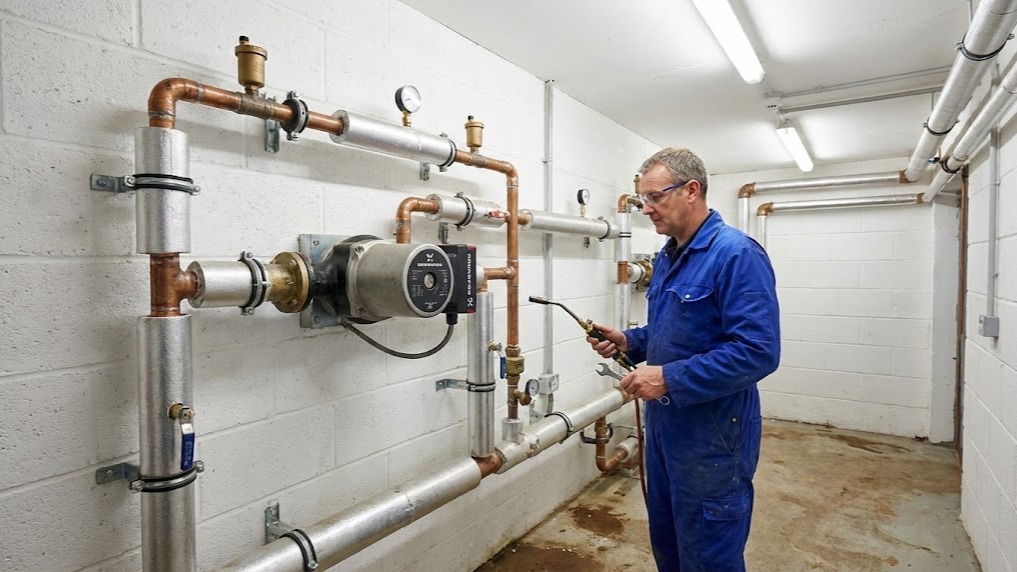
Air locks rank among the most frustrating failures in central heating and commercial HVAC systems. A circulation pump running at full speed yet failing to move water through the system, radiators remaining cold despite a functioning boiler, and mysterious gurgling noises that signal trapped air - these symptoms point directly to pipework design errors that create conditions for air accumulation.
The physics behind the pump air lock is straightforward: air naturally rises to high points in any water-filled system. When pipework design traps this air in locations where it cannot escape, it forms pockets that block water flow. The pump continues running, but it cannot displace the compressible air barrier. Understanding the specific pipework configurations that cause these failures allows heating engineers to prevent them during installation and diagnose them efficiently during service calls.
Why Pipework Design Determines Air Lock Risk
The relationship between pipe routing and air entrapment follows predictable patterns. Water systems operate as closed loops where fluid must circulate continuously. Any deviation from ideal flow paths creates opportunities for air separation and accumulation.
Pump Performance and Air Interaction
Pump performance depends entirely on moving incompressible liquid. When air enters the equation, several failure modes emerge. Small bubbles reduce heat transfer efficiency as they insulate pipe surfaces. Larger pockets create complete flow blockages. In severe cases, pumps can cavitate when air bubbles collapse, causing mechanical damage to impellers and bearings.
Grundfos pumps and other quality circulators incorporate features to resist air lock formation, but no pump can overcome fundamentally flawed pipework. The solution lies in understanding which pipe configurations create problems and designing systems that naturally evacuate air.
The High Point Trap: Inverted Loops and Crown Venting
The most common pipework error creates unvented high points in circulation loops. Picture a heating system where pipes route over a doorway or structural beam, forming an inverted U-shape. As water circulates, any dissolved air or air introduced during filling rises to this high point. Without a vent, the air accumulates until it blocks the pipe completely.
Retrofit Installation Challenges
This configuration appears frequently in retrofit installations where installers route new pipework around existing structures. The immediate consequence: radiators downstream of the high point remain cold while upstream sections heat normally. The pump runs continuously but cannot push water past the air barrier.
Professional practice requires automatic air vents at all system high points. These devices allow trapped air to escape while preventing water loss. For systems with multiple high points, each location needs its own vent. The alternative involves redesigning pipe routes to eliminate high points entirely, sloping all horizontal runs upward toward a single venting location.
Commercial Coordination Requirements
Building services engineers working on commercial installations face this challenge when coordinating mechanical systems with architectural features. A pipe route that looks acceptable on 2D drawings may create multiple air traps when installed in three-dimensional space. Site surveys before final design prevent these issues.
Incorrect Pump Positioning Relative to System Components
Pump location within the circuit dramatically affects air lock susceptibility. The relationship between pump position, system pressure, and air solubility determines whether air remains dissolved or separates into bubbles.
High Point Installation Problems
Installing pumps at the highest point in a system creates immediate problems. The pump inlet experiences the lowest system pressure - exactly where dissolved air most readily comes out of solution. These bubbles accumulate in the pump body, reducing flow and eventually causing a complete airlock.
Optimal practice positions the pump on the return leg of the circuit, after the lowest point and before the heat source. This location ensures maximum system pressure at the pump inlet, keeping air dissolved. The cooler return water also holds more dissolved air than hot flow water, reducing bubble formation risk.
Expansion Vessel Relationship
For systems with expansion vessels, pthe ump location relative to the vessel connection point matters critically. The expansion vessel connection creates a pressure reference point. Pumping toward this point increases pressure throughout the system; pumping away from it creates low-pressure zones where air separates.
Heating engineers troubleshooting persistent airlocks should verify pump position before investigating other causes. A pump installed in the wrong location will struggle regardless of pipework quality elsewhere in the system.
Inadequate Pipe Sizing and Flow Velocity Issues
Pipe diameter affects air transport in ways that surprise many installers. Undersized pipes create high flow velocities that seem beneficial for moving air, but actually worsen pump air lock causes through increased turbulence and pressure drop.
Velocity and Air Separation
When flow velocity exceeds optimal ranges (typically 0.5-1.5 m/s for heating systems), turbulence strips dissolved air from water and forms bubbles. These bubbles then accumulate at high points. The increased pressure drop across undersized pipes also lowers system pressure, further encouraging air separation.
Oversized pipes present different challenges. Low flow velocities allow air bubbles to rise and separate from the water stream rather than being carried along. This creates conditions for air accumulation in horizontal pipe runs, not just at high points.
Sizing Guidelines and Pump Matching
Proper pipe sizing follows established guidelines based on flow rate and acceptable pressure drop. For domestic central heating, 15mm pipes suit radiator branches whilst 22mm or 28mm pipes handle main circuits. Commercial systems require detailed calculations accounting for flow rates, pipe lengths, and system complexity.
The pump specification must match the pipe sizing. Wilo pumps and equivalent circulators come in various performance ratings. Pairing a high-head pump with undersized pipes creates excessive velocity and turbulence. Conversely, a low-performance pump in oversized pipes may not generate sufficient velocity to transport air to venting points.
Missing or Incorrectly Located Air Vents
Automatic air vents represent the primary defence against pump air locks, yet their placement frequently violates basic principles. An air vent installed halfway down a vertical pipe section or on a horizontal run serves little purpose - air naturally rises and will not reach these locations.
Identifying Actual High Points
Effective air vent placement requires identifying actual high points in the installed system, not just high points shown on drawings. Pipe sag between supports, routing around obstacles, and settlement of building structures all create high points that may not appear in design documents.
Each circuit in a multi-zone system needs its own venting provision. A single air vent on the main flow pipe cannot evacuate air from individual radiator circuits or zone loops. This explains why systems sometimes show partial heating - zones with adequate venting work properly, whilst others remain air-locked.
Manual vs Automatic Venting
Manual radiator bleed valves supplement automatic vents but cannot replace them. Bleed valves require occupant intervention and only address air in radiators themselves, not in the pipework feeding them. Systems designed without automatic vents at high points will require frequent manual bleeding.
Commercial installations benefit from differential pressure air separators installed in the main circuit. These devices actively remove air from circulating water rather than passively venting trapped air. For large systems or those with chronic air problems, this approach proves more reliable than multiple individual vents.
Improper Integration of Expansion Vessels
Expansion vessels absorb pressure changes as water heats and cools, but their connection to the system affects air lock formation. The vessel connection point must be made on the suction side of the pump, creating a neutral pressure reference point.
Connection Location Impact
When expansion vessels connect on the pump discharge side, system pressure distribution changes dramatically. The pump creates a low-pressure zone at its inlet, encouraging air separation. This air then accumulates in the pump body, causing air lock.
The expansion vessel connection also requires a tee fitting that allows air bubbles to rise into the vessel rather than continuing through the circuit. A side-entry connection on a horizontal pipe allows air to pass by, defeating the vessel's secondary function as an air separation point.
Vessel Sizing Considerations
Vessel sizing affects air management indirectly. An undersized expansion vessel causes excessive pressure swings during heating cycles. These pressure fluctuations bring dissolved air out of solution, creating bubbles that accumulate at high points. Proper vessel sizing based on system volume and temperature range maintains a stable pressure that keeps air dissolved.
Reverse Circulation and Incorrect Valve Installation
Flow direction through circuits affects air transport significantly. Pumps push water more effectively than they pull it, creating pressure differences that influence air behaviour. When valves or pipe connections force reverse circulation through a zone, air transport patterns change and can trap air in unexpected locations.
Valve Orientation Requirements
Zone valves and motorised valves must be oriented correctly for the intended flow direction. A valve installed backward creates turbulence and pressure drop that encourages air separation. The valve body may also trap air, creating a blockage that prevents circulation even when the valve is fully open.
Pump valves and isolation valves require similar attention to orientation. Ball valves and gate valves generally tolerate either flow direction, but check valves and pressure-reducing valves function correctly only when flow matches the indicated direction.
Heating engineers diagnosing mysterious air locks should verify flow direction through all valves and check that the installed orientation matches manufacturer requirements. A single reversed valve can create airlock conditions throughout an entire zone.
Insufficient System Filling and Commissioning Procedures
Even perfectly designed pipework will air-lock if not filled and commissioned properly. The filling process itself introduces air that must be systematically removed before the system enters service.
Proper Filling Techniques
Rapid filling from a single point traps air throughout the system. Water rushes through pipes, creating turbulence that suspends air bubbles. These bubbles then accumulate at high points after filling stops. Professional practice for preventing pump airlocks requires slow filling from the lowest point whilst venting air from the highest point, working systematically through the system.
Multi-zone systems need individual filling and venting of each circuit. Simply filling the main circuit and hoping air will purge from the branches rarely succeeds. Each zone valve must be opened in sequence, allowing water to displace air completely before moving to the next zone.
Chemical Considerations
The initial fill should include a system cleaner or inhibitor, but these chemicals must not foam excessively. Foaming products trap air bubbles in the water, making thorough venting impossible. After filling, the system should run for several hours with all automatic air vents open, allowing dissolved air to separate and escape.
Thermal Expansion Loops and Flexible Connections
Expansion loops and flexible connections accommodate thermal movement but can create air traps if poorly designed. An expansion loop forms a high point where air naturally accumulates. Without a venting provision, this air remains trapped and eventually blocks circulation.
Flexible Connection Challenges
Flexible connections between pipes and equipment must maintain a continuous upward slope toward venting points. A flexible connector that sags creates a trap where air accumulates. This commonly occurs with pump connections where flexible hoses simplify installation but introduce low points that trap air.
The solution involves supporting flexible connections to prevent sagging and installing automatic air vents at the high point of any expansion loop. For commercial systems with multiple expansion loops, each loop requires its own vent.
Contaminated Systems and Sludge Accumulation
Pipework mistakes extend beyond physical design errors. Chemical contamination and sludge accumulation create conditions that encourage airlock formation. Corrosion in steel pipework releases hydrogen gas that behaves identically to air, accumulating at high points and blocking circulation.
Corrosion and Surface Effects
Magnetite sludge from corroded components settles in low points but also creates rough internal pipe surfaces that nucleate bubble formation. Water flowing past these rough surfaces more readily releases dissolved air, creating bubbles that rise to high points.
System water treatment prevents corrosion and sludge formation, indirectly reducing air lock risk. Inhibitor chemicals maintain clean internal pipe surfaces that resist bubble nucleation. Regular flushing removes accumulated sludge before it affects flow patterns.
For systems with chronic airlock problems despite correct pipework design, water quality testing often reveals the underlying cause. Contaminated systems require thorough flushing and chemical treatment before air lock symptoms will resolve permanently.
Diagnosing and Resolving Existing Air Lock Problems
When air locks occur in existing systems, systematic diagnosis identifies the specific pipework error responsible. Temperature measurements across the system reveal where circulation stops - the air lock location lies immediately upstream of the cold section.
Diagnostic Procedures
Manual venting at suspected air trap locations confirms diagnosis. If venting restores circulation temporarily but air returns quickly, the pipework design allows continued air accumulation. Permanent resolution requires either installing automatic vents at the trap location or redesigning the pipe route to eliminate the high point.
For persistent air locks resistant to venting, the problem often lies in pump position or expansion vessel connection. These fundamental design errors require system modifications rather than simple venting procedures.
National Pumps and Boilers supplies the components needed to resolve air lock problems, from automatic air vents and DHW pumps to expansion vessels and system controls. Technical support helps heating engineers identify the specific pipework errors causing airlocks in problematic systems.
Conclusion
Pump air locks result from predictable pipework mistakes that violate basic hydraulic principles. High points without venting, incorrect pump positioning, improper pipe sizing, and inadequate commissioning procedures create conditions where air accumulates and blocks circulation. Understanding the causes of pump air lock allows heating engineers to design systems that naturally evacuate air and troubleshoot existing problems efficiently.
Prevention requires attention during the design and installation phases. Pipe routes must avoid unnecessary high points, and unavoidable high points must include automatic venting. Pumps belong on return legs at low points, not at system high points. Expansion vessels connect on pump suction sides, creating stable pressure references that keep air dissolved. Proper pipe sizing maintains flow velocities that transport air without encouraging bubble formation.
For systems experiencing air lock problems, systematic diagnosis identifies the specific pipework error responsible. Temperature measurements reveal circulation patterns, manual venting confirms air trap locations, and understanding of hydraulic principles guides permanent solutions. Preventing pump airlocks through correct pipework design eliminates air lock causes rather than merely treating symptoms.
Heating engineers seeking technical guidance on air lock prevention and resolution can contact us for expert advice on system design, component selection, and troubleshooting strategies.