

Common Signs Your System Has Air Lock Problems
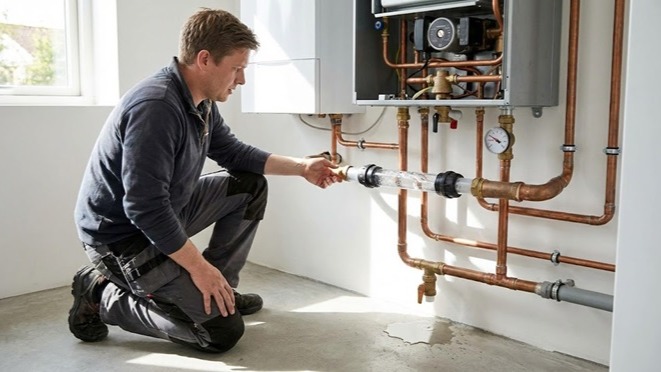
Air locks represent one of the most common yet frequently misdiagnosed problems affecting commercial heating systems. Unlike general air accumulation that causes a gradual performance decline, air locks create complete or near-complete flow blockages that produce distinctive symptoms. Recognising these air lock symptoms heating engineers commonly encounter enables facilities managers to identify problems early and arrange appropriate remediation before secondary damage develops.
The symptoms of airlocks differ from other heating system problems in characteristic ways that aid diagnosis. Understanding these distinctive patterns helps distinguish air lock issues from pump failures, valve problems, or system design inadequacies. Accurate diagnosis ensures that corrective efforts address the actual cause rather than treating symptoms whilst the underlying problem persists.
Understanding Air Locks in Heating Systems
An air lock occurs when accumulated air completely blocks water flow through a section of pipework or equipment. This differs from general air presence, where bubbles circulate with the water or collect in pockets that reduce but do not prevent flow. The distinction matters because airlocks require specific intervention to clear, whilst general air accumulation may respond to routine venting.
Air lock symptoms are heavy systems that appear suddenly rather than developing gradually. A circuit that functions normally may become completely cold overnight as air migrates into a critical location. This sudden onset helps distinguish air locks from progressive problems like pump wear or system fouling.
The formation of airlocks depends on pipework geometry and flow conditions. Horizontal pipe runs with slight upward slopes create natural air traps where bubbles accumulate until blocking the passage completely. High points in vertical risers similarly collect air that cannot escape during normal circulation. Understanding these vulnerable locations helps predict where airlocks form.
Partial airlocks restrict flow without stopping it entirely. These situations produce symptoms intermediate between normal operation and complete blockage, often confusing diagnosis. Circuits may heat slowly and incompletely rather than remaining entirely cold, making the air lock less obvious than complete blockage would be.
Visual and Physical Indicators
The most accessible air lock indicators require no special equipment to detect. Simple observation and touch testing of system components reveals important information about circulation status and likely air lock locations.
Cold Radiators and Heat Emitters
Radiators are completely cold despite adequate boiler operation, strongly suggesting the presence of an airlock in the supply pipework. Unlike the top-cold pattern typical of general air accumulation, airbound circulation problems often produce entirely cold radiators with no warm sections at all.
When airbound circulation problems affect individual radiators whilst others heat normally, the air lock likely exists close to the affected emitter. Checking lockshield and thermostatic valve positions confirms these are not the cause before concluding air lock presence. Valves inadvertently closed produce identical cold radiator symptoms.
Touch testing pipework leading to cold radiators helps locate airlocks. Following the pipe run from the manifold or branch connection, the point where the temperature changes from warm to cold indicates the approximate air lock location. This transition point shows where circulating hot water stops and static cold water begins.
Multiple radiators are cold on a single circuit, whilst other circuits heat normally, indicating an airlock in the common supply to affected emitters. This pattern typically points to air accumulation in a riser or branch takeoff serving the cold circuit. Quality system components from suppliers like National Pumps and Boilers perform reliably when circulation flows normally, making sudden cold circuits a clear airlock indicator.
Pressure Gauge Fluctuations
System pressure gauges provide indirect evidence of air lock presence through abnormal reading patterns. Air compresses and expands with temperature changes, causing pressure fluctuations that would not occur in properly filled systems.
Pressure rising unusually high during heat-up periods suggests significant trapped air volume compressing as water temperature increases. The gauge may also show instability, fluctuating noticeably rather than holding steady. These patterns indicate air presence that may be causing or contributing to airlocks elsewhere in the system.
Pressure dropping after venting air confirms that trapped air was occupying volume within the system. Significant pressure reduction after venting a single point indicates substantial air accumulation that likely caused circulation problems. Recording pressure before and after venting provides objective evidence of air removal effectiveness.
Unexplained pressure loss over time may indicate an airlock that has displaced water from the system. As air accumulates and forces water out through pressure relief valves or expansion vessel connections, system pressure gradually falls. This pattern suggests chronic air accumulation requiring systematic investigation.
Audible Symptoms
Air locks generate characteristic sounds that experienced engineers recognise immediately. Learning these distinctive noises helps facilities staff identify air lock problems even without technical training.
Characteristic Noises From Air Locks
The air lock symptoms heating systems produce include gurgling, banging, and whistling sounds, depending on air lock location and severity. Each noise type indicates specific conditions within the affected pipework or component.
Gurgling sounds occur when water attempts to flow past a partial airlock. The intermittent passage of water through the restriction creates bubbling noises that may be continuous during pump operation or occur in periodic bursts. Gurgling intensity often increases as water temperature rises and air expands within the lock.
Banging or water hammer sounds indicate airlocks, locations where the flow starts and stops abruptly. The compression and expansion of trapped air create hydraulic shocks that transmit through pipework as loud knocks. Repeated banging during pump cycling suggests airlocks near check valves or zone valves where flow reversal occurs.
Whistling or hissing sounds occur when water forces through narrow passages created by partial airlocks. The high-velocity flow through restrictions generates characteristic sounds similar to wind through gaps. These noises help locate aairlockseven when cold pipework identification proves difficult.
Pump Operation Sounds
Circulation pumps provide audible evidence of air lock issues through changes in their operating sounds. Normal pump operation produces a steady, consistent noise that changes noticeably when air locks restrict flow.
Pumps operating against air-locked circuits often produce strained sounds indicating increased loading. The motor works harder to overcome the restriction, generating higher noise levels and possibly different tonal characteristics. Experienced listeners recognise these changes as indicators of downstream flow problems.
Cavitation sounds from pumps indicate air entrainment that may result from airlocks drawing air into the pump inlet. The crackling or rattling characteristic of cavitation warns of conditions causing rapid pump wear. Addressing the source of air entrainment prevents ongoing pump damage.
High-quality circulation pumps from Grundfos incorporate protection features that may activate when air-bound circulation problems develop. Electronic pumps may display fault codes or reduce speed when detecting abnormal operating conditions.
Performance-Based Indicators
Changes in system performance often provide the clearest evidence ofairlockk problems. Monitoring heating behaviour reveals circulation restrictions that visual inspection might miss.
System-Wide Circulation Problems
Air locks affecting main circulation paths reduce flow throughout dependent circuits. Symptoms include slow heating response, inadequate temperature rise, and uneven heat distribution across buildings. These system-wide effects distinguish main circuit air locks from localised problems affecting individual emitters.
Temperature differentials across system components exceed normal ranges when air locks restrict flow. The difference between boiler flow and return temperatures increases as the reduced flow rate allows greater heat extraction. Monitoring these differentials reveals circulation problems even before obvious symptoms develop.
Slow building heating despite adequate boiler capacity suggests circulation restrictions from airlocks or other causes. Buildings that previously reached comfortable temperatures within an hour may require two or three hours when air locks impede flow. Comparing current performance against historical baselines reveals the extent of degradation.
Uneven building heating, with some areas comfortable whilst others remain cold, indicates airlocks in branch circuits serving affected zones. This pattern differs from general underheating that affects all areas equally. Mapping cold and warm zones helps identify which circuits contain airlocks.
Boiler Behaviour Changes
Boiler symptoms provide valuable diagnostic information about airbound circulation problems affecting the primary circuit. Changes in boiler behaviour often appear before occupant comfort complaints signal heating problems.
Short-cycling occurs when air locks prevent adequate heat removal from boiler heat exchangers. The boiler reaches the high limit temperature rapidly because the restricted flow cannot carry heat away. Repeated start-stop cycles waste fuel and accelerate component wear whilst providing inadequate heating.
Flow switch activation indicates insufficient circulation through the boiler. Air locks downstream of the flow sensor reduce water velocity below the threshold required for burner operation. The boiler locks out on a flow fault despite the pump running normally.
Modern boilers from manufacturers like Remeha incorporate diagnostic features that display error codes related to circulation problems. These codes help identify when air locks, rather than component failures, cause operational problems.
Pressure switch activation may indicate lockouts, causing abnormal pressure conditions within the boiler. High-limitt orlow-limitt pressure trips suggest air accumulation affecting pressure regulation. Checking the expansion vessel condition confirms whether air locks or vessel failure causes the pressure problems.
Diagnostic Approaches
Systematic diagnostic methods help locate airlocks when symptoms indicate their presence. Methodical investigation identifies air lock positions more reliably than random venting attempts.
The process of elimination narrows down air lock locations by testing circulation through different system sections. Isolating circuits and checking which areas heat when others are closed identifies blocked paths. This approach proves particularly valuable in complex systems with multiple zones and circuits.
Temperature measurement using surface thermometers or thermal imaging provides objective evidence of circulation patterns. Following temperature gradients along pipework reveals where flow stops and airlocks begin. This method locates air locks even in concealed pipework where direct inspection proves impossible.
Pressure testing individual circuits identifies restrictions fromairlocks orr other causes. Comparing pressure drops across different circuits reveals which paths contain blockages. Higher-than-expected pressure drops indicate restrictions requiring further investigation.
When simple diagnostic methods fail to locate airlocks, specialist equipment may be necessary. Ultrasonic flow meters confirm whether water actually moves through suspect pipework. Borescope inspection examines internal pipe conditions in accessible locations. These advanced methods suit complex commercial installations where air lock symptoms are observed by heating staff who resist conventional diagnosis.
Conclusion
Recognising air lock symptoms in heating systems enables timely intervention before secondary damage develops. The visual, audible, and performance indicators described provide multiple diagnostic pathways for identifying air lock presence and approximate location.
Addressing airway circulation problems promptly prevents the cascade of consequences that follow from chronic flow restriction. Boiler stress, pump damage, and inadequate heating all result from unresolved airlocks that early intervention could have cleared.
Facilities managers observing the symptoms described should arrange a professional investigation to locate and clear airlocks. Persistent problems despite venting attempts suggest airlocks in locations requiring specialist access or system modifications to resolve.
For guidance on air lock diagnosis and quality heating components, contact the National Pumps and Boilers team for expert technical support.