

Common Strainer Installation Mistakes That Reduce Effectiveness
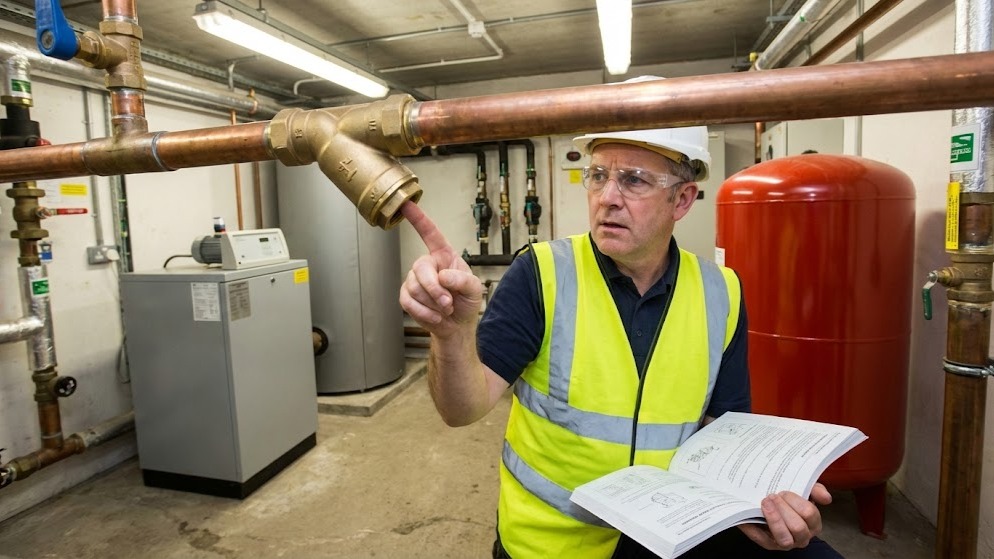
Strainers protect pumps, boilers, and heating systems from debris that causes premature wear, reduced efficiency, and costly breakdowns. Yet improper installation compromises this protection, creating pressure drops that waste energy, allowing contaminants to bypass filtration, and triggering maintenance issues that could have been prevented. National Pumps and Boilers encounters these strainer installation mistakes regularly when supporting heating engineers and contractors troubleshooting system performance problems.
The technical requirements for effective strainer installation often conflict with site constraints and installation timelines. Understanding where installations go wrong, and the specific performance penalties each mistake creates, helps heating professionals avoid the costly rework and system inefficiencies that follow poorly installed strainers. Incorrect filter fitting causes problems that persist throughout system operational life.
Installing Strainers Upstream Instead of Downstream
The most fundamental strainer installation mistake involves positioning. Strainers must sit upstream of the equipment they protect, between the contamination source and the pump or valve. Installing a strainer downstream of a circulator pump provides zero protection to the pump itself, allowing debris to damage impellers, bearings, and mechanical seals before reaching the strainer.
This error typically occurs during system modifications when installers add strainers to existing pipework without fully tracing flow direction. In heating systems with multiple zones and complex piping layouts, flow direction is not always immediately obvious from visual inspection alone. The consequences become apparent within weeks as pump performance degrades from debris accumulation that the mispositioned strainer never captured.
Correct positioning requires identifying the actual flow path under operating conditions. In systems with reversible flow, such as some heat pump installations, strainers need positioning that provides protection regardless of flow direction, which may require dual strainers or specialised reversible designs. This incorrect filter fitting error is entirely preventable with proper planning.
Inadequate Straight Pipe Runs Before and After Strainers
Strainers require sufficient straight pipe sections before and after installation to function effectively. Insufficient upstream straight pipe prevents proper flow distribution across the strainer screen, causing uneven debris loading that reduces effective filtration area and increases pressure drop. The typical requirement calls for five pipe diameters of straight run upstream and two pipe diameters downstream.
When installers position strainers immediately after elbows, tees, or reducers, turbulent flow concentrates debris on one section of the screen whilst leaving other areas underutilised. This localised loading creates higher pressure drops than necessary and accelerates the need for cleaning. The uneven flow distribution also allows finer particles to pass through less-loaded screen sections at higher velocities.
Space constraints often drive this mistake, particularly in plant rooms with dense equipment layouts. However, the performance penalty justifies finding alternative mounting locations or redesigning pipe routing to accommodate proper straight runs. When absolutely unavoidable, flow straightening devices can partially compensate, though they add cost and complexity.
Incorrect Strainer Orientation and Mounting Position
Y-strainers and basket strainers have specific orientation requirements that installers frequently ignore. Y-strainers installed on horizontal pipes must have the strainer leg pointing downward or horizontal, never upward. Installing with the leg pointing up creates an air trap that prevents proper drainage during cleaning and allows air accumulation that reduces effective screen area.
Basket strainers require the basket to sit below the pipe centreline in horizontal installations, allowing debris to settle properly. Mounting basket strainers with the basket above the centreline causes debris to fall back into the flow stream rather than collecting in the basket, defeating the entire purpose of the design.
Vertical pipe installations present additional challenges. When strainers must be installed in vertical runs, flow direction matters critically. Downward flow through vertical strainers works effectively, but upward flow can cause debris to settle back onto screens, increasing pressure drop and reducing cleaning intervals. The Grundfos range includes pumps particularly sensitive to debris, making proper strainer orientation essential for protecting these high-efficiency circulators. This strainer installation mistake costs significant efficiency.
Using Incorrect Mesh Sizes for System Requirements
Strainer mesh selection involves balancing protection level against pressure drop and maintenance frequency. Oversized mesh, such as 20-mesh screens when 40-mesh protection is needed, allows damaging particles through. Undersized mesh, such as 100-mesh screens in systems with typical debris loads, creates excessive pressure drops and requires impractically frequent cleaning.
The appropriate mesh size depends on the downstream equipment's tolerance for particulate contamination. Pump mechanical seals typically require protection from particles larger than 0.4mm, suggesting 40-mesh minimum (0.42mm openings). Control valves with tight clearances may need 60-mesh or finer. However, finer mesh dramatically increases maintenance requirements in systems with high debris loads.
Many heating engineers default to the finest mesh available, assuming more protection is always better. This approach backfires in systems with cast iron components, older pipework, or poor water quality where debris loads overwhelm fine mesh screens within days. The resulting pressure drops reduce system flow rates, increase pump energy consumption, and trigger nuisance service calls.
Temporary startup strainers with coarse mesh (10-20 mesh) should protect systems during initial commissioning when debris loads are highest, then be replaced with appropriately-sized permanent strainers matched to long-term system conditions and downstream equipment requirements.
Failing to Provide Adequate Access for Maintenance
Strainers require regular cleaning, yet installers frequently position them where maintenance access is impractical or impossible. Basket strainers need sufficient clearance in front of the cover to remove the basket, typically 1.5 times the strainer body length. Y-strainers need clearance below or beside the strainer leg to remove the screen assembly.
Installing strainers tight against walls, beneath other equipment, or in confined spaces forces maintenance technicians to partially dismantle surrounding pipework just to clean the strainer. This additional labour cost often leads to deferred maintenance, allowing strainers to become progressively more clogged until they create system problems. Incorrect filter fitting in inaccessible locations compounds maintenance difficulties.
The maintenance access issue compounds in systems requiring frequent strainer cleaning. In heating systems with poor water quality or during initial system commissioning, strainers may need weekly or even daily attention. If accessing the strainer requires two hours of dismantling work, cleaning intervals inevitably extend beyond what is appropriate, defeating the strainer's protective function.
Planning maintenance access during initial design prevents these problems. When space constraints are unavoidable, specifying strainers with blow-down valves or automatic self-cleaning designs reduces hands-on maintenance requirements, though at higher equipment cost.
Incorrect Pipe Sizing Around Strainers
Strainers create pressure drop proportional to flow velocity through the screen. Installing strainers in undersized pipework amplifies this pressure drop significantly. Yet installers sometimes reduce pipe size at the strainer location to accommodate smaller, less expensive strainer bodies, a false economy that increases pumping costs throughout the system's operating life.
The relationship between pipe size and pressure drop is exponential, not linear. Reducing from 50mm to 40mm pipe at the strainer location does not just increase pressure drop by 20%; it can double or triple the pressure penalty depending on flow rates. This forces Wilo pumps and other circulators to work harder, consuming more energy and experiencing increased wear.
Proper practice sizes strainers to match the pipe diameter they serve. In systems where pressure drop is critical, such as low-loss header arrangements or systems with minimal available pump head, specifying oversized strainer bodies (one size larger than pipe diameter) reduces velocity through the screen and minimises pressure penalties.
Temporary reducers and expanders to accommodate mismatched strainer sizes add turbulence, additional pressure drop, and potential leak points. The modest cost difference between correctly-sized and undersized strainers pales against the energy waste and reduced system performance that undersized installations create over years of operation.
Neglecting Pressure Gauge Installation Points
Effective strainer maintenance requires monitoring pressure drop across the strainer to determine when cleaning is needed. Yet many installations omit pressure gauge ports entirely, forcing maintenance technicians to guess when strainers need attention based on system symptoms rather than objective measurements.
Installing pressure gauge ports immediately upstream and downstream of the strainer, or specifying strainers with integral gauge ports, enables simple differential pressure monitoring. A clean strainer typically shows 0.1-0.3 bar pressure drop at design flow rates. When differential pressure reaches 0.5-0.7 bar, cleaning is needed. Without these measurement points, strainers often remain in service until pressure drop becomes severe enough to cause obvious system problems.
The cost of adding pressure gauge tapping points during initial installation is negligible compared to the diagnostic value they provide. Gauge ports also enable temporary differential pressure gauge installation during commissioning to verify strainer performance and establish baseline pressure drops for future reference.
Some heating engineers argue that pressure gauges add leak potential and prefer to monitor strainer condition through periodic inspection. However, this approach requires shutting down system sections and dismantling strainers for inspection, far more disruptive than simply reading differential pressure gauges during routine plant room checks.
Improper Gasket Selection and Installation
Strainer covers and access ports require proper gaskets to prevent leaks, yet gasket failures cause a disproportionate number of strainer-related service calls. Using incorrect gasket materials for system temperature and pressure conditions, failing to replace gaskets during maintenance, and improper bolt torque all contribute to leakage problems.
Standard rubber gaskets deteriorate rapidly in heating systems operating above 80°C, requiring high-temperature gasket materials such as EPDM or graphite. Chemical water treatment additives also affect gasket compatibility, as inhibitors, biocides, and antifreeze solutions can degrade certain gasket materials whilst leaving others unaffected.
Many maintenance technicians reuse old gaskets when cleaning strainers, particularly if the gasket appears undamaged. This practice inevitably leads to leaks as compressed gasket materials lose their sealing properties even when visual appearance suggests they remain serviceable. Strainer gaskets are consumables that require replacement at every maintenance intervention.
Bolt torque specifications matter more than most installers recognise. Overtightening distorts gasket materials and can crack cast iron strainer bodies, whilst undertightening leaves gaps that allow weepage. Following manufacturer torque specifications and using proper tightening sequences prevents these problems, yet many installations rely on "feel" rather than calibrated torque wrenches. This strainer installation mistake causes ongoing leak issues.
Installing Strainers in Locations Where They Cannot Drain
Strainers positioned at high points in piping systems or without proper drain provisions create maintenance difficulties and can harbour stagnant water that promotes corrosion and bacterial growth. When strainers cannot fully drain, cleaning requires capturing significant water volumes, making the task messier and more time-consuming than necessary.
Y-strainers installed with the strainer leg angled upward (rather than down or horizontal) trap water that cannot drain during maintenance. This trapped water spills when the strainer cap is removed, often onto electrical components or finished surfaces below. The maintenance inconvenience encourages technicians to defer cleaning, allowing debris accumulation to progress beyond optimal intervals.
Proper installation positions strainers where gravity drainage is possible and provides drain valves or drain connections at low points. In systems where strainer location at a high point is unavoidable, installing isolation valves and drain points on both sides of the strainer enables controlled drainage before opening for maintenance.
The central heating equipment supplied by National Pumps and Boilers often requires strainer protection, and proper drainage provisions ensure this protection can be maintained without creating service complications that lead to deferred maintenance.
Omitting Isolation Valves Around Strainers
Installing strainers without isolation valves on both upstream and downstream sides forces system shutdown for strainer maintenance. In large heating systems serving occupied buildings, this means scheduling maintenance during unoccupied periods or accepting occupant disruption, constraints that often result in maintenance being deferred beyond appropriate intervals.
The cost of two isolation valves represents a small fraction of total installation cost, yet the operational flexibility they provide is substantial. With proper isolation, technicians can clean strainers during occupied hours without affecting building comfort, enabling responsive maintenance when pressure drop monitoring indicates cleaning is needed rather than waiting for convenient shutdown opportunities.
Ball valves provide the most reliable isolation for strainer maintenance, offering tight shutoff and full-bore flow when open. Gate valves are acceptable but can develop leakage past seats over time, particularly in systems with debris-laden water. Butterfly valves are generally unsuitable for strainer isolation due to their obstruction of flow and difficulty achieving complete shutoff.
Isolation valve sizing should match the pipe diameter, not the strainer connection size. Installing 40mm isolation valves on a 50mm strainer installation creates unnecessary flow restrictions and pressure drops. The valves also require sufficient operating clearance, as quarter-turn ball valve handles need space to rotate 90 degrees without interference from adjacent equipment or structures.
Incorrect Installation Sequence During Commissioning
Even correctly installed strainers can fail to protect systems adequately if commissioning procedures do not account for initial debris loads. New heating systems contain significant construction debris, including weld slag, pipe thread cuttings, flux residue, and manufacturing debris from components. Installing permanent fine-mesh strainers before initial flushing simply overwhelms the screens, creating immediate pressure drop problems. This incorrect filter fitting approach defeats the strainer's purpose.
Proper commissioning sequence installs temporary coarse-mesh startup strainers (10-20 mesh) during initial filling and flushing operations. These capture large debris without creating excessive pressure drops. After thorough flushing, typically involving multiple fill, circulate, and drain cycles, the startup strainers are removed and permanent strainers with appropriate mesh sizes are installed.
Many installations skip this two-stage approach, installing final strainers immediately and attempting to clean them repeatedly during commissioning. This approach is less effective because fine-mesh screens clog so quickly during initial operation that debris simply bypasses the strainer through gaps around the screen or forces through the mesh, defeating the protective function.
Chemical cleaning and flushing operations during commissioning also require consideration. Some cleaning chemicals attack strainer gaskets and screens, requiring temporary removal of permanent strainers during chemical treatment phases. Planning these sequences during design prevents damage to strainer components and ensures protective filtration is in place when systems enter normal operation.
Conclusion
Strainer installation mistakes reduce system reliability, increase energy consumption, and accelerate equipment wear despite the modest cost and apparent simplicity of these protective devices. The positioning errors, sizing mistakes, and maintenance oversights detailed above appear regularly in heating system installations, creating performance penalties that persist throughout system operational life.
Proper strainer installation requires understanding flow dynamics, equipment protection requirements, and maintenance realities. The upstream positioning, adequate straight pipe runs, correct orientation, appropriate mesh selection, and maintenance access provisions that define effective installations are not optional refinements; they are essential requirements for strainers to deliver their intended protective function.
The pressure monitoring, isolation provisions, and drainage considerations that enable practical maintenance determine whether strainers receive the regular attention they require or become maintenance liabilities that technicians avoid. Systems with well-installed, properly maintained strainers protect DHW pumps and other equipment from debris damage whilst maintaining efficient operation. Poorly installed strainers create problems rather than preventing them.
For technical guidance on strainer selection and installation best practices for specific heating system applications, contact the team at National Pumps and Boilers for expert advice tailored to system requirements.