

Compliance and Regulations for Boiler Room Safety in Commercial Buildings
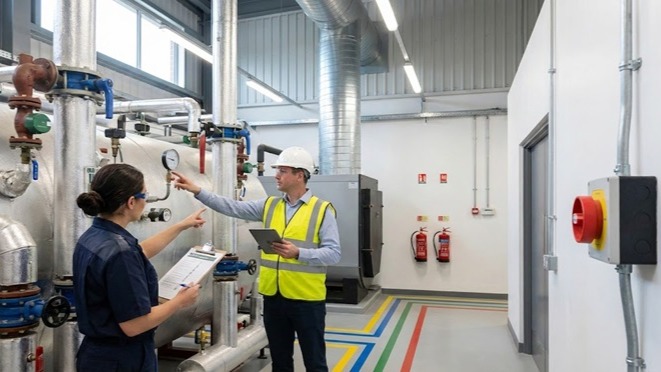
Navigating the complex landscape of boiler room safety regulations proves essential for commercial building owners, facility managers, and operators. UK legislation establishes comprehensive requirements governing boiler room design, installation, operation, and maintenance. Understanding these boiler clearance regulations alongside broader safety obligations enables organizations to maintain legal compliance whilst protecting personnel and assets. Non-compliance risks prosecution, substantial fines, insurance coverage loss, and most importantly, dangerous operating conditions threatening safety.
The regulatory framework addressing commercial boiler rooms draws from multiple sources including health and safety legislation, pressure systems requirements, gas safety rules, fire safety obligations, and environmental standards. Each regulatory domain imposes specific duties requiring systematic compliance approaches. This comprehensive guide examines key regulations applicable to commercial boiler rooms whilst providing practical guidance on achieving and maintaining compliance.
Overview of UK Boiler Room Safety Legislation
Primary Health and Safety Legislation
Health and Safety at Work Act 1974 establishes foundational employer duties ensuring workplace safety so far as reasonably practicable. This broad obligation extends to providing safe equipment and systems of work, safe handling and storage of substances, necessary information and training, adequate supervision, and safe work environments. For boiler room operations, these duties translate into comprehensive safety management systems addressing all identified hazards.
Management of Health and Safety at Work Regulations 1999 specify particular requirements for risk assessment, control measure implementation, health surveillance where appropriate, competent person appointments, and emergency procedure establishment. These regulations mandate documented approaches to safety management rather than allowing informal arrangements. Boiler room operations must be formally risk-assessed with control measures implemented following established hierarchies.
General principles of prevention guide control measure selection, prioritizing hazard elimination through substitution, collective protection measures over individual protection, adapting work to individuals, replacing dangerous processes with safer alternatives, developing coherent prevention policies, and giving collective protective measures priority over personal protective equipment. Applying these principles to boiler room design and operation creates inherently safer systems.
Employee rights include receiving adequate health and safety information, being consulted on safety matters, refusing work they believe presents serious danger, and not being penalized for exercising safety rights. Organizations must establish mechanisms enabling employee participation in safety decisions. Conversely, employees have duties to take reasonable care of themselves and others, cooperate with safety requirements, use provided equipment properly, and report dangerous situations.
Boiler-Specific Regulations
Pressure Systems Safety Regulations 2000 represent the primary boiler-specific legislation addressing pressure vessel safety. These regulations require written schemes of examination developed by competent persons, examinations before first use and periodically thereafter, immediate reporting of dangerous defects, maintaining safe operating limits, and documenting all examinations and findings. Compliance demands systematic approaches with qualified personnel involvement.
Gas Safety (Installation and Use) Regulations 1998 govern gas-fired boiler installations and maintenance. Key requirements include Gas Safe registration for anyone working on gas appliances, annual servicing of commercial gas appliances by registered engineers, proper ventilation provision, flue and chimney adequacy, gas tightness standards, and emergency control accessibility. Gas-fired boiler systems must comply with comprehensive gas safety standards.
Dangerous Substances and Explosive Atmospheres Regulations (DSEAR) 2002 apply to boiler rooms where flammable gases or vapours present explosion risks. Requirements include hazardous area classification, controlling ignition sources, providing explosion-protected equipment where necessary, developing procedures minimizing risks, maintaining equipment properly, and training personnel on explosion hazards. Natural gas installations trigger DSEAR obligations requiring specialized assessment and control measures.
Control of Substances Hazardous to Health (COSHH) Regulations 2002 address water treatment chemicals and other hazardous substances used in boiler operations. Organizations must assess health risks, implement control measures, monitor exposures where appropriate, conduct health surveillance if indicated, provide information and training, and prepare emergency procedures. Chemical management represents significant compliance obligations for most boiler operations.
Pressure Systems Safety Regulations 2000
Written Schemes of Examination
Written schemes of examination form the cornerstone of pressure systems safety compliance. Schemes must be drawn up by competent persons with appropriate qualifications and experience. Schemes specify which items require examination, examination methods and scope, examination frequencies based on risk assessment, arrangements for reporting findings, and updating procedures when systems change. Schemes must be available to inspectors upon request and followed rigorously.
Competent persons developing schemes typically possess engineering degrees, professional institution membership, specialist pressure systems qualifications, and substantial practical experience examining similar systems. Some organizations employ internal competent persons whilst others engage external engineering inspection companies. Insurance company approved inspectors commonly fulfill competent person roles, combining regulatory compliance with insurance requirements.
Examination frequencies specified in written schemes typically range from 12-26 months for commercial boilers depending on operating conditions, water treatment quality, equipment age and condition, and previous examination findings. More frequent examinations apply to severe service conditions or deteriorating equipment. Schemes must balance regulatory compliance with practical operational requirements whilst maintaining adequate safety margins.
Examination and Inspection Obligations
Before first use examinations verify that new or substantially modified pressure systems meet design standards and prove safe for operation. Examinations should confirm proper installation, verify safety device adequacy, check instrumentation functionality, review operating instructions, and issue certificates permitting operation. Never operate pressure systems without valid examination certificates.
Periodic examinations occur at intervals specified in written schemes. External examinations assess overall condition, corrosion evidence, mechanical damage, safety device condition, and support structure integrity. Internal examinations requiring system opening examine internal surfaces, detect corrosion or deposits, assess structural integrity, and identify developing problems invisible externally. Some systems permit extended examination intervals through risk-based approaches using comprehensive monitoring.
Defect reporting requirements mandate immediate notification of dangerous defects presenting imminent risk. Examiners must inform system users and HSE where appropriate. Less serious defects require reporting with specified rectification timescales. Users must take defects seriously, implementing temporary risk controls if necessary, repairing defects promptly, and seeking re-examination verifying satisfactory repairs.
Gas Safety Regulations Compliance
Gas Safe Registration Requirements
Gas Safe registration remains legally mandatory for anyone installing, maintaining, or repairing gas appliances. Registration proves competency in relevant gas work categories through assessment and practical examination. Different registration categories cover specific appliance types - commercial boiler work requires appropriate commercial registration. Employing or contracting non-registered persons for gas work constitutes criminal offenses.
Verification of registration status should occur before appointing contractors. The Gas Safe Register website enables online verification using registration numbers. Valid registration cards should be inspected confirming appropriate work categories. Some organizations maintain approved contractor lists of verified Gas Safe registered engineers, simplifying procurement whilst ensuring compliance.
Record keeping for gas work proves essential demonstrating compliance. Records should document who performed work, registration numbers and categories, work scope and findings, any defects identified, safety checks conducted, and issue dates of certificates. Retaining comprehensive records protects against allegations of non-compliance whilst supporting maintenance planning.
Annual Servicing Obligations
Commercial boiler servicing requirements mandate annual servicing by Gas Safe registered engineers for gas-fired appliances. Servicing should include burner cleaning and adjustment, combustion analysis and optimization, safety control testing, visual inspection of components, flue system inspection, and comprehensive operational testing. Commercial boiler maintenance must meet manufacturer specifications and gas safety standards.
Qualified engineer specifications require Gas Safe registration in appropriate categories, manufacturer-specific training for particular boiler types, access to proper tools and equipment, current technical knowledge, and professional indemnity insurance. Some manufacturers specify authorized service providers for warranty maintenance. Ensuring engineer qualifications protects both compliance and equipment warranty coverage.
Service documentation should record all work performed, test results and measurements, any defects found and remedied, safety check outcomes, and recommendations for future attention. Engineers must issue safety certificates following satisfactory servicing. Certificates provide evidence of compliance whilst documenting system condition. Missing or expired service certificates represent serious compliance failures.
Fire Safety Regulatory Compliance
Regulatory Reform (Fire Safety) Order 2005
Responsible person designation establishes clear accountability for fire safety compliance. In most commercial buildings, the employer serves as responsible person, though building owners, managing agents, or occupiers may hold responsibility depending on control and obligations. Responsible persons must carry out fire risk assessments, implement fire precautions, develop emergency plans, provide staff training, and maintain equipment. Multiple responsible persons in shared buildings must coordinate fire safety arrangements.
Fire risk assessment requirements demand systematic identification of fire hazards including ignition sources and fuel sources, identification of people at risk, evaluation of existing fire safety measures, determination of additional measures needed, and recording findings and action plans. Assessments should be reviewed regularly or when significant changes occur. Boiler room fire risks warrant particular attention given fuel storage and ignition sources.
Preventive and protective measures implemented following risk assessment should address ignition source control, flammable material management, fire detection and warning systems, escape route provision and maintenance, firefighting equipment provision, staff training, and coordination with emergency services. Fire protection systems must meet recognized standards with regular maintenance ensuring functionality.
Building Regulations Part B
Fire resistance requirements specify minimum standards for structural elements, compartment walls and floors, and fire doors. Boiler rooms typically require 60-120 minute fire resistance depending on building size and use. Requirements apply to new construction and material alterations. Compliance verification requires test certificates for fire-rated products and proper installation following manufacturer specifications.
Compartmentation standards prevent fire spread between building areas. Boiler room compartmentation should provide complete separation from other spaces, use fire-rated barriers throughout, seal all penetrations with approved fire stopping, and maintain separation during renovations. Boiler clearance regulations specify minimum separations from combustibles and between equipment ensuring adequate fire safety margins.
COSHH Compliance for Water Treatment
Assessment Requirements
Identifying hazardous substances begins with inventorying all chemicals used in boiler water treatment. This includes corrosion inhibitors, oxygen scavengers, scale inhibitors, biocides, and cleaning chemicals. Each substance requires individual COSHH assessment or generic assessments may cover substance categories if adequately specific. Safety data sheets provide essential hazard information supporting assessments.
Evaluating exposure risks considers how substances are used, quantities handled, exposure frequencies and durations, existing control measures, and vulnerable workers. Assessments should address normal operations, foreseeable upsets, and maintenance activities. Multiple exposure routes (inhalation, skin contact, ingestion) require evaluation. Chemical handling systems benefit from risk assessments identifying exposure scenarios.
Recording assessments fulfills documentation obligations whilst guiding control measure implementation. Assessments should clearly state findings, specify control measures, identify monitoring requirements if applicable, and establish review schedules. Documented assessments demonstrate due diligence and inform employee training on chemical hazards.
Clearance and Spacing Requirements
Building Regulations Clearances
Minimum clearances from combustibles prevent fires from radiated or conducted heat. Typical requirements specify 50mm minimum from non-combustible materials, 150-300mm from combustibles depending on temperatures, greater distances where temperatures exceed certain thresholds, and fire-resistant barriers where clearances cannot be achieved. Clearances must account for thermal expansion preventing contact during operation.
Ventilation opening specifications ensure adequate combustion air supply and prevent dangerous gas accumulation. Requirements depend on total heat input from installed appliances. Permanent ventilation openings should provide unrestricted air flow, remain free from blockage, not be closeable, and connect to adequate external air sources. Mechanical ventilation systems require regular maintenance ensuring continued adequacy.
Access space requirements enable safe operation, routine maintenance, emergency repairs, and statutory examinations. Minimum working spaces around equipment, adequate headroom, clear access routes, and provisions for equipment removal all affect compliance. Planning boiler room layouts should consider maintenance access from design stages preventing future access problems complicating compliance.
Record Keeping and Documentation
Mandatory Records
Examination reports and certificates from pressure system examinations must be retained throughout system life. Reports document examination scope and findings, identify any defects, specify rectification timescales, and confirm continued safe operation or prohibit use until repairs complete. Missing or incomplete examination records constitute serious compliance deficiencies that inspectors readily detect.
Maintenance logs documenting all servicing, repairs, and component replacements demonstrate ongoing care. Logs should record dates, work performed, parts replaced, findings, and performing personnel. Systematic maintenance documentation supports compliance verification, warranty claims, and fault diagnosis. Digital maintenance management systems simplify logging whilst providing analysis capabilities.
Training records proving that personnel received appropriate instruction and demonstrate competency support compliance with multiple regulations. Records should specify training content, duration, trainer qualifications, assessment results, and refresher dates. Competency matrices tracking qualifications across teams enable management oversight ensuring adequate coverage.
Retention Requirements
Document retention periods vary by record type and applicable regulations. Pressure system examination records should be retained throughout system life plus several years after decommissioning. Training records typically require 3-5 year retention. Incident reports may warrant indefinite retention. Some organizations adopt standardized retention periods exceeding minimum requirements, simplifying policy administration.
Digital storage offers advantages including easy searching, backup protection against loss, unlimited copying for authorized users, and minimal physical storage space. However, digital records require appropriate security, regular backups, format compatibility over time, and accessibility during system failures. Some regulations specify electronic record requirements including audit trails and access controls.
Enforcement and Penalties
HSE Enforcement Actions
Improvement notices require organizations to remedy contraventions within specified timescales (typically weeks to months). Notices specify violations, required remedial actions, and compliance deadlines. Failure to comply with improvement notices constitutes further offenses potentially leading to prosecution. Organizations may appeal notices through employment tribunals, though appeals don't suspend compliance obligations unless tribunals grant suspension.
Prohibition notices immediately stop dangerous activities until hazards are remedied. Inspectors issue prohibition notices when activities risk serious personal injury. Notices specify prohibited activities and required improvements before resuming operations. Prohibition notices cause immediate operational disruptions potentially affecting business substantially. Contravening prohibition notices represents serious criminal offenses.
Prosecution procedures follow when inspectors determine offenses warrant formal legal action. Cases are heard in magistrates' courts (simpler cases, lower penalties) or crown courts (serious cases, unlimited penalties). National Pumps and Boilers emphasizes proactive compliance preventing enforcement actions.
Penalty Structures
Fine calculation methodologies introduced in 2016 consider organizational size, offence seriousness, and culpability level. Large organizations face significantly higher fines than small enterprises for equivalent offenses. Fines frequently reach hundreds of thousands of pounds for serious violations. Aggravating factors including previous convictions, deliberate non-compliance, and cost-cutting motives increase penalties. Mitigating factors like proactive safety culture, cooperation with investigators, and immediate remediation somewhat reduce penalties though rarely eliminate them.
Maintaining Ongoing Compliance
Compliance Management Systems
Policy and objective setting establishes organizational commitment to regulatory compliance. Policies should state compliance as minimum acceptable standard, assign accountabilities clearly, commit resources for compliance activities, and establish review processes ensuring continued adequacy. Senior management must champion compliance making it non-negotiable priority.
Legal register maintenance ensures awareness of applicable regulations. Registers should list all relevant regulations and standards, specify key requirements, identify responsible persons for compliance, note compliance verification methods, and establish review schedules for regulation changes. Many organizations use commercial compliance software maintaining current legal registers automatically.
For expert guidance on boiler room safety regulations compliance, clearance requirement verification, and regulatory compliance system development, contact us at National Pumps and Boilers. Our experienced team understands complex regulatory requirements and can help ensure your commercial boiler operations meet all applicable standards whilst implementing efficient compliance management systems.