

Condensing vs Non-Condensing Boilers: Which One Suits Your Commercial Property
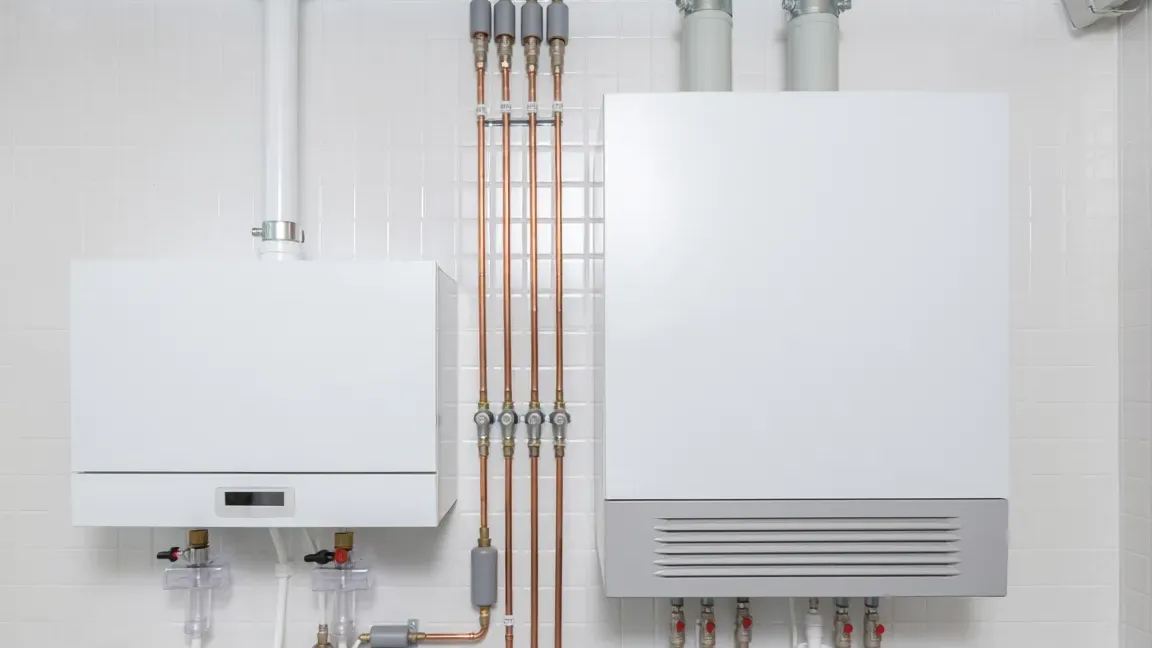
Commercial property managers face a decision that shapes operational budgets for the next 15-20 years when selecting heating equipment. The choice between a condensing vs non-condensing commercial boiler determines not just initial capital expenditure but annual fuel costs, maintenance requirements, and regulatory compliance. Understanding the technical differences and financial implications across the full ownership period helps identify which technology genuinely suits each property's requirements.
The decision is rarely straightforward. Building Regulations constrain options for most applications, yet genuine technical challenges create legitimate exceptions. Efficiency differences appear clear in headline figures but require careful analysis when applied to specific buildings, operating profiles, and system configurations. A thorough assessment combining regulatory requirements with lifecycle cost analysis provides the foundation for confident specification decisions.
How Condensing Boilers Work
Condensing boilers extract additional heat from combustion gases before they exit through the flue. Traditional non-condensing designs discharge flue gases at temperatures between 120-180°C, wasting significant thermal energy with every firing cycle. Condensing units incorporate a secondary heat exchanger that cools these gases below their dew point - typically around 55°C - causing water vapour to condense and release latent heat back into the system.
This recovered latent heat pre-warms the return water entering the boiler, reducing the energy required to reach target flow temperatures. The process generates condensate - slightly acidic water requiring proper drainage to foul sewers or treatment through neutralisation systems before discharge. Modern condensing boilers achieve seasonal efficiencies of 90-96% (Gross), representing a substantial improvement over the 75-80% typical of non-condensing equivalents operating across real-world commercial conditions.
The efficiency advantage intensifies when systems operate at lower flow temperatures. Heating systems designed for 70/50°C flow and return temperatures extract considerably more heat than those running at 82/71°C. This characteristic makes central heating configurations with larger radiators, fan convectors, or underfloor heating particularly well suited to condensing technology - the lower the return temperature, the more efficiently the secondary heat exchanger performs.
For commercial systems where pump selection must match condensing boiler flow characteristics, Grundfos offers a range of circulation pumps engineered specifically for the pressure and temperature parameters these installations require, ensuring the system operates within the range that maximises condensing efficiency throughout the heating season.
How Non-Condensing Boilers Work
Non-condensing boilers follow the traditional combustion process established over decades of commercial heating practice. Fuel burns in the combustion chamber, heating water directly through a primary heat exchanger. Flue gases exit at high temperatures - between 120-180°C - carrying substantial thermal energy that dissipates into the atmosphere rather than being recovered for useful heating duty.
The single heat exchanger design limits heat recovery but offers meaningful advantages in simplicity. No condensate forms, eliminating drainage requirements and the potential corrosion issues associated with managing acidic water in building drainage systems. The higher flue gas temperatures create a stronger natural draught, which proves beneficial in buildings with existing conventional flue systems that would require expensive modifications to accept condensing technology.
Non-condensing boilers typically achieve seasonal efficiencies between 75-82% (Gross). Whilst this falls well short of condensing alternatives, these units often cost 30-40% less to purchase and install in straightforward replacement applications. The simpler design generally requires less specialised maintenance, and replacement parts remain widely available for established models from major manufacturers - a practical consideration in commercial buildings where maintenance response times directly affect occupant comfort.
Variable speed pump technology from Wilo complements condensing boiler installations by adjusting flow rates to match part-load conditions, improving return temperatures and maximising condensing operation throughout the heating season - a combination that delivers measurable efficiency gains beyond what the boiler alone could achieve.
Efficiency Comparison: The Numbers That Matter
The efficiency gap translates directly and quantifiably into fuel consumption differences. A 500kW condensing boiler operating at 92% efficiency consumes approximately 543kW of gas input to deliver its rated output. Achieving identical heat output from an 80% efficient non-condensing boiler requires 625kW input - an 82kW difference representing consistent additional gas consumption throughout every operating hour.
Over a typical commercial heating season of 2,200 hours, this difference amounts to 180,400kWh of additional gas consumption for the non-condensing option. At commercial gas rates of 3.5p per kWh, the annual fuel cost difference reaches £6,314 for this single 500kW boiler. Properties operating multiple boilers or larger capacities see proportionally greater disparities that compound year on year throughout the equipment's service life.
The payback calculation must honestly account for higher condensing boiler purchase costs - typically £15,000-25,000 more for a 500kW unit - plus additional installation expenses for condensate drainage, neutralisation equipment, and modified flue systems. For the example above, simple payback occurs within 3-4 years, after which the condensing boiler delivers net savings throughout its remaining 15-20 year operational life. Over a full 20-year lifespan, the total fuel saving for a single 500kW boiler exceeds £100,000 - a figure that transforms the capital cost comparison entirely.
Specifying the right central heating configuration from the outset ensures condensing boilers operate within the temperature ranges that maximise their efficiency advantage, particularly in commercial buildings where system design choices at specification stage determine whether theoretical efficiency gains translate into actual operational savings.
Installation Requirements and Constraints
Condensate Drainage and Flue Systems
Condensing boilers demand specific installation provisions that affect project feasibility and costs before equipment selection can be finalised. The condensate produced - approximately 2 litres per hour per 30kW of output - requires drainage to foul sewers or, where pH levels concern local water authorities, treatment through neutralisation systems. Properties without convenient drainage access face additional pipework costs or neutralisation equipment expenses ranging from £800 to £2,500 depending on system size and site conditions.
Flue requirements differ significantly between technologies. Condensing boilers produce cooler, wetter flue gases that are unsuitable for traditional brick chimneys without stainless steel liners. Most contemporary installations use room-sealed fan-assisted flues constructed from plastic or stainless steel, which offer flexibility in routing but require additional specification work compared to conventional flue systems. Non-condensing boilers can utilise existing chimney infrastructure in many buildings, reducing installation complexity and cost particularly in retrofit applications.
The additional components associated with condensing installation - condensate traps, neutralisation tanks, modified flue systems, and specialist drainage connections - increase installation time by 20-30% compared with like-for-like non-condensing replacements. This time premium translates to higher labour costs and longer programme durations that must be factored into project planning, particularly where buildings must remain partially operational throughout installation works.
Pump and System Compatibility
System pump selection plays a significant role in whether condensing boilers achieve their rated efficiency in practice. Circulation pumps must deliver appropriate flow rates to maintain the temperature differentials that enable condensing operation, whilst variable speed capability allows adjustment to match varying load conditions throughout the heating season.
In commercial applications where DHW demand runs alongside space heating, correctly specified DHW pumps prevent return temperature spikes that would otherwise disrupt condensing boiler operation and reduce seasonal efficiency - a detail that experienced heating engineers address at the design stage rather than discovering during commissioning.
Reliable fluid transfer and condensate management throughout commercial boiler installations are supported by Lowara pump solutions, which are designed to handle the flow rates and fluid characteristics that condensing systems generate, ensuring consistent performance across the full range of operating conditions encountered in commercial buildings.
Building Regulations and Compliance
Part L of the Building Regulations governs commercial heating efficiency in England and Wales. Since 2012, condensing boilers have been mandatory for most new installations and replacements, with seasonal efficiency requirements typically exceeding 86% (Gross). This requirement effectively precludes non-condensing boilers in standard commercial applications and must be the starting point for any specification decision.
Exceptions exist for specific and well-defined circumstances. Replacement boilers in buildings where condensate drainage proves technically unfeasible may use non-condensing technology, subject to Building Control approval and documented evidence that all condensing options have been genuinely assessed. High-temperature applications - industrial processes requiring flow temperatures above 90°C - can justify non-condensing equipment where condensing technology cannot maintain required process temperatures efficiently.
Listed buildings and conservation areas present particular challenges. Where external flue modifications would harm architectural character, Building Control may approve non-condensing replacements for existing systems. However, authorities increasingly expect applicants to demonstrate conclusively that condensing technology with concealed or sympathetically designed flue arrangements genuinely proves impossible, rather than simply inconvenient or marginally more expensive to implement.
Scotland's Building Standards Division and Northern Ireland's Technical Booklet L impose similar requirements with regional variations that property managers must verify with local Building Control before specifying non-condensing equipment. Retrospective changes following incorrect assumptions about regional exemptions prove both costly and disruptive, making early consultation essential.
National Pumps and Boilers supplies commercial boiler configurations for both technologies, providing technical guidance that helps contractors and building managers navigate regulatory requirements and identify compliant solutions suited to specific building constraints and operational requirements across all commercial sectors.
Operating Costs: Beyond the Purchase Price
Maintenance costs differ between technologies, though less dramatically than efficiency comparisons might suggest. Condensing boilers require annual servicing focusing on heat exchanger cleanliness, condensate trap function, and combustion analysis. Service contracts for commercial condensing boilers typically cost £450-750 annually per unit depending on output and complexity.
Non-condensing boiler maintenance emphasises combustion efficiency, flue integrity, and primary heat exchanger condition. Annual service costs range from £350-600 per unit. The simpler design generally experiences fewer component failures, though efficiency degradation over time can be more pronounced without the self-cleaning effect that condensation provides in correctly operating condensing units.
Condensing boiler components - particularly secondary heat exchangers and electronic controls - typically cost 40-60% more than non-condensing equivalents when replacement becomes necessary. However, superior fuel efficiency usually outweighs these incremental maintenance cost differences within the first year of operation for most commercial applications. Expected service life reaches 15-20 years for quality commercial boilers of either type when properly maintained and operating with appropriate water treatment.
For commercial condensing boiler applications requiring high modulation capability and proven reliability across demanding operating profiles, Remeha offers a range of units that consistently achieve seasonal efficiencies above 92% in real-world commercial installations, making them a well-established choice for property managers prioritising long-term operational performance.
Best Applications for Condensing Boilers
New commercial developments represent ideal condensing boiler applications. Design teams can specify heating systems optimised for lower flow temperatures - 70/50°C or even 60/40°C - maximising condensing efficiency from day one. Larger radiators, underfloor heating, or fan convectors designed for lower operating temperatures extract maximum value from condensing technology throughout the building's operational life.
Retrofit projects in buildings with adequate space for system modifications benefit significantly from condensing upgrades. Properties installing new heating distribution pipework can size emitters appropriately for lower flow temperatures. Even buildings retaining existing radiators gain measurable efficiency improvements, though not maximising the full potential of condensing operation.
Multi-boiler cascade installations particularly suit condensing technology. Systems with three to six modular boilers operate more efficiently than single large units, as individual boilers cycle off during low-demand periods whilst others continue running at optimal efficiency. For cascade configurations requiring proven sequencing controls and wide modulation ranges, Andrews commercial boiler systems are engineered to maintain high efficiency across the full range of building load conditions throughout the heating season.
Where plant room dimensions constrain equipment selection, Vaillant commercial boilers provide compact condensing units that deliver high outputs within restricted footprints, making them a practical choice for space-limited plant rooms where oversized equipment cannot be accommodated without significant structural modifications.
When Non-Condensing Boilers Make Sense
Specific scenarios justify non-condensing technology despite its efficiency disadvantages, though the bar for approval under current Building Regulations is considerably higher than many property managers assume. Buildings with absolutely no feasible condensate drainage route - perhaps listed structures where internal pipework modifications prove genuinely impossible and external discharge fails environmental regulations - may require non-condensing solutions with documented Building Control approval.
High-temperature industrial processes present another valid application. Manufacturing operations requiring 90-95°C flow temperatures for process heating see limited benefit from condensing technology, which operates most efficiently below 70°C. As flow temperatures rise, the efficiency advantage diminishes progressively, potentially justifying non-condensing equipment for these specialised applications where process requirements cannot be compromised.
Emergency replacements occasionally demand non-condensing solutions as temporary measures during winter boiler failures. Buildings without condensate drainage and facing system failure during cold weather may require a non-condensing installation to restore heating quickly, with condensing upgrades then planned for the following off-season when comprehensive system modifications can be completed without affecting occupant comfort.
Making the Right Choice for Your Property
Assessment begins with technical feasibility rather than capital cost comparison. Qualified heating engineers should evaluate condensate drainage routes, flue options, and system compatibility before financial analysis begins. Buildings with accessible drainage and suitable flue routes face no technical barriers to condensing installation and should proceed on that basis.
Financial analysis must extend beyond purchase price to lifetime costs. A 20-year comparison including purchase, installation, fuel consumption, and maintenance provides accurate decision-making data that simple capital comparisons cannot offer. Most commercial properties find condensing boilers deliver lower total costs despite higher initial investment, with payback periods of 3-5 years typical across a range of building sizes and heating demands.
Regulatory compliance remains non-negotiable. Building Regulations require condensing boilers except in specific exempted circumstances that must be documented and approved by Building Control. Property managers must secure that approval before proceeding with non-condensing installation, demonstrating that condensing technology proves genuinely unfeasible rather than merely less convenient or marginally more expensive to implement.
For detailed assessment of specific property requirements and recommendations tailored to individual circumstances, Contact Us to discuss the technical and commercial factors that determine the right boiler technology choice for each commercial building.