

Dead Legs and Stagnant Pipework: How They Increase Legionella Risk
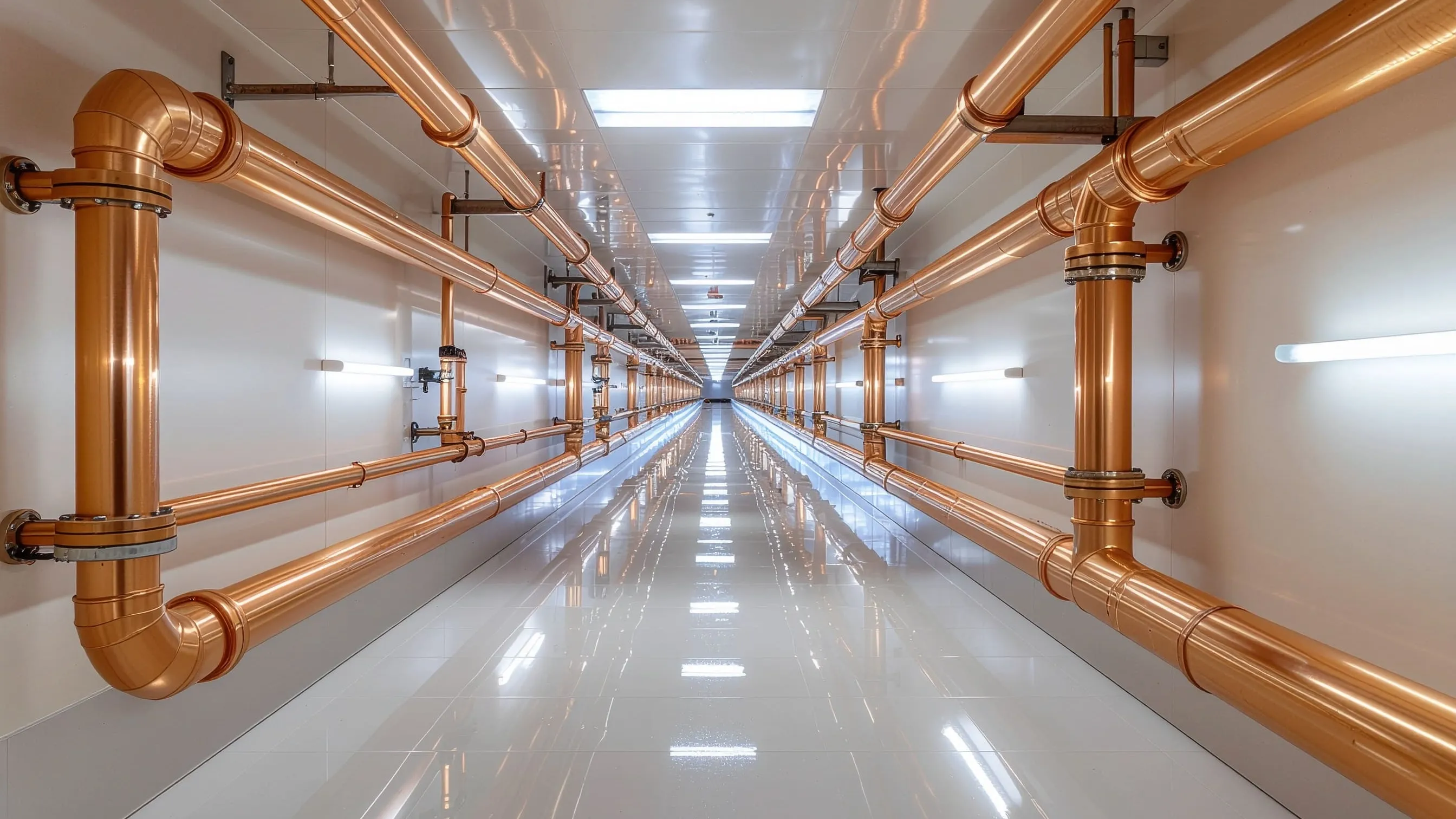
Legionella bacteria remain one of the UK's most preventable causes of fatal pneumonia, with dead legs and stagnant pipework identified as contributing factors in approximately 40% of investigated outbreaks. These sections of unused or poorly designed plumbing create conditions that actively favour bacterial proliferation - warm, static water with elevated nutrient availability from established biofilm. For building managers, facilities teams, and heating engineers, understanding how dead legs and stagnant pipework increase legionella risk is not merely a regulatory requirement. It is the foundation of effective water system safety management.
The Health and Safety Executive's Approved Code of Practice L8 places clear legal obligations on duty holders to identify and control legionella hazards in building water systems, with dead legs featuring prominently in HSE enforcement notices following outbreaks in healthcare settings, hotels, and commercial premises. The technical challenge lies not only in identifying these problematic sections during system surveys, but in understanding the microbiological processes that transform otherwise ordinary pipework into concentrated bacterial reservoirs.
What Qualifies as a Dead Leg in Plumbing Systems
A dead leg in plumbing engineering terms refers to any section of pipework where water remains static or experiences insufficient flow to maintain protective temperature. The HSE definition focuses on pipework where water temperature cannot be maintained because there is no flow or insufficient flow velocity to prevent heat exchange with the surrounding environment. British Standard BS 8558:2015 provides more specific dimensional guidance, stating that pipe sections exceeding one metre from a circulating flow or active point of use should be considered potential dead legs requiring formal risk assessment.
The technical definition extends beyond simply unused pipe sections. Oversized distribution pipework creates functional dead leg conditions even in nominally active systems - if a 28mm pipe serves a single washbasin with a 15mm supply requirement, the additional water volume stagnates between infrequent uses. The water in the centre of the pipe section never fully exchanges, creating a persistent stagnant core at ambient temperature regardless of occasional outlet use.
Temperature differential testing provides the most reliable identification method during system surveys. A dead leg typically exhibits a temperature differential exceeding 2°C compared to adjacent circulating pipework. In domestic hot water systems, this manifests as noticeably cooler water in the stagnant section - consistently within the 20-45°C growth range where legionella multiplication occurs most rapidly.
The Science Behind Legionella Growth in Stagnant Water
Legionella pneumophila - responsible for approximately 90% of Legionnaires' disease cases - multiplies rapidly when environmental conditions align within the critical temperature band. Stagnant water in dead legs frequently falls within this danger zone, particularly in buildings with poorly insulated pipework, inadequate temperature control, or distribution systems that allow water to cool during extended low-demand periods.
The bacterial growth cycle in dead legs follows a predictable sequence. Initial colonisation occurs when legionella, naturally present in mains water at low concentrations, enters the stagnant section. Within 24-48 hours of water remaining static, biofilm begins establishing on internal pipe surfaces. This biofilm - composed of bacteria, algae, fungi, and organic matter accumulating over time - provides both nutrients and physical protection for developing legionella colonies within its matrix structure.
Research demonstrates that legionella populations within established biofilm can reach concentrations 1,000 times higher than in the surrounding free water. The bacteria exist in a protected state within the biofilm matrix, resistant to temperature fluctuations and chemical disinfection treatments that would eliminate free-floating organisms from the same water. When disturbed by sudden flow events, biofilm fragments detach and release concentrated bacterial loads into the active water supply.
Water age - the elapsed time since water last flowed through a pipe section - correlates directly with bacterial population density. Studies demonstrate that legionella concentrations increase logarithmically after 72 hours of stagnation. A dead leg section unused for one week can harbour bacterial counts 100-500 times higher than circulating sections of the same distribution system operating under identical temperature conditions. Nutrient availability accelerates this growth further, with corrosion products from copper and iron pipes, mineral scale deposits, and organic matter from rubber seals and gaskets all providing food sources that sustain established bacterial colonies.
Grundfos research into pump materials and water contact components highlights how trace metal dissolution and material surface chemistry affect biofilm development rates - a consideration that extends from pump material selection to all wetted components throughout the distribution system, including pipework, fittings, and valve internals in sections prone to low flow velocity.
Where Dead Legs Typically Occur in Building Services
Capped-off pipework represents the most immediately obvious dead leg category in commercial buildings. System modifications, equipment replacements, and building layout changes frequently leave redundant pipe sections in place rather than removing them entirely. A boiler replacement with new primary flow and return routing may leave original pipework capped but still water-filled. These sections experience zero flow and gradually drift into the bacterial growth temperature range without any active indication that a problem is developing.
Oversized pipework creates less visually obvious but equally problematic conditions. Older installation standards featured pipe diameters that significantly exceed current requirements for the fixtures they serve. A 28mm distribution pipe serving a single basin with occasional daily use creates a substantial water volume that stagnates completely between uses. Even with daily operation, the water in the pipe section never fully exchanges, creating a persistent stagnant zone that standard usage patterns cannot disrupt.
Long horizontal distribution runs in domestic hot water systems create functional dead legs where circulation is inadequate. Hotel corridor pipework serving rooms at the end of long branch runs, student accommodation distribution to individual shower rooms, and office building lateral runs to distant washrooms all create extended sections where water cools to ambient temperature between periods of use. Secondary circulation systems address this in correctly designed installations, but poorly designed or commissioned loops frequently bypass the final pipe sections, leaving them as persistent dead leg conditions despite the presence of a circulation pump elsewhere in the system.
National Pumps and Boilers technical guidance on secondary circulation system design addresses the dead leg formation that inadequate loop coverage creates, providing specification support for ensuring that return pipework covers all distribution branches within the BS 8558 one-metre criterion rather than simply circulating through the main risers.
Redundant distribution branches represent a common legacy issue in commercial buildings that have undergone multiple refurbishments. A hotel corridor reconfigured to remove two guest bathrooms but retaining the original supply pipework behind access panels creates dead legs that accumulate biofilm undisturbed for years. These forgotten sections remain unknown until a comprehensive system survey identifies them, which is why physical survey rather than documentation review alone is required for accurate dead leg identification.
Seasonal and rarely used facilities compound the stagnant water problem by creating extended periods of zero flow throughout entire facility sections. DHW pumps maintaining secondary circulation in school changing rooms, holiday accommodation blocks, or conference facilities used only during specific seasons continue circulating through main distribution loops whilst static conditions develop in the branch pipework serving inactive outlets. Even well-designed circulation systems cannot prevent dead leg conditions developing in branches during extended shutdown periods.
Central heating primary circuits in commercial buildings sometimes develop dead leg conditions following zone valve installations, boiler replacement pipework modifications, or zone changes that leave sections of original primary circuit isolated but not removed. Whilst sealed heating systems present lower direct legionella risk than potable water systems, any interface with domestic hot water supply requires comprehensive assessment to ensure that stagnant sections do not compromise the temperature of DHW storage vessels connected through indirect heating coils.
British Standards and Legal Requirements
The regulatory framework governing dead legs and legionella risk management centres on the HSE's L8 Approved Code of Practice. This document places legal duties on those in control of commercial premises to identify dead legs and stagnant pipework during risk assessments and implement controls proportionate to the risk each presents. Dead legs feature explicitly in L8 guidance as high-risk system features requiring documented management within the written water safety control scheme.
COSHH Regulations 2002 provide the legal foundation for the risk assessment obligation, classifying legionella bacteria as a biological hazard agent requiring formal assessment. The duty to identify potential exposure sources necessarily includes systematic identification of dead legs and stagnant pipework as part of any compliant legionella risk assessment process.
BS 8558:2015 specifies the one-metre maximum criterion for dead leg length measured from the nearest circulating flow or active point of use. This criterion derives from research demonstrating that bacterial multiplication rates in isolated water volumes decrease significantly when water age is maintained below 24 hours through regular use or circulation. Dead legs exceeding this limit require either physical removal or documented management controls within the written scheme.
HSG274 Part 2 specifies the temperature regimes - cold water below 20°C, hot water distributed above 50°C and stored above 60°C - that define what dead legs stagnant pipework legionella risk management must achieve. Dead legs cannot maintain these protective temperatures by definition, which is why L8 treats them as inherently higher-risk features requiring specific attention in both risk assessments and control scheme documentation.
Vaillant commercial boiler systems with primary circuit temperature optimisation controls contribute to the overall temperature management programme that supports dead leg control in buildings where heating system primary temperatures influence DHW storage calorifier performance - ensuring that heat input to storage vessels remains sufficient to maintain the 60°C standard regardless of seasonal heating demand variation.
Identifying Dead Legs During System Surveys
Effective dead leg identification requires systematic methodology combining documentation review, physical inspection, and instrumental testing across the full extent of the building water system. The process begins with as-built drawings and modification records, though these are frequently incomplete, outdated, or absent entirely from older commercial properties. Physical survey must verify what actually exists rather than relying on documentation of what was originally intended.
Temperature differential testing provides the most reliable identification tool. Using calibrated digital contact thermometers or non-contact infrared instruments, surveyors measure surface temperatures at suspected dead leg locations and compare against confirmed circulating sections. A differential exceeding 2°C in hot water sections, or temperatures approaching or exceeding 20°C in cold water sections, confirms stagnant conditions requiring assessment and documentation.
Wilo circulation pump performance data establishes expected flow velocities for correctly functioning distribution branches, providing reference values against which measured flow rates at suspected dead leg locations can be compared - sections showing flow rates significantly below designed values indicate functional dead leg conditions even in pipework that appears continuously supplied.
Thermal imaging cameras provide powerful diagnostic capability for identifying dead legs in concealed or inaccessible pipework. Infrared surveys reveal temperature patterns invisible to conventional inspection methods. A properly circulating DHW distribution system appears with uniform temperature distribution; dead legs present as distinct cool zones with clearly defined thermal boundaries. This technology proves particularly valuable for pipework concealed within wall cavities, above suspended ceilings, or in service ducts where physical access requires significant disruption.
Visual inspection supplements thermal testing by identifying physical evidence of dead leg conditions. Capped pipe ends, redundant tee branch connections, isolated valves with no downstream outlet, and pipework showing corrosion patterns inconsistent with active flow all warrant investigation and temperature measurement. Documentation of the complete survey produces schematic drawings marking all identified dead legs with temperature readings, flow rate measurements, and recommended control actions for each location.
Engineering Solutions to Eliminate Dead Legs
Physical removal represents the definitive solution for dead leg elimination. Cutting out redundant pipework sections and capping at the nearest circulating main eliminates the stagnation risk permanently without creating an ongoing management requirement. This approach suits clearly redundant capped branches, pipework serving removed fixtures, and sections created by previous system modifications. The work requires system isolation, professional installation to current standards, and pressure testing before service reinstatement.
Pipework reconfiguration addresses dead legs created by oversized sections or poor distribution layout. Replacing 28mm distribution pipework serving single fixtures with correctly sized 15mm supply pipe reduces water volume and improves exchange rate with each fixture use. Rerouting distribution to minimise pipe run lengths shortens the distance from circulation loops to points of use, bringing more of the system within the BS 8558 one-metre dead leg criterion.
Secondary circulation loop extension brings previously stagnant sections into continuous circulation. Installing return pipework and appropriately sized circulation pumps to cover all distribution branches maintains continuous flow and temperature throughout sections that previously operated as functional dead legs. Correct hydraulic balancing using commissioning valves ensures that circulation reaches the furthest extremities of the loop rather than short-circuiting through the path of least resistance.
Lowara variable speed secondary circulation pumps enable precise flow optimisation during commissioning, ensuring that all distribution branches receive adequate circulation to maintain 50°C return temperatures without creating excessive flow velocities in sections close to the calorifier that would cause noise and accelerate internal surface erosion.
Automated flushing systems provide management solutions where physical elimination proves impractical due to building construction constraints or asset protection requirements. Solenoid valves controlled by programmable timers periodically flush stagnant sections, preventing water age from exceeding the limits where significant bacterial accumulation occurs. Daily flushing cycles with duration calculated to achieve complete water exchange in each branch provide documented evidence of active management for sections that cannot be permanently removed or brought into circulation.
Mikrofill system control and monitoring equipment supports the automated management of building water systems, including timed flushing sequences and temperature monitoring integration that allows dead leg management protocols to be embedded within the building's overall water safety control programme rather than managed as separate manual procedures.
Maintenance Protocols for Unavoidable Stagnant Sections
Where engineering elimination proves genuinely impractical, structured maintenance protocols control legionella risk in documented unavoidable dead legs. The regime must combine temperature management verification, regular flushing, and comprehensive documentation that demonstrates active control rather than passive acknowledgement of the hazard.
Monthly temperature checks at identified dead leg locations verify that water temperature remains outside the 20-45°C growth range - above 50°C for hot water sections, below 20°C for cold. Readings outside these thresholds require documented immediate investigation and corrective action, not simply recording for the next review period. Digital data loggers with continuous monitoring and automated alerts provide stronger evidence of control for critical locations than monthly manual checks alone.
Flushing regimes prevent bacterial accumulation through regular water exchange. Weekly flushing represents the minimum frequency for most commercial applications, with duration sufficient to achieve complete water exchange in each section - typically two to three minutes for standard outlet branches, longer for extended pipe runs. Water should be run until temperature stabilises at the expected supply temperature before concluding the flush, confirming complete exchange rather than partial displacement of static water.
Pump valves within dead leg management systems - including automated flushing solenoid valves, section isolation valves, and any temperature monitoring bypass arrangements - require inclusion in the maintenance programme with documented periodic operation checks to prevent seizure from infrequent use compromising the flushing system reliability that the management protocol depends upon.
Documentation requirements under L8 mandate comprehensive records for all dead leg management activities. Flushing logs must record date, time, responsible person, duration, and outlet temperature for every flushing event at every managed location. Monthly temperature monitoring records must show readings at each identified dead leg. Annual reviews must assess whether identified dead legs remain genuinely unavoidable or whether changing circumstances now make engineering elimination practical.
Case Studies: Legionella Outbreaks Linked to Dead Legs
A 2019 outbreak at a North England hospital resulted in three patient deaths and seven confirmed cases. HSE investigation identified multiple dead legs in the refurbished ward's water system, where original pipework serving relocated bathrooms had been capped but left in place, creating stagnant sections exceeding five metres. Temperature monitoring consistently recorded these sections at 32-38°C - optimal for legionella growth. The hospital received formal censure and implemented a comprehensive dead leg removal programme under regulatory supervision.
A London hotel faced prosecution following a guest's confirmed Legionnaires' disease diagnosis in 2020. Investigation identified 14 dead legs in the DHW distribution system, several exceeding three metres. The hotel held no documented risk assessment addressing these features, and temperature monitoring records were incomplete. Sentinel outlets recorded hot water temperatures consistently below 50°C, indicating secondary circulation system deficiencies alongside the dead leg problem. The prosecution resulted in significant financial penalties and mandatory system remediation under independent expert supervision.
A Midlands manufacturing facility provides a constructive positive example. Following a comprehensive legionella risk assessment, the facilities team identified 23 dead legs across the site's extensive water systems. Rather than accepting ongoing management burden, the company invested in systematic elimination. Over 18 months, all dead legs exceeding one metre were physically removed or brought into active circulation through extended secondary loop installation. Remaining short sections received automated flushing systems with documented protocols. Subsequent monitoring confirmed the programme's effectiveness, with legionella sampling returning below detection limits in all tested sections.
These cases demonstrate that dead legs and stagnant pipework legionella risk requires active management rather than documentation acknowledgement, that temperature monitoring without corrective action provides no protection, and that systematic physical elimination delivers superior long-term outcomes compared to ongoing management of identified high-risk sections.
Conclusion
Dead legs and stagnant pipework represent one of the most significant and preventable legionella risk factors in commercial building water systems. The combination of temperature conditions within the bacterial growth range, static water allowing biofilm establishment, and nutrient availability from internal pipe surfaces creates concentrated bacterial reservoirs that pose genuine risk to building occupants. BS 8558 one-metre criteria, L8 documentation requirements, and COSHH risk assessment obligations provide the regulatory framework for systematic identification and control.
Effective management of dead legs stagnant pipework legionella risk requires systematic identification through temperature measurement and flow testing, followed by engineering solutions prioritising physical elimination wherever practically achievable. Unavoidable sections demand rigorous ongoing management through temperature monitoring, regular flushing with documented technique and duration, and comprehensive records that demonstrate active control consistent with L8 requirements.
For building managers and heating engineers, dead leg identification and elimination represents fundamental competence in commercial water safety management. The technical solutions - from secondary circulation loop extension through automated flushing to point-of-use heater installation - are well-established and proportionate to the risk reduction they deliver. Systematic investment in dead leg elimination produces both regulatory compliance and simplified long-term maintenance management that periodic flushing regimes can never fully replicate.
For expert guidance on legionella risk assessment, dead leg identification surveys, and water system optimisation for specific commercial building requirements, Contact Us to discuss practical solutions and compliance programmes.