

Documenting Changes During Phased Commercial Heating System Upgrades
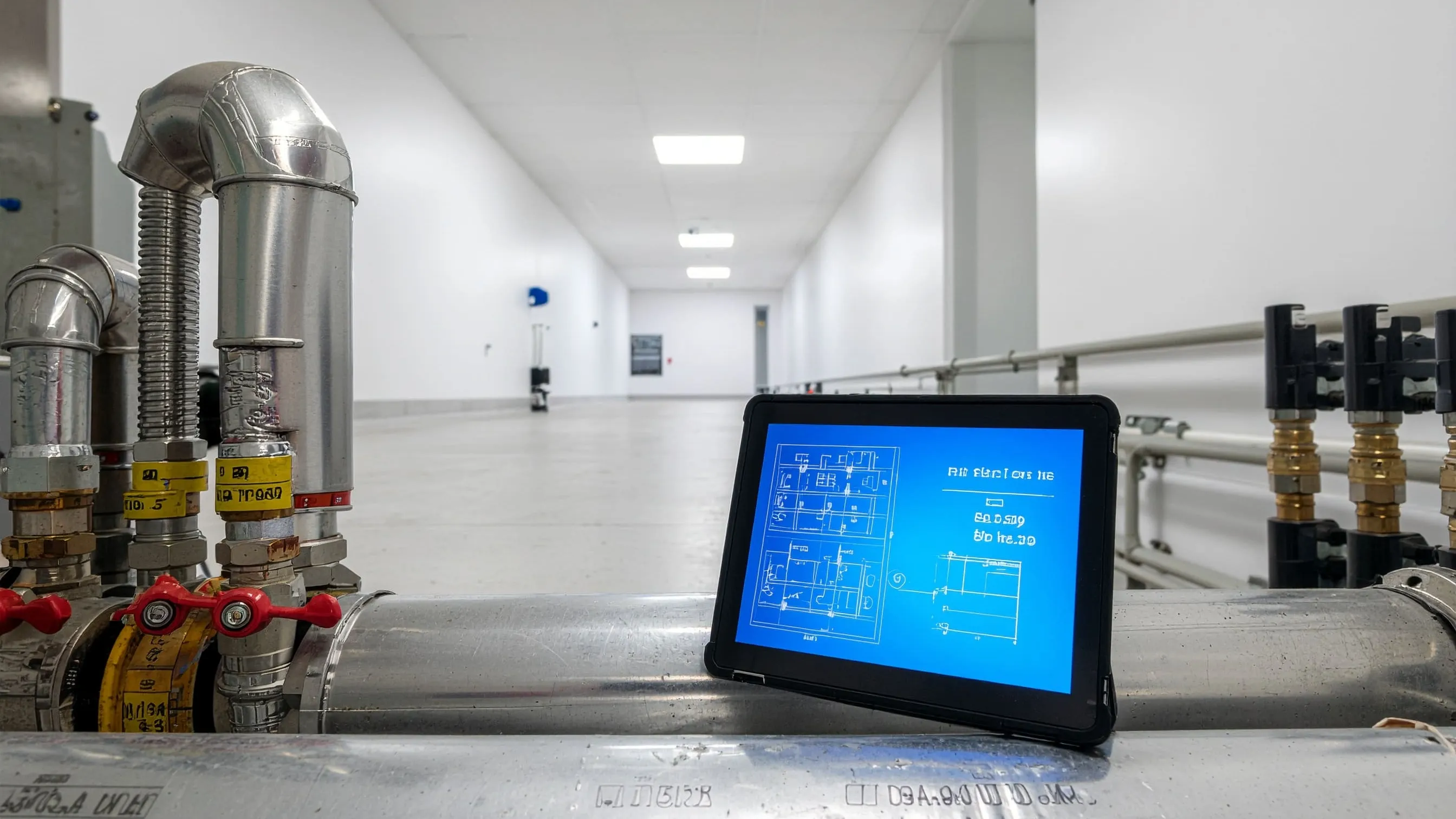
Upgrading a commercial plant room in stages keeps your building warm, but it creates a massive administrative headache. When half of your equipment is brand new and the other half is 30 years old, knowing exactly what is active is a critical life-safety requirement. Strict phased heating upgrade documentation prevents this transitional period from descending into absolute chaos.
In a standard replacement, engineers rip everything out, start fresh, and hand over a clean manual at the very end. Phased projects do not offer that luxury. The system evolves dynamically week by week. If you do not track every single pipe cut, temporary bypass, and valve addition, your facility management team will be flying blind during an emergency.
The Danger of Information Loss During Phasing
During a phased retrofit, the boundaries between old and new infrastructure blur heavily. Without proper phased heating upgrade documentation, incoming night-shift engineers will not know which isolation valves are live, which pipes are redundant, and which safety interlocks are currently bypassed. National Pumps and Boilers consistently reminds facility managers that inaccurate paperwork is just as dangerous as a leaking high-pressure pipe.
A facilities team at a large regional hospital recently took over a phased boiler replacement midway through the project. Because the previous contractor skipped their phased heating upgrade documentation, an incoming engineer accidentally cut into a live, pressurised chilled water line, mistakenly believing it was a redundant heating pipe. The resulting flood caused forty thousand pounds in damage and shut down the entire outpatient wing.
Updating the As-Built Drawings Iteratively
Every time a pipe is cut or a temporary bypass is installed, the schematic must change immediately. You cannot wait until the end of a six-month project to produce an accurate as-built schematic drawing. It must be updated iteratively after every single phase. If you install a temporary remeha low loss header during phase one, it must appear on the current as-built schematic drawing before the engineers leave the site that day.
An outdated diagram is a massive mechanical liability. Engineers rely on a precise as-built schematic drawing to safely isolate heating zones during major leaks or pressure drops. Think of a phased upgrade like rewriting a technical manual chapter by chapter while someone is still actively reading it. If you do not update the index constantly, the reader gets completely lost in the machinery.
Modifying the Asset Register for Warranties
As old boilers leave the building and new pumps arrive, your financial and maintenance records must reflect the physical reality of the plant room. Every single new component requires an immediate asset register modification. This action tracks the exact warranty start date, the unique serial number, and the physical location of the new hardware.
When you commission a new pump, you must pair the asset register modification directly with the associated grundfos pump maintenance manual pdf in your records. If you delay the asset register modification until the final handover phase, you risk losing critical warranty periods on the expensive equipment installed during the early stages of the project.
Tracking Interim Commissioning and Water Quality
Bringing new equipment online alongside legacy cast iron requires highly specific commissioning. You are operating the plant outside its final design parameters. Because of this, phased heating upgrade documentation must clearly state the temporary set points, working pressures, and restricted flow rates.
If you install a new Vaillant ecoTEC cascade to temporarily assist the remaining old boilers, the interim commissioning records prove that it is running safely. These temporary certificates provide absolute legal protection during the crossover period. Furthermore, you must meticulously document system water quality. You must track every chemical flush and inhibitor dose applied during the phases to prove you protected the new heat exchangers from old system sludge.
Maintaining the Digital Logbook
Paper documents get destroyed, soaked, or lost easily in a busy, messy plant room. Transitioning to a secure digital maintenance logbook ensures that every contractor logging onto the site sees the exact same updated information. Real-time digital updates prevent engineers from working off outdated assumptions.
A proper digital maintenance logbook tracks who made changes, what day they were made, and precisely why. If an engineer reroutes the gas supply for an andrews gas fired water heater during phase two, they log it instantly. This means the weekend team checking the digital maintenance logbook sees the mechanical change immediately, preventing dangerous and costly miscommunications.
Managing Electrical and Control Updates
Mechanical pipework is only half the battle during a phased retrofit. Phasing also involves splicing new digital communication networks into legacy analog wiring. Whenever a new hot water recirculation pump is wired into a temporary relay, the electrical diagrams must reflect this temporary bypass accurately.
You must label every temporary wire physically and document its purpose digitally so no one accidentally disconnects a critical safety interlock. Tracking the specific BACnet or Modbus addresses assigned to temporary equipment ensures your Building Management System does not throw constant communication errors during the transition.
The Final Handover Process
The culmination of a phased project requires a comprehensive, ruthless reconciliation of all paperwork. The final O&M manual handover represents the official transfer of responsibility back to the client. This manual must contain every single interim certificate, pressure test, and warranty document generated over the last few months of the build.
A flawless O&M manual handover guarantees that your internal team can operate the new commercial pump equipment safely and efficiently. If the O&M manual handover is incomplete or poorly organised, your staff will struggle to maintain the new high-efficiency system, ultimately destroying your return on investment through poor operation. You must also formally log that all staff received adequate training on the new controls.
Conclusion
Phased commercial upgrades keep your building running seamlessly, but they demand elite administrative discipline. Your paperwork must evolve daily to match the physical reality of the plant room. Meticulous tracking protects your staff, validates your expensive warranties, and ensures total regulatory compliance under strict health and safety laws.
Never let a contractor leave the site without providing updated schematics and logbook entries for that specific phase. If your facility requires professional guidance on managing complex mechanical retrofits safely and legally, Need Help Choosing? Contact Us to speak with our expert commercial engineering team today.