

Energy Efficiency Checks That Start With the Plant Room
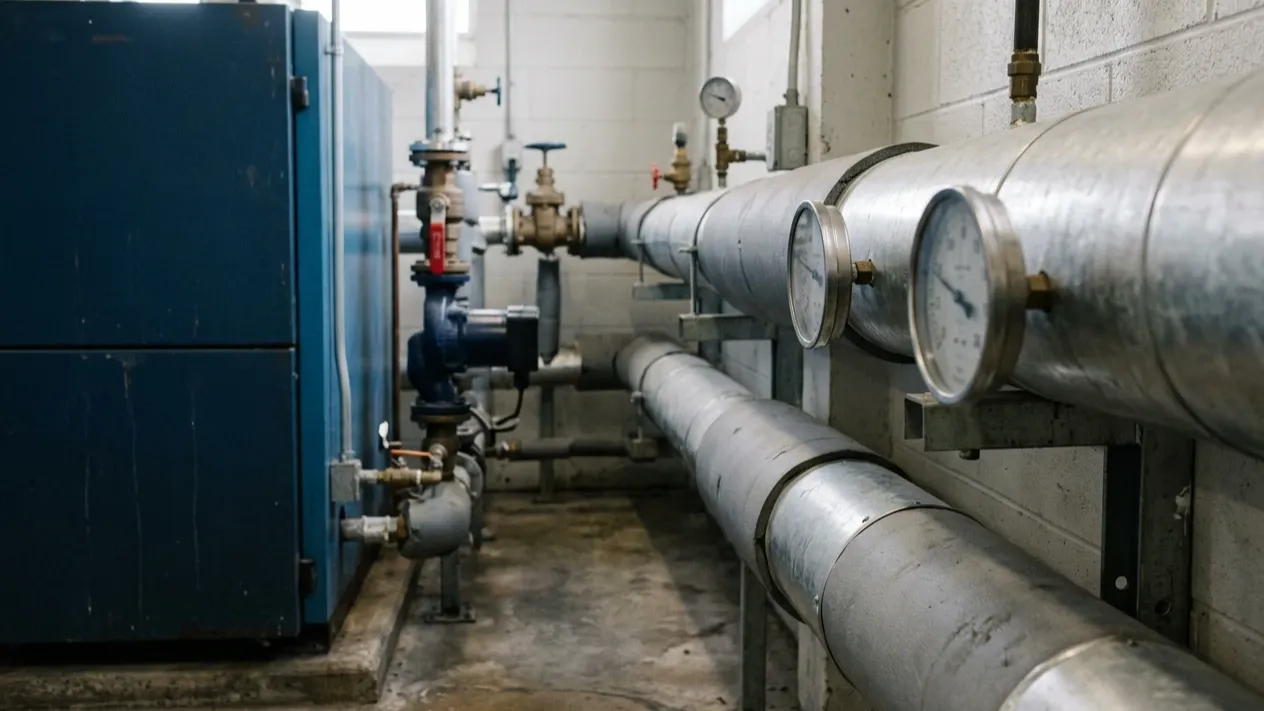
Plant room energy efficiency checks should start with what the system is doing, not with a preferred product answer. A building can waste energy while every major component appears to run. Pumps can operate longer or harder than demand requires. Boilers can miss condensing benefit when return conditions are unfavourable. Controls can carry yesterday's workaround into normal operation.
The useful review is a plant-room walk from readings to intervention. It keeps plant room energy efficiency tied to measurable evidence, then asks whether the next step is a control correction, competent maintenance review, operating change or product comparison. Low boiler return temperature is part of that discussion, but it should be treated carefully. Return temperature is evidence for competent assessment, not a diagnosis by itself.
ENERGY STAR's operation and maintenance guidance recommends assessing equipment, controls and schedules to identify operational improvements. Measure how the system is being used before asking product data to explain the bill.
Begin With Readings And Operating State
A useful plant-room walk records readings with time, load and operating state. Meter data, boiler flow temperature, boiler return temperature, pump speed, pump mode, run hours, control setpoints, enabled periods and occupancy schedule all become more useful when they are tied to when the building was actually asking for heat.
Energy drift is often gradual. Opening hours change. A complaint leads to an extended schedule. A pump is left in manual after testing. A bypass position changes and is not reset. A boiler is enabled early because one area is slow to recover. None of those observations proves the cause, but each one can change energy use.
Use a compact evidence stack before product comparison:
- Gas and electricity use aligned with dates and occupancy.
- Flow and return temperatures at warm-up, steady operation and low load.
- Pump status, speed and control mode during occupied and unoccupied periods.
- Boiler firing pattern, cycling observations and enabled schedule.
- Manual overrides, holiday settings, frost settings and local control changes.
- Maintenance findings such as strainer condition, water quality notes or valve observations.
That sequence protects the review from jumping from a high bill to a product purchase. It also gives competent maintainers a clearer basis for the next check.
Read Pumps Against Demand
Pumping energy depends on duty, operating hours and control method. A variable-speed circulator can be efficient where the circuit and demand pattern allow speed reduction. It can still waste energy if it is oversized, held in the wrong mode or running when the service does not need flow.
The US Department of Energy material on variable-speed pumping supports the general principle that pumping systems should be considered against demand and that speed control can reduce wasted energy where flow requirements vary. That does not prove a saving in a particular building. It makes the demand profile worth measuring before a replacement is compared.
A domestic hot water circulation pump, a constant flow primary loop, a variable heating circuit and a small zone pump may all have different reasons to run. The plant-room evidence should show whether the pump is responding to demand, being forced by a local setting or circulating through periods where the service is not needed.
Before narrowing the choice to a particular circulator, record the flow required at representative loads and the pressure rise needed to overcome circuit resistance. Keep those requirements separate from the building's static pressure. A higher advertised maximum head is not automatically an efficiency improvement. The useful comparison is how each suitable pump meets the measured duty over the periods when the system actually operates.
Treat Return Temperature As Evidence, Not A Verdict
In a condensing boiler context, lower return temperature can support condensing operation when the system can still meet useful heat demand. The common warning sign is often the opposite: persistently high return temperature that suggests the boiler may spend less time in favourable condensing conditions.
Return temperature still does not diagnose the cause. A high return may be linked to control settings, bypass flow, hydraulic separation, emitter sizing, balancing, pump speed, water condition, load profile or operating hours. A low return may be desirable in one context, but it may also be part of a poor heat delivery problem if occupied areas cannot recover.
Record when the reading was taken and what the plant was doing. A return temperature during morning warm-up is not the same as a return temperature during low-load afternoon operation. A single value cannot show whether the system spends most of the season in a favourable or unfavourable range.
Look For Workarounds That Became Normal
Many energy losses survive because a temporary decision becomes routine. A pump may be held at a fixed high speed after a complaint. A boiler may be enabled early and never returned to schedule. A local override may defeat a planned time programme. The plant room works, but it works to the workaround rather than to demand.
ENERGY STAR recommends after-hours walk-throughs to identify equipment running when it should be off. That fits plant rooms because unnecessary operation can occur when there are no occupants present to raise comfort complaints. Compare those observations with the authorised schedule, while preserving any required frost protection and hot-water safety arrangements.
During the walk, compare intended state with actual state. Are pumps in automatic, manual or off? Are boilers enabled by schedule or by local intervention? Are zones calling for heat while other systems oppose them? Are valves, bypasses and isolation points consistent with the intended control sequence?
The aim is not to diagnose from a clipboard. It is to decide whether the next intervention is record correction, competent investigation, controls review, maintenance action or product comparison.
Compare Products After The Baseline
Once the baseline is clear, product comparison can be narrow and useful. The required fields include duty range, control method, electrical supply, connection size, pressure rating, liquid temperature, port-to-port length, access and whether a single or twin arrangement is needed.
For a confirmed single-pump replacement, compare the selected model's performance curve with the required duty rather than choosing from connection size alone. Record its available control modes, electrical supply, dimensions and pressure and temperature limits. Note which figures describe operating limits and which describe the intended duty. Two pumps that fit the same pipework can have different control capabilities, so the competent designer or maintainer should confirm the setting and interface needed.
Our commercial circulators cover a range of pump sizes and configurations for a defined replacement requirement. Use the recorded duty and control needs to narrow that choice. If the readings point instead to schedules, balancing or restricted flow, resolve that finding before assuming new pumping equipment is needed.
Compare commercial boilers only when a competent assessment has identified a heat-generation requirement. Keep the load, temperature regime, flue route and control requirements together in the enquiry so that an attractive appliance specification does not obscure an unresolved site constraint.
Make The Improvement Measurable
An efficiency decision should end with the evidence that will be checked after the intervention. If the action is a schedule correction, compare operating hours. If the action is a pump setting change, compare speed, run time and complaints. If the action is product comparison after a confirmed duty, compare published fields against the record and then let the responsible site parties verify operation after installation.
We can help with product specifications, availability and ordering once the replacement requirement is defined. Bring the selected duty and interface requirements with the enquiry, rather than a high energy bill alone. Site assessment and commissioning remain with the responsible competent people.
Write the buying note around the reading that started the question, the operating state that gave it meaning, the competent owner for interpretation and the product fields needed only if replacement remains justified. If pump speed and operating hours point towards a circulator comparison, compare the product against measured duty. If return temperature is the concern, establish why the return is high before treating boiler hardware as the answer.