

Energy Efficiency Mistakes That Waste Budget in Heating Systems
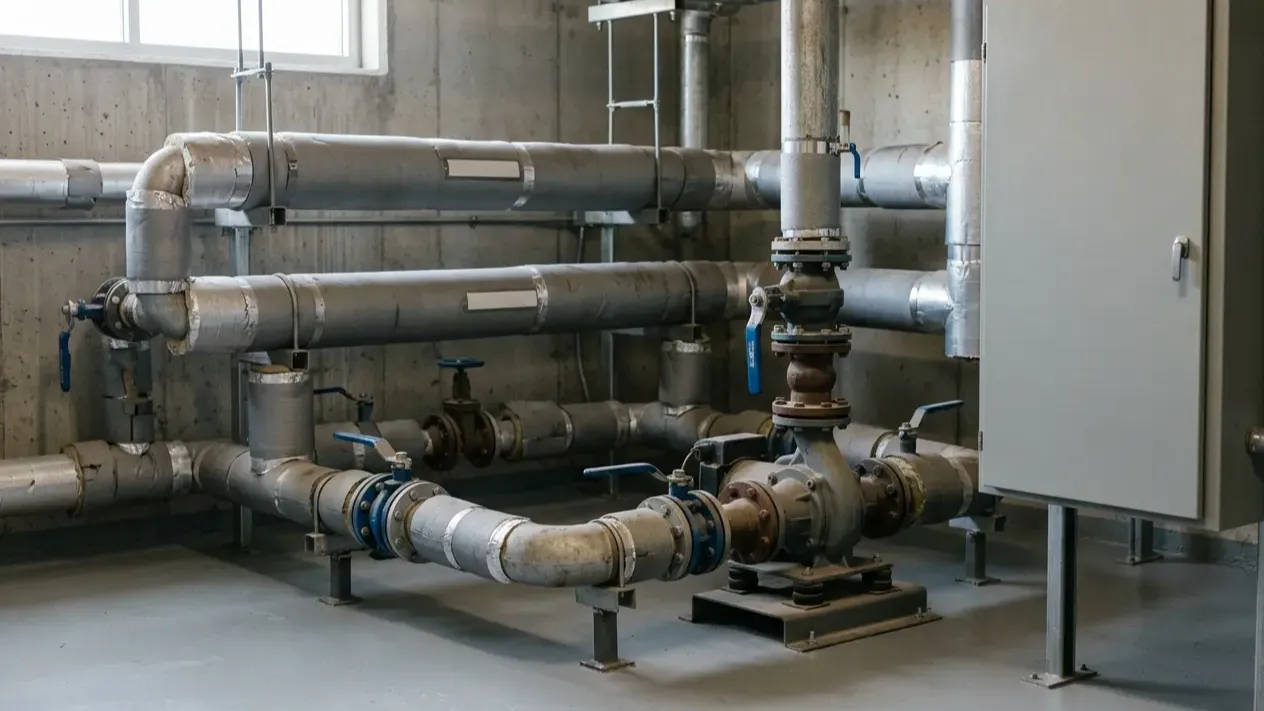
Heating budget is often lost before a boiler or pump has failed. In commercial buildings, waste usually starts with schedules that no longer match occupancy, commercial heating controls that send mixed instructions, pumps moving more water than the load needs, or heat being generated but not transferred cleanly.
Commercial heating system efficiency is not just about the performance of one appliance. It depends on demand, operating hours, setpoints, control logic, flow, return temperatures, water condition and equipment performance. Even an efficient boiler or pump can operate within a wasteful system if the building heats empty spaces, circulates through satisfied zones or runs longer to compensate for poor heat transfer.
The UK Government's Energy Technology List guidance on HVAC building controls highlights the role of controls in managing building heating and ventilation. Before considering replacement, the priority is to identify where energy is being used without providing a corresponding benefit.
Mistake: paying to heat when the building does not need it
The most basic loss is also one of the easiest to overlook. Heating runs because a time schedule was copied from an old occupancy pattern, a temporary override became permanent, or clocks were not reset after seasonal changes. The plant may be operating exactly as instructed, but the instruction is wrong.
Heating schedules and temperature setpoints need regular review. A system that starts too early, finishes too late or serves unused areas is spending money without a matching operational benefit. The problem can continue for months if nobody checks whether the original schedule still reflects how the building is used.
Demand should be considered by area rather than assumed across the whole site. Offices, workshops, retail zones, welfare areas and storage spaces may have different occupancy patterns and temperature requirements. One central schedule can be convenient, but it becomes wasteful when every zone is treated as equally occupied.
Heating and cooling overlap can create another avoidable expense. If heating starts as soon as cooling stops, or cooling removes heat that should not have been supplied, the building is paying for opposing processes. A suitable dead band between heating and cooling setpoints gives the system a neutral range and reduces unnecessary changeover.
Comfort still matters. The aim is not to underheat the building, but to stop buying heat for periods and places where there is no present demand.
Mistake: letting controls fight each other
Controls should turn building demand into orderly plant operation. Problems arise when thermostats, time clocks, boiler controls, pump settings, valves, frost protection, local overrides and building management settings are not aligned.
One schedule may say the heating is off while a local override keeps a zone calling. A room thermostat may be set high in one area while nearby cooling is set low. Frost protection may be necessary, but an incorrectly configured setting or misunderstood override can keep equipment operating beyond the intended conditions.
These conflicts are not always obvious from a single complaint. A warm room does not automatically indicate a control fault, just as high gas consumption does not prove poor boiler performance. The operating behaviour needs to be understood before money is spent on adjustments or replacement.
Useful control checks include:
- occupied and unoccupied schedules by zone;
- heating and cooling setpoints, including the intended dead band;
- optimum-start, frost-protection and holiday settings where present;
- local overrides and how long they remain active;
- valve positions during occupied, unoccupied and warm-up periods;
- pump-enable signals and whether they match actual demand;
- boiler and pump run hours compared with building use;
- meter data considered alongside weather, occupancy and operating periods.
These checks help distinguish a genuine plant limitation from unnecessary operating time. Commercial heating controls only reduce waste when schedules, setpoints and plant responses reflect how the building is actually used.
Mistake: running pumps as if demand never changes
Pumps are sometimes treated as background equipment, yet circulation strategy affects both electricity use and heating performance. If pumps run continuously at fixed output, the system may move water through circuits that have little active demand.
Heating demand changes throughout the day. Zones reach their setpoints, valves close, occupancy varies and external temperatures change. A pumping arrangement that does not respond can continue using electricity unnecessarily. It can also contribute to poor control, unwanted bypassing, noise or unstable temperatures.
Variable-speed commercial circulators can reduce unnecessary pumping where the wider system supports demand-led operation. CIBSE's guidance on pressure-independent control valves in variable-volume systems discusses how circulation requirements change as system demand falls. However, variable-speed operation is not automatically suitable for every installation.
The pump still needs to match the required duty, system resistance and control arrangement. Changing the pump alone will not correct poor hydraulics, incorrectly set valves, fouled components or conflicting control signals. The existing system needs to be understood before selecting replacement equipment.
Pump operation should also be considered alongside building demand. Look for circulation continuing through unoccupied periods, pumps working against mostly closed valves, or a large circuit remaining active to serve one small load. Differential pressure, temperature trends and run-hour information can help establish whether circulation is responding appropriately.
Where replacement is justified, compare suitable commercial circulators against the confirmed duty, available control modes and installation requirements.
Mistake: treating poor heat transfer as a boiler-capacity problem
Poor comfort, slow warm-up and uneven temperatures can lead to one expensive assumption: the boiler is too small. Capacity may be part of the problem, but it should not be the first conclusion.
Heat may be generated but not transferred effectively. Fouled heat exchangers, blocked strainers, air, poor water condition, incorrect flow, failing valves, unwanted bypassing and control conflicts can all reduce useful heat delivery. These are possible causes to investigate, not automatic diagnoses.
Commercial heating system efficiency depends on more than combustion or appliance efficiency. Generated heat must also reach occupied spaces at the required time and temperature. Deposits or restrictions can reduce heat transfer, while poor flow control may leave some areas overheated and others struggling to reach their setpoints.
Comparing flow and return temperatures, warm-up periods, zone temperatures, boiler cycling, run hours and meter data can help identify recurring problems. Weather and occupancy also need to be considered when interpreting those readings. A single low-temperature complaint does not establish a capacity issue, but a repeated pattern across different operating conditions may justify further investigation.
Replacing plant to compensate for a heat-transfer problem can waste capital. New equipment may have better published performance, but those improvements may not translate into lower operating costs if the system still cannot distribute heat effectively.
Mistake: judging efficiency from one reading
One reading can raise a question, but it cannot explain the whole system. A gas meter value, display temperature, room reading, pump setting or single flow and return measurement represents only one point in time. Heating performance changes with weather, occupancy, internal heat gains, schedules, setpoints and control conditions.
A more useful assessment compares consumption with the conditions that produced it. Did the system run overnight? Was the building fully occupied? Were outside temperatures lower than during the comparison period? Were weekend schedules active? Did pumps continue running while valves were closed? Was heating operating alongside cooling?
Weather or degree-day adjustment can help distinguish increased demand during colder periods from changes in system performance. Run-hour data may reveal early starts, late finishes and unnecessary weekend operation. Temperature trends can also show whether slow warm-up is persistent or linked to a particular zone, valve state or control period.
This does not need to become an elaborate reporting project. A representative baseline can help establish whether the main issue is operating time, control conflict, pumping, heat transfer or equipment performance. The important point is to compare like with like rather than draw conclusions from isolated readings.
Mistake: replacing equipment before the operating evidence is complete
Replacement has a place, but premature replacement can waste capital as well as energy. If the underlying problem is an incorrect schedule, heating and cooling overlap, poor heat transfer, excessive pumping or unresolved control conflict, new equipment may not address the main loss.
A practical assessment should establish how the system is meant to operate before replacement is considered:
- Define intended operation by area, schedule and occupancy.
- Compare actual run hours with that intended operation.
- Check heating and cooling setpoints for overlap or conflict.
- Review pump operation against valve position and demand.
- Investigate heat-transfer issues where temperatures, warm-up or cycling suggest a problem.
- Compare replacement options once the duty and control requirements are understood.
This sequence makes equipment comparisons more useful. Without it, procurement can become focused on model names or headline efficiency figures rather than the conditions under which the equipment will operate.
Keep the operating diagnosis separate from the equipment shortlist. A replacement should address a loss the site has actually identified, rather than simply offer a better published efficiency rating.
Where efficient replacement equipment fits the plan
Efficient replacement equipment fits best after operational corrections and maintenance findings have been separated from genuine plant limitations.
Some improvements may require little or no equipment expenditure. These include adjusting time schedules, removing unnecessary overrides, checking clock changes, correcting inappropriate heating and cooling overlap, and aligning occupied and unoccupied setpoints with actual use. They address avoidable waste where the existing system can still operate effectively.
Maintenance findings need a different response. Poor heat transfer, water condition concerns, fouled components, suspect valves, abnormal temperatures or excessive pumping behaviour should prompt competent investigation. They should not be treated as proof of one particular fault without confirmation.
Replacement becomes more useful when existing equipment cannot meet the confirmed duty, load profile or control requirements economically. Where the constraint is heat generation, suitable Remeha commercial boilers can be compared against the required output, operating temperatures, flue arrangement and control requirements.
We supply commercial circulators and boilers for replacement projects. Bring the confirmed duty, existing model, connection details and control requirements to the product comparison. Keep the building's schedules, temperatures, run hours and maintenance findings with the site assessment.
The priorities are straightforward. Stop heating spaces when there is no demand. Prevent heating and cooling from working against each other. Match circulation to the actual load where the system allows it. Investigate poor heat transfer before assuming the boiler lacks capacity. Use operating trends rather than isolated readings, and replace equipment only when the evidence supports the investment.