

Ensuring Compliance with British Standards for Commercial Pipework Insulation
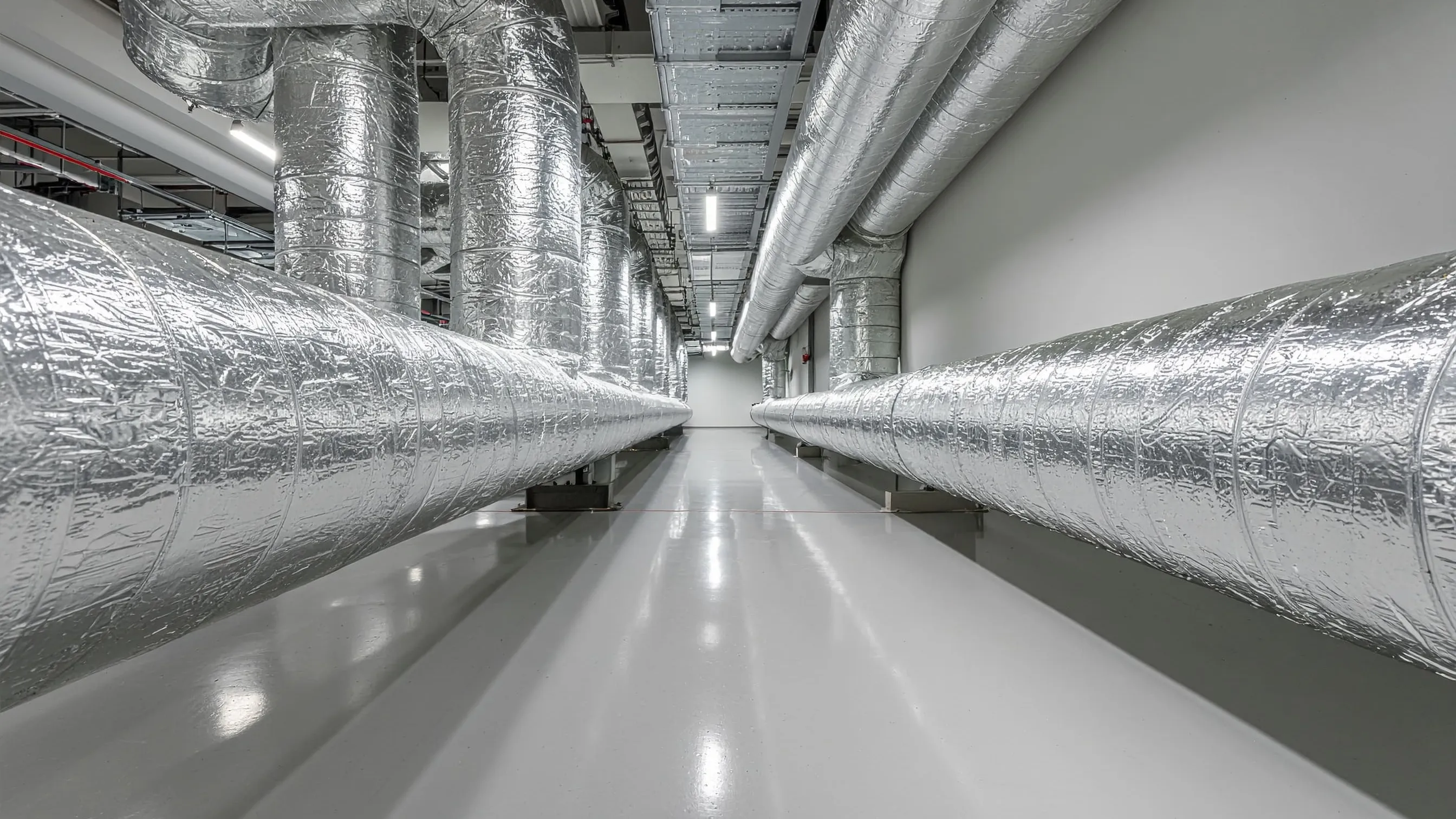
Achieving total commercial pipework insulation compliance isn't just about saving money on your monthly gas bills. It is a strict legal requirement governed by stringent UK engineering codes. If you ignore these mandates, your facility will fail its energy audits and potentially face severe regulatory penalties.
Maintaining flawless commercial pipework insulation compliance protects your building's operational budget while ensuring you meet national carbon reduction targets. You cannot rely on guesswork when specifying thermal lagging. You must follow the exact mathematical and physical guidelines set out by British law to ensure your plant room operates safely and legally.
The Legal Framework for Insulation
Every mechanical installation must adhere to a specific legal framework. Building control officers heavily scrutinise commercial plant rooms to ensure they meet modern energy efficiency mandates. National Pumps and Boilers regularly advises facility managers that relying on outdated installation rules is incredibly dangerous.
You must understand how different regulations overlap to enforce energy efficiency and physical safety. Furthermore, post-Brexit product regulations demand that all commercial insulation materials carry a valid UKCA or CE mark under the Construction Products Regulation. Ignoring these rules guarantees failed inspections. If an inspector discovers bare pipes or undersized lagging, they will flag the installation as non-compliant. This can delay the handover of a newly refurbished building and invalidate your mechanical warranties.
Adhering to Codes of Practice
The absolute cornerstone of UK insulation practice is the BS 5970 thermal insulation standards. This specific code dictates exactly how materials should be selected, applied, and finished across commercial pipe networks. Engineers must follow the BS 5970 thermal insulation standards to ensure the lagging performs reliably over its intended fifteen-year lifespan.
This code provides strict guidance on installing vapour barriers, sealing longitudinal seams, and preventing atmospheric moisture from causing corrosion underneath the foam. It also strictly dictates the use of load-bearing phenolic blocks at pipe bracket locations. If you just crush soft insulation with a steel bracket, you ruin the vapour seal. If you are retrofitting a massive ecoTEC commercial boiler, you must apply the BS 5970 thermal insulation standards to the surrounding primary headers. Doing this prevents devastating radiant heat loss and ensures your new generation plant operates at peak efficiency.
Meeting Strict Energy Retention Targets
Beyond basic physical installation methods, facilities must satisfy Building Regulations Part L2A. This specific legal document governs the conservation of fuel and power in new non-domestic buildings, setting the benchmark for major commercial retrofits. To achieve full compliance with Building Regulations Part L2A, engineers must calculate the exact thickness of insulation required to limit heat transfer.
The regulation dictates the maximum permissible heat loss per metre of pipework based on the fluid temperature and the pipe's external diameter. A newly installed central heating system pump will waste massive amounts of electricity if the attached pipework fails to meet Building Regulations Part L2A. Correct calculations guarantee that the thermal energy actually reaches the furthest radiators instead of bleeding into the basement.
Fire Safety and Material Choices
Commercial plant rooms present severe fire risks due to the presence of high-voltage electrical equipment and combustible gases. Therefore, specifying the correct insulation material is a critical life-safety issue. You must implement a strict non-combustible lagging specification for any pipework carrying high-temperature primary fluids.
A proper non-combustible lagging specification ensures that if a fire breaks out, the insulation will not act as fuel or emit lethal, toxic smoke. Materials must achieve strict Euroclass A1 or A2 fire ratings to be legally permitted in high-risk zones. If your mechanical contractors are installing a new grundfos circulation array, you must verify their materials. Ensure they use a certified non-combustible lagging specification like dense mineral wool rather than cheap, highly flammable domestic foam.
Water Regulations and Health Compliance
Insulation compliance extends far beyond saving heating gas. It is a critical component of public health and safety under the Water Supply Regulations and HSE L8 ACOP guidelines. Commercial hot water secondary return loops must be insulated flawlessly to keep the water temperature strictly above 50 degrees Celsius. Failing to insulate these lines allows the temperature to drop, creating a lethal breeding ground for Legionella bacteria.
Conversely, external cold water mains require thick insulation to prevent freezing during winter and to stop dangerous heat gain during summer. Protecting the water feeding a large andrew water heater prevents the pipes from bursting and flooding the facility. Insulation is the primary defence mechanism that ensures your water systems remain sanitary and structurally intact.
Leveraging Financial Incentives
The UK government actively encourages elite energy performance through specific tax incentives. To qualify for these rebates, your insulation materials must meet the strict energy technology list criteria. Products that satisfy the energy technology list criteria are independently verified to operate at the absolute highest levels of thermal efficiency.
When upgrading a commercial heating network, using insulation that hits the energy technology list criteria guarantees you achieve maximum thermal retention. This unlocks valuable financial rebates for your business through enhanced capital allowances. It proves to financial stakeholders that you have installed the absolute top tier of energy-saving equipment available on the market.
Protecting Mechanical Components
A compliant commercial system requires total thermal continuity. You cannot insulate the straight pipes perfectly but leave the complex mechanical joints totally bare. Think of insulating a pipe but ignoring the valves like wearing a thick winter coat but leaving it completely unzipped in a blizzard. All your body heat escapes instantly through the massive gap.
During strict energy audits, inspectors use thermal imaging cameras to catch these exact radiant leaks. You must fit bespoke, removable thermal jackets over all pump valves and heavy steel flanges. Covering these components ensures total commercial pipework insulation compliance across the entire fluid pathway, trapping the heat securely while allowing engineers quick access for maintenance.
Documenting and Proving Conformity
Inspectors will never just take your word for it. You must provide hard, documented evidence of your legal compliance. A facility manager at a newly refurbished leisure centre recently failed a critical energy audit because they lost the paperwork proving their insulation thickness met the legal standards. They had to pay an independent assessor thousands of pounds to core-sample the lagging and rewrite the technical reports just to pass the inspection.
You must retain all product datasheets, UKCA certificates, and thickness calculations in your master Health and Safety file. Keep these documents filed securely alongside the operating manuals for your heavy commercial pump equipment. Flawless documentation proves your due diligence and protects your facility management team from any future liability.
Conclusion
Achieving perfect commercial pipework insulation compliance is not an optional extra. It is a fundamental engineering requirement that protects your building from financial penalties, fire hazards, and severe energy waste. You must demand that your mechanical contractors follow these strict British Standards to the letter on every single project.
Never accept a plant room installation that cuts corners on material thickness or leaves mechanical valves bare. If you are unsure if your current plant room meets these strict legal requirements, Call Our Team Today to discuss an expert compliance assessment and material specification with our commercial engineering team.