

Essential Equipment Every Commercial Boiler Room Should Have
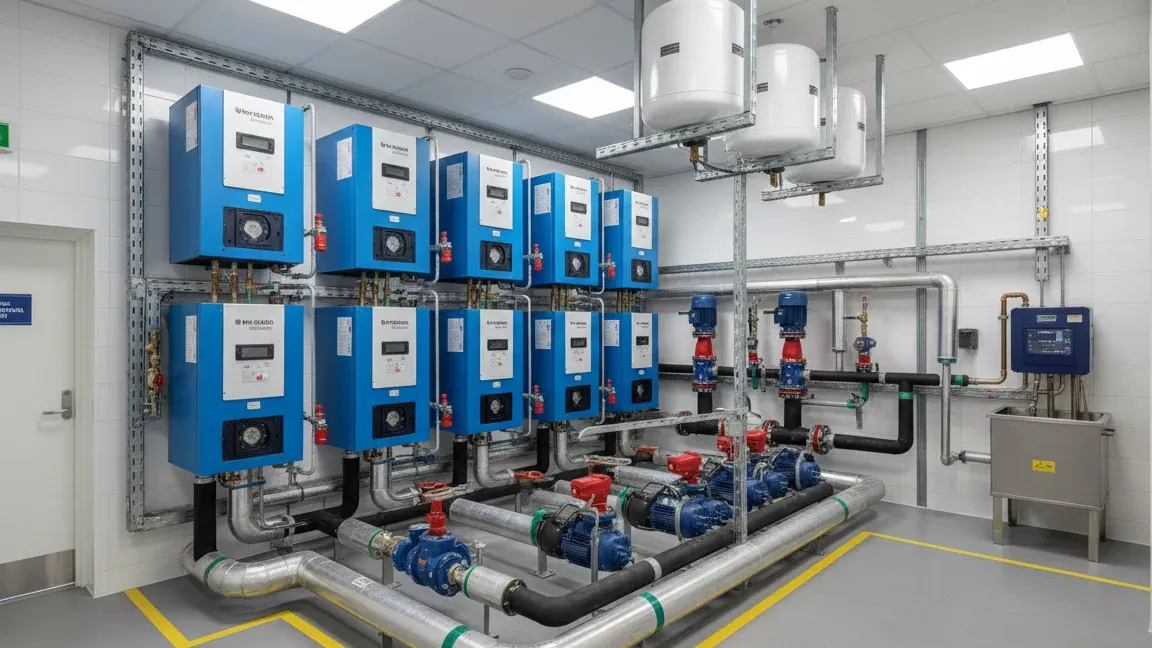
A well-equipped commercial boiler room represents the difference between reliable heating and costly downtime. The equipment discussed here forms the foundation of safe, efficient operation - but selecting the right components requires understanding specific system demands and regulatory obligations.
Core Safety Equipment for Commercial Boiler Rooms
Pressure Relief Valves and Safety Controls
Every commercial boiler installation must include properly sized pressure relief valves as the primary safety mechanism against dangerous pressure build-up. These valves automatically release excess pressure before it reaches critical levels, preventing catastrophic boiler failure. UK regulations mandate that pressure relief valves meet BS EN ISO 4126 standards and undergo annual testing by qualified engineers.
Temperature and pressure safety systems work alongside relief valves to shut down the boiler before dangerous conditions develop. Modern commercial systems typically incorporate multiple safety interlocks - high limit thermostats, low water cut-offs, and flame failure devices - creating redundant protection layers. A single failed safety control can result in equipment damage costing tens of thousands of pounds, making regular inspection and testing non-negotiable.
Gas Safe registered engineers must certify all safety controls during annual inspections, with documentation retained for insurance purposes. Many commercial insurance policies specifically exclude claims resulting from inadequate safety equipment or lapsed certifications, making compliance a financial necessity beyond the obvious safety considerations.
Emergency Shutdown Systems
Accessible emergency stop buttons must be positioned at all boiler room exits, allowing personnel to immediately halt operations when dangerous conditions arise. These controls should integrate with building management systems to trigger alarms, activate ventilation, and notify facilities management simultaneously.
Automatic shutdown triggers include gas leak detectors, carbon monoxide sensors, and flood detection systems. Modern commercial boiler rooms increasingly incorporate networked safety systems that provide remote monitoring and automatic emergency response, reducing reliance on personnel being physically present when problems develop.
Testing emergency shutdown systems quarterly ensures they function correctly when needed. This testing should simulate actual emergency conditions, verifying that all interconnected systems respond appropriately. Documentation of these tests demonstrates due diligence for insurance and regulatory purposes.
Water Treatment and Quality Control Equipment
Chemical Dosing Systems
Poor water quality destroys commercial boilers faster than any other factor. Scale build-up reduces heat transfer efficiency by up to 40%, whilst corrosion can perforate boiler tubes within months of installation. Chemical dosing systems maintain water chemistry within manufacturer-specified parameters, protecting capital investments and maintaining efficiency throughout equipment lifespan.
Automatic dosing systems continuously monitor water conductivity and pH levels, adjusting chemical injection rates to maintain optimal conditions. These systems eliminate the inconsistency of manual dosing whilst providing data logging for maintenance records. Commercial installations handling multiple boilers typically require centralised dosing systems with proportional injection based on system flow rates.
Water treatment testing equipment should include conductivity meters, pH testers, and hardness test kits. Weekly testing catches problems before they cause damage, whilst monthly laboratory analysis provides detailed water chemistry profiles. Many commercial circulators benefit significantly from properly maintained water chemistry, as corrosion and scale affect pump performance alongside boiler efficiency.
Expansion Vessels and Pressurisation Equipment
Commercial heating systems require properly sized expansion vessels to accommodate water volume changes during heating cycles. Undersized vessels cause pressure relief valves to discharge repeatedly, wasting water and energy whilst indicating system design problems. Oversized vessels create unnecessary costs without performance benefits.
Pressurisation units maintain system pressure within design parameters, automatically adding water when pressure drops and providing expansion capacity during heating. These units combine expansion vessels, pumps, controls, and pressure sensors into integrated packages sized for commercial applications. Quality pressurisation units from established manufacturers provide reliable pressure control for systems ranging from small commercial buildings to large district heating networks.
Annual inspection of expansion vessels includes checking pre-charge pressure, examining the diaphragm for failure, and verifying pressure vessel certification remains current. Failed expansion vessels exhibit symptoms including frequent pressure relief valve discharge, pressure gauge fluctuations, and waterlogged vessels that have lost their air cushion.
Monitoring and Control Equipment
Temperature and Pressure Gauges
Accurate monitoring equipment allows operators to identify developing problems before they cause failures. Commercial boiler rooms require pressure gauges at key points including boiler outlets, system high points, and pump discharge locations. Temperature sensors should monitor flow and return temperatures, flue gas temperatures, and critical component temperatures.
Digital gauges with data logging capabilities provide valuable diagnostic information and compliance documentation. These systems track temperature and pressure trends over time, revealing gradual changes that indicate developing problems. Remote monitoring allows facilities managers to check boiler room conditions from anywhere, receiving alerts when parameters exceed preset limits.
Gauge calibration schedules depend on criticality and manufacturer recommendations, typically ranging from annual to biennial verification. Uncalibrated gauges provide false confidence, potentially allowing dangerous conditions to develop unnoticed. Many insurance policies require documented calibration records for pressure monitoring equipment.
Flow Meters and Circulation Monitoring
Flow measurement provides crucial diagnostic information about system performance and efficiency. Reduced flow rates indicate pump problems, valve failures, or system blockages requiring investigation. Flow data combined with temperature measurements calculates actual heat delivery, verifying system performance against design specifications.
Ultrasonic flow meters offer non-invasive installation suitable for existing systems, whilst insertion meters provide cost-effective solutions for larger pipe sizes. Modern flow meters integrate with building management systems, providing continuous monitoring and historical data analysis. This information proves invaluable when troubleshooting circulation problems or optimising pump operation.
Circulation monitoring helps identify issues with central heating pumps before complete failure occurs. Gradual flow reduction often indicates bearing wear, impeller damage, or system fouling - problems that cost far less to address before catastrophic failure occurs.
Pumping Equipment and Circulation Systems
Commercial Circulation Pumps
Reliable circulation pumps form the heart of every commercial heating system. Pump selection must account for system flow requirements, pressure drop calculations, and future expansion possibilities. Undersized pumps fail to deliver adequate heat, whilst oversized pumps waste energy and create noise problems throughout the building.
Redundancy requirements vary by building type and occupancy. Critical facilities like hospitals require duplicate pumps with automatic changeover, ensuring continuous operation despite pump failure. Less critical applications might accept brief heating interruptions, allowing single pump configurations with emergency spares available on site.
Energy-efficient pump selection significantly impacts operating costs over equipment lifespan. Variable speed drives reduce energy consumption by 30-50% compared to fixed-speed pumps with throttling valves. Grundfos pumps with integrated frequency converters provide excellent efficiency whilst simplifying installation and control integration.
Leading manufacturers including Grundfos, Wilo, and Lowara offer commercial circulation pumps designed for continuous operation in demanding applications. These pumps feature robust construction, easy maintenance access, and comprehensive monitoring capabilities suitable for building management system integration.
Valve Systems and Distribution Controls
Proper valve selection and placement enables system maintenance without complete shutdown whilst providing zone control for efficient heating distribution. Isolation valves at each major component allow maintenance work on individual pumps, heat exchangers, or boilers without draining the entire system.
Balancing valves optimise flow distribution across multiple zones, ensuring each area receives design flow rates. Commissioning engineers adjust these valves during initial system setup, with periodic rebalancing addressing changes in system configuration or occupancy patterns. Motorised zone valves provide automated control, responding to thermostats or building management systems to deliver heat only where needed.
Quality pump valves withstand the temperature and pressure conditions in commercial heating systems whilst providing reliable sealing over years of operation. Valve maintenance includes periodic operation to prevent seizing, packing adjustment or replacement, and eventual rebuild or replacement based on condition assessment.
Maintenance Tools and Testing Equipment
Combustion Analysis Equipment
UK regulations require annual combustion analysis for commercial boilers, with results documented for compliance purposes. Flue gas analysers measure combustion efficiency, carbon monoxide levels, and excess air ratios - providing the data needed to optimise burner settings and verify safe operation.
Modern analysers incorporate electronic sensors providing accurate measurements across the full range of combustion conditions. These devices calculate efficiency automatically, eliminating manual calculations whilst providing data storage for compliance documentation. Gas Safe registered engineers performing annual inspections bring calibrated analysers, but facilities staff benefit from having basic combustion testing capability for ongoing optimisation.
Combustion testing should occur whenever burner adjustments are made, fuel supply changes, or efficiency appears reduced. Poor combustion wastes fuel, increases emissions, and can produce dangerous carbon monoxide levels. Regular testing catches problems early whilst providing documentation demonstrating proper maintenance for insurance purposes.
General Maintenance Tools and Spares
Well-equipped boiler rooms include the tools needed for routine maintenance without waiting for service contractors. Basic requirements include pressure and temperature testing equipment, leak detection solutions, pipe wrenches and spanners sized for system components, and cleaning supplies for burners and heat exchangers.
Critical spare parts inventory depends on equipment redundancy and service contractor response times. Facilities with backup boilers might stock fewer spares than single-boiler installations where failures cause immediate heating loss. Common spares include pump seals, burner nozzles, gaskets, and control components specific to installed equipment.
Heat exchanger and burner cleaning equipment maintains efficiency between major services. Scale and soot build-up reduces heat transfer, wasting fuel and potentially causing equipment damage. Regular cleaning using appropriate brushes, scrapers, and chemical cleaners maintains peak efficiency whilst extending equipment lifespan.
Compliance and Documentation Requirements
Mandatory Safety Certifications
Commercial boiler operations fall under multiple regulatory frameworks including pressure systems regulations, gas safety requirements, and building regulations. Compliance requires documented inspections, testing, and maintenance performed by qualified engineers holding appropriate certifications.
Pressure system examinations must occur at intervals specified by the written scheme of examination, typically annually for commercial boilers. These examinations verify pressure relief valves, safety controls, and pressure vessel integrity meet regulatory standards. Insurance companies often require these examinations as policy conditions, making compliance both a legal and financial necessity.
Gas Safe registration remains mandatory for anyone working on gas-fired boilers. Only Gas Safe registered engineers can legally install, maintain, or repair gas boilers, with significant penalties for non-compliance. Facilities managers must verify contractor credentials before allowing work on gas systems, maintaining records of contractor certifications alongside maintenance documentation.
Record-Keeping Obligations
Record-keeping obligations extend beyond inspection certificates to include daily logs, maintenance activities, water treatment records, and safety system testing. These records demonstrate due diligence when problems occur whilst providing the operational history needed for effective troubleshooting.
Many facilities maintain digital records integrated with building management systems, ensuring documentation remains accessible and properly archived. National Pumps and Boilers recommends comprehensive documentation practices that support both compliance requirements and operational excellence.
Selecting Equipment for Your Commercial Boiler Room
Choosing appropriate boiler room equipment requires understanding specific system requirements, regulatory obligations, and operational priorities. Oversized equipment wastes capital and operating costs, whilst undersized components compromise reliability and efficiency. Working with experienced suppliers ensures equipment selection matches actual system demands rather than generic recommendations.
Equipment quality significantly impacts long-term costs and reliability. Premium manufacturers command higher initial prices but deliver superior reliability, efficiency, and service life. Budget equipment often requires more frequent replacement and generates higher operating costs, eliminating any initial savings within the first few years of operation.
System integration capabilities increasingly influence equipment selection as building automation becomes standard in commercial facilities. Equipment with built-in communication protocols simplifies integration whilst providing enhanced monitoring and control capabilities. This connectivity enables predictive maintenance strategies, reducing unexpected failures through condition-based servicing.
Professional installation and commissioning prove as important as equipment selection for achieving reliable operation. Even premium equipment performs poorly when incorrectly installed or commissioned. Documentation from commissioning should include as-built drawings, equipment specifications, control sequences, safety system test results, and initial performance data.
Commercial boiler room equipment represents a significant investment requiring careful selection, professional installation, and diligent maintenance. For expert guidance on equipment selection and system design, Contact Us to discuss requirements with experienced heating specialists who can recommend solutions tailored to specific operational needs.