

Fill Pressure Settings for Commercial Heating Systems: A Plain Guide
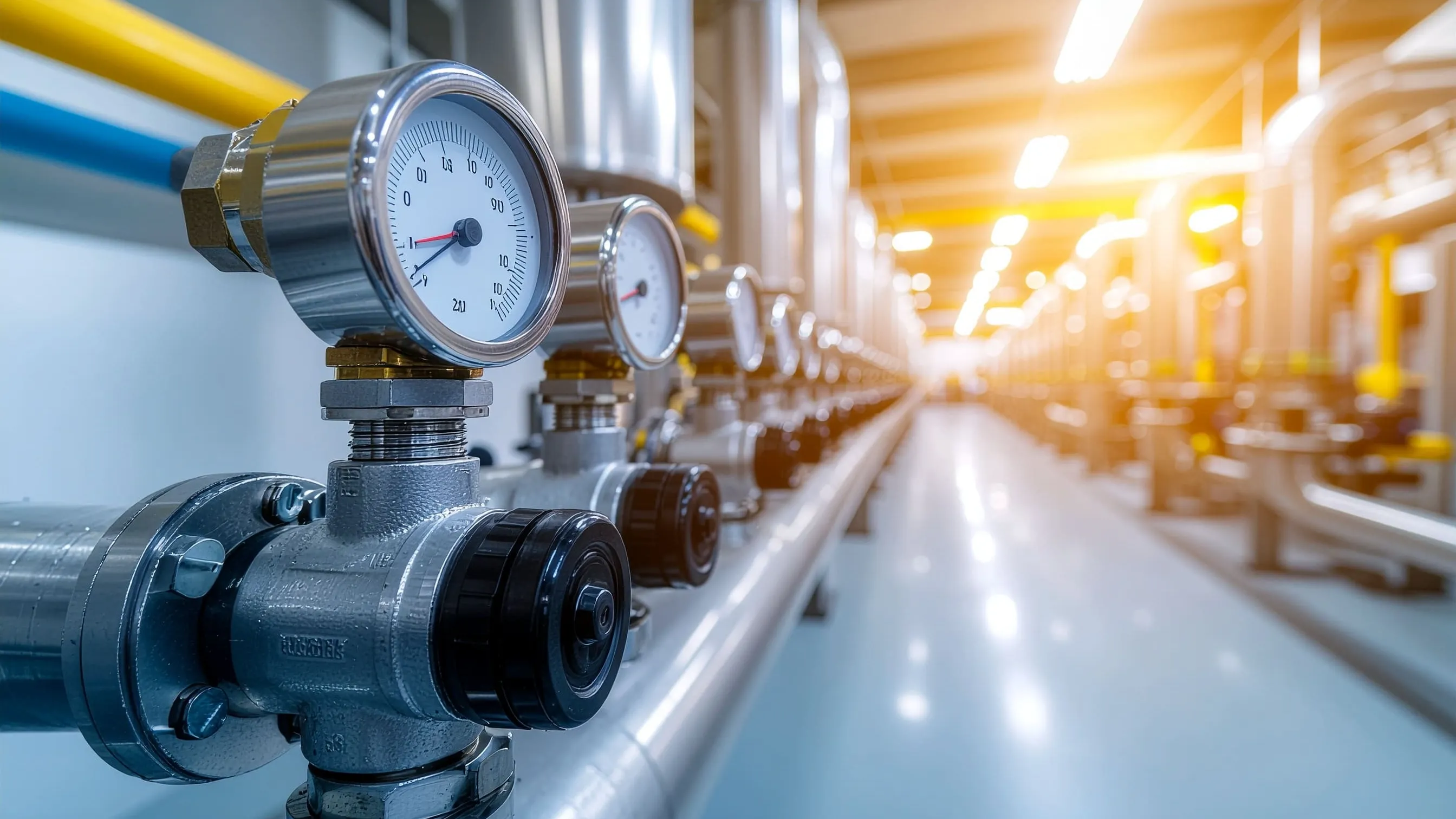
Commercial heating systems operate within narrow pressure parameters that determine reliability, efficiency, and component lifespan. Commercial heating fill pressure settings - the static pressure maintained when the system is cold - form the baseline from which every other pressure parameter derives. Set this figure correctly and the system circulates effectively, avoids air ingress, and operates within the safe range across every heating cycle. Set it incorrectly and the consequences cascade through every component from circulation pumps to heat exchangers.
The consequences extend beyond comfort issues. Incorrect fill pressure accounts for a significant proportion of commercial heating breakdowns during the first operational year, according to BSRIA commissioning data. Facility managers face unnecessary callouts, building occupants experience cold zones, and equipment warranties become void when pressure parameters fall outside manufacturer specifications. Understanding the correct commercial heating fill pressure settings for each system type prevents these problems at the specification and commissioning stage.
Understanding Fill Pressure in Commercial Systems
Fill pressure represents the static pressure throughout the heating system when cold, measured in bar. This baseline must overcome two fundamental challenges: the static head created by the vertical height from the lowest to the highest point in the system, and the minimum operating pressure required by each component to function within its design parameters.
In a four-storey office building with a ground-level plant room and radiators on the fourth floor, the static head might reach 12 metres. Since 10 metres of water column equals approximately 1 bar, this building requires a minimum fill pressure of 1.2 bar simply to fill the upper pipework with water rather than air. Add safety margins and equipment requirements, and typical cold fill pressure reaches 1.5–2.0 bar for such an installation.
Operating pressure increases as the system heats and water expands. A sealed commercial system filled to 1.5 bar cold typically reaches 2.5–3.0 bar at full operating temperature. The expansion vessel accommodates this volume increase, maintaining pressure within safe limits and preventing safety valve discharge during normal heat-up cycles. The difference between cold fill and hot operating pressure - the pressure rise - is a function of system volume, temperature range, and expansion vessel sizing rather than a figure that can be specified independently.
Calculating Required Fill Pressure
Determining correct commercial heating fill pressure settings follows a straightforward calculation accounting for static head, equipment requirements, and safety margins. The formula for minimum cold fill pressure is:
Minimum Fill Pressure (bar) = (Static Head in metres ÷ 10) + Equipment Requirements + Safety Margin (0.3–0.5 bar)
For a building with 15-metre static head and standard radiator circuit equipment: (15 ÷ 10) + 0.5 = 2.0 bar minimum cold fill pressure. This calculation establishes the floor below which pressure must never fall, not the target operating value.
Equipment requirements add further pressure demands that stack with static head. Circulation pumps require minimum inlet pressure to prevent cavitation, with most commercial pumps specifying 0.5 bar minimum inlet head. For Grundfos commercial circulation pumps handling high-temperature circuits, the minimum inlet pressure specification must be verified from the pump's technical datasheet and incorporated into the fill pressure calculation rather than assumed from generic values.
Plant room location significantly affects fill pressure management. Rooftop plant rooms in tall buildings face challenging pressure scenarios because the system operates under lower static head from the plant room perspective, often requiring pressurisation units rather than simple fill loops to maintain adequate pressure at points lower in the building. Basement plant rooms benefit from building height providing natural static pressure at the plant level, simplifying pressure maintenance whilst requiring careful calculation for high-level zones.
Multi-storey buildings with separate heating zones require individual fill pressure calculations for each zone. A 12-storey building typically uses three separate heating circuits - floors 1–4, 5–8, and 9–12 - with each zone's fill pressure calculated based on its specific static head. This zoning prevents over-pressurisation of lower circuits whilst maintaining adequate pressure in upper zones, a balance that a single fill pressure setting serving the entire building cannot achieve.
Standard Pressure Settings by System Type
Sealed Commercial Systems
Sealed commercial systems represent the most common configuration in modern commercial buildings. These closed-loop systems typically operate with cold fill pressure between 1.5–2.5 bar, rising to 2.5–4.0 bar at operating temperature. Buildings up to four storeys generally use 1.5 bar cold fill; six-storey buildings typically require 2.0 bar; and eight-storey structures warrant 2.5 bar. These figures assume ground-level plant rooms and standard radiator circuits without unusual equipment pressure requirements.
For central heating systems where multiple zones, buffer vessels, or plate heat exchangers raise minimum pressure requirements beyond the static head calculation, each additional pressure demand must be itemised and added to the calculation rather than covered within the generic safety margin.
Open Vented Systems
Open vented systems with header tanks maintain atmospheric pressure at the tank location, with system pressure determined purely by static head below that point. A header tank 20 metres above the boiler creates 2.0 bar static pressure at the boiler regardless of system temperature. These systems avoid the pressure fluctuation issues characteristic of sealed systems but require adequate tank height and proper sizing to deliver consistent pressure at the lowest system point.
Pressurisation Unit-Maintained Systems
Larger commercial installations use pressurisation units where simple expansion vessels cannot accommodate system volume or height requirements. National Pumps and Boilers supplies pressurisation units for installations requiring precise automatic pressure maintenance across wide temperature ranges - typically 2.0–4.0 bar - compensating automatically for minor leakage, expansion, and contraction without manual intervention.
Key Components Affecting Fill Pressure
Expansion Vessels
The expansion vessel forms the heart of pressure control in sealed systems. As water heats and expands, the rubber diaphragm compresses the pre-charged air cushion, absorbing volume increase whilst limiting pressure rise. Pre-charge pressure - the air pressure inside the vessel before connection to the system - must match system fill pressure minus 0.2–0.3 bar. A system with 1.5 bar cold fill pressure requires 1.2–1.3 bar vessel pre-charge. This relationship ensures the diaphragm occupies neutral position when cold, providing maximum expansion capacity throughout the heating cycle.
Undersized expansion vessels cause rapid pressure increase during heat-up, leading to frequent safety valve discharge. British Standard BS EN 12828 provides detailed sizing calculations accounting for system volume, temperature differential, and fill pressure. For Vaillant commercial boiler installations where the integral expansion vessel must be verified against total system volume rather than boiler water content alone, these calculations frequently reveal that supplementary external vessels are required to serve the full distribution system.
Pressure Relief Valves
Pressure relief valves protect against over-pressurisation, typically set 0.5–1.0 bar above maximum operating pressure. A system with 2.5 bar maximum operating pressure requires a 3.0 bar relief valve. Regular testing confirms these safety devices function correctly - a stuck-closed relief valve eliminates overpressure protection, whilst a weeping valve causes gradual pressure loss that mimics system leakage and leads to repeated topping-up without addressing the actual fault.
Circulation Pumps
Commercial circulation pumps require minimum inlet pressure to prevent cavitation - the formation of vapour bubbles that damage impellers and reduce pump efficiency. For Wilo commercial pump installations, the minimum net positive suction head requirement must be incorporated into fill pressure calculations, particularly for high-temperature applications where water approaches its vapour pressure at lower absolute pressures than standard heating system temperatures.
Common Fill Pressure Problems
Under-Pressurisation
Under-pressurisation manifests through symptoms that facility managers should recognise immediately. Circulation pumps develop cavitation noise - a rattling or grinding sound indicating vapour bubble formation at the impeller. Upper floors lose heat as insufficient pressure prevents water reaching high-level radiators. Air repeatedly enters the system through automatic air vents operating in reverse rather than expelling air, requiring constant manual bleeding that addresses the symptom without resolving the underlying pressure deficit.
Pressure gauges showing below 1.0 bar on cold commercial systems indicate significant under-pressurisation requiring investigation. For DHW pumps in combined heating and hot water systems, under-pressurisation creates particular problems because hot water circuits operating at higher temperatures require higher minimum pressures to prevent flashing - a condition where water partially vaporises at the pump inlet as pressure falls below the saturation pressure at that temperature.
Over-Pressurisation
Safety valves discharging regularly waste treated system water whilst indicating either undersized expansion vessels or incorrect pre-charge pressure. Pipework joints develop leaks as excessive pressure overcomes compression fittings and threaded connections that were designed for the rated working pressure rather than the elevated pressures that over-pressurisation creates. Boiler heat exchangers suffer stress cracking under repeated cycling between normal and excessive pressure levels.
For Mikrofill pressurisation and expansion equipment, the automatic filling function that protects against under-pressurisation must be configured with correct upper and lower setpoints to prevent the equipment itself contributing to over-pressurisation by continuing to inject water beyond the correct fill pressure when a sensor fault or setpoint error occurs.
Pressure Loss Mechanisms
Pressure loss occurs through two distinct mechanisms requiring different responses. Rapid pressure drops over hours or days indicate active leaks - visible water at pipework joints or concealed leaks within floor and ceiling voids. Slow pressure loss over weeks suggests expansion vessel failure, with a perforated diaphragm allowing the air charge to dissolve into system water. Seasonal variation of 0.3–0.5 bar between cold winter mornings and warm operating conditions is normal and requires no adjustment. Variation exceeding 1.0 bar requires investigation regardless of season.
Setting and Adjusting Fill Pressure
Initial filling of new commercial heating systems follows a specific sequence ensuring complete air removal and correct pressure establishment. Fill slowly from the lowest system point whilst all automatic air vents are open and manual vents are accessible. Fill pressure should reach the target cold figure with the system cold and vents still open, pushing air through until water flows from high-level vents. Close automatic air vents once water appears, isolate the fill loop, and monitor pressure stability for 24 hours before commissioning.
During commissioning, monitor pressure rise during first heat-up to confirm maximum pressure remains below the safety valve setting. Excessive pressure rise indicates an undersized expansion vessel requiring replacement before system handover. For DAB pressurisation unit installations, commissioning records must capture cold fill pressure, pump activation setpoints, and maximum operating pressure as the baseline for ongoing maintenance monitoring.
Building Regulations Approved Document L requires pressure documentation during commissioning: cold fill pressure, hot operating pressure, expansion vessel size and pre-charge, and relief valve setting. These records enable future maintenance engineers to verify correct operation and identify deviations indicating developing faults - a documentation requirement that protects facility managers from disputes about whether a system was commissioned correctly.
Maintenance and Monitoring
Regular pressure monitoring forms the core of planned preventive maintenance for commercial heating systems. Monthly pressure checks during the heating season identify gradual changes before they affect operation. Record cold pressure - measured with the system off overnight - and hot operating pressure at typical load. Cold fill pressure should remain within 0.2 bar of the original commissioning value; significant deviation requires investigation before attributing it to normal system ageing.
Annual expansion vessel maintenance involves pre-charge pressure verification. Isolate the vessel, drain water from the system side, then check air pressure at the Schrader valve. Pre-charge should match the original setting, typically 0.2–0.3 bar below cold fill pressure. Low pre-charge indicates air loss requiring re-inflation; water discharge when checking confirms diaphragm failure requiring vessel replacement.
For pump valves and isolation valves throughout the distribution system, quarterly operation during routine checks maintains valve operability whilst identifying any leaks developing at valve glands or seats. Leaking isolation valves contribute to gradual pressure loss that facility managers often attribute to expansion vessel problems or system leakage rather than valve seat wear.
Compliance and Safety Considerations
The Pressure Systems Safety Regulations 2000 apply to commercial heating systems, requiring written schemes of examination for systems operating above 0.5 bar and exceeding specific volume thresholds. Competent persons must examine pressure vessels and protective devices at specified intervals, maintaining records demonstrating ongoing safety compliance. Facility managers hold direct responsibility for maintaining safe pressure operation, including pressure gauge monitoring, anomaly investigation, and engaging qualified engineers for pressure system work.
Record-keeping obligations extend beyond initial commissioning documentation. Maintain pressure records showing monthly readings, any adjustments, reasons for those adjustments, and engineer details for all pressure system work. These records demonstrate regulatory compliance and provide diagnostic information when pressure problems develop - a paper trail that protects facility managers and demonstrates due diligence to insurers and regulators.
Conclusion
Correct commercial heating fill pressure settings form the foundation of reliable, efficient commercial heating operation. The parameters established during commissioning - cold fill pressure, hot operating pressure, expansion vessel pre-charge, and relief valve setting - provide the baseline for ongoing monitoring and maintenance throughout the system's operational life. Incorrect fill pressure costs money through multiple mechanisms: under-pressurisation reduces circulation efficiency; over-pressurisation causes component wear and safety valve discharge; both accelerate corrosion and shorten equipment lifespan.
For facilities experiencing ongoing pressure management challenges, persistent pressure loss, or planning system modifications that affect pressure calculations, Contact Us to discuss pressure system assessment and optimisation with engineers experienced in commercial heating fill pressure settings across building types and system configurations.