

Glycol System Maintenance: Why Testing Is Essential
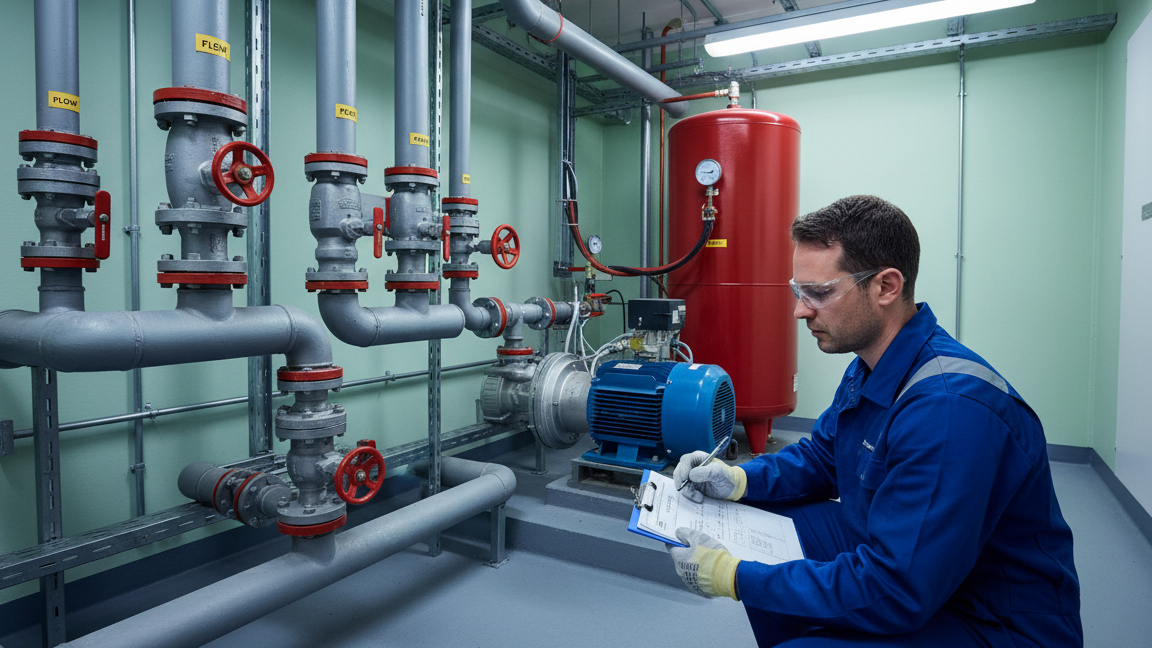
Glycol-based heating and cooling systems protect buildings across the UK from freeze damage and maintain efficient heat transfer year-round. Yet many facility managers treat glycol as a fit-and-forget fluid, assuming it performs indefinitely once installed. This assumption costs businesses thousands in premature equipment failures, efficiency losses, and emergency repairs.
Glycol maintenance requires systematic testing and monitoring to preserve the protective properties that justify its use. Without regular testing, glycol degrades silently, losing freeze protection and corrosion inhibition long before visible problems appear. Understanding what testing reveals and when to act separates proactive maintenance from reactive crisis management.
What Glycol Does in Heating Systems
Freeze Protection and Heat Transfer
Glycol solutions prevent freezing in pipework exposed to sub-zero temperatures - a critical function for outdoor sections of heating systems, rooftop installations, and plant rooms in unheated spaces. Pure water freezes at 0°C and expands with destructive force, splitting pipes and damaging central heating pumps. Glycol depresses the freeze point proportionally to its concentration, with typical UK installations using 25-40% glycol by volume.
The British climate demands reliable freeze protection during winter months, but glycol concentration must match the lowest expected temperature. A 30% propylene glycol solution protects to approximately -15°C, adequate for most UK locations. Systems in Scotland or exposed rooftop installations may require 35-40% concentration for -20°C protection.
Beyond freeze protection, glycol maintains heat transfer efficiency when properly maintained. Glycol solutions have lower specific heat capacity than water, meaning they transfer slightly less heat per litre pumped. However, this modest efficiency trade-off becomes worthwhile in applications where freeze damage risk exists. The key is maintaining glycol in optimal condition - degraded glycol loses heat transfer efficiency faster than its freeze protection.
Corrosion Inhibition Properties
Fresh glycol contains corrosion inhibitors that protect steel, copper, aluminium, and other metals in closed-loop systems. These inhibitors form protective films on metal surfaces, preventing oxygen and contaminants from attacking the base material. Without these inhibitors, glycol solutions become more corrosive than plain water due to their chemical breakdown products. Grundfos pump protection depends critically on maintaining adequate inhibitor levels through regular testing.
Corrosion inhibitors deplete over time through chemical reactions and thermal stress. As inhibitors fail, corrosion accelerates throughout the system, attacking pumps, heat exchangers, boiler internals, and pipework. The iron oxide and copper corrosion products contaminate the glycol further, creating a destructive cycle. National Pumps and Boilers regularly encounters systems where neglected glycol maintenance has caused extensive corrosion damage requiring component replacement. Grundfos pump systems regularly encounter systems where neglected glycol maintenance has caused extensive corrosion damage requiring component replacement.
The cost implications are substantial. Replacing a corroded heat exchanger in a commercial boiler can exceed £5,000 in parts alone, not including labour and system downtime. A failed circulator pump costs £800-2,500 depending on size and specification. These failures are preventable through testing that costs a fraction of repair expenses.
Why Glycol Degrades Over Time
Chemical Breakdown Process
Glycol solutions undergo oxidation when exposed to air, breaking down into acidic compounds that lower pH and attack system components. Thermal stress from repeated heating cycles accelerates this degradation, particularly in high-temperature applications above 80°C. The breakdown products include organic acids that consume corrosion inhibitors and create an increasingly hostile environment for metal components.
Contamination from external sources compounds chemical degradation. Air ingress through faulty seals, automatic air vents, or during maintenance introduces oxygen that drives oxidation. Dirt and debris from initial system fill or poor water quality provide nucleation sites for corrosion. Even minor leaks that require regular top-up dilute glycol concentration and introduce fresh oxygen with each addition.
Visual signs of degradation include colour changes from clear or dyed to brown or black, indicating oxidation and corrosion products. Smell changes from odourless to sour or acrid signal acid formation. However, these obvious signs appear late in the degradation process - long after protective properties have diminished. Testing reveals problems while intervention remains straightforward and economical.
Consequences of Degraded Glycol
Reduced freeze protection develops as glycol concentration drops from water addition or as glycol molecules break down. A system designed for -15°C protection may only protect to -5°C after several years without testing, leaving pipework vulnerable during cold snaps. Freeze damage can occur in a single night, causing leaks that require extensive repairs and potential water damage to buildings.
Accelerated corrosion from failed inhibitors attacks system components systematically. Pumps develop bearing wear and seal failures as corrosion products act as abrasives. Heat exchangers lose efficiency as corrosion deposits insulate heat transfer surfaces. Boiler internals corrode, reducing lifespan and efficiency. The cumulative damage from several years of degraded glycol can necessitate replacing major components that should have lasted decades.
Efficiency losses manifest as increased energy consumption to maintain building temperatures. Degraded glycol with reduced heat transfer properties requires higher flow rates and pump speeds, increasing electrical consumption. Corrosion deposits in heat exchangers reduce thermal efficiency, forcing boilers to fire longer to meet demand. These efficiency penalties accumulate month after month, creating ongoing operational cost increases.
Essential Testing Parameters
pH Level Monitoring
pH testing indicates glycol solution acidity, with fresh glycol typically showing pH 8.5-10.5 depending on inhibitor package. As glycol degrades and acids form, pH drops progressively. A pH reading below 7.5 signals significant degradation requiring immediate attention, while readings below 7.0 indicate severe degradation demanding glycol replacement.
Acceptable pH ranges vary between ethylene and propylene glycol formulations, with most commercial systems using propylene glycol for lower toxicity. Propylene glycol systems should maintain pH above 8.0 for adequate corrosion protection. Regular pH monitoring establishes trending data that predicts when intervention becomes necessary, allowing planned maintenance rather than emergency response.
Testing frequency depends on system age, operating temperature, and previous test results. New systems benefit from testing after the first year to establish baseline condition, then annually for the first five years. Systems showing pH decline require more frequent monitoring - every six months if pH approaches 8.0, quarterly if below 8.0. This graduated approach focuses resources on systems showing degradation while avoiding unnecessary testing of stable systems.
Freeze Point Testing
Freeze point testing verifies actual glycol concentration using a refractometer or laboratory analysis. On-site refractometers provide immediate results by measuring how the glycol solution bends light, correlating to concentration and freeze protection level. This simple test takes minutes and reveals whether the system maintains design freeze protection or has been diluted through top-ups.
Accurate measurements require temperature compensation, as refractometer readings vary with sample temperature. Quality refractometers include automatic temperature compensation, while basic models require manual correction using conversion charts. Laboratory analysis provides greater accuracy but introduces delay between sampling and results, making refractometers the practical choice for routine testing.
Seasonal testing makes particular sense for freeze point verification, with autumn testing confirming protection before winter exposure. Systems requiring regular top-up should be tested after additions to verify concentration hasn't dropped below design levels. Concentration adjustments involve calculating the glycol volume needed to restore target percentage, then adding concentrated glycol through a system fill point.
Inhibitor Reserve Testing
Inhibitor reserve measurements quantify the remaining protective capacity in the glycol solution. Laboratory analysis measures specific inhibitor compounds, reporting results as percentage of original inhibitor level. A reserve above 50% indicates adequate protection, while levels below 30% signal approaching inhibitor depletion requiring replenishment or replacement.
Inhibitor depletion accelerates system damage exponentially - the final 20% of inhibitor reserve depletes faster than the first 80% as corrosion products catalyse further degradation. Testing catches this acceleration early, when adding inhibitor concentrate can restore protection without full glycol replacement. Waiting until inhibitors are completely exhausted means glycol replacement becomes the only effective option.
Testing methods for inhibitor levels require laboratory analysis, as the chemical tests exceed on-site capabilities for most facilities. Sampling involves drawing a small quantity (typically 100-250ml) from a system drain point into a clean container, labelling with system details and sampling date, then sending to a specialist laboratory. Results typically return within 5-7 working days, providing comprehensive analysis of pH, freeze point, inhibitor reserve, and contamination.
Recommended Testing Frequency
Annual Testing Minimum
Annual testing represents minimum best practice for glycol maintenance, providing regular verification that protective properties remain adequate. Testing should include pH measurement, freeze point verification, and visual assessment of colour and clarity. This baseline monitoring catches gradual degradation before it causes damage, with minimal cost compared to system component value.
Documentation of test results creates a maintenance history that demonstrates due diligence for insurance purposes and helps identify systems requiring increased attention. Recording pH, freeze point, and visual condition annually reveals degradation trends, allowing predictive maintenance scheduling. Many boiler and system warranties require documented glycol maintenance, making annual testing a contractual obligation as well as a technical necessity.
Seasonal timing affects testing practicality, with autumn testing providing maximum value by confirming freeze protection before winter. Spring testing offers an alternative that avoids busy pre-winter maintenance periods while still providing annual verification. The specific timing matters less than consistent annual execution - choose a schedule that fits maintenance resources and stick to it.
Increased Testing for Critical Systems
Quarterly or bi-annual testing becomes warranted for systems where failure consequences exceed normal business interruption. Hospitals, data centres, pharmaceutical facilities, and other critical operations cannot tolerate heating system failures during cold weather. The modest additional cost of increased testing provides risk mitigation proportional to failure consequences.
Risk factors that justify more frequent monitoring include system age beyond 10 years, previous glycol degradation issues, high operating temperatures above 80°C, and systems requiring frequent top-up. Each factor accelerates degradation or indicates existing problems, making closer monitoring prudent. Wilo circulation systems and other quality components deserve the protection that proper glycol condition provides. Wilo commercial systems and other quality components deserve the protection that proper glycol condition provides.
Cost-benefit analysis for increased testing compares testing expenses against potential failure costs. If quarterly testing costs £400 annually but prevents a single £5,000 heat exchanger replacement, the return on investment is clear. For critical facilities where heating failure could cost tens of thousands in operational disruption, even monthly testing becomes economically justified.
What Testing Results Tell You
Interpreting Test Data
Glycol test reports typically include pH, freeze point, inhibitor reserve percentage, and visual assessment. Understanding what each parameter indicates enables informed maintenance decisions rather than simply filing reports. pH above 8.5 with freeze protection at design level indicates healthy glycol requiring no immediate action - simply continue annual monitoring. Remeha system guidance provides detailed interpretation protocols for test result analysis across different equipment types.
pH between 8.0-8.5 signals early degradation, suggesting increased testing frequency to every six months and planning for inhibitor addition or glycol replacement within 1-2 years. pH below 8.0 demands immediate action - either inhibitor addition if reserve testing shows moderate depletion, or complete glycol replacement if inhibitors are exhausted. Freeze point testing revealing concentration below design level requires glycol addition to restore protection before winter.
Threshold values that trigger maintenance action should be established in advance, creating clear decision criteria. For example: pH below 8.0 = immediate inhibitor addition or replacement; freeze point protection less than 5°C below design = glycol addition within 30 days; inhibitor reserve below 30% = plan replacement within 6 months. These predetermined thresholds prevent analysis paralysis when test results arrive.
When to Replace Glycol
Complete glycol replacement becomes necessary when pH drops below 7.5, inhibitor reserve falls below 20%, or visual contamination indicates severe degradation. At this stage, the glycol solution has become actively harmful to the system, and adding fresh inhibitor cannot restore adequate protection. Replacement involves draining the old glycol, flushing the system thoroughly, and refilling with fresh glycol solution at correct concentration.
Partial system flushing with glycol top-up offers a middle option for moderately degraded systems, removing some contaminated glycol while adding fresh solution. This approach costs less than complete replacement but provides less thorough restoration of protective properties. It works best for systems showing early degradation (pH 7.8-8.0) where full replacement isn't yet justified but some intervention is needed.
Cost considerations for glycol replacement include the glycol itself (£8-15 per litre for propylene glycol concentrate), labour for draining and refilling, disposal of used glycol (classified as hazardous waste requiring licensed disposal), and system downtime. A typical 500-litre commercial system might cost £2,500-4,000 for complete glycol replacement including labour and disposal - significant, but far less than replacing corroded components.
Maintenance Procedures Beyond Testing
System Flushing Protocols
Proper flushing before glycol replacement removes corrosion products, sludge, and degraded glycol residues that would contaminate fresh glycol. Flushing involves circulating clean water through the system using temporary connections, draining, and repeating until discharge water runs clear. Inadequate flushing leaves contaminants that accelerate new glycol degradation, wasting the investment in replacement.
Equipment needed for effective flushing includes a flushing pump with adequate flow rate, hoses and connections for temporary circulation loops, and discharge routing to drains. Flow rate should achieve turbulent flow throughout the system to dislodge deposits - typically 1-1.5 metres per second velocity in pipework. Flushing duration depends on initial contamination level, ranging from 2-6 hours for most commercial systems.
Water quality for flushing matters more than many realise - using hard water or contaminated mains water introduces new problems. Treated water or softened water provides better flushing results and avoids depositing scale during the flushing process. The final flush should use water quality suitable for system fill, ensuring the system is clean before introducing expensive glycol. Vaillant system flushing recommendations emphasise the critical importance of proper flushing procedures before fresh glycol introduction.
Air Removal and Pressurisation
Air affects glycol system performance through multiple mechanisms - reducing heat transfer efficiency, accelerating oxidation and degradation, causing pump cavitation and noise, and creating air locks that prevent circulation. Proper air removal during commissioning and ongoing automatic air venting maintain system performance and glycol condition.
Proper air venting procedures involve operating the system at design conditions whilst bleeding air from high points. DAB circulation systems benefit from methodical air removal that prevents air pockets from persisting in distribution circuits. Automatic air vents at system high points continuously remove air that comes out of solution, though these vents require periodic inspection to prevent fouling.
Pressurisation requirements for glycol systems differ slightly from water systems due to glycol's different expansion characteristics. The system pressure must remain above atmospheric at all points to prevent air ingress. Pre-charge pressure in expansion vessels should match cold fill pressure, typically calculated as 0.5 bar plus 0.3 bar per metre of height above the expansion vessel reference point.
Cost Implications of Neglected Glycol Maintenance
Direct Equipment Damage
Repair costs from corrosion-damaged components dwarf the cost of preventive glycol testing. A single corroded heat exchanger replacement easily exceeds £5,000, whilst degraded glycol can damage multiple components simultaneously. Pump failures from corrosion-induced seal damage cost £1,000-3,000 per pump replacement, often requiring multiple units in larger systems. Central heating system protection through proper glycol maintenance prevents catastrophic failures that devastate budgets and interrupt operations.
Boiler heat exchanger damage from glycol degradation can necessitate complete boiler replacement, running £8,000-15,000+ for commercial units. These catastrophic failures occur silently when facility managers neglect testing, then appear suddenly when the system fails during cold weather.
Energy Efficiency Losses
Degraded glycol with reduced heat transfer properties requires higher flow rates and pump speeds, increasing electrical energy consumption by 20-40%. For a building consuming 500,000 kWh annually for heating, efficiency losses of 25% represent £10,000+ in additional annual energy costs - money wasted year after year until glycol is tested and replaced.
Corrosion deposits in heat exchangers reduce thermal efficiency by 10-20%, forcing boilers to fire longer to meet demand. These efficiency penalties persist throughout the degraded glycol's service life, creating cumulative cost impacts that dwarf the testing expense.
Professional Testing vs. DIY Approaches
Laboratory Analysis Benefits
Professional laboratory testing provides comprehensive assessment of glycol condition including pH, freeze point, inhibitor reserve, contamination analysis, and metals content. This detailed information guides maintenance decisions with certainty, preventing both premature replacement of serviceable glycol and dangerous delays in replacing degraded fluid. Armstrong testing standards represent industry best practice for comprehensive glycol analysis supporting informed maintenance decisions.
Lowara system specialists recommend laboratory analysis for critical installations, recognising that the investment pays for itself through informed maintenance decisions and prevention of costly failures.
On-Site Testing Capabilities
Refractometers and pH test strips provide quick field assessment of glycol condition, enabling immediate maintenance decisions without waiting for laboratory results. Facility managers equipped with these tools can monitor system health continuously, catching problems before they escalate to emergency status.
However, on-site testing has limitations. Refractometers measure only concentration, not inhibitor levels or contamination. pH strips provide approximate readings only. Neither method detects corrosion products or chemical degradation compounds that laboratory analysis reveals. On-site testing works best as a supplement to annual laboratory analysis, providing intermediate verification between comprehensive tests.
Conclusion
Glycol system testing represents the foundation of effective maintenance, enabling proactive management of degradation before it causes failures. Facility managers who implement systematic testing programs protect their equipment investments, maintain operational efficiency, and avoid the emergency repair costs that inevitably follow neglected glycol maintenance.
Annual testing costs mere hundreds of pounds whilst preventing failures costing thousands. The financial logic is inescapable - systematic glycol testing delivers exceptional returns on investment whilst maintaining the system reliability that modern facilities demand.
If you're uncertain about your glycol system's current condition or want to establish a comprehensive maintenance programme, Contact Us to discuss how professional guidance and systematic testing can protect your heating infrastructure and optimise long-term performance.