

Heating System Design Considerations for Multi-Unit Residential Developments
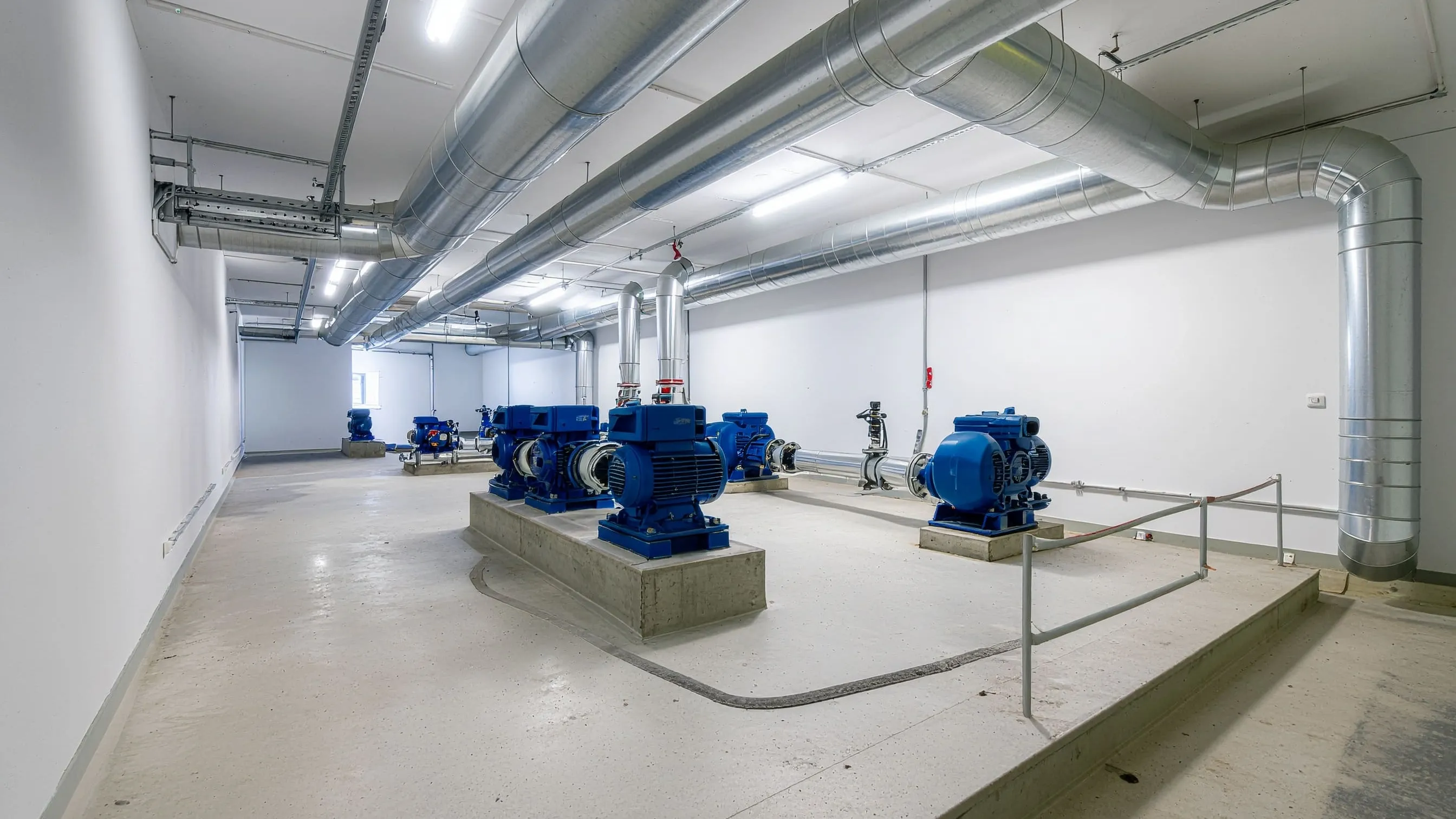
Multi-unit residential developments present unique challenges that separate competent heating engineers from those who simply scale up basic domestic solutions. A large apartment block isn't simply a stack of individual houses. The hydraulics, control strategies, and regulatory framework of heating design multi unit residential projects operate under entirely different and highly complex principles. Poor decisions made during the planning stage create maintenance headaches and inefficient systems that plague buildings for decades.
The margin for error narrows considerably when hundreds of residents depend on a single heating infrastructure. Understanding diversity factors, distribution losses, and the interaction between primary and secondary circuits is absolutely essential. It forms the foundation of any credible apartment block specification. We will explore the critical elements that ensure long-term reliability and comfort for occupants across modern high-density developments.
Understanding Load Calculations for Multi-Unit Buildings
Calculating heating loads for multi-unit developments differs fundamentally from standard single-dwelling assessments. A detached house might require 12 kilowatts for space heating and 3 kilowatts for domestic hot water. However, multiplying these figures by 50 apartments produces a vastly inflated total that completely ignores system diversity.
Diversity factors account for the statistical reality that not all apartments demand maximum heat simultaneously. British Standard BS EN 12831 provides the exact methodology for detailed heat loss calculations. Applying appropriate diversity requires practical engineering experience with occupied buildings. A typical apartment block might see diversity factors of 0.7 for space heating and 0.4 for domestic hot water. This depends heavily on occupancy patterns and the level of storage provision. Ignoring these vital factors in heating design multi unit residential projects leads directly to oversized plant that wastes valuable capital.
Furthermore, oversized equipment runs inefficiently throughout its entire service life. Peak demand analysis must consider building orientation, exposure to the elements, and modern construction methods. Corner apartments with two external walls require significantly more heat than mid-floor units entirely surrounded by heated spaces. These variations affect not just total plant capacity but also the distribution network sizing and complex balancing requirements. The apartment block infrastructure must accommodate these load variations whilst maintaining perfect comfort across all zones.
Centralised vs Decentralised Heating Systems
The fundamental decision between centralised and decentralised heating shapes everything downstream. This choice dictates capital costs, ongoing maintenance strategies, metering approaches, and the level of tenant control. Neither solution perfectly suits every single development, so you must weigh the specific project constraints carefully. Centralised systems using communal boiler houses offer excellent economies of scale and professional maintenance oversight. You can explore modern commercial solutions by consulting with National Pumps and Boilers, who specialise in these large-scale network designs.
Decentralised solutions place individual boilers in each apartment. This entirely eliminates distribution losses and simplifies metering. Hybrid approaches cleverly combine elements of both strategies to maximise efficiency and reliability. A centralised plant room might serve space heating through a heat network while apartments use individual point-of-use water heaters. This strategy reduces peak loads on the central system and simplifies Legionella control protocols significantly.
A bank of commercial boilers serving the entire development through a distribution network allows for essential built-in redundancy. This setup also provides sophisticated controls and long-term fuel flexibility for the building operators. Accurate Remeha industrial boiler capacity calculations ensure the plant provides the exact reliability and modulation range required for varying loads. Proper Remeha industrial boiler capacity planning prevents short-cycling, extending the lifespan of the equipment significantly. A modular remeha cascade installation acts as an excellent, highly efficient primary heat source for these demanding networks.
Heat Interface Units and Distribution Networks
Heat Interface Units form the critical junction between centralised distribution networks and individual apartments. These compact assemblies transfer heat from the primary circuit to the apartment's secondary heating and hot water systems. Crucially, they do this without ever mixing the two distinct water streams. Proper selection of these units significantly impacts overall system performance and everyday tenant satisfaction.
Instantaneous units heat mains cold water strictly on demand, which completely eliminates stored water and associated Legionella risks. However, they require higher primary flow temperatures, typically around 65 to 70 degrees Celsius, to achieve adequate hot water delivery rates. This higher temperature requirement unfortunately reduces the overall distribution network efficiency. Storage-integrated units incorporate small buffer vessels that happily allow lower primary flow temperatures, perfectly suiting low-carbon heat sources.
Primary distribution networks require exceptionally careful hydraulic design to maintain adequate pressure at all interface units. Tall buildings face static pressure variations that severely affect flow rates and system balancing. You must implement robust HIU pressure differential control to maintain completely stable conditions across wildly varying loads. Proper HIU pressure differential control ensures that apartments on the top floor receive the exact same reliable performance as those on the ground floor.
Think of HIU pressure differential control like the suspension system in a modern car. Just as the suspension absorbs uneven bumps to keep the cabin perfectly level, the differential controller absorbs wild fluctuations in water pressure to keep the heating output perfectly consistent.
Pump Sizing and Selection for Multi-Unit Systems
Pump selection determines both immediate system performance and the long-term operating costs in any apartment block heating system. Fixed-speed pumps running continuously waste enormous amounts of valuable electrical energy. This waste is particularly noticeable in systems with varying loads across the day and changing seasons. Modern variable speed technology adjusts the pump output to precisely match actual demand, reducing electrical consumption by up to 50 to 70 percent according to standard ErP efficiency data.
Integrating a reliable Grundfos MAGNA3 circulator provides the exact variable flow characteristics needed for these complex distribution networks. The Grundfos MAGNA3 circulator automatically analyses the heating system and adjusts its performance to the most optimal setting. This intelligent adaptability makes the Grundfos MAGNA3 circulator an essential component in modern, energy-efficient building design. A grundfos pump is frequently specified in these critical primary circulation roles due to its proven reliability.
Pressure sensors positioned at the most hydraulically remote points ensure adequate flow reaches absolutely all apartments. Standby pumps provide essential redundancy in multi-unit buildings where a single heating failure affects numerous households. Automatic changeover systems seamlessly switch to the standby pump when the duty pump fails. Using a dedicated central heating system pump configuration guarantees full service is maintained while engineers attend to the fault.
DHW Provision and Legionella Control
Domestic hot water systems in multi-unit developments present significant Legionella risks if poorly designed or improperly maintained. The Health and Safety Executive provides specific, strict guidance for hot water systems in residential buildings under HSG274 Part 2. Storage vessels must heat water to 60 degrees Celsius minimum to effectively kill Legionella bacteria. Meanwhile, distribution systems should maintain 50 degrees Celsius throughout the entire network to prevent bacterial colonisation.
A mechanical contractor on a recent luxury residential build initially undersized the domestic hot water returns to save on copper piping. Within two months of handover, the penthouse suites were consistently recording return temperatures below 45 degrees Celsius, creating a massive Legionella compliance risk. Upgrading the circulation pumps and properly re-balancing the return valves immediately resolved the temperature drop and brought the entire building back into strict safety compliance.
Centralised systems serving multiple apartments require exceptionally careful calculation to meet peak demand without retaining excessive storage volumes. Oversized storage vessels take much longer to heat, creating extended, dangerous periods where temperatures sit in the bacterial growth range. Accurate centralised DHW calorifier sizing guarantees that the system meets morning peak demands while maintaining fully compliant temperatures. Proper centralised DHW calorifier sizing acts as the primary mechanical defence against waterborne bacteria in apartment complexes.
Commercial calorifiers with enhanced stratification control and multiple immersion points provide even, reliable heating across the full vessel volume. Premium andrews water heaters are frequently chosen to deliver this precise level of temperature control and rapid thermal recovery. To ensure water keeps moving, a correctly sized hot water recirculation pump is essential for preventing stagnant, lukewarm water in the pipework. Thermostatic mixing valves installed at the outlets prevent scalding while allowing the distribution network to safely maintain high pasteurisation temperatures.
Metering and Heat Cost Allocation
The Heat Network Regulations mandate individual metering in all new multi-unit developments served by communal heating systems. Residents must absolutely receive accurate bills based firmly on their actual energy consumption. Heat meters accurately measure energy consumption in kilowatt-hours by monitoring flow rate, flow temperature, and return temperature simultaneously. Installing these meters at each interface unit provides the precise apartment-level data needed for transparent billing purposes.
Billing systems must provide completely clear information about consumption, unit costs, and any associated standing charges. Standing charges covering fixed costs like maintenance, pump energy, and heat losses must be allocated fairly. This level of transparency is absolutely essential for resident satisfaction in any heating design multi unit residential scheme. Reliable metering components ensure that these networks operate fairly and legally.
Future-Proofing and Low Carbon Technologies
Building Regulations constantly drive continuous improvement in energy efficiency and overall carbon emissions. New residential developments must clearly demonstrate compliance through detailed Standard Assessment Procedure calculations. These calculations strictly account for heating system efficiency, building fabric performance, and any renewable energy contributions.
Smart controls optimise equipment operation around variable electricity pricing, charging thermal stores during cheap off-peak periods. Designing plant rooms to easily accommodate future connections allows for a straightforward transition when municipal district networks eventually reach the development boundary.
Conclusion
Designing heating systems for multi-unit residential developments demands rigorous, uncompromising analysis of loads, distribution strategies, and complex control approaches. Standard single-dwelling experience simply doesn't provide the technical foundation needed for these large-scale projects. Diversity factors, hydraulic balancing, and strict Legionella control separate truly functional apartment block systems from those constantly plagued by cold complaints and serious safety risks. Variable speed pumping technology, precise individual metering, and smart future-proofing for low carbon heat sources are absolutely fundamental requirements.
Specialist consultation during the very early design stages actively prevents exceptionally costly mistakes and guarantees systems meet both current regulations and future performance expectations. You can't afford to guess when specifying critical mechanical equipment for hundreds of residential units. For expert, practical guidance on selecting the exact system components for your next project, Speak to a Pump & Boiler Specialist. They are ready to help you engineer a highly reliable, cost-effective solution today.