

Heating System Design for Education Buildings: Balancing Comfort and Running Costs
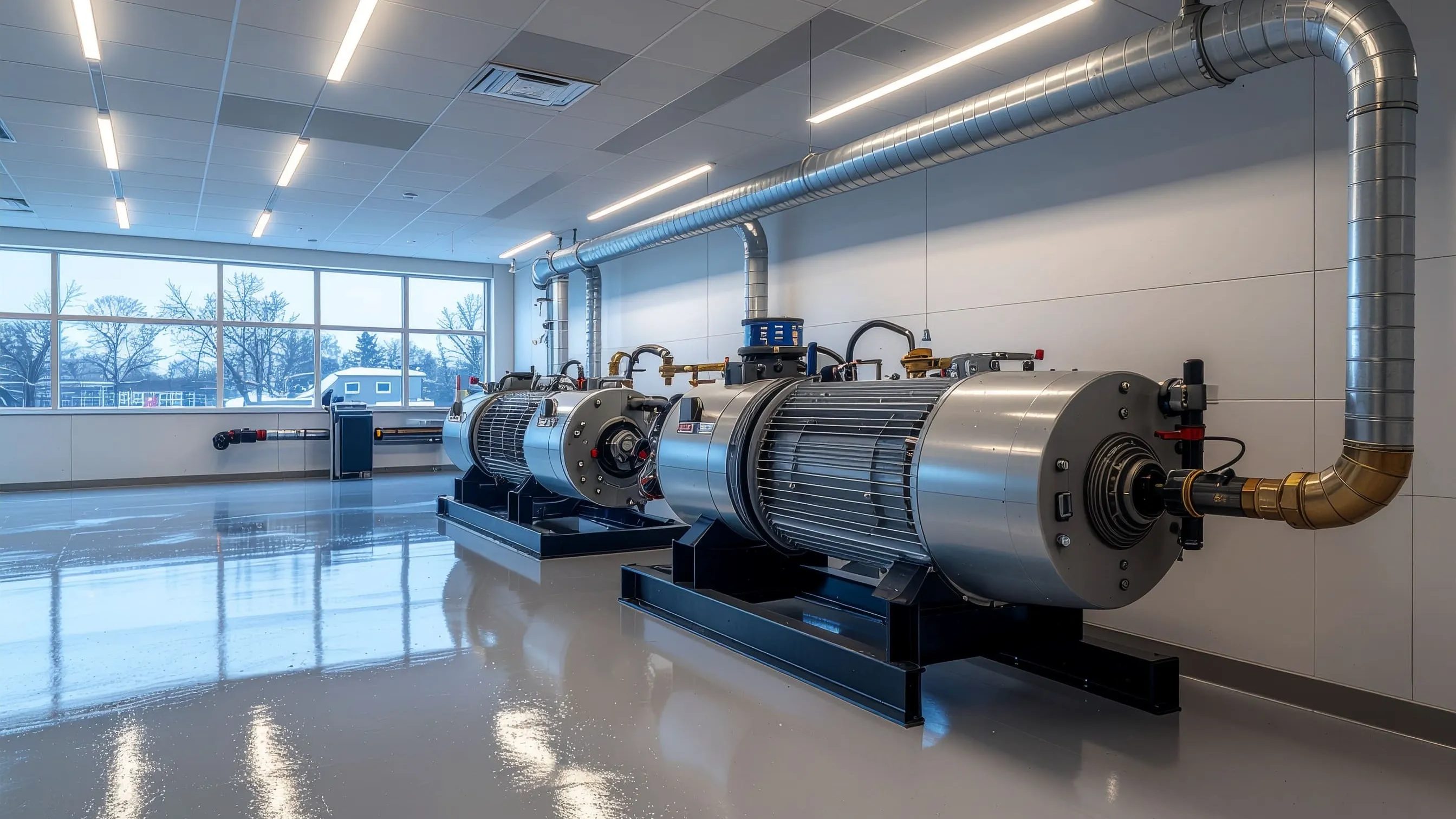
Educational establishments present distinct challenges for heating engineers. Schools are occupied intensively during term time but stand entirely empty for extended holidays. They demand heating systems that respond rapidly while minimising energy waste. Local authorities and facility managers constantly face strict budget pressures and rising energy costs.
Effective school heating system design addresses these competing demands through careful zoning, properly sized equipment, and intelligent controls. A successful installation requires durable, high-efficiency mechanical equipment to make these strategies viable over the long term.
Key Design Considerations for School Heating Systems
Occupancy patterns and thermal demand create dramatic fluctuations. These specific variations define the fundamental challenge of school heating system design. A classroom might sit empty at 07:30 but needs to reach 20 degrees Celsius by 08:30. It must maintain comfortable conditions through varying occupancy levels before dropping to a setback temperature by 16:00.
Traditional heating systems designed for steady-state operation simply can't handle these dynamic demands. Oversized boilers cycling on and off waste massive amounts of energy and reduce equipment lifespan.
Metabolic heat gains from pupils significantly affect the required heating loads. A typical classroom with 30 children generates approximately 2.5 to 3 kilowatts of ambient heat. You must account for this specific internal heat gain accurately in your design calculations. In well-insulated modern buildings, this metabolic heat meets much of the room's demand once the space actually reaches its target temperature.
Acoustic performance standards directly affect mechanical equipment choices. Building Bulletin 93 specifies a maximum ambient noise level of 35 dB(A) in teaching spaces. Pump selection requires particular attention here to maintain strict compliance. Oversized pumps running at high speed generate excessive noise that transmits easily through building pipework. Proper pipe sizing prevents flow noise, keeping water velocities safely below 1.0 metre per second near occupied classrooms.
System Selection for Different Educational Settings
Effective zoning forms the absolute foundation of efficient school heating system design. Primary schools typically feature smaller classrooms with lower ceiling heights and simpler architectural layouts. Radiator-based systems with individual room thermostats provide appropriate control without excessive mechanical complexity.
Secondary schools present much greater challenges. Science laboratories require enhanced ventilation that directly affects heat losses. Design technology workshops need robust heating systems that don't fail when external doors are left open. Sixth form study areas expect office-standard comfort levels.
Sports halls present particular difficulties due to their high ceilings. Warm air accumulates uselessly at ceiling level, leaving floor-level temperatures totally inadequate for students. Radiant heating systems address this effectively by delivering comfort directly to the floor without heating large, empty air volumes.
Intermittent occupancy makes rapid warm-up essential for morning physical education lessons. Administrative offices maintain much more consistent occupancy patterns, making standard commercial perimeter heating perfectly suitable. Partnering with a specialist like National Pumps and Boilers helps you source the exact equipment required for these highly specific mechanical layouts.
Energy Efficiency Strategies
Installing a modern weather compensation controller adjusts heating flow temperatures based on outdoor conditions. During mild weather, reducing the flow temperature from 75 degrees Celsius to 55 degrees Celsius allows condensing boilers to operate highly efficiently. This single control strategy typically reduces heating energy consumption by 15 to 25 percent.
Think of a weather compensation controller exactly like driving a car with adaptive cruise control. Instead of slamming on the accelerator and brakes erratically, a dedicated central heating pump adjusts the hot water flow smoothly based on the conditions ahead. This approach saves fuel and reduces overall mechanical wear on the entire network.
Integrating optimum start stop programming calculates the precise time to commence heating effectively. A school requiring 18 degrees Celsius by 08:30 might need heating to start at 06:30 on freezing mornings. However, optimum start stop programming intelligently delays that start until 07:45 during milder weather.
This automation uses the building's thermal mass to maintain temperatures, cutting daily heating periods substantially. Modern school buildings require mechanical ventilation to meet Building Regulations Part F. Integrating heat recovery ventilation reduces energy demand significantly by recovering heat from extract air. Specifying a Remeha Gas 610 commercial boiler helps achieve the high seasonal efficiencies that strict educational targets demand.
Compliance with Building Regulations Part L
Building Regulations Approved Document L2 sets strict minimum performance standards for non-domestic buildings. New installations must achieve specific efficiency levels to remain legally compliant.
The core compliance requirements for educational buildings include:
- Condensing boilers must achieve a minimum 86 percent seasonal efficiency.
- System pump valves must feature low pressure drop characteristics to reduce pumping energy.
- System controls must include weather compensation, time control, and precise boiler interlock.
- Commissioning must follow CIBSE standards with verified performance testing.
A mechanical contractor working on a recent secondary school refurbishment completely overlooked the BMS configuration for a new remeha boiler. The system ran continuously at full design temperature for a week while the building was empty during the half-term break. By installing correct optimum start stop programming and configuring the holiday setback modes, they prevented future waste and cut their winter gas usage by a substantial 22 percent.
Pump Selection and Circulation Design
Variable speed pumps adjust their output dynamically to match exact system demand. In school applications where demand varies constantly, variable speed technology delivers substantial electrical savings. Traditional fixed-speed pumps sized for peak demand run continuously at full speed, wasting electrical energy and creating unnecessary flow noise.
Modern Grundfos Pump options feature built-in differential pressure control. They maintain constant pressure across the system regardless of flow rate. Multiple pump configurations provide vital redundancy and improved part-load efficiency for larger school systems.
Twin pump installations with a duty and standby arrangement ensure continued operation if a primary pump fails. During mild weather, a single pump meets requirements much more efficiently than a massive pump running at reduced speed.
A reliable Wilo Pump with automatic changeover maintains system reliability. This redundancy is absolutely essential in educational environments where a heating failure during term time creates immediate operational closures.
Long-Term Cost Management
Heating systems in schools must remain operational throughout the entire academic year. The summer holidays provide the primary maintenance window, making physical accessibility to the plant crucial. Plant room design should provide adequate working space around all major equipment. You'll need a minimum 600 millimetres of clearance for safe routine maintenance.
Proper specification requires thorough lifecycle cost analysis. You must compare the initial capital cost against projected running costs over decades. Spending more upfront on a highly efficient system that consumes less energy annually usually proves cheaper over a 20-year lifespan.
This straightforward calculation demonstrates why school heating system design must consider whole-life value rather than just the initial purchase price. For specific space heating needs, specifying a Vaillant ecoTEC rapid response unit ensures classrooms heat up quickly without excessive lag. These commercial range models combined with intelligent controls deliver exceptional daily resilience.
Consulting the DHW catalogue for DHW circulation pump models serving school domestic hot water systems is highly recommended. These secondary systems benefit from the exact same variable speed technology principles that improve efficiency in the primary heating circuits.
Conclusion
Designing heating systems for educational buildings demands careful balancing of competing mechanical requirements. You've got to weigh rapid warm-up capability against part-load efficiency, and capital cost against lifecycle value. Schools operate under unique thermal conditions that generic commercial heating solutions simply can't address adequately.
Successful projects begin with a thorough analysis of actual usage patterns rather than broad assumptions. Proper zoning, appropriately sized equipment, and well-configured controls deliver comfortable learning environments while minimising energy waste.
Variable speed pumps and weather compensation provide measurable improvements that reduce running costs substantially over the system's operational life. For educational establishments planning heating system installations or complex upgrades, you need professional mechanical engineering guidance.
Don't leave your school's heating to chance. Ask About This Product today and speak with our team to discuss designs that balance performance with long-term cost management.