

Hot Water Storage Tanks for Commercial Buildings: Types and Benefits
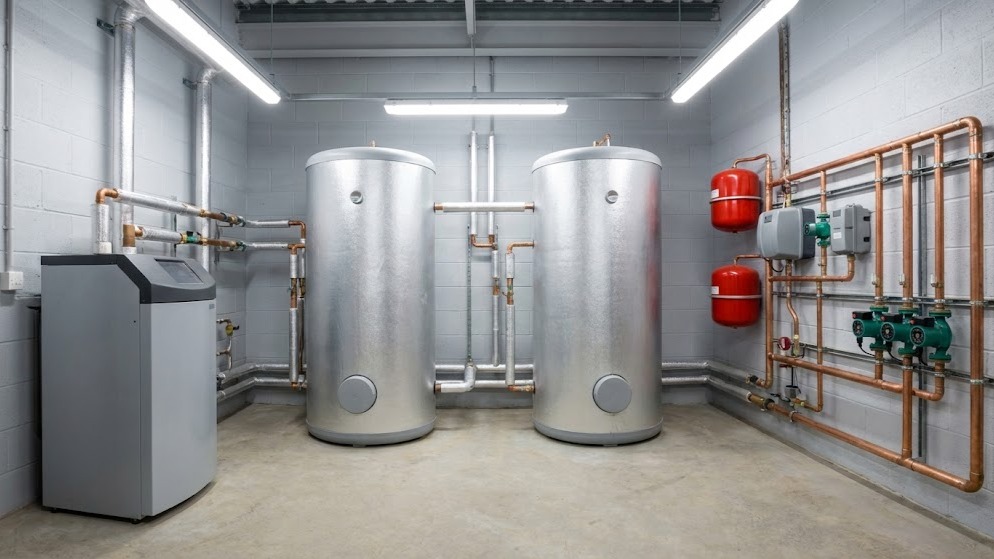
Commercial buildings require hot water systems capable of meeting demands that far exceed domestic requirements. Hotels, hospitals, sports facilities, and industrial premises all need reliable hot water delivery at volumes and temperatures that standard domestic equipment cannot provide. Understanding the options available for commercial hot water tanks helps specifiers select appropriate equipment that delivers reliable service whilst managing energy costs effectively.
The diversity of commercial applications creates demand for various storage solutions, each with characteristics suited to specific requirements. From simple direct-fired cylinders to sophisticated calorifier systems with multiple heat sources, the range of available equipment enables tailored solutions for virtually any commercial hot water demand profile.
Understanding Commercial Hot Water Demands
Commercial hot water demands differ fundamentally from domestic requirements in scale, pattern, and criticality. A hotel may require thousands of litres of hot water during morning peak periods, whilst a hospital needs continuous availability regardless of demand fluctuations. These demands cannot be met by simply scaling up domestic equipment.
The sizing of commercial hot water tanks considers not only total daily consumption but also peak demand rates and acceptable recovery times. A system that could eventually provide sufficient hot water may prove inadequate if recovery between peak demands takes too long. Understanding demand profiles enables appropriate system specification.
Different calorifier cylinder types address varying demand characteristics through their heating mechanisms and storage configurations. Indirect systems separating primary heating circuits from stored domestic water suit most commercial applications, whilst direct systems may prove appropriate where simplicity outweighs other considerations.
The consequences of inadequate commercial hot water provision extend beyond occupant inconvenience. Hotels lose guests, hospitals face clinical implications, and food service operations may violate hygiene regulations. The criticality of reliable hot water delivery justifies careful specification and quality equipment investment.
Types of Hot Water Storage Vessels
Commercial hot water storage encompasses several distinct technologies, each with characteristics suited to specific applications. Understanding these options enables informed selection for each project's requirements.
Direct Fired Cylinders
Direct fired cylinders heat stored water using integral burners or immersion heaters without intermediate heat transfer circuits. This simple arrangement reduces system complexity and initial cost, making direct heating attractive for certain applications.
Gas-fired direct cylinders incorporate burners that heat water through flue tubes passing through the storage volume. These units provide high recovery rates suitable for demanding applications. Electric direct cylinders use immersion heaters, offering simpler installation but higher operating costs in most tariff structures.
The simplicity of direct heating creates both advantages and limitations. Fewer components mean reduced maintenance requirements and lower failure probability. However, direct systems cannot integrate with building heating circuits or utilise waste heat from other sources as easily as indirect alternatives.
Applications suited to direct heating include standalone installations remote from central heating systems, locations where gas supply enables cost-effective direct firing, and situations where system simplicity outweighs integration benefits.
Indirect Calorifiers
Indirect calorifiers represent the most common commercial hot water tanks configuration, heating stored water through heat exchange coils supplied by primary heating circuits. This arrangement separates the potable water store from the heating system, providing operational and maintenance advantages.
The calorifier cylinder types using indirect heating vary in coil configuration and number. Single-coil units accept heat from one primary source, whilst twin-coil designs accommodate multiple sources such as boilers and solar thermal systems. Multi-coil arrangements enable even greater source diversity.
Primary circuit connections enable indirect calorifiers to share heat sources with building heating systems. Boilers serving both space heating and domestic hot water through indirect storage provide efficient year-round operation. During summer months when space heating demand falls, the same boilers serve domestic hot water loads.
Heat exchanger sizing within calorifiers determines heating capacity and recovery rates. Coils must transfer sufficient heat to meet peak demands whilst primary circuit flows remain within acceptable limits. Undersized exchangers create bottlenecks that prevent adequate hot water delivery despite adequate storage volume.
Quality calorifiers from manufacturers like Andrews provide the robust construction and effective heat exchange that commercial applications demand. Proper specification ensures these units deliver reliable service throughout their extended service lives.
Plate Heat Exchanger Systems
Plate heat exchangers provide instantaneous water heating without storage, transferring heat from primary circuits to domestic water as it flows through the exchanger. This approach suits applications requiring high instantaneous flow rates without the space requirements of large storage vessels.
Instantaneous systems eliminate the standing heat losses associated with stored water, potentially improving overall efficiency. However, they require primary circuits capable of delivering full peak demand instantaneously, which may demand larger boiler capacity than storage-based alternatives.
Hybrid systems combining plate exchangers with storage vessels address the limitations of purely instantaneous or storage-based approaches. Storage provides buffer capacity for peak demands whilst plate exchangers supplement heating during sustained high-demand periods.
The choice between storage and instantaneous heating depends on demand profiles, available primary capacity, and space constraints. Professional assessment identifies the approach best suited to each application's specific characteristics.
Benefits of Commercial Hot Water Storage
Properly specified commercial hot water tanks deliver benefits extending beyond simple hot water availability. Understanding these advantages helps justify investment in appropriate equipment.
Meeting Variable Demand Profiles
Commercial buildings experience hot water demands that vary dramatically throughout operating periods. Morning peaks in hotels, shift-change surges in industrial facilities, and post-event demands in sports venues all require storage capacity to meet instantaneous requirements exceeding sustainable generation rates.
Storage vessels accumulate heat during low-demand periods for release during peaks. This accumulation enables modest heating capacity to meet much higher instantaneous demands. A system with fifty-kilowatt heating capacity backed by adequate storage may meet two-hundred-kilowatt peak demands that the heater alone could never sustain.
Recovery rates determine how quickly storage systems replenish following demand events. Fast recovery enables smaller storage volumes to serve larger peak demands through rapid recharge between events. Slower recovery demands larger storage to ensure adequate capacity remains available.
Building types with particularly demanding profiles include hotels experiencing simultaneous morning peaks across many rooms, sports facilities where post-event showers create intense short-duration demands, and food service operations with multiple meal service periods.
System Efficiency and Control
Storage systems enable efficient heat generation by decoupling production from demand timing. Boilers can operate during off-peak electricity periods, heat pumps can run during mild daytime temperatures, and solar thermal systems can capture daytime gains for evening use.
Temperature stratification within storage vessels preserves heat quality by maintaining hot water at the top for immediate use whilst cooler return water settles at the bottom for reheating. Properly designed calorifier cylinder types maintain this stratification through appropriate connection positioning and internal baffling.
National Pumps and Boilers supplies storage equipment designed to maintain stratification that maximises usable hot water delivery whilst minimising energy waste from unnecessary mixing.
Control integration enables sophisticated energy management strategies. Building management systems can schedule heating to minimise peak electricity demand charges, coordinate multiple heat sources for optimal efficiency, and monitor storage temperatures for Legionella compliance.
Legionella Risk Management
Commercial hot water systems must manage Legionella pneumophila bacteria that thrive in warm water between 20°C and 45°C. Storage systems designed for commercial applications incorporate features supporting the control measures that regulations require.
Storage at temperatures above 60°C ensures that Legionella cannot multiply within properly functioning systems. Regular pasteurisation cycles raising temperatures above 70°C throughout the storage volume kill any bacteria that may have entered the system. Properly designed commercial hot water tanks enable these control measures.
Temperature monitoring at multiple points within storage vessels confirms that required temperatures are maintained throughout the volume. Dead legs and stratification issues that might allow cool zones to develop require identification and remediation. Design features minimising these risks contribute to effective Legionella management.
Documentation of temperatures and control measures supports compliance demonstration during inspections and outbreak investigations. Systems enabling easy data access and reporting simplify this compliance burden for building operators.
Selection Criteria for Commercial Applications
Selecting appropriate commercial hot water storage requires systematic assessment of application requirements matched against available equipment characteristics.
Demand assessment identifies peak flow rates, total daily consumption, and acceptable recovery periods. These parameters establish minimum storage capacity and heating power requirements. Conservative assessment ensures adequate provision without excessive oversizing that wastes capital and increases standing losses.
Material selection affects durability, maintenance requirements, and whole-life costs. Stainless steel provides excellent corrosion resistance for aggressive water conditions, whilst glass-lined or enamelled steel offers more economical alternatives where water quality permits. Copper cylinders suit certain applications despite higher material costs.
Space constraints often influence equipment selection, particularly in retrofit applications. Vertical cylinders minimise floor space but require adequate height clearance. Horizontal alternatives spread the footprint where height is limited. Modular approaches using multiple smaller vessels can address particularly constrained situations.
Integration requirements affect selection where storage must work with existing heating systems or accommodate future modifications. Connection configurations, control compatibility, and physical positioning all require consideration during specification.
Systems incorporating appropriate circulation equipment including DHW pumps ensure effective heat distribution and temperature maintenance throughout storage volumes. Proper pump specification supports reliable system operation.
Conclusion
Commercial hot water tanks serve essential functions that domestic equipment cannot fulfil. The scale, reliability, and control requirements of commercial applications demand purpose-designed storage solutions matched to specific demand profiles and operating requirements.
Understanding the calorifier cylinder types available enables informed specification that delivers reliable hot water service whilst managing energy costs and compliance requirements. Direct, indirect, and hybrid approaches each suit specific application characteristics.
Building owners and facilities managers specifying commercial hot water systems should engage professional designers who understand both equipment options and application requirements. The investment in proper specification delivers systems that perform reliably throughout their service lives.
For guidance on commercial hot water storage and quality heating equipment, contact the National Pumps and Boilers team for expert technical support.