

How Air in Systems Affects Pump Performance and Energy Use
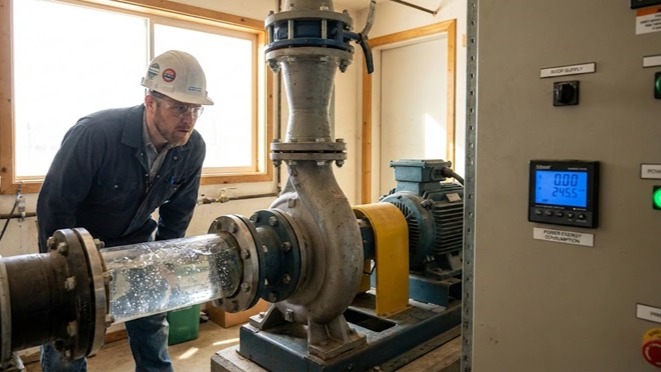
Trapped air pump strain in heating systems creates more problems than most engineers realise. Beyond the obvious gurgling radiators and cold spots, entrained air fundamentally changes how pumps operate, driving up energy costs and shortening equipment life. Understanding how air affects pump performance, and knowing how to eliminate it, separates competent system design from truly efficient installations.
The Physics of Air in Pump Systems
Water naturally contains dissolved gases, typically 2% by volume at standard conditions. When system pressure drops or temperature rises, this dissolved air comes out of solution, forming bubbles that collect at high points and create operational havoc. In a typical domestic heating system operating at 70°C, water releases approximately 50% more dissolved air than at 20°C.
These air pockets do not just sit quietly; they actively interfere with pump operation. As the impeller spins through air-water mixtures, cavitation occurs. This trapped air pump strain forces the pump to work harder to move the same volume of fluid, consuming 15-25% more energy while delivering reduced flow rates. National Pumps and Boilers regularly encounters systems where air problems have pushed pump motors beyond their design limits.
The relationship between air content and pump efficiency follows a predictable curve. With just 1% free air by volume, centrifugal pump efficiency drops by approximately 3%. At 5% air content, efficiency plummets by 15% or more. Modern high-efficiency circulators like Grundfos pumps incorporate advanced impeller designs to handle minor air entrainment, but no pump performs optimally with significant air present. Understanding how entrained air impacts pump operation enables engineers to design systems that maintain efficiency throughout their operational life.
Energy Consumption Impact
The energy penalty from air in systems extends beyond simple efficiency losses. When pumps encounter air pockets, they temporarily lose prime, causing the motor to speed up as load decreases. This hunting behaviour increases electrical consumption by 20-40% during affected periods. Over a heating season, these efficiency losses translate to hundreds of pounds in unnecessary energy costs for commercial installations.
Consider a typical 11kW commercial heating pump operating 3,000 hours annually. With 5% air entrainment reducing efficiency by 15%, the additional energy consumption reaches 495 kWh per year. At current commercial electricity rates, that amounts to approximately £75 per pump in wasted energy, and most systems have multiple pumps.
Variable speed pumps suffer particularly severe impacts. Their control algorithms expect consistent hydraulic conditions. Air pockets cause erratic pressure readings, forcing pumps to constantly adjust speed. This continuous ramping up and down accelerates inverter wear while consuming 30% more energy than steady-state operation. The strain on variable speed units often exceeds that on fixed-speed alternatives.
System Performance Degradation
Beyond energy waste, air dramatically reduces heat transfer effectiveness. Air acts as an insulator with thermal conductivity 25 times lower than water. When air accumulates in radiators or heat exchangers, it creates dead zones where no heat transfer occurs. A radiator with 10% air content delivers only 75% of its rated output.
Flow distribution problems compound these issues. Air naturally migrates to high points and low-velocity zones, creating preferential flow paths. Some circuits receive excessive flow while others stagnate. This imbalance forces pumps to work at higher heads to overcome the resistance, further increasing energy consumption.
Noise represents another significant concern. Air bubbles passing through pump impellers create distinctive gurgling and churning sounds. In residential settings, these noises disturb occupants and indicate system problems requiring immediate attention. Commercial installations face similar issues, with noise complaints often triggering expensive call-outs. This strain from entrained air manifests audibly before efficiency losses become measurable.
Mechanical Damage From Air
The mechanical consequences of air entrainment extend far beyond efficiency losses. Cavitation erosion physically damages impeller surfaces, creating pitting that progressively worsens pump performance. Wilo pumps and other quality manufacturers design impellers to resist cavitation damage, but sustained operation with significant air content overwhelms these protective measures.
Bearing wear accelerates dramatically when pumps run partially dry. The water film that normally lubricates and cools pump bearings breaks down in the presence of air bubbles. Temperature spikes of 20-30°C above normal operating levels occur within minutes. This thermal stress causes premature bearing failure, typically reducing service life from 40,000 hours to less than 15,000 hours.
Mechanical seals suffer similar degradation. Air pockets cause the seal faces to run dry momentarily, generating friction and heat. The resulting thermal shock creates microscopic cracks that eventually develop into leaks. Replacing mechanical seals on commercial pumps costs £200-500 per unit, not including labour and system downtime.
Identifying Air Problems
Recognising air-related issues early prevents extensive damage and energy waste. Visual indicators include:
- Fluctuating pressure gauge readings
- Pump motor cycling on and off
- Reduced flow rates despite correct pump speed
- Unusual noises from pump housings
- Cold spots on radiators or heat exchangers
Performance testing provides quantitative confirmation. Measuring pump differential pressure against manufacturer curves reveals efficiency losses. A pump delivering 20% less head than specified at a given flow rate likely suffers from air entrainment. Power consumption readings 15% above nameplate values further confirm the diagnosis.
DHW pumps in domestic hot water systems show particularly clear symptoms. The combination of high temperatures and pressure variations makes these systems prone to air problems. Monitoring pump current draw over 24-hour periods often reveals tell-tale spikes during morning demand when dissolved gases come out of solution.
Prevention and Solutions
Effective air management starts with proper system design. Automatic air vents positioned at all high points provide continuous air removal. Quality vents incorporate float mechanisms that seal positively when water reaches the valve, preventing air ingress during negative pressure conditions.
Deaerators offer more comprehensive solutions for larger systems. These devices use centrifugal force or mesh coalescers to separate air from water actively. Modern deaerators remove 99% of free air and up to 95% of dissolved gases. Installation costs range from £500 for domestic units to £5,000 for commercial systems, but energy savings typically provide two-year payback periods.
Expansion vessels play crucial roles in preventing air ingress. Properly sized vessels maintain positive pressure throughout the system, preventing dissolved gases from coming out of solution. Undersized vessels allow pressure to drop during cooling cycles, drawing air through valve stems and pump seals.
System filling procedures significantly impact long-term air content. Filling from the lowest point at reduced flow rates minimises initial air entrainment. Using treated, deaerated water prevents introducing dissolved gases. Commercial systems benefit from vacuum filling, which removes air before introducing water.
Maintenance Best Practices
Regular air purging forms the foundation of effective maintenance programmes. Monthly checks during the heating season identify developing problems before efficiency losses become significant. Annual system power flushing removes accumulated debris that traps air pockets.
Pump-specific maintenance focuses on early problem detection. Monitoring motor current provides clear efficiency indicators: a 10% increase above baseline typically indicates developing air problems. Vibration analysis reveals cavitation damage before catastrophic failure occurs.
Chemical water treatment prevents corrosion that generates hydrogen gas internally. Proper inhibitor levels reduce gas generation by 90% compared to untreated systems. Annual water quality testing ensures treatment effectiveness and identifies developing problems.
Pump valves require particular attention. Isolation valves with worn stems allow air ingress under negative pressure conditions. Regular repacking or replacement prevents this common air source. Similarly, automatic air vent maintenance ensures reliable operation when needed most.
Cost-Benefit Analysis
The financial case for comprehensive air management proves compelling. A typical 100kW commercial heating system with uncontrolled air problems wastes £1,500-2,500 annually in excess energy consumption. Add premature pump replacement costs of £1,000-2,000 every five years instead of ten, and the total impact exceeds £3,500 annually.
Investing £2,000-3,000 in proper air management equipment and controls typically generates full payback within 12 months through energy savings alone. Extended equipment life provides additional returns. Systems with effective air control show 40% longer pump life and 25% better long-term efficiency retention.
The environmental impact multiplies these benefits. Reducing pump energy consumption by 20% through air elimination saves approximately 2 tonnes of CO2 annually for a typical commercial system. With increasing focus on carbon reduction, these savings contribute significantly to sustainability targets.
Conclusion
Air in heating systems represents a silent thief, stealing energy efficiency and equipment life while most operators remain unaware of the full impact. Understanding how air impacts pump operation enables engineers to design and maintain systems that deliver optimal efficiency throughout their service life.
The solutions exist, from basic automatic air vents to sophisticated deaeration systems. The key lies in recognising air management as a fundamental design requirement rather than an afterthought. Systems designed with comprehensive air elimination consume 20-30% less pump energy while lasting significantly longer.
For existing systems suffering from air-related inefficiencies, retrofitting proper air management equipment provides rapid returns. The combination of energy savings, reduced maintenance costs, and extended equipment life justifies the investment in virtually all cases.
Whether specifying new central heating equipment or troubleshooting existing installations, addressing air entrainment should rank among the top priorities. The technical team at National Pumps and Boilers can assess specific system requirements and recommend appropriate solutions. To discuss air management strategies for any installation, contact the team for expert guidance tailored to system needs.