

How Building Height and Distance Affect Pump Selection Requirements
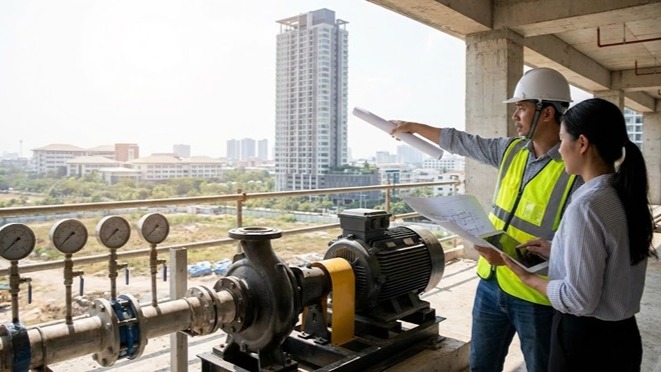
Selecting a circulation pump for a multi-storey building or extended horizontal distribution system requires precise calculations that account for static head, friction losses, and system resistance. A pump that performs efficiently in a single-storey commercial unit may fail completely when tasked with lifting water 30 metres vertically or pushing it 200 metres horizontally through pipework. Understanding how pump selection building height relationships directly influence equipment requirements prevents costly failures, excessive energy consumption, and system inefficiencies.
Understanding Static Head in Vertical Pumping Applications
Static head represents the vertical distance a pump must overcome to move fluid from one level to another. In a five-storey office building with 4-metre floor heights, the pump faces approximately 20 metres of static head before accounting for any friction losses or system resistance. This vertical lift requirement fundamentally determines the minimum pump head requirements for reliable system operation.
Every 10 metres of vertical lift requires approximately 1 bar (100 kPa) of pump pressure. A building with 40 metres of height difference between the boiler room and the uppermost radiators demands a pump capable of generating at least 4 bar of pressure - and that calculation excludes friction losses through pipework, fittings, valves, and heat emitters. Engineers who select pumps based solely on flow rate without considering static head encounter circulation failures where upper floors receive inadequate heating or no flow whatsoever.
Grundfos pumps designed for commercial applications typically provide performance curves showing head pressure capabilities across various flow rates. A pump might deliver 6 bar at 2 m³/h but only 3 bar at 8 m³/h - this relationship between flow and pressure proves critical when matching pump performance to building requirements.
Calculating Friction Losses in Extended Horizontal Systems
Horizontal distance introduces friction losses that increase proportionally with pipe length, flow velocity, and pipe diameter. A heating system serving a warehouse with 150 metres of horizontal pipework between the plant room and the furthest radiator experiences significant pressure drops that must be overcome by the circulation pump.
Friction Loss Calculations
Friction loss calculations follow the Darcy-Weisbach equation, but practical pump selection typically uses simplified tables that relate flow rate, pipe diameter, and length to pressure drop. A 50mm steel pipe carrying 4 litres per second experiences approximately 250 Pa of pressure loss per metre of pipe length. Over 150 metres, this accumulates to 37.5 kPa (0.375 bar) - a substantial resistance that reduces available pressure for overcoming static head or pushing flow through heat emitters.
Impact of Pipe Sizing on Pump Requirements
Pipe sizing decisions directly impact pump head requirements. Undersized pipework increases flow velocity and friction losses exponentially. A system designed with 40mm pipe where 50mm is appropriate might double the friction losses, forcing the selection of a larger pump operating at higher energy consumption. Conversely, oversised pipework reduces friction but increases installation costs and system water volume.
Combining Vertical and Horizontal Resistance
Real-world buildings present combined challenges where pumps must simultaneously overcome static head and friction losses across both vertical and horizontal distances. A hotel with eight floors and wing extensions creates a system where the pump must lift water 32 metres vertically whilst also pushing it 80 metres horizontally to reach the furthest guest rooms.
Total system resistance equals static head plus friction losses through all pipework, plus additional losses through valves, fittings, heat exchangers, and radiators. A comprehensive pump selection building height analysis for a complex building might reveal:
- Static head: 32 metres (3.2 bar)
- Pipe friction losses: 1.8 bar
- Valve and fitting losses: 0.6 bar
- Heat emitter losses: 0.4 bar
- Total system resistance: 6.0 bar
This calculation establishes the minimum head pressure required at the design flow rate. Engineers must then select a pump whose performance curve intersects this operating point whilst maintaining reasonable efficiency. Operating a pump far from its best efficiency point (BEP) wastes energy and accelerates wear on mechanical components.
System Diversity and Simultaneous Load Factors
Building height and distribution distance influence how diversity factors apply to pump sizing. In a 20-storey residential tower, not every flat demands heating simultaneously at peak load. Diversity factors typically range from 0.6 to 0.8 for residential buildings, meaning the pump need only deliver 60-80% of the theoretical maximum flow if every heat emitter operated simultaneously.
Vertical Distribution Considerations
However, vertical distribution systems with significant static head cannot rely as heavily on diversity factors as horizontal systems. Even with reduced flow demands, the pump must still overcome the full static head to reach upper floors. A Wilo pump selected for a tall building might operate at 70% of maximum flow during typical conditions but must still generate sufficient pressure to reach the top floor - the static head component remains constant regardless of flow rate.
Horizontal System Benefits
Extended horizontal systems with multiple zones benefit more substantially from diversity factors. A sprawling industrial facility with six separate production halls may only operate three simultaneously, allowing pump selection building height and distance calculations based on reduced flow rates. Zoning valves and variable speed drives enable the pump to modulate output based on actual demand rather than theoretical maximum load.
Variable Speed Pumps for Buildings With Varying Loads
Modern central heating equipment increasingly incorporates variable speed drive (VSD) technology that adjusts pump speed to match instantaneous system demand. In buildings where height and distance create substantial static head and friction losses, VSD pumps deliver significant energy savings compared to fixed-speed alternatives.
A fixed-speed pump selected for peak load conditions in a 15-storey office building operates at full capacity regardless of actual heating demand. During mild weather when only 40% of the building requires heating, the pump continues consuming full electrical power whilst excess flow bypasses through pressure relief valves or differential pressure controls. This operational inefficiency costs thousands of pounds annually in wasted electricity.
Energy Efficiency Benefits
Variable speed pumps automatically reduce motor speed when system pressure requirements decrease. As thermostatic radiator valves close throughout the building, system resistance increases and flow demand decreases. The VSD pump responds by reducing speed, lowering both flow rate and pressure whilst maintaining adequate circulation to areas still requiring heat. Energy consumption falls proportionally with the cube of speed reduction - a pump operating at 70% speed consumes approximately 34% of full-speed power.
British Standards BS EN 16297-2 establishes minimum efficiency requirements for circulators, with Energy-related Products (ErP) regulations mandating specific Energy Efficiency Index (EEI) thresholds. Pumps serving buildings with significant height or distribution distance should meet EEI ≤ 0.20 for optimal lifecycle costs, with VSD capability providing additional savings in variable-load applications.
Pressure Staging and Booster Systems
Buildings exceeding 50 metres in height often require pressure staging or booster systems rather than single pumps attempting to overcome extreme static head. A 30-storey tower block might employ separate circulation pumps for floors 1-10, 11-20, and 21-30, with each pump overcoming only its zone's static head plus local friction losses.
Pressure staging reduces pump head requirements and improves system reliability. A single pump generating 15 bar to reach the 30th floor requires substantial motor power and creates excessive pressure at lower floors, necessitating pressure-reducing valves that waste the energy expended creating that pressure. Three staged pumps each generating 5 bar operate more efficiently whilst maintaining appropriate pressure throughout the building.
DAB pumps configured as booster sets provide redundancy and capacity matching for tall buildings. Twin or triple pump configurations allow one pump to handle base load whilst additional pumps activate during peak demand. If one pump fails, the system continues operating at reduced capacity rather than experiencing complete circulation loss.
Pipe Material and Age Impact on Friction Calculations
The relationship between building distance and pump selection building height factors changes as pipework ages and internal surfaces corrode or scale. New copper or stainless steel pipe presents minimal surface roughness, but 20-year-old steel pipe in a hard water area may have accumulated sufficient scale to increase friction losses by 40-60%.
Refurbishment Project Considerations
Pump selection for refurbishment projects must account for deteriorated pipe conditions. Engineers cannot simply calculate friction losses based on nominal pipe diameter and new pipe roughness factors. Flow testing or pressure drop measurements across existing pipework sections provide realistic data for selecting replacement pumps that deliver adequate performance despite compromised pipe conditions.
Mixed Pipe Material Systems
Buildings with mixed pipe materials present additional complications. A system using copper for risers but steel for horizontal distribution exhibits different friction characteristics in vertical versus horizontal sections. Modern plastic pipe systems (PEX, MLCP) offer lower friction losses than traditional steel, potentially allowing smaller pump selection for equivalent building height and distance.
Balancing Valves and System Commissioning
Buildings with significant height or distribution distance require precise hydraulic balancing to ensure proportional flow distribution. Without proper balancing, the pump follows the path of least resistance - typically the nearest or lowest circuits - leaving distant or elevated areas with inadequate flow regardless of pump capacity.
Commissioning Procedures
Commissioning procedures for complex buildings involve measuring and adjusting flow rates at each circuit using balancing valves. A properly balanced system ensures the furthest radiator on the top floor receives its design flow rate simultaneously with the nearest ground-floor unit. This balancing process may reveal that the initially selected pump provides insufficient pressure to overcome the actual system resistance, necessitating pump replacement or system modification.
Monitoring System Performance
Differential pressure sensors installed at critical system points provide ongoing verification that the pump maintains adequate pressure throughout the distribution network. In a large hospital with extensive horizontal distribution, pressure sensors at the furthest wing confirm that the pump delivers sufficient head to overcome the friction losses across 200 metres of pipework plus the resistance of local heating equipment.
Expansion Vessel Sizing for Tall Buildings
Building height directly influences expansion vessel requirements, which in turn affects pump selection and system design. A heating system serving a 40-metre tall building contains significantly more water than an equivalent single-storey system, and the static pressure at the base of the system reaches 4 bar before accounting for operating pressure.
Expansion vessels must accommodate water expansion whilst maintaining minimum system pressure at the highest point and preventing excessive pressure at the lowest point. Undersised expansion vessels cause pressure relief valve discharge or pump cavitation, whilst oversised vessels add unnecessary cost and space requirements.
The relationship between expansion vessel sizing and pump head requirements centres on maintaining adequate net positive suction head (NPSH) at the pump inlet. If system pressure drops too low during operation, the pump experiences cavitation that damages impellers and reduces performance. Tall buildings require careful coordination between expansion vessel pre-charge pressure, system fill pressure, and pump location to ensure reliable operation across all conditions.
Safety Factors and Future-Proofing
Pump selection for buildings with substantial height or distribution distance should include appropriate safety factors whilst avoiding excessive over-sizing. A safety margin of 10-15% on calculated head requirements accounts for minor calculation uncertainties, pipe ageing, and system modifications without dramatically increasing energy consumption.
Avoiding Over-Sizing Errors
Over-sizing pumps by 50-100% - a common error when engineers lack confidence in calculations - creates multiple problems. Excessive flow rates increase system noise, accelerate erosion in pipework, and waste energy. Pumps operating far below their best efficiency point experience reduced service life and higher maintenance costs. Variable speed drives partially mitigate over-sizing issues by allowing the pump to operate at reduced speed, but proper initial sizing remains preferable.
Planning for Future Modifications
Future building modifications may extend distribution distances or add floors, requiring pump capacity upgrades. Installing oversised pipework during initial construction provides capacity for future flow increases without complete system replacement. However, the pump should match current requirements with the understanding that future upgrades may necessitate pump replacement - attempting to future-proof by installing an immediately oversised pump wastes energy for years whilst waiting for expansion that may never occur.
Selecting the Right Pump Technology
The specific combination of building height and distribution distance determines which pump technology provides optimal performance. Buildings with extreme static head but modest flow requirements benefit from high-pressure, low-flow pumps with steep performance curves. Conversely, sprawling single-storey facilities with extensive horizontal distribution but minimal static head require high-flow, moderate-pressure pumps.
Lowara pumps designed for commercial applications offer various impeller designs and motor configurations matched to different building profiles. Closed-coupled inline circulators suit compact plant rooms in tall buildings where space is limited. End-suction pumps with separate motors provide higher pressures for extreme-height applications. Twin-head pumps deliver redundancy for critical facilities where circulation failure risks significant operational or safety consequences.
Professional pump selection software accounts for all relevant factors - static head, friction losses, diversity factors, pipe materials, and operating conditions - to identify pumps operating near their best efficiency point at the design condition. National Pumps and Boilers provides technical support for complex projects where building height and distribution distance create challenging pumping requirements that demand precise equipment matching rather than rule-of-thumb sizing.
Conclusion
Building height and distribution distance fundamentally determine pump head requirements through their direct impact on static head and friction losses. Engineers must calculate total system resistance by combining vertical lift requirements with horizontal friction losses, then select pumps whose performance curves deliver the required head at the design flow rate whilst maintaining reasonable efficiency. Variable speed technology, pressure staging, and proper system balancing optimise performance in buildings where significant height or distance creates substantial pumping challenges. For technical guidance on pump selection for specific building configurations, contact us for expert support tailored to project requirements.