

How DHW Circulation Pumps Deliver Instant Hot Water to Commercial Taps
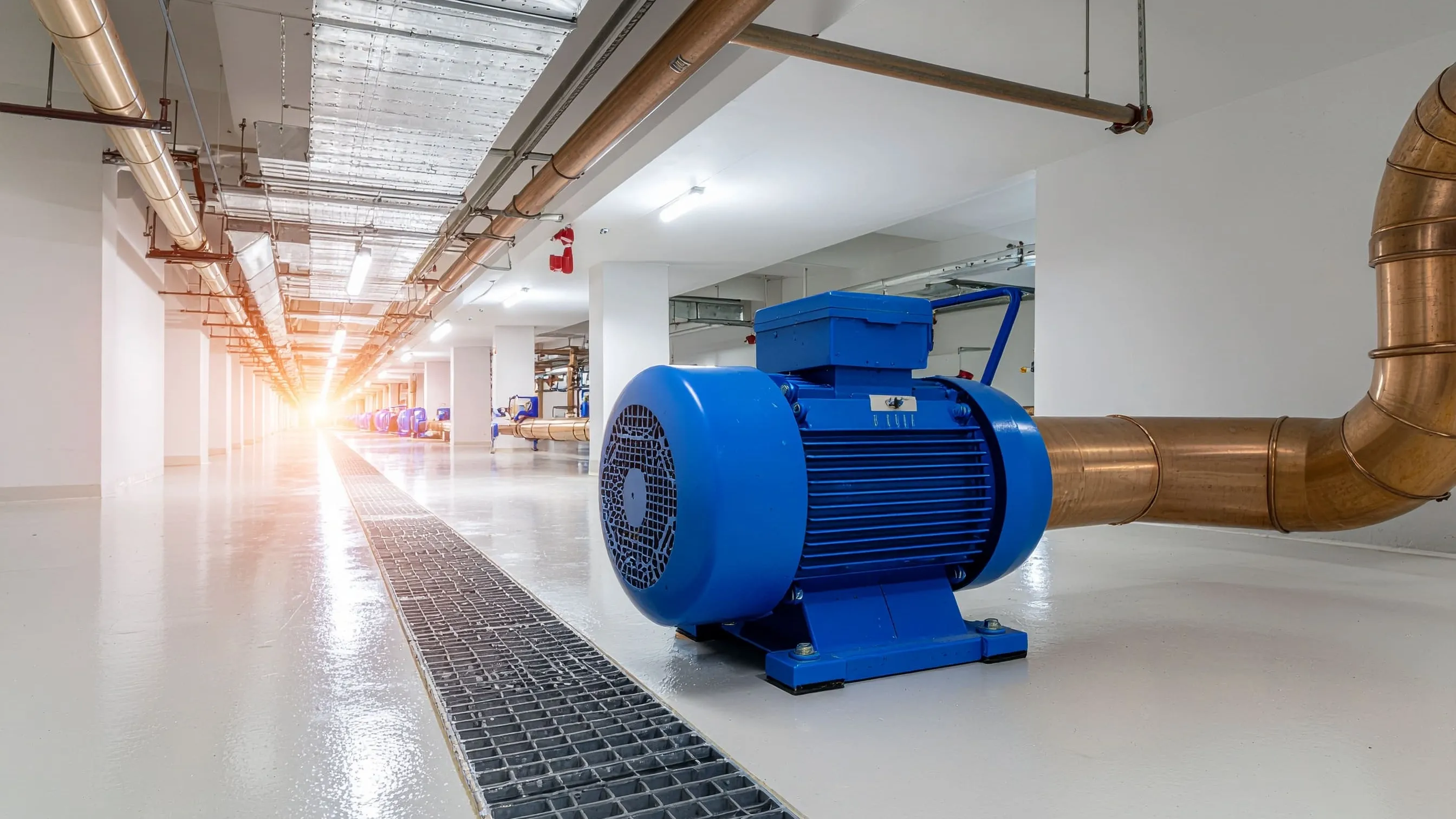
Walk into any hotel bathroom, office washroom, or commercial kitchen, and the expectation is clear. Hot water should arrive at the tap within seconds. Yet without proper circulation, occupants in a multi-storey building might wait 30 seconds or longer while litres of cold water drain away. This is not just inconvenient. It wastes water, frustrates users, and fails to meet modern expectations for commercial facilities.
A DHW circulation pump solves this problem by maintaining hot water throughout the distribution system. This ensures near-instantaneous delivery at every outlet. Unlike central heating pumps that move water through radiators, these specialised pumps keep domestic hot water constantly moving. They use a dedicated return loop to prevent heat loss and eliminate dead legs in the pipework.
What Is a DHW Circulation Pump?
A DHW circulation pump is a mechanical device designed specifically to circulate domestic hot water through a closed-loop system. It maintains temperature throughout the pipework between the heat source and the taps. The pump draws cooled water from the furthest points back to the calorifier or andrews water heaters, where it is reheated and sent out again.
This differs fundamentally from primary heating pumps, which operate in sealed systems with different temperature ranges and higher heads. DHW circulation pumps typically handle lower flow rates but must be constructed from materials that resist corrosion from potable water. You will usually see a bronze pump body, stainless steel, or composite materials approved for drinking water contact used here. Having a robust bronze pump body is a standard specification for many commercial sites.
Think of a domestic hot water pump like an airport baggage carousel. If the belt stops, you're stuck waiting forever for your bag to arrive from the back room. When it's constantly moving, your bag is right there waiting for you the moment you step up.
The Problem: Dead Legs and Heat Loss
In commercial buildings, hot water often travels considerable distances from the plant room to the point of use. A hotel might have 100 metres of pipework between the calorifier and a top-floor bathroom. Without circulation, water sitting in those pipes cools to ambient temperature within hours.
When someone turns on that tap, they must first flush out all the cooled water before hot water arrives. In a 22mm copper pipe, each metre holds approximately 0.3 litres. A 50-metre run contains 15 litres, all of which is wasted down the drain before usable hot water appears. Multiply this across dozens of taps being used throughout the day, and the water wastage becomes substantial.
Heat dissipation is equally problematic. Even with insulation, poorly insulated pipework loses heat continuously. This creates two issues: wasted energy from reheating water repeatedly, and potential Legionella risk if temperatures drop into the bacterial growth range of 20 to 45°C. Building Regulations Approved Document G requires that hot water reaches outlets within 30 seconds under normal flow conditions. For larger commercial installations, this effectively mandates DHW circulation pumps to ensure compliance.
How DHW Circulation Systems Work
The circulation system operates as a closed hydraulic loop. Hot water leaves the calorifier through the flow pipe, travels to the furthest tap locations, and then returns via a dedicated return pipe. The DHW circulation pump sits on this return line, pulling cooled water back for reheating.
Most commercial systems don't run the pump continuously at full speed. Instead, they use temperature differential controls. Sensors measure the return water temperature, and when it drops below a set point, the pump activates. Once the return temperature rises to the target level, the pump stops or reduces speed. This cycling maintains temperature whilst minimising energy consumption.
Time clocks add another layer of control. In office buildings, the pump might run continuously during working hours but switch to temperature-only control overnight. Advanced systems incorporate variable-speed pumps that modulate flow based on real-time demand. Explore grundfos pumps to find options with built-in differential pressure sensors. These automatically adjust speed, reducing energy consumption by up to 70% compared to fixed-speed alternatives.
Key Components of a Commercial System
Beyond the pump itself, several components work together to create an efficient system. The return pipework must be sized correctly. If it's too small, friction losses increase pump energy consumption. If it's too large, the system holds excessive water volume.
Shop pump valves, including non-return valves that prevent reverse flow, to ensure water moves in the intended direction. These are particularly important in systems with multiple risers or zones. They prevent short-cycling where water takes the path of least resistance rather than reaching distant outlets.
Temperature sensors provide the control signals that determine pump operation. Balancing valves on each return branch allow engineers to regulate flow. This ensures all parts of the building receive adequate circulation.
Insulation isn't optional. Building Regulations Part L specifies minimum insulation thicknesses for DHW pipework, but commercial systems often exceed these minimums. Both flow and return pipes require insulation. A common mistake is neglecting the return line, which leads to major heat loss.
Types of Circulation Pumps for Commercial Applications
Single-speed pumps represent the traditional approach. These run at constant RPM when energised, providing fixed flow regardless of system conditions. Whilst simple and reliable, they consume maximum energy and cannot adapt to varying demand.
Variable-speed pumps have become the preferred choice for most commercial installations. An ECM (Electronically Commutated Motor) circulation pump adjusts speed based on temperature differential, time schedules, or pressure sensors. This significantly reduces electricity consumption. Shop for a modern ECM circulation pump, like a Wilo circulator, to eliminate the need for separate control panels.
Critical facilities like hospitals and hotels can't afford hot water system failures. Here, twin-head duty/standby configurations provide essential redundancy. In a twin-head duty/standby setup, one pump handles normal operation whilst the second remains ready as a backup. If the primary pump fails, the backup activates automatically.
Material construction matters significantly. A bronze pump body suits most potable water applications and resists corrosion from chlorinated water. Stainless steel pumps offer superior corrosion resistance for aggressive water conditions or higher temperature applications.
Sizing a DHW Circulation Pump Correctly
Undersizing causes inadequate circulation and temperature loss at distant taps. Oversizing wastes energy and can cause noise from excessive flow velocities. Correct sizing requires calculating both the required flow rate and the system head loss.
Flow rate depends on the heat loss from the pipework. Engineers calculate the total surface area of flow and return pipes, apply the insulation U-value, and determine heat loss in watts. This heat loss calculation determines the required circulation flow rate in litres per second.
Head loss calculations account for friction in pipes, fittings, valves, and the calorifier. Manufacturers provide pump performance curves showing flow rate versus head. The pump must deliver the required flow rate at the calculated system head. National Pumps and Boilers provides technical support for complex sizing calculations where multiple zones complicate standard approaches.
Energy Efficiency Considerations
Running a pump continuously to maintain hot water temperature consumes electricity and increases a building's carbon footprint. However, the energy used for circulation is often less than the heat lost from allowing water to cool and requiring reheating.
The key is optimisation. Time clock programming reduces circulation during low-demand periods without eliminating it entirely. Maintaining some flow prevents Legionella risk from stagnant water. Many commercial buildings reduce circulation flow to 30-50% of daytime rates during nights and weekends rather than switching off completely.
ErP Directive compliance sets minimum efficiency standards for pumps. Modern variable-speed pumps with permanent magnet motors easily achieve ErP Directive compliance. They boast Energy Efficiency Index ratings well below the legal threshold. Replacing a 15-year-old pump with a modern ECM circulation pump can reduce electricity consumption by 60-70%.
When our technical support team helped a facilities manager at a refurbished 12-storey office block, they discovered their oversized, fixed-speed circulators were masked by a poorly insulated return line. By installing a properly sized pump with full ErP Directive compliance, they eliminated the four-minute wait for hot water on the top floor and slashed their pumping electricity costs by over 60%.
Installation Requirements and British Standards
BS 6700 provides detailed guidance on hot and cold water services, including circulation system design. Key requirements include minimum pipe sizes for circulation returns and maximum dead leg lengths.
Building Regulations Part L mandates insulation thicknesses and encourages high-efficiency pumps. New installations must demonstrate compliance through energy calculations that account for circulation losses.
Legionella control intersects significantly with DHW circulation. The system must maintain storage temperature above 60°C and distribution temperature above 50°C. Correctly specified DHW circulation pumps play a critical role in achieving this, but the system must be designed to avoid dead legs.
Correct pump positioning matters. The pump should be installed on the return line, after the last draw-off point but before the calorifier. Isolation valves on either side of the unit allow maintenance without draining the entire system.
Maintenance and Troubleshooting
DHW circulation pumps require less maintenance than many system components, but regular inspection prevents failures. Quarterly checks should verify the pump is running when scheduled and confirm return temperatures meet design specifications.
Air locks are the most common issue in new installations. Air trapped in the pump housing prevents the impeller from moving water effectively. Most pumps have a vent screw on the pump head to allow trapped air to escape.
Seized impellers occur when pumps sit idle for extended periods. This is why twin-head duty/standby systems that alternate operation prove more reliable than systems where one pump sits unused. Worn bearings announce themselves through increasing noise and vibration. Catching this early prevents catastrophic failure.
Conclusion
DHW circulation pumps transform commercial hot water systems from frustrating, wasteful arrangements into responsive, efficient services. The technology is reliable, but performance depends entirely on correct specification, installation, and maintenance.
Selecting the right pump requires understanding the specific building's needs. Occupancy patterns, pipe lengths, and temperature requirements all influence the optimal solution. Variable-speed pumps deliver the best combination of performance and efficiency for most applications.
By ensuring correct specification, facilities can reliably deliver instant hot water while meeting all efficiency standards. For guidance on specifying systems for commercial buildings, Find the Right Pump by reaching out to specialists who can recommend appropriate solutions.