

How Glycol Protects Pipes, Pumps, and Equipment from Freeze Damage
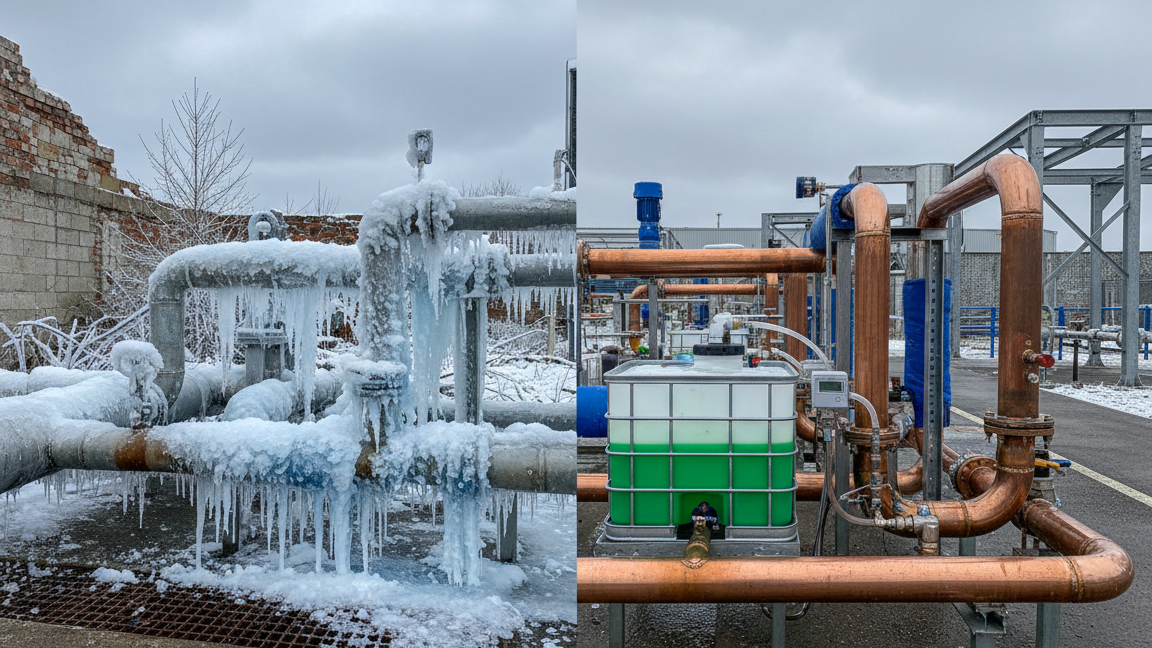
When temperatures plummet, water-based heating systems face a destructive enemy: ice formation. A single night of sub-zero temperatures can transform the water inside pipes and pumps into expanding ice crystals that crack copper, split cast iron, and destroy mechanical seals. The resulting damage often runs into thousands of pounds, shutting down entire buildings and leaving occupants without heat precisely when they need it most. Glycol antifreeze offers a proven solution, lowering the freezing point of system fluids and safeguarding equipment through even the harshest UK winters.
The aftermath of freeze damage across countless commercial and residential properties demonstrates common patterns - burst pipes flooding server rooms, cracked heat exchangers in mothballed warehouses, and destroyed circulator pumps in holiday cottages left unheated for weeks. These failures share a common thread: inadequate freeze protection in vulnerable systems. Understanding how glycol antifreeze works and implementing it correctly prevents these costly scenarios whilst maintaining heating efficiency year-round.
Understanding Freeze Damage in Heating Systems
The Science Behind Freezing and Expansion
Water behaves unlike most substances when it freezes. Rather than contracting, it expands by approximately 9% as it transitions from liquid to solid state. This expansion generates tremendous force - up to 25,000 pounds per square inch - easily exceeding the structural limits of copper pipe, cast iron radiators, and aluminium heat exchangers.
The damage begins when ambient temperatures drop below 0°C and system water starts forming ice crystals. These crystals initially appear at nucleation points - scratches, joints, or areas of turbulence - before spreading throughout stagnant water. As ice volume increases, pressure builds against pipe walls and pump casings. Even thick-walled steel pipes eventually yield, developing hairline cracks that become catastrophic leaks once the ice thaws.
Circulator pumps face particular vulnerability. Ice forming around impellers can bend blades, crack volutes, and destroy mechanical seals. When the ice melts, contaminated system water floods motor windings, often resulting in complete pump failure. A single freeze event can write off a Grundfos pump worth several hundred pounds whilst simultaneously damaging the pipework it serves.
The cascading effects extend beyond immediate physical damage. Leaked water destroys insulation, ceiling tiles, and electrical systems. Business interruption costs multiply as facilities remain offline awaiting repairs. In healthcare settings, care homes, and schools, freeze damage can force complete building evacuation until heating restoration. National Pumps and Boilers has encountered countless freeze damage scenarios across UK properties, emphasising the critical importance of proper glycol protection in vulnerable systems.
Common Freeze Damage Scenarios
Certain configurations face elevated freeze risk regardless of primary heating reliability. Unheated outbuildings with heating circuits - garages, workshops, and storage areas - often experience overnight temperature drops that freeze exposed pipework before building managers notice the problem. By morning, the damage is done.
Commercial properties face freeze threats during planned shutdowns. A warehouse closing for the Christmas period might reduce heating to save energy, inadvertently allowing temperatures in poorly insulated areas to drop below freezing. Exposed pipe runs near loading bays or in roof spaces freeze first, often going unnoticed until staff return weeks later to discover extensive water damage.
Solar thermal systems present unique challenges. Roof-mounted collectors and their associated pipework remain exposed to ambient temperatures year-round. Without proper glycol pipe protection, a single cold snap can freeze and split collector tubes, destroying equipment worth thousands of pounds. The elevated position of these systems means freeze damage often goes undetected until significant leaks develop.
Seasonal properties - holiday cottages, beach houses, and vacation rentals - sit empty for extended periods with minimal heating. Owners attempting to save energy by switching heating off entirely during vacant periods risk catastrophic freeze damage. Even properties with heating programmed to maintain minimal temperatures can suffer failures if boilers malfunction during unoccupied periods.
How Glycol Antifreeze Works
Chemical Properties of Glycol Solutions
Glycol antifreeze functions by disrupting the molecular process that allows water to form organised ice crystals. Pure water freezes at 0°C because its molecules arrange into a crystalline lattice structure at that temperature. Glycol molecules interfere with this arrangement, requiring significantly lower temperatures before ice formation can begin.
The relationship between glycol concentration and freeze protection follows a predictable curve. A 25% glycol solution by volume lowers the freezing point to approximately -12°C, whilst 50% concentration provides protection down to -37°C. This allows system designers to match freeze protection precisely to regional climate requirements and specific application risks.
Beyond freeze point depression, glycol solutions also modify how ice forms when temperatures drop below their protection threshold. Rather than creating solid ice that expands destructively, glycol solutions form a slush-like mixture that remains somewhat pliable. This characteristic provides a safety margin - even if temperatures briefly exceed the solution's rated protection level, the resulting slush causes less damage than solid ice formation in pure water systems.
Heat transfer properties change with glycol concentration. Pure water transfers heat more efficiently than glycol solutions, meaning higher concentrations slightly reduce system efficiency. A 30% glycol solution typically reduces heat transfer capacity by 5-10% compared to pure water. This trade-off remains acceptable for most applications, though system designers must account for it when sizing pumps and heat emitters.
Types of Glycol for HVAC Applications
Two primary glycol types serve HVAC applications: propylene glycol and ethylene glycol. Propylene glycol offers lower toxicity, making it mandatory for systems with any potential for potable water contact. Food processing facilities, hospitals, and residential properties with combination boilers typically specify propylene glycol to eliminate health risks from accidental cross-contamination.
Ethylene glycol provides superior heat transfer characteristics and costs less than propylene glycol, making it preferred for closed-loop systems with zero potable water contact risk. Large commercial heating systems, chilled water networks, and industrial process cooling typically employ ethylene glycol for economic and performance advantages.
Both glycol types are available as concentrated solutions requiring dilution before use, or as pre-mixed formulations ready for direct system filling. Concentrated products offer flexibility - installers can mix to exact specifications for specific freeze protection requirements. Pre-mixed solutions eliminate mixing errors but limit concentration options to manufacturer-supplied ratios.
Inhibited glycol formulations include corrosion inhibitors that protect system metals from degradation. These additives prevent the acidic breakdown products of glycol from attacking copper, steel, and aluminium components. Quality inhibited glycols from manufacturers like Wilo include buffers maintaining pH levels between 7.5-10.5, the range that minimises corrosion across mixed-metal systems.
Protecting Different System Components
Pipe Protection Across Various Materials
Glycol pipe protection safeguards all common piping materials from freeze damage, though the mechanisms and benefits vary by material type. Copper pipe - the most common material in UK heating systems - remains vulnerable to splitting when water freezes. The ductility that makes copper easy to work with offers no protection against ice expansion forces. Glycol solutions prevent ice formation entirely, eliminating split pipe risk regardless of copper wall thickness or pipe diameter.
Steel pipe in commercial systems faces similar freeze damage risks despite heavier wall sections. Black steel and galvanised pipe both crack when internal ice formation generates sufficient pressure. The added benefit of glycol in steel systems extends beyond freeze protection - corrosion inhibitors in quality glycol formulations significantly reduce internal rust formation that otherwise shortens steel pipe lifespan.
Plastic piping systems using PEX, polybutylene, or CPVC demonstrate greater flexibility than metal pipes, sometimes accommodating ice expansion without immediate failure. However, repeated freeze-thaw cycles eventually fatigue plastic materials, causing cracks and joint failures. Glycol antifreeze eliminates these cycles, extending plastic pipe service life whilst preventing the leaks that occur when flexibility limits are exceeded.
Underground pipework faces particular freeze risks in areas where ground frost penetrates below typical burial depths. Exposed pipe runs entering buildings through unheated crawl spaces or passing through uninsulated exterior walls create freeze damage hotspots. Glycol protection eliminates these vulnerabilities without requiring expensive pipe rerouting or additional insulation.
Pump and Circulator Protection
Central heating pumps contain multiple freeze-vulnerable components that glycol solutions protect comprehensively. Pump impellers - whether bronze, cast iron, or composite materials - crack when ice forms around their blades. The asymmetric forces generated during ice expansion can bend impeller vanes, creating imbalance that destroys bearings once the pump restarts.
Mechanical seals represent another critical vulnerability. These precision-machined components maintain tiny clearances - often measured in thousandths of an inch - that prevent water leaking along the pump shaft. Ice formation distorts seal faces and damages the spring mechanisms that maintain sealing pressure. Once compromised, mechanical seals leak continuously, requiring complete pump replacement or costly seal rebuild.
Motor windings in wet rotor circulators face particular risk when ice formation cracks pump bodies or seal assemblies. System water flooding into motor cavities shorts electrical windings, destroying motors instantly. Even high-quality DAB pumps cannot withstand this type of failure - the resulting damage typically exceeds repair economics, necessitating complete pump replacement.
Glycol protection extends beyond preventing immediate freeze damage. The corrosion inhibitors in quality glycol formulations reduce internal pump corrosion, extending service life significantly. Bronze and cast iron pump components particularly benefit from reduced corrosion, maintaining efficiency and reliability for years beyond what pure water systems achieve.
Heat Exchanger and Boiler Protection
Plate heat exchangers in commercial systems contain dozens of thin stainless steel plates separated by narrow gaps - typically 3-5mm - where heat transfer occurs. These confined spaces trap water that freezes rapidly when ambient temperatures drop. Ice expansion forces plates apart, distorting the precise spacing required for efficient heat transfer. Even minor distortion ruins heat exchanger performance, often requiring complete replacement.
Air handling unit coils face severe freeze risks because they're deliberately exposed to cold air streams. Without glycol protection, a failed heating control valve can allow freezing air to circulate through water coils, creating ice that splits tube walls and destroys fin-to-tube bonds. The resulting leaks contaminate air streams and force complete coil replacement - a repair often costing thousands of pounds in parts and labour.
Boiler heat exchangers in condensing boilers employ thin-walled stainless steel or aluminium construction optimised for heat transfer efficiency. These lightweight materials offer minimal resistance to ice expansion forces. A single freeze event can crack heat exchanger sections, allowing combustion gases to contaminate system water - a failure requiring complete boiler replacement rather than repair.
Solar thermal collectors present unique protection challenges. Roof-mounted panels experience full ambient temperature exposure, including radiative cooling that can drop collector temperatures below ambient air temperature on clear winter nights. Glycol pipe protection remains essential year-round in UK solar installations, with 40-50% concentrations typical to ensure protection during extreme cold snaps.
Selecting the Right Glycol Concentration
Calculating Freeze Protection Requirements
Determining appropriate glycol concentration begins with identifying the lowest expected ambient temperature in areas containing system components. UK climate data provides historical minimum temperatures by region, though designers should add safety margins accounting for microclimate effects and climate variability.
Exposed pipework in unheated roof spaces might experience temperatures approaching outdoor minimums, whilst pipe runs through insulated walls remain several degrees warmer. System designers must identify the most vulnerable component and protect to that requirement. A single exposed pipe section dictates concentration for the entire system - there's no benefit to varying concentration by circuit.
The relationship between concentration and freeze point isn't linear. Moving from 30% to 40% glycol concentration provides significantly more freeze protection than increasing from 10% to 20%. Standard concentration tables published by glycol manufacturers specify exact freeze points for given concentrations, eliminating guesswork from the selection process.
Safety margins prove essential because unexpected weather events occasionally exceed historical minimums. The "Beast from the East" cold snap in February 2018 brought temperatures 5-8°C below typical UK winter minimums, catching many systems inadequately protected. Adding 5-10°C safety margin to historical minimum temperatures provides resilience against these exceptional events.
Concentration Guidelines for Different Applications
Residential central heating systems typically employ 25-30% glycol concentrations, providing protection to -12°C to -18°C. This level protects most UK properties from normal winter conditions whilst maintaining good heat transfer efficiency. Lowara residential systems often specify this concentration range as optimal for domestic applications.
Commercial systems with outdoor exposure - rooftop pipework, external heat pump installations, or exposed distribution lines - typically use 40-50% concentrations for protection to -24°C to -37°C. This higher protection level accounts for more severe exposure and the consequences of system failure in commercial operations.
Industrial applications requiring extreme cold protection might exceed 50% concentration, though the viscosity penalties at these levels demand careful pump sizing. Chilled water systems and process cooling applications present different requirements, often using 30-40% concentrations balanced against the heat transfer needs of the specific process.
Solar thermal systems require year-round protection despite summer operation in relatively warm conditions. A 40% propylene glycol concentration provides adequate winter protection while maintaining reasonable heat transfer efficiency for summer collection operations. Vaillant solar systems typically specify concentrations in this range for UK installations.
Installation and Maintenance Best Practices
Proper System Filling Procedures
Pre-flushing existing systems removes debris, scale, and corrosion products that would contaminate the new glycol solution. Water flushing at high flow rates dislodges accumulated deposits; multiple flush cycles with inspection of discharge water ensure thorough cleaning before glycol introduction.
Mixing glycol to correct concentrations requires careful calculation and verification. Calculate total system volume including pipework, radiators, heat exchangers, and buffer vessels. Measure the required quantity of glycol concentrate, mix with clean water in a separate container, verify concentration with a refractometer, then transfer to the system through the lowest fill point.
Eliminating air from glycol-filled systems involves filling slowly whilst venting high points, allowing air to escape naturally rather than becoming entrained as fine bubbles. Operating the system at design temperature after filling circulates fluid throughout the system, carrying residual air to automatic vents where it can be expelled.
Pressure testing after glycol charging verifies that the system maintains integrity without leaks. Pressurise to 1.5 times maximum operating pressure, hold for one hour with visual inspection of all connections, then verify that pressure remains stable. Any pressure loss indicates leaks requiring repair before system operation.
Ongoing Glycol Monitoring
Annual testing of glycol concentration using a refractometer provides quick verification that freeze protection remains adequate. Refractometer readings reveal whether concentration has dropped from top-ups with water or from system evaporation at expansion tanks. Concentration verification before each winter heating season confirms readiness for cold weather.
pH level monitoring detects the gradual acidification that indicates glycol degradation. pH above 8.5 indicates fresh, healthy glycol. Values between 7.5-8.5 signal early degradation requiring increased monitoring. pH below 7.5 demands immediate corrective action - either inhibitor addition or complete glycol replacement depending on test results.
Visual inspection for colour changes provides non-technical indication of glycol condition. Fresh glycol is typically colourless or slightly dyed. Darkening to brown or black indicates oxidation and corrosion products contaminating the solution. Visual inspection combined with refractometer and pH testing provides comprehensive condition assessment.
Topping up systems to maintain proper concentration requires adding pre-mixed glycol solution at design concentration, not pure glycol or pure water. Incorrect top-up composition dilutes concentration or creates localised high concentrations that cause problems before fluids fully mix. Documentation of top-up dates and quantities maintains records supporting maintenance planning.
Conclusion
Glycol antifreeze protects heating and cooling systems from freeze damage through proven chemical principles backed by decades of industrial application. Selecting appropriate glycol concentration for UK climate conditions, installing systems correctly, and maintaining proper inhibitor levels ensures comprehensive freeze protection year-round.
The cost-benefit analysis strongly favours glycol protection in systems with any freeze risk exposure. A single freeze damage event costs thousands in repairs; glycol solution costs hundreds and lasts years between replacements. For businesses operating heating systems in vulnerable configurations, glycol protection represents essential risk mitigation.
Proper glycol selection, installation, and maintenance require professional expertise to ensure systems deliver intended protection without efficiency penalties. If your heating system faces freeze damage risk or you're planning new installations in vulnerable locations, Contact Us to discuss glycol protection solutions and ensure your equipment remains safe through even the harshest UK winters.