

How Hard Water Affects Different Pump Materials (and What to Choose)
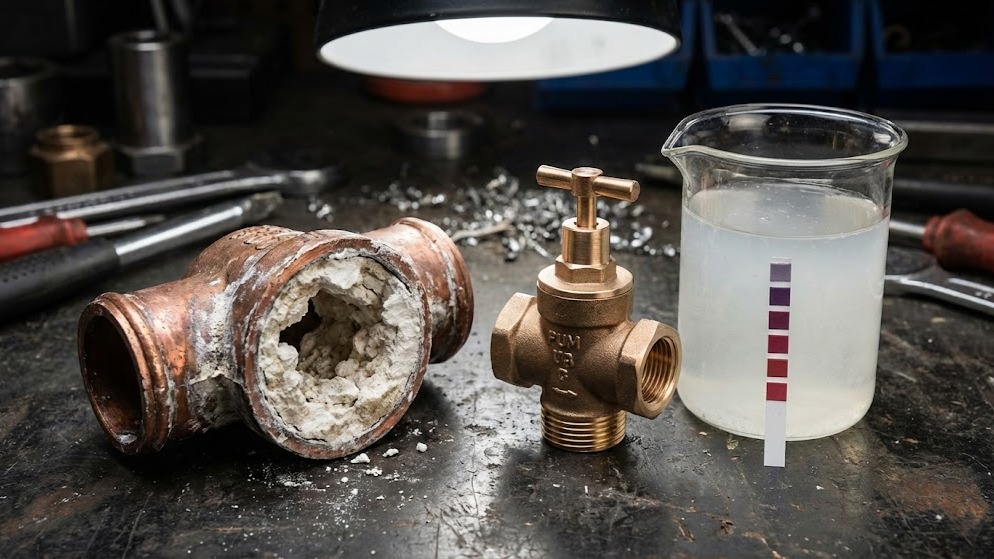
Hard water destroys pumps from the inside out. Across the UK, 60% of properties receive hard or very hard water - particularly in London, the South East, and East Anglia - where dissolved calcium and magnesium carbonates range from 200 to 400 parts per million. These minerals precipitate onto internal pump surfaces, forming limescale deposits that reduce efficiency by up to 40% and cut operational lifespan by half.
The material composition of a pump determines whether it survives or succumbs to hard water conditions. Cast iron corrodes, bronze resists, and stainless steel endures - but the specific alloy grade, surface treatment, and operating temperature all influence long-term performance. Selecting the wrong hard water pump materials leads to premature impeller erosion, seized bearings, and catastrophic seal failure.
National Pumps and Boilers supplies circulation pumps and heating equipment engineered for UK water conditions, with specific material specifications designed to withstand high mineral content. Understanding how hard water interacts with different pump materials prevents costly replacements and system downtime.
What Makes Water "Hard" and Why It Damages Pumps
Hard water contains dissolved calcium carbonate (CaCO₃) and magnesium carbonate (MgCO₃) measured in parts per million or degrees of hardness (°dH). Water classification ranges from soft (0-60 ppm) to very hard (above 180 ppm), with much of southern England exceeding 300 ppm.
Limescale Formation Mechanisms
When hard water heats above 55°C - typical in central heating systems - dissolved minerals precipitate as solid limescale. This crystalline deposit adheres to metal surfaces, particularly in areas of turbulent flow like impeller vanes, volute chambers, and narrow clearances between rotating and stationary components.
Limescale accumulation creates three distinct failure mechanisms. First, deposits reduce internal clearances, increasing friction and mechanical resistance until motors overheat or bearings seize. Second, uneven buildup on impeller surfaces causes dynamic imbalance, generating vibration that damages seals and bearings. Third, scale formation beneath protective surface layers creates crevices where localised corrosion accelerates.
Electrochemical Environment
The combination of elevated temperature, dissolved oxygen, and mineral deposits creates an aggressive electrochemical environment. Different water hardness pumps respond differently to these conditions, with corrosion rates varying by orders of magnitude depending on alloy composition and surface treatment.
Cast Iron: Traditional Material With Hard Water Limitations
Cast iron remains common in older heating systems and budget-conscious installations, offering low material cost and excellent castability for complex pump geometries. However, grey cast iron demonstrates poor corrosion resistance in hard water, particularly when combined with dissolved oxygen and elevated temperatures.
Degradation Mechanisms
Hard water accelerates two forms of cast iron degradation. Graphitic corrosion - also called graphitisation - occurs when iron dissolves preferentially, leaving behind a porous graphite skeleton that maintains original dimensions but loses structural integrity. Pitting corrosion creates localised cavities that penetrate deep into the material, eventually causing catastrophic failure.
Limescale deposits on cast iron surfaces initially provide temporary protection by forming a barrier between metal and water. However, uneven scale distribution creates differential aeration cells where oxygen-starved areas beneath deposits become anodic, accelerating localised corrosion. This mechanism explains why cast iron pumps often fail suddenly after years of apparently stable operation.
Service Life Expectations
Cast iron pump bodies in hard water systems typically achieve 5-8 years of service life in domestic heating applications, compared to 12-15 years in soft water areas. Commercial systems with higher operating temperatures and continuous duty cycles see even shorter lifespans, with impeller replacement often required within 3-4 years.
Modern alternatives like ductile iron with protective coatings extend service life, but fundamental limitations remain. When specifying central heating equipment for hard water areas, cast iron pumps represent a false economy despite lower initial purchase prices.
Bronze and Brass Alloys: Mid-Range Corrosion Resistance
Bronze alloys - particularly gunmetal (85% copper, 5% tin, 5% zinc, 5% lead) - offer substantially better hard water performance than cast iron. The copper-rich composition forms a stable patina that resists further corrosion, while the alloy structure tolerates some dezincification without catastrophic failure.
Dezincification Resistance
Brass impellers and fittings demonstrate adequate performance in moderate hard water conditions (150-250 ppm), but dezincification becomes problematic above 300 ppm combined with temperatures exceeding 60°C. This selective corrosion process leaches zinc from the alloy, leaving porous copper that loses mechanical strength and eventually fractures under operating loads.
Manufacturers address dezincification through alloying modifications - adding 1% arsenic or aluminium creates "dezincification-resistant" (DZR) brass that maintains integrity in hard water. When reviewing Grundfos pumps or Wilo pumps specifications, DZR brass components indicate suitability for challenging water chemistry.
Performance in Commercial Applications
Bronze pump bodies paired with stainless steel shafts provide a cost-effective solution for commercial heating systems in hard water areas. This material combination balances corrosion resistance with thermal conductivity and machinability, explaining widespread adoption in DHW pumps serving hotels, hospitals, and multi-occupancy buildings.
Service life for bronze pumps in hard water typically reaches 10-15 years with appropriate system maintenance, including annual scale inhibitor dosing and five-year full system flushes. However, limescale still accumulates on bronze surfaces, requiring periodic mechanical or chemical descaling to maintain efficiency.
Stainless Steel: Premium Solution for Aggressive Conditions
Stainless steel grades 304 and 316 demonstrate exceptional hard water resistance, with chromium content forming a passive oxide layer that self-heals when scratched or abraded. This protective film remains stable across wide temperature ranges and resists breakdown from dissolved minerals.
Grade 316 Advantages
Grade 316 stainless steel contains 2-3% molybdenum, substantially improving pitting resistance in chloride-rich environments. While hard water primarily contains carbonates rather than chlorides, many UK water supplies include chlorine disinfection residuals that accelerate corrosion of lesser materials. The molybdenum addition in 316 stainless provides insurance against these secondary corrosion mechanisms.
Limescale still deposits on stainless steel surfaces, but adhesion remains relatively weak compared to cast iron or bronze. Periodic system flushing removes accumulated scale more easily, and the underlying metal surface remains uncorroded beneath deposits. This characteristic explains why stainless steel pumps maintain efficiency longer in hard water conditions.
Lifecycle Value
Fully stainless steel pump construction - including body, impeller, shaft, and fasteners - represents the premium solution for extreme hard water applications. Commercial installations in areas exceeding 350 ppm hardness, particularly those operating continuously above 70°C, justify the 40-60% cost premium over bronze equivalents through extended service life and reduced maintenance requirements.
National Pumps and Boilers stocks stainless steel circulation pumps from leading manufacturers, with specific models engineered for hard water districts across southern England. When replacement costs, system downtime, and energy efficiency losses from scale accumulation factor into lifecycle calculations, stainless steel often proves most economical despite higher upfront investment.
Composite and Ceramic Materials: Emerging Technologies
Advanced composite materials and ceramic coatings offer alternative approaches to hard water resistance. Glass-reinforced polymers eliminate metallic corrosion entirely, while ceramic coatings on metal substrates provide extreme hardness that resists both scale adhesion and abrasive wear.
Polymer and Ceramic Applications
Polymer pump housings paired with ceramic-coated impellers demonstrate excellent performance in hard water applications, with smooth non-porous surfaces that inhibit limescale nucleation. These materials suit domestic heating systems where operating pressures remain below 6 bar and temperatures stay under 90°C.
Ceramic coatings - typically aluminium oxide or silicon carbide applied through thermal spray processes - create surfaces where limescale adhesion requires significantly higher supersaturation levels. Scale that does form exhibits weaker bonding and removes more easily during maintenance procedures.
Material Limitations
However, composite materials present limitations for high-pressure commercial applications. Thermal expansion coefficients differ between polymer and metal components, creating seal challenges across wide temperature ranges. Ceramic coatings, while hard, remain brittle and vulnerable to impact damage during installation or maintenance.
These emerging technologies suit specific applications - particularly domestic hot water circulation and low-temperature heating systems - but have not displaced traditional metallic construction for demanding commercial installations.
Protective Coatings and Surface Treatments
Surface engineering extends the hard water performance of conventional pump materials. Epoxy powder coatings on cast iron bodies provide barrier protection, while electroless nickel plating on impellers combines corrosion resistance with low surface roughness that inhibits scale formation.
Coating Technologies
Epoxy coatings must achieve complete coverage without pinholes or holidays where underlying metal contacts water. Quality control during application determines long-term effectiveness, with coating thickness typically 150-300 micrometres for adequate protection. Physical damage during installation or maintenance breaches this barrier, allowing accelerated localised corrosion.
Electroless nickel-phosphorus coatings offer self-healing properties absent in paint systems. The high phosphorus content (10-13%) creates an amorphous structure that resists corrosion initiation, while coating thickness of 25-50 micrometres provides adequate protection without dimensional interference in precision-machined components.
Passivation Treatments
Passivation treatments for stainless steel components enhance the natural chromium oxide layer through controlled acid exposure that removes free iron contamination and thickens the protective film. This process particularly benefits pumps assembled from mixed materials where iron particles from machining operations contaminate stainless surfaces.
When comparing pump valves and system components, surface treatment specifications indicate manufacturer attention to water chemistry challenges. Premium brands invest in protective coatings that justify higher purchase prices through extended service intervals.
Matching Pump Materials to Water Hardness Levels
Understanding how to select appropriate hard water pump materials based on local water conditions ensures optimal system performance and longevity.
Soft Water Areas (0-100 ppm)
Soft water areas tolerate cast iron pumps without significant corrosion concerns, making material selection primarily dependent on mechanical requirements and budget constraints. Standard grey cast iron bodies with bronze impellers provide adequate service life for domestic heating systems.
Moderately Hard Water (100-200 ppm)
Moderately hard water requires bronze or coated cast iron construction for reliable long-term operation. DZR brass fittings become essential, and annual scale inhibitor dosing prevents excessive buildup. Stainless steel shafts paired with bronze impellers represent good practice in this hardness range.
Hard Water (200-300 ppm)
Hard water demands either fully stainless steel construction or bronze with aggressive scale management protocols. Cast iron pumps, even with protective coatings, face shortened service life and increased maintenance requirements. Commercial systems particularly benefit from stainless steel investment in this range.
Very Hard Water (Above 300 ppm)
Very hard water - common across London, Essex, Kent, and Hertfordshire - makes stainless steel construction essential for commercial applications and strongly recommended for domestic systems. The combination of high mineral content and elevated temperatures creates conditions where only premium water hardness pumps achieve acceptable service life.
Water hardness data from local suppliers informs material selection, but system-specific factors also matter. Operating temperature, duty cycle, and maintenance capabilities all influence appropriate material choices. A continuously operating commercial system requires more robust materials than an intermittently used domestic installation, even at identical water hardness.
System Design Considerations Beyond Pump Materials
Material selection alone cannot overcome poor system design. Adequate expansion vessels prevent pressure fluctuations that accelerate corrosion, while proper air elimination reduces dissolved oxygen that drives electrochemical degradation.
Water Treatment and Chemical Inhibitors
System water treatment - including scale inhibitors, corrosion inhibitors, and biocides - extends pump life regardless of construction materials. Phosphate-based scale inhibitors sequester calcium and magnesium ions, preventing precipitation as limescale. These chemicals require annual replenishment as they deplete through reaction with incoming minerals.
Magnetic and electronic water treatment devices claim to prevent scale formation through altered crystal structure, but independent testing shows mixed results. British Standard BS 6700 requires verifiable performance data for such devices, which many manufacturers cannot provide. Traditional chemical treatment remains more reliable for critical applications.
Temperature Management
Temperature management also influences scale formation rates. Operating heating systems at the minimum temperature that meets comfort requirements - typically 70°C flow temperature for radiator systems - reduces limescale precipitation compared to unnecessarily high settings. Modern weather compensation controls optimise temperatures automatically.
Maintenance Protocols
Regular maintenance including annual system flushes removes accumulated sludge and loose scale before deposits harden and bond to surfaces. Power flushing equipment generates high-velocity, low-pressure flow that dislodges debris without damaging components, extending pump life across all material types.
Cost-Benefit Analysis: Initial Investment vs Lifecycle Costs
Cast iron pumps cost 40-60% less than stainless steel equivalents at purchase, creating tempting initial savings. However, lifecycle cost analysis reveals different economics when replacement intervals, efficiency losses, and maintenance requirements factor into calculations.
Domestic Application Economics
A cast iron pump in very hard water requiring replacement after six years, with 15% efficiency loss from scale accumulation over its service life, costs substantially more than a stainless steel pump operating efficiently for fifteen years. Energy consumption differences alone - approximately £180 annually for a typical domestic heating pump - exceed the material cost premium within the first replacement cycle.
Commercial Installation Economics
Commercial installations amplify these economics. A bronze pump serving a 200-unit apartment building might consume £2,400 annually in excess energy from scale-related efficiency losses, while requiring £1,800 replacement every eight years. Stainless steel construction eliminates the replacement cycle and reduces energy waste by 80%, recovering its cost premium within four years.
Maintenance Labour Costs
Maintenance labour costs further favour durable materials. System descaling, impeller replacement, and seal repairs require heating engineer callouts at £80-120 per visit. Stainless steel pumps in hard water areas typically require half the maintenance interventions of bronze equivalents over equivalent operating periods.
When specifying equipment for hard water areas, lifecycle cost calculations should span 15-20 years and include energy consumption at current rates plus 3% annual escalation, replacement costs with labour, and maintenance frequency estimates based on local water chemistry data.
Conclusion
Hard water pump materials determine whether heating systems operate reliably or face recurring failures and efficiency losses. Cast iron suits only soft water areas, bronze provides mid-range performance with appropriate maintenance, and stainless steel delivers premium durability in aggressive conditions.
Water hardness above 200 ppm - affecting most of southern and eastern England - makes material selection critical for both domestic and commercial installations. The 40-60% cost premium for stainless steel construction recovers quickly through extended service life, maintained efficiency, and reduced maintenance requirements.
System design factors including proper expansion vessels, air elimination, and chemical treatment complement material selection but cannot substitute for appropriate pump construction. Regular maintenance extends pump life regardless of materials, but stainless steel tolerates harder water and less-than-perfect maintenance protocols.
National Pumps and Boilers supplies circulation pumps engineered specifically for UK water conditions, with material specifications matched to regional hardness levels. Technical specifications detail exact alloy grades, surface treatments, and hard water suitability for informed equipment selection.
For expert guidance on pump material selection based on your specific water chemistry and application requirements, contact us for personalised recommendations that balance performance, durability, and lifecycle costs.