

How Mains Water Pressure Affects Your Booster Pump Choice and Sizing
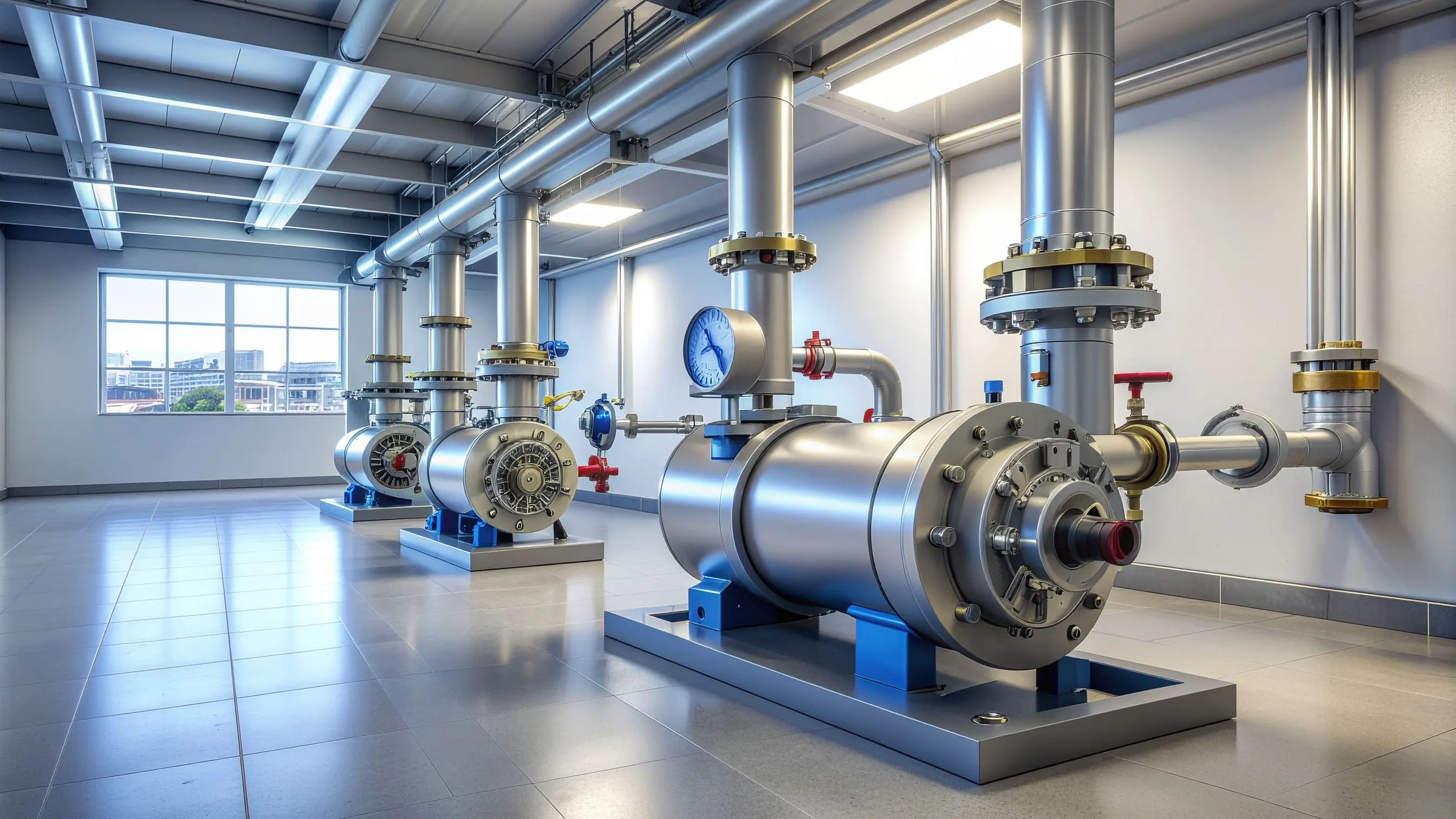
Mains water pressure is the foundational variable in booster pump specification. A pump selected without accurate mains pressure data routinely fails to meet system demands, operates inefficiently, or requires premature replacement - all costly outcomes that accurate mains water pressure booster pump sizing calculations prevent at the design stage.
Most UK properties receive mains water at pressures between 1.0 and 3.0 bar, though this range extends from below 0.5 bar in rural locations to over 5.0 bar in some urban areas close to network pumping stations. This variation creates distinct specification challenges for applications ranging from domestic shower boosting to large-scale commercial building services. Incoming mains pressure establishes the baseline from which every booster pump must work, directly influencing both pump model selection and the full range of sizing calculations that follow.
Understanding Mains Water Pressure in UK Properties
Mains water pressure represents the force available at the point of entry to a property, typically measured in bar or metres head (1 bar equals approximately 10 metres head). Water companies maintain minimum statutory pressures at the point of connection - typically 1.0 bar at the highway boundary - but actual delivered pressure at the property inlet depends on several variables: elevation relative to the local mains, distance from the main through the supply pipe, supply pipe diameter, and local demand patterns throughout the day.
Properties at higher elevations experience lower mains pressure due to gravitational effects - approximately 0.1 bar reduction per metre of elevation above the local main. A building 20 metres above the nearest water main loses roughly 2.0 bar before water reaches the property inlet. Similarly, extended supply pipe runs introduce friction losses that reduce available pressure, particularly where older or undersized pipes serve the property from the highway boundary.
Accurate mains pressure measurement requires a calibrated pressure gauge fitted to an outside tap or the incoming main, with readings recorded during both low-demand periods (typically 02:00-04:00) and peak demand periods (07:00-09:00 and 17:00-20:00). The lowest recorded dynamic mains pressure during peak periods determines the baseline for pump sizing calculations, as the system must perform reliably under worst-case conditions. Properties experiencing pressure below 1.0 bar at peak demand face specification challenges that significantly influence every aspect of pump selection.
The Relationship Between Mains Pressure and Booster Requirements
Static mains pressure - the pressure when no water flows - differs from dynamic mains pressure measured during active draw-off. This distinction is critical for accurate mains water pressure booster pump sizing, as pumps operate against dynamic conditions where available inlet pressure falls as flow rate increases. A property showing 2.5 bar static pressure might deliver only 1.8 bar dynamically at 20 litres per minute flow - a difference that creates a substantially different pump specification requirement.
Low mains pressure scenarios below 1.5 bar require pumps to generate substantially higher heads to achieve target outlet pressures at all draw-off points. A domestic property with 0.8 bar incoming pressure requiring 3.0 bar at shower outlets needs the booster pump to add at minimum 2.2 bar, plus allowances for pipe friction losses and any elevation change between the pump location and the highest fixture. This requirement immediately narrows booster pump selection to models capable of generating sufficient head at the required flow rate, and typically drives selection towards inverter-controlled units that maintain pressure consistently across the full flow range.
Properties with high mains pressure above 3.0 bar need smaller pressure additions but must incorporate pressure limitation to prevent damage to downstream fixtures, appliances, and pipework. UK Water Supply Regulations limit maximum outlet pressure to 5.0 bar for most domestic applications. A property receiving 3.5 bar mains pressure during off-peak periods requires only modest boosting with integral pressure regulation to prevent over-pressurisation at lower flow rates when pump head contribution adds to high incoming pressure.
Calculating Required Pressure Boost
Accurate booster pump sizing begins with establishing the target outlet pressure at the furthest or highest fixture in the distribution system. For domestic shower applications, Building Regulations Approved Document G recommends minimum 1.0 bar dynamic pressure at outlets, though modern thermostatic shower valves require 1.5-2.0 bar for consistent and comfortable operation. Commercial applications demand higher pressures - typically 2.5-3.5 bar for sanitary fittings and up to 6.0 bar for some process applications requiring high-pressure supply.
The required pressure boost equals target outlet pressure minus available dynamic mains pressure, plus the sum of all system losses. System losses include pipe friction calculated using Darcy-Weisbach or Hazen-Williams equations, elevation changes at 0.1 bar per metre of rise, and component losses through isolation valves, check valves, meters, and any backflow prevention devices in the supply line. A typical domestic installation accumulates 0.3-0.5 bar in system losses, whilst commercial buildings with extensive distribution pipework can exceed 1.5 bar in combined pipe and fitting losses alone.
Flow rate requirements derive from simultaneous demand calculations appropriate to the building type and occupancy. Domestic properties typically require 12-20 litres per minute for single shower boosting, 25-35 litres per minute for whole-house boosting serving all bathrooms and kitchen simultaneously, and 40+ litres per minute for larger properties with multiple bathrooms in concurrent use. Commercial buildings require fixture unit calculations per BS EN 806-3, converting loading units to design flow rates using probability factors that account for non-simultaneous fixture operation.
Grundfos produces pressure boosting systems covering the full range of domestic and commercial duty requirements, with selection software that plots system resistance curves against pump performance curves to confirm accurate duty point identification - particularly useful for installations where low mains pressure narrows the viable pump selection range.
Pump Sizing Fundamentals
Every pump manufacturer publishes performance curves showing the relationship between flow rate on the horizontal axis and generated head on the vertical axis. The pump's duty point - where the system resistance curve intersects the pump performance curve - determines actual operating conditions in service. Selecting the correct pump requires both the system curve and the pump curve to be accurately derived from measured and calculated system parameters.
Converting pressure requirements to head requirements uses simple multiplication: pressure in bar multiplied by 10 equals head in metres. A system requiring 2.5 bar pressure boost needs a pump capable of generating 25 metres head at the design flow rate. However, pump performance curves show generated head declining as flow increases, so the pump must generate the required head specifically at the design flow rate, not at zero flow or at the manufacturer's maximum flow rating.
Selecting pumps with duty points in the middle third of the performance curve ensures efficient operation and provides tolerance for minor system variations without performance degradation. Pumps operating at curve extremes - either very low flow where head is near maximum, or very high flow where head drops sharply - run inefficiently and experience accelerated wear on impellers and bearings. This middle-third principle applies equally to single pump and multi-pump booster set configurations.
Central heating circulator pumps follow the same performance curve principles as pressure boosters, though the system characteristics differ significantly - understanding pump curve interpretation from one application type directly aids specification confidence in the other.
Wilo provides detailed pump selection support and digital selection tools that overlay system curves against full pump performance data, confirming that specified duty points fall within optimal operating ranges across the full flow variation expected in service - particularly valuable for booster pump selection criteria assessments in applications where dynamic mains pressure varies significantly between peak and off-peak periods.
Single Pump vs Multiple Pump Configurations
Properties with marginal mains pressure (0.5-1.0 bar) often benefit from twin pump arrangements rather than single large pumps. Twin pump systems configured as duty/standby provide supply redundancy whilst allowing smaller individual pump sizes that better match varying demand patterns. Variable speed drives on each pump further enhance efficiency by modulating speed to maintain constant outlet pressure as demand fluctuates throughout the day and night.
Very low mains pressure below 0.5 bar typically necessitates break tank installations where mains water fills a storage cistern and pumps draw from the tank rather than directly from the incoming supply. This arrangement decouples pump operation from mains pressure fluctuations entirely but introduces storage capacity requirements and additional plant room space demands. Water Supply Regulations mandate specific backflow prevention and water quality measures for break tank installations, including covered tanks, screened overflows, and regular maintenance and inspection protocols.
Properties with adequate mains pressure above 2.0 bar typically achieve satisfactory results with single pump variable speed installations incorporating pressure transducers and inverter control. Modern electronic controllers maintain target outlet pressures automatically, modulating pump speed as fixtures open and close throughout the building. National Pumps and Boilers supplies complete packaged booster systems with integrated controls that simplify installation, reduce commissioning time, and ensure regulatory compliance from a single coordinated supply source.
DAB packaged booster sets incorporate dynamic mains pressure compensation, automatically adjusting pump speed setpoints to maintain consistent outlet pressure as incoming mains pressure varies between off-peak and peak demand periods - an important feature for buildings in supply zones where dynamic mains pressure measurement reveals significant variation across the day.
Pressure Vessel and Accumulator Sizing
Pressure vessels buffer pressure fluctuations and reduce pump cycling frequency, extending mechanical component life and reducing noise from frequent motor starts. Vessel sizing depends on pump flow rate, acceptable pressure band width, and minimum required pump run time between starts. Undersized vessels cause excessive cycling - potentially hundreds of starts per day - that rapidly degrades bearing and seal components in both single and twin pump systems.
The relationship between mains pressure and vessel sizing becomes important in systems where incoming pressure varies significantly between off-peak and peak demand periods. Properties experiencing wide mains pressure swings of 1.5 bar or more between night and morning peak require larger accumulator volumes to maintain stable outlet pressure without constant pump intervention. Manufacturers typically recommend vessel volumes of 20-50 litres for domestic boosting applications and 100-500 litres for commercial installations, scaled according to design flow rates and required pressure stability.
Vessels must be sized considering effective volume - the usable water storage between pump cut-in and cut-out pressures. A 100-litre vessel with pre-charge pressure set at 2.0 bar, cut-in at 2.5 bar, and cut-out at 3.5 bar provides approximately 25-30 litres of effective volume for pressure vessel sizing purposes. Systems with low dynamic mains pressure require careful pre-charge pressure selection to maximise effective vessel volume whilst preventing bladder or diaphragm damage from over-expansion during high mains pressure periods.
Lowara booster sets include pre-charged pressure vessels with factory-set charge pressures matched to standard supply conditions, with guidance on adjustment procedures for installations where measured dynamic mains pressure deviates significantly from standard assumptions - critical information for accurate pressure vessel sizing in sites with atypical mains pressure profiles.
Manufacturer Specifications and Performance Curves
Reading pump performance curves correctly relative to available mains pressure prevents specification errors with significant operational consequences. The curve's vertical axis shows head that the pump adds to incoming pressure, not the absolute outlet pressure delivered. A pump generating 30 metres head (3.0 bar) connected to a property with 1.5 bar mains pressure delivers 4.5 bar maximum outlet pressure - potentially approaching regulatory pressure limits in low-demand periods without integral pressure control.
Ebara publishes comprehensive technical data including NPSH (Net Positive Suction Head) requirements that become critical in low mains pressure applications - the full technical datasheets provide the NPSH values needed to confirm that available inlet conditions prevent cavitation, which causes noise, vibration, and rapid impeller wear in pumps operating with insufficient suction pressure.
Common pump selection mistakes include selecting pumps based on maximum flow rate without checking generated head at that flow, choosing pumps with duty points at performance curve extremes, and failing to account for all system losses in the pressure budget calculation. Another frequent error in booster pump selection criteria involves using static mains pressure rather than dynamic mains pressure for calculations, resulting in pumps that perform adequately during off-peak periods but fail to meet requirements during peak demand when mains pressure drops and building demand simultaneously peaks.
Regulatory Compliance and Backflow Prevention
Water Supply (Water Fittings) Regulations 1999 mandate backflow prevention for all booster pump installations to protect public mains water from contamination by building system water. Required backflow prevention category depends on mains pressure, system configuration, and the fluid risk category of the downstream system. Properties with mains pressure below 1.5 bar may require Type AB air gaps or RPZ valves, whilst higher pressure installations may accept simpler check valve arrangements for lower fluid risk categories.
RPZ valves introduce pressure losses of typically 0.3-0.5 bar that must be included in pump sizing calculations. Installing an RPZ valve on a system sized without accounting for this loss results in inadequate outlet pressure during peak demand - a failure mode that requires either pump replacement or costly system modifications. Accurate mains water pressure booster pump sizing must incorporate all backflow prevention device pressure losses as identifiable line items in the total pressure budget calculation.
Armstrong booster systems are available with integrated backflow prevention configurations suited to various fluid risk categories, with pressure loss data for each protection arrangement published in the technical specifications - enabling accurate inclusion of backflow prevention losses in pump sizing calculations from the outset rather than as an afterthought during commissioning.
Pump valves require correct specification to prevent backflow contamination, enable safe system isolation for maintenance, and protect against pressure surges during pump start-up. Pressure surge protection becomes increasingly important as system head increases above 30 metres - water hammer from rapid valve closure or pump shutdown creates transient pressure spikes that can exceed 10 bar, damaging pipework, fittings, and downstream fixtures.
Practical Installation Considerations
Installing pressure monitoring equipment at the pump inlet provides valuable diagnostic capability and early warning of mains pressure deterioration over time. Properties experiencing gradual mains pressure reduction over months or years - often the result of increasing demand on ageing supply infrastructure - require pump performance adjustments or eventual replacement to maintain adequate outlet pressure. Inlet pressure monitoring records also provide useful evidence when requesting supply improvements from the water undertaker.
Pressure relief valves rated 0.5 bar above maximum designed system pressure provide essential protection against over-pressurisation from pump malfunction or control system failure. These safety devices discharge to drain when system pressure exceeds set points, preventing potentially serious damage to building pipework and downstream fixtures. Relief valve discharge pipes must terminate in visible locations to provide clear indication of system faults requiring investigation and repair.
Commissioning procedures must verify that installed pumps deliver specified performance across the full operating range, not just at a single measured point. This includes measuring outlet pressure at various flow rates, confirming pressure switch and transducer setpoints, testing accumulator pre-charge pressure, and verifying correct operation of all backflow prevention devices. Documentation of commissioning measurements provides the baseline data essential for future maintenance comparisons and troubleshooting.
Conclusion
Mains water pressure fundamentally determines booster pump selection, sizing, and configuration across all application types. Properties with dynamic mains pressure below 1.5 bar require substantially different specifications than those receiving 3.0 bar or more, with the differences affecting pump model selection, vessel sizing, backflow prevention requirements, and potentially the need for break tank storage. Accurate dynamic mains pressure measurement during peak demand periods provides the essential baseline for all subsequent calculations, preventing the undersized or mismatched installations that fail to meet system requirements in service.
Successful mains water pressure booster pump sizing accounts for the complete pressure budget - available dynamic mains pressure, target outlet pressure, elevation changes, pipe and fitting friction losses, and backflow prevention device pressure drops. This comprehensive approach ensures pumps operate efficiently within their optimal performance range whilst complying with Water Supply Regulations and Building Regulations requirements for pressure control. Properties with variable mains pressure benefit from variable speed pump systems with appropriately sized accumulator vessels that maintain stable outlet pressure despite incoming supply fluctuations.
For guidance on booster pump selection and sizing matched to specific mains pressure conditions and site requirements, Contact Us to discuss application parameters and ensure specifications deliver reliable performance from commissioning through the full equipment lifespan.