

How Pipe Sizing Affects Pump Performance and Long-Term Energy Costs
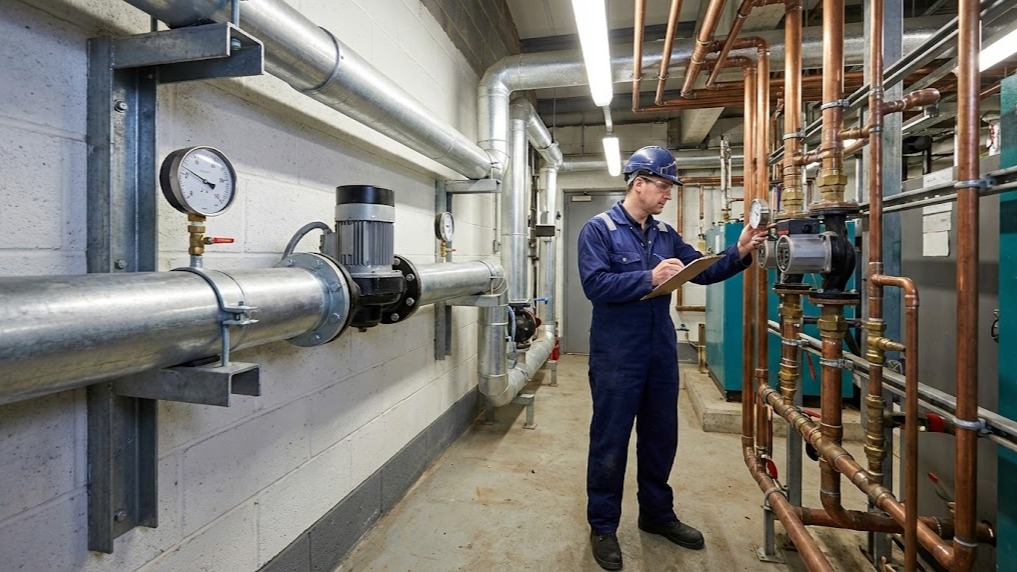
Pipe sizing decisions made during system design determine pump efficiency for the next 20-30 years. Undersized pipes force pumps to work harder, consuming 15-40% more energy annually whilst accelerating wear on mechanical components. Oversized pipes waste capital on unnecessary materials but rarely cause operational penalties. Between these extremes lies an optimal diameter that balances installation cost against decades of energy consumption.
National Pumps and Boilers regularly addresses performance issues traced directly to pipe sizing errors made years earlier. A 2mm reduction in pipe diameter below design specifications can increase pumping costs by £200-£800 annually in a typical commercial heating system, compounding over the system's operational life to represent thousands in avoidable expenditure.
The Relationship Between Pipe Diameter and Flow Resistance
Flow resistance increases exponentially as pipe diameter decreases. This relationship follows the Darcy-Weisbach equation, where friction loss varies inversely with the fifth power of diameter. Halving pipe diameter doesn't double resistance - it increases friction loss by approximately 32 times for the same flow rate.
This exponential relationship explains why seemingly minor pipe sizing errors create disproportionate performance penalties. A heating system designed for a 42mm pipe but installed with 35mm pipe experiences friction losses 2.8 times higher than intended, forcing the Grundfos pump to develop significantly greater head pressure to maintain design flow rates.
Velocity Guidelines and Performance Standards
Velocity provides the practical indicator installers use on-site. British Standard BS EN 12828 recommends maximum velocities of 1.5 m/s for heating systems to limit noise and erosion whilst maintaining reasonable pipe sizing. Exceeding 2 m/s generates audible flow noise and accelerates corrosion at bends and fittings. Systems designed below 0.5 m/s waste capital on oversized pipework without operational benefit.
How Undersized Pipes Increase Pump Energy Consumption
Pumps overcome system resistance by converting electrical energy into pressure. When pipes are undersized, resistance increases, requiring the pump to operate further up its performance curve towards higher head and lower efficiency. Most circulator pumps achieve peak efficiency at their design duty point - typically 60-80% of maximum head. Operating significantly above this point drops efficiency by 10-25%.
A Wilo Stratos circulator rated at 80% efficiency at design duty might operate at only 55-60% efficiency when compensating for undersized pipework. This efficiency penalty translates directly into heat generation within the pump motor and wasted electricity consumption.
Three Ways Energy Consumption Increases
Energy consumption increases manifest in three ways:
- Higher electrical draw to generate additional head pressure required by increased friction
- Reduced pump efficiency when operating outside the optimal performance envelope
- Extended runtime as reduced flow rates take longer to satisfy heating demands
A commercial building system moving 20 litres per second through a properly sized 80mm pipe requires approximately 0.8 kW of pump power. Reducing pipe diameter to 65mm increases friction loss by 180%, requiring 2.2 kW to achieve the same flow - a 175% increase in pump energy consumption for a 19% reduction in pipe diameter.
Flow Rate Limitations and System Performance Degradation
Undersized pipes physically limit achievable flow rates regardless of pump capacity. Even oversizing the pump cannot fully compensate for severe pipe restrictions because excessive velocity creates turbulence that further increases losses whilst generating noise and vibration.
Building services engineers specify flow rates based on heat load calculations. A commercial heating system designed to deliver 500 kW requires approximately 21.5 litres per second at a 20°C temperature differential. If pipework restrictions limit actual flow to 16 litres per second, the system can only deliver 372 kW - a 26% shortfall that manifests as inadequate heating in remote zones or during peak demand.
Gradual Performance Degradation
This performance degradation often appears gradually. Systems may perform adequately during commissioning in mild weather but fail to meet demand during cold snaps when design flow rates become critical. The Wilo pump operates continuously at maximum capacity yet cannot overcome the physical limitations imposed by undersized distribution pipework.
Installers sometimes attempt to compensate by increasing pump size or speed, but this approach has practical limits. Excessive pump pressure can damage components, increase noise, and cause cavitation. The fundamental issue - inadequate pipe diameter - remains unresolved whilst energy consumption increases further.
Pipe Sizing Standards and Design Calculations
British Standard BS EN 12828 provides the framework for heating system pipe sizing, specifying maximum velocities and pressure drop rates. The standard recommends limiting pressure drop to approximately 100-150 Pa per metre of pipe length in heating systems, though commercial applications may accept higher values where energy costs justify smaller pipe diameters.
Balancing Three Competing Factors
Design calculations for proper pump pipe sizing balance three competing factors:
Capital cost: Larger pipes require more material, insulation, and support infrastructure. A 100m run of 80mm pipe costs approximately £1,200 more than 65mm pipe including insulation and fittings.
Energy cost: Smaller pipes increase pumping energy by 15-40% annually. At £0.18 per kWh, the annual penalty for undersizing might reach £300-£800 for a single circuit in continuous operation.
Space constraints: Larger pipes require more vertical clearance and may not fit within ceiling voids or service risers designed for smaller diameters.
Competent mechanical services designers perform lifecycle cost analysis, comparing installation savings against decades of increased operating costs. A £1,200 saving on smaller pipes becomes a £6,000-£16,000 lifetime penalty when energy costs accumulate over 20 years.
Design Tools and Calculation Methods
The CIBSE Pipe Sizing software and tables provide pre-calculated diameters for common flow rates and acceptable pressure drops. These tables assumea clean pipe with standard fittings - actual systems with scale buildup, corrosion, or excessive fittings experience higher friction than tabulated values suggest.
The Compounding Effect of Fittings and Valves
Fittings, bends, and valves create additional resistance beyond straight pipe friction. Each 90° elbow adds resistance equivalent to approximately 30 diameters of straight pipe. A system with twelve 90° bends in a 50mm pipe experiences additional friction equivalent to 18 metres of straight pipe.
This compounding effect makes pipe sizing errors more severe in systems with complex layouts. A simple two-pipe heating circuit tolerates moderate undersizing better than a system with multiple zone valves, balancing valves, and direction changes. The pump valves necessary for system control add resistance that must be factored into pipe sizing calculations.
Hidden Restrictions in System Design
Installers sometimes underestimate fitting losses, sizing pipes based only on straight-run friction. A system designed with adequate straight-pipe diameter but excessive fittings experiences the same performance penalties as undersized pipework. British Standard calculations include equivalent length factors that convert fittings into additional straight pipe length for accurate pressure drop calculations.
Partially closed balancing valves represent another hidden restriction. Systems balanced by throttling valves rather than proper pump pipe sizing waste energy, forcing flow through intentional restrictions. Properly sized pipes with fully open balancing valves achieve the same flow distribution whilst consuming significantly less pump energy.
Long-Term Cost Analysis: Installation Savings vs Operating Penalties
The financial case for proper pump pipe sizing becomes compelling when examined across system's lifespan. Commercial heating systems typically operate 15-20 years before major refurbishment, whilst well-maintained systems may function for 30+ years.
Financial Impact Over System Lifespan
Consider a commercial system where undersized pipework increases annual pumping costs by £500:
- 5-year cost: £2,500 additional energy consumption
- 10-year cost: £5,000 (excluding inflation and rate increases)
- 20-year cost: £10,000+ (likely £15,000+ with energy cost inflation)
Installation savings from smaller pipes rarely exceed £2,000-£3,000 for typical commercial circuits. The operational penalty recovers this saving within 4-6 years, then continues accumulating costs for the system's remaining lifespan.
This calculation excludes accelerated pump wear, increased maintenance requirements, and potential performance inadequacy during peak demand. Systems operating pumps continuously at high duty points experience bearing wear, seal failure, and motor burnout 30-50% sooner than properly loaded installations.
Energy Cost Inflation Amplifies Penalties
Energy cost inflation amplifies the penalty. Electricity prices increased 54% between 2020 and 2023 in the UK. Systems installed with undersized pipes in 2015 now cost significantly more to operate than original calculations predicted, whilst the pipe sizing decision remains fixed for the system's lifespan.
Pressure Drop Measurement and System Diagnostics
Existing systems can be evaluated by measuring pressure drop across circuits and comparing actual values to design calculations. Differential pressure gauges installed at circuit extremities reveal whether excessive friction indicates undersized pipes or system fouling.
Diagnostic Indicators
Pressure drop exceeding 150-200 Pa per metre suggests either undersized pipework or significant fouling. New systems should measure near calculated design values. Systems showing 50-100% higher pressure drop than design calculations indicate problems requiring investigation.
Flow measurement provides additional diagnostic information. Ultrasonic flow meters measure actual flow rates without system penetration. Comparing measured flow to design flow rates reveals whether pumps achieve intended performance or operate in restricted conditions.
Technical specialists regularly diagnose systems where measured flow rates fall 20-40% below design values due to pipe sizing restrictions. These systems consume maximum pump energy whilst delivering minimum performance - the worst possible outcome.
Retrofit Solutions and System Modifications
Correcting undersized pipes in existing systems requires significant intervention. Complete pipe replacement during building occupation proves disruptive and expensive, often costing 3-5 times the original installation due to access limitations and tenant coordination.
Practical Retrofit Options
Pump upgrades: Installing higher-capacity pumps with variable speed drives partially compensates for undersized pipes. Modern Grundfos circulators with ECM motors and pressure control can adapt to suboptimal pipework whilst minimising energy penalties through intelligent speed modulation.
System reconfiguration: Dividing single large circuits into multiple smaller circuits reduces flow through each pipe, potentially bringing velocity and pressure drop within acceptable ranges. This approach requires additional pumps and controls but avoids pipe replacement.
Partial replacement: Replacing the most restrictive sections - typically long horizontal runs or main distribution pipes - whilst retaining adequately sized branch pipework. This targeted approach addresses the worst bottlenecks without complete system renewal.
Acceptance and optimisation: Some systems must operate with existing undersized pipes until major refurbishment. Variable speed pumps, system cleaning, and control optimisation minimise energy penalties whilst maintaining acceptable performance.
The most cost-effective solution depends on system age, performance deficit severity, and planned building lifecycle. Systems approaching end-of-life may justify operating with existing restrictions, whilst recently installed systems with severe undersizing warrant correction despite expense.
Conclusion
Pipe sizing decisions made during system design determine energy consumption patterns for decades. Undersized pipes increase pumping energy by 15-40% annually whilst limiting system capacity and accelerating component wear. These penalties compound over 20-30-year system lifespans, transforming modest installation savings into substantial operational costs.
Proper pump pipe sizing follows British Standard calculations, balancing capital cost against lifecycle energy consumption. Systems designed to BS EN 12828 recommendations with velocities below 1.5 m/s and pressure drops under 150 Pa/m achieve optimal pipe sizingand pump performance with minimal energy waste.
Existing systems suffering from undersized pipework require careful evaluation of retrofit options. Variable speed pumps, system reconfiguration, or targeted pipe replacement can improve performance, though complete correction may prove economically impractical until major refurbishment.
For technical guidance on pump selection for existing systems or pipe sizing verification for new installations, contact us for expert mechanical services support.