

How Pump Reliability Affects Business Continuity and Downtime Costs
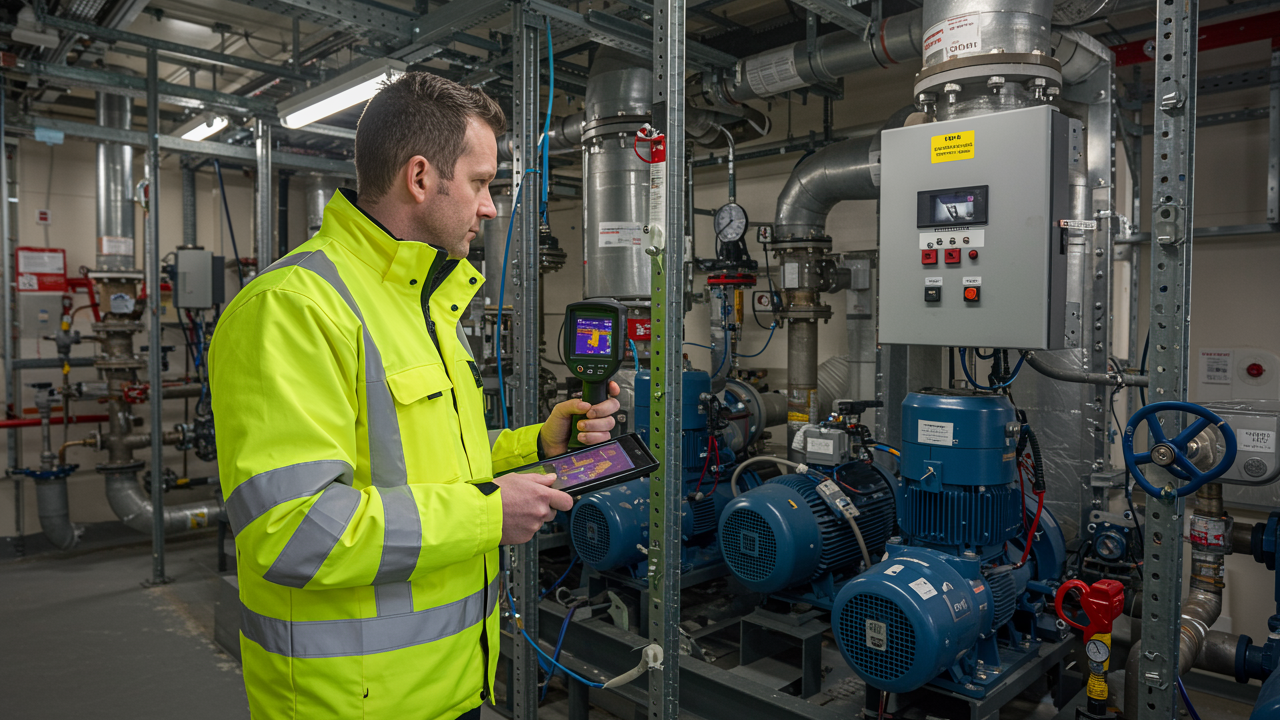
Pump reliability in a commercial building doesn't announce itself with warning signs. One moment, a hotel's heating system maintains guest comfort across 200 rooms. The next, a seized circulator bearing triggers a cascade: cold radiators, guest complaints, emergency callouts, and a frantic search for replacement equipment. The direct repair cost might reach £800. The actual business impact? Often ten times higher.
National Pumps and Boilers works with facilities managers who've learned this lesson the expensive way. A failed DHW pump in a care home doesn't just mean cold taps - it means infection control protocols, temporary accommodation costs, and regulatory scrutiny. A circulation pump breakdown in a data centre triggers cooling system failures that threaten millions of pounds worth of IT infrastructure. Pump reliability isn't a maintenance detail. It's a business continuity fundamental.
The True Cost of Pump Downtime
Most financial models underestimate pump downtime costs business operations by focusing solely on repair expenses. A replacement Grundfos pump might cost £600-£1,200. The repair labour adds another £200-£400. These figures appear manageable in maintenance budgets. The hidden costs tell a different story.
Lost Revenue and Productivity
A commercial office building loses approximately £150-£300 per hour in tenant complaints and productivity impacts when heating fails during winter months. A hotel facing heating system failure during peak season faces direct revenue loss from room discounts, relocations, and cancellations. One London hotel documented £18,000 in direct costs from a single weekend pump failure - £2,400 in emergency repairs, £15,600 in guest compensation and rebooking costs.
Manufacturing facilities face even steeper consequences. Process heating systems depend on consistent circulation pump performance. When a pump fails, production lines stop. A food processing plant in Yorkshire calculated their true pump downtime costs business operations at £2,400 per hour - raw material waste, labour costs for idle staff, missed delivery commitments, and customer penalties. Their annual maintenance budget increased 40% after one pump failure cost them £38,000 in a single 16-hour incident.
Emergency Response Premiums
Standard maintenance callouts cost £80-£120 during business hours. Emergency weekend or night callouts jump to £200-£400 before any work begins. Parts ordered on emergency basis carry 30-50% price premiums. A facilities manager in Birmingham paid £1,850 for a Wilo pump on emergency Sunday delivery - the same unit would have cost £720 with standard three-day delivery.
Express courier charges add another £80-£200 for next-day delivery. Weekend installation labour costs double or triple standard rates. One Manchester shopping centre spent £4,200 on emergency pump replacement that would have cost £1,400 during planned maintenance - a 200% premium driven entirely by timing.
Regulatory and Compliance Consequences
Healthcare facilities face regulatory scrutiny when heating or hot water systems fail. Care homes must maintain minimum temperatures under Care Quality Commission standards. A pump failure causing temperature drops below 18°C in resident rooms triggers incident reporting requirements. Repeated failures can influence inspection ratings, affecting occupancy rates and reputation.
Educational facilities face similar pressures. Schools must close when heating systems cannot maintain adequate temperatures - typically 18°C in corridors, 15°C in circulation spaces under Building Regulations. A primary school in Leeds closed for three days due to heating system failure caused by a failed circulation pump. The cost breakdown: £1,200 in emergency repairs, £8,400 in lost funding (based on per-pupil daily rates), and immeasurable disruption to 420 families scrambling for childcare.
How Pump Failures Cascade Through Building Systems
Pump reliability matters because these components sit at critical points in interconnected systems. A single pump failure rarely stays isolated. The effects ripple through mechanical, electrical, and control systems in ways that multiply costs and extend recovery time.
System Pressure and Water Hammer Damage
When a circulation pump seizes suddenly, the abrupt flow stoppage creates pressure spikes throughout the pipework. This water hammer effect can damage pipe joints, valve seals, and expansion vessels. A facilities team in Bristol traced £6,800 in secondary damage back to a single pump bearing failure - the initial £900 pump replacement was the smallest cost component. Damaged pipe joints required opening walls in six locations. Three zone valves needed replacement. The expansion vessel diaphragm ruptured from the pressure spike.
Control System Complications
Modern building management systems monitor pump performance through flow sensors, pressure transducers, and temperature measurements. Erratic pump performance confuses these systems, triggering fault modes that shut down entire heating zones. A Manchester office complex experienced heating failures across four floors when a deteriorating pump bearing caused intermittent flow variations. The BMS interpreted these fluctuations as system faults, shutting down secondary circuits as a protective measure. Technicians spent eight hours diagnosing the problem, initially suspecting control system failures rather than the underlying pump issue.
Boiler Efficiency and Safety Lockouts
Boilers depend on consistent flow rates for safe operation. When circulation pumps fail or perform erratically, boilers experience overheating conditions that trigger safety lockouts. Modern condensing boilers are particularly sensitive - they require specific flow rates to maintain efficient condensing operation and prevent heat exchanger damage. A failed pump can force a Remeha boiler into repeated lockout cycles, each requiring manual reset. One commercial building experienced 14 boiler lockouts over a weekend before identifying the underlying pump fault. The boiler operated in low-efficiency dry-cycling mode for 40 hours, wasting an estimated £380 in excess gas consumption.
Predictable Failure Patterns and Warning Signs
Pump failures follow recognisable patterns. Understanding these patterns transforms maintenance from reactive crisis management to predictive prevention. The difference shows directly in downtime statistics and cost profiles.
Bearing Wear and Noise Escalation
Bearing failure accounts for approximately 40% of circulation pump breakdowns. The progression follows a predictable timeline. New bearings operate silently. After 18-24 months in continuous operation, subtle bearing noise becomes detectable during close inspection. By 30-36 months, the noise becomes obvious during routine plant room visits. At 40-48 months, bearing roughness causes vibration that transfers through pipework. Final failure typically occurs between 48-60 months in standard-duty applications.
Facilities teams that monitor bearing noise catch failures before seizure occurs. This changes the cost equation dramatically. Planned bearing replacement during scheduled maintenance costs £180-£280 in labour and parts. Emergency replacement after bearing seizure costs £600-£900, plus the pump downtime costs business operations already discussed.
Seal Leakage Progression
Mechanical seal leakage starts microscopically. The first sign appears as slight dampness around the pump shaft - barely enough to darken the surface. This stage can persist for weeks or months. The next stage shows visible dripping, typically 1-2 drops per minute. This accelerates rapidly. Within days or weeks, the drip becomes a steady trickle. Final seal failure produces significant leakage - 2-5 litres per hour in typical heating circulators.
The cost implications depend entirely on detection timing. Seal replacement during the dampness stage costs £140-£220 and takes 90 minutes. Waiting until active dripping means potential water damage to electrical components, control panels, or building finishes. One London office building ignored a dripping pump seal for three weeks. The eventual repair cost £4,200 - £180 for the seal, £1,100 for damaged electrical contactors, £2,400 for ceiling tile replacement and decoration, and £520 for emergency drying equipment.
Impeller Degradation and Performance Loss
Impeller wear reduces pump performance gradually. A heating system might lose 2-3% flow rate annually due to impeller erosion and internal wear. This degradation goes unnoticed until it crosses a threshold where heating performance becomes inadequate. Radiators in distant zones start heating slowly. DHW temperature drops. Occupants complain about comfort.
The insidious aspect of gradual performance loss is that buildings adapt slowly. Controls compensate by extending run times. Boilers fire more frequently to overcome reduced circulation. Energy consumption creeps upward by 8-12% over three years, costing a typical commercial building £600-£1,400 annually in excess fuel costs. The pump appears to function normally - it runs, makes no unusual noise, and shows no leaks. Yet it's costing money every day through reduced efficiency.
Reliability-Centred Maintenance Strategies
Facilities managers who've calculated true pump downtime costs business continuity approach pump maintenance differently. They shift resources from reactive repairs to predictive monitoring and planned replacement. The financial logic becomes compelling once the full cost picture emerges.
Condition Monitoring and Inspection Protocols
Effective pump monitoring requires minimal time investment - approximately 15 minutes per pump quarterly. The inspection covers five key indicators: bearing noise (using a mechanic's stethoscope or vibration meter), seal condition (visual inspection for dampness or leakage), shaft alignment (checking coupling condition), electrical consumption (comparing current draw to baseline), and performance verification (measuring flow rate or differential pressure).
This 15-minute inspection catches 85% of developing failures before they cause downtime. A facilities team managing 40 pumps across a commercial portfolio invests 10 hours quarterly in inspections. This time investment prevents an average of 4-6 emergency callouts annually, saving approximately £8,000-£12,000 in emergency costs and downtime impacts.
Strategic Spare Parts Inventory
Holding strategic spares changes the emergency response equation. A complete spare pump for critical applications costs £600-£1,800 depending on specification. This represents insurance against downtime. When a pump fails, the spare goes into service immediately. Downtime drops from 8-24 hours (typical emergency parts delivery and installation) to 2-4 hours (swap and restart).
The financial analysis favours spare parts inventory for any application where downtime costs exceed £200 per hour. A hotel holding a spare DHW pump worth £840 protects against potential losses of £2,400-£4,800 from a single hot water system failure during peak occupancy. The spare pump pays for itself by preventing one emergency situation.
Planned Replacement Cycles
Pumps operating in continuous duty applications show predictable service lives. Standard circulators typically deliver 50,000-70,000 hours of reliable operation before bearing or seal replacement becomes necessary. At 24/7 operation, this represents 6-8 years. At typical commercial building operation (4,000-6,000 hours annually), this extends to 10-15 years.
Planned replacement before failure occurs costs 40-60% less than emergency replacement. The pump costs the same, but labour charges drop to standard rates, parts arrive via economical shipping, and installation occurs during convenient scheduling. A facilities manager replacing pumps on an 8-year cycle pays £1,200-£1,600 per replacement. The same pump replaced during emergency failure costs £2,200-£3,400 when emergency premiums and downtime impacts are included.
System Design Factors That Enhance Pump Reliability
Pump reliability doesn't start with maintenance - it starts with system design and equipment selection. Pumps operating in well-designed systems with appropriate specifications deliver significantly longer service lives and lower failure rates.
Proper Pump Sizing and Selection
Oversized pumps operate inefficiently and wear prematurely. A pump selected for 150% of actual system requirements runs with throttled flow, creating turbulence and cavitation that damages impellers and bearings. Undersized pumps run continuously at maximum capacity, accelerating bearing wear and increasing failure risk. Proper sizing matches pump performance curves to actual system requirements with 10-15% margin for degradation and future expansion.
Central heating system pumps should be selected based on calculated flow rates and system head loss, not guesswork or "same as last time" approaches. A heating system requiring 2.5 m³/h at 4 metres head pressure needs a pump rated for approximately 2.8-3.0 m³/h at 4.5-5.0 metres head - providing operational margin without massive oversizing. This pump will deliver 8-10 years of reliable service. An oversized pump rated for 4.5 m³/h at 8 metres head in the same application might fail within 4-6 years due to operating stress from throttled flow.
System Water Quality and Treatment
Pump reliability correlates directly with system water quality. Heating systems operating with untreated water experience corrosion, scale formation, and debris accumulation that damages pump internals. Iron oxide sludge acts as an abrasive, wearing impellers and bearing surfaces. Scale deposits reduce flow passages and increase operating temperatures. Dissolved oxygen accelerates corrosion of cast iron and steel components.
Systems treated with inhibitor and maintained at proper pH levels (8.5-10.0 for steel systems) show pump service lives 60-80% longer than untreated systems. The cost of proper water treatment - approximately £120-£180 annually for a typical commercial building - prevents pump damage that would cost £2,400-£4,800 in premature replacements over a 10-year period.
Installation Quality and Pipework Configuration
Pumps installed with proper support, alignment, and pipework configuration deliver significantly better reliability. Common installation errors that reduce pump life include: inadequate pipe support causing stress on pump flanges, misaligned couplings creating bearing loads, insufficient straight pipe runs before pump inlets causing turbulent flow, and air entrainment from improper air elimination.
A pump installed according to manufacturer specifications and BS 5449 guidance operates in ideal conditions. The same pump installed with poor pipework support and misaligned connections might experience 40% shorter bearing life due to mechanical stress. The installation quality difference costs nothing in materials - it requires only proper technique and attention to detail.
Financial Justification for Reliability Investment
Facilities managers face constant pressure to minimise maintenance budgets. Reliability-focused maintenance appears expensive compared to reactive approaches - until the full cost accounting includes downtime impacts and emergency premiums.
A typical commercial building operating 15 circulation pumps in heating, DHW, and comfort cooling applications faces this choice: invest £2,400 annually in proactive maintenance (quarterly inspections, condition monitoring, planned replacements, water treatment), or operate reactively with £800 annual maintenance spending. The reactive approach appears 67% cheaper. The actual cost comparison tells a different story.
The reactive building experiences an average of 2-3 pump failures annually requiring emergency response. Each emergency costs £2,200-£3,400 in direct repair costs, plus £1,800-£4,200 in downtime impacts (averaged across different building types and failure scenarios). Annual total: £8,000-£15,200 in failure-related costs, plus the £800 base maintenance spending. Total reactive cost: £8,800-£16,000 annually.
The proactive building experiences 0-1 pump failures annually, typically caught before complete failure through condition monitoring. Planned replacements occur during scheduled maintenance at standard costs. Annual total: £2,400 in proactive maintenance, plus £600-£1,200 in planned replacements. Total proactive cost: £3,000-£3,600 annually.
The proactive approach costs 66-79% less than reactive maintenance when full costs are included. This financial advantage compounds over time. Buildings operating reactively experience cumulative damage from repeated failures, emergency repairs performed under time pressure, and deferred problems that worsen. Proactive buildings maintain system integrity, preventing the cascade failures that multiply costs.
Conclusion
Pump reliability determines whether mechanical systems support business operations or disrupt them. The £800 repair cost represents a fraction of true failure impact. Lost revenue, emergency premiums, secondary damage, and regulatory consequences multiply costs by factors of 5-20 depending on facility type and timing.
Facilities managers who quantify these full costs shift their approach from reactive repairs to predictive maintenance. Quarterly inspections, condition monitoring, strategic spares inventory, and planned replacement cycles cost more in direct maintenance spending. They cost dramatically less in total ownership expenses when downtime impacts are included.
System design choices compound these effects. Properly sized pumps operating in well-maintained systems with quality water treatment deliver 60-80% longer service lives than equipment operating in poorly designed or neglected systems. The installation and design quality investment pays returns throughout the equipment lifecycle.
National Pumps and Boilers supplies the equipment and technical support that facilities teams need to build reliable mechanical systems. From Grundfos circulators specified for commercial applications to pump valves and system components that support proper installation, the right equipment selection forms the foundation of reliability-centred maintenance.
The business case for pump reliability isn't theoretical - it's calculated in prevented downtime hours, avoided emergency callouts, and maintained business operations. For technical guidance on pump selection, system design, or reliability-focused maintenance approaches, contact us for expert support.