

How Thermal Storage Systems Enhance Energy Efficiency in Large Buildings
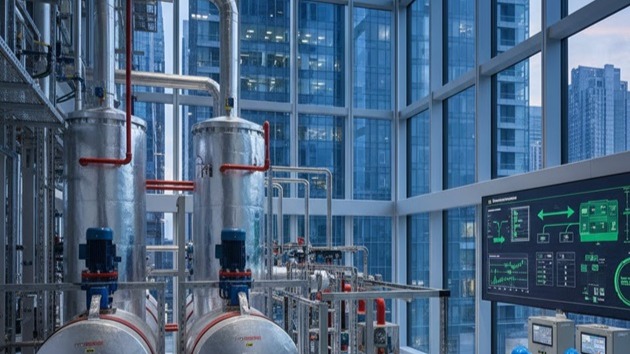
Thermal energy storage efficiency revolutionises building operations through strategic load management, equipment optimisation, and grid interaction. Commercial facilities, educational campuses, healthcare complexes, and industrial operations increasingly adopt energy-efficient TES systems to reduce costs, support sustainability goals, and improve operational reliability. This comprehensive guide explores multiple pathways through which thermal storage enhances building energy performance whilst delivering substantial financial and environmental benefits.
Understanding Thermal Energy Storage Efficiency
What Is Thermal Energy Storage
Thermal energy storage efficiency begins with understanding fundamental storage principles. These systems store heating or cooling capacity as sensible heat in water, latent heat in ice, or phase change materials. Storage decouples energy generation from consumption, enabling equipment operation during optimal periods regardless of when building loads actually occur. This temporal flexibility creates opportunities for cost savings, efficiency improvements, and grid support services.
Chilled water storage maintains temperatures between 4-7°C in insulated tanks, serving cooling loads during peak demand periods. Hot water storage operates at 60-90°C for space heating and domestic hot water applications. Ice storage achieves the highest energy density, storing cooling capacity in frozen water at 0°C. Each storage technology offers distinct advantages regarding capacity density, cost, and application suitability.
Modern energy-efficient TES systems integrate seamlessly with building automation, enabling sophisticated control strategies optimising equipment operation, energy consumption, and demand management. Temperature sensors, flow metres, and energy monitoring systems provide real-time performance data enabling continuous optimisation. National Pumps and Boilers supplies complete thermal storage solutions incorporating controls, pumps, and storage vessels, delivering maximum efficiency.
How TES Decouples Energy Generation from Use
Traditional building systems generate heating or cooling on demand as loads occur. This approach requires equipment capacity matching peak demands whilst accepting poor efficiency during partial load operation. Thermal energy storage efficiency enables equipment operation during optimal periods, storing energy for later use when loads actually materialise. This fundamental shift creates multiple efficiency and cost-saving opportunities.
Chillers and boilers achieve peak efficiency operating at or near full capacity under consistent conditions. Off-peak operation avoids high ambient temperatures, degrading chiller performance whilst electrical rates reach their lowest levels. Storage systems enable equipment operation during these favourable conditions regardless of actual building load timing. Generated energy is stored in tanks, available for discharge during subsequent peak demand periods.
Role in Modern Building Energy Management
Energy-efficient TES systems increasingly serve as central components of comprehensive energy management strategies. These systems enable participation in utility demand response programmes, provide backup capacity during equipment failures, and support integration with renewable energy sources. Advanced control algorithms optimise charging schedules based on weather forecasts, occupancy predictions, and real-time utility pricing signals.
Building operators leverage thermal storage for multiple purposes simultaneously - reducing energy costs, supporting grid stability, qualifying for utility incentives, achieving sustainability certifications, and improving equipment reliability. This versatility justifies storage investments across diverse building types and operational profiles. Systems designed for cooling applications may incorporate heating, storage, sharing tanks and pumps, maximising utilisation throughout the year.
Peak Demand Reduction and Cost Savings
Time-of-Use Rate Optimisation
Understanding utility rate structures reveals significant savings opportunities through strategic load shifting. Time-of-use rates charge substantially more for electricity consumed during peak demand periods, typically weekday afternoons when grid loads reach maximum levels. Off-peak rates during nighttime hours may cost 50-70% less per kilowatt-hour. Thermal energy storage efficiency capitalises on these rate differentials by consuming energy when rates are lowest, storing it, and discharging during expensive peak periods.
Charging during off-peak hours occurs overnight when building cooling loads disappear, and outdoor temperatures drop. Chillers operate at maximum efficiency under these favourable conditions whilst paying minimum electrical rates. Storage tanks accumulate cooling capacity throughout off-peak periods, fully recharging before rates increase. Morning transitions from charging to discharge modes occur automatically based on time-of-day schedules or real-time rate signals.
Discharging during peak demand periods eliminates or dramatically reduces chiller operation when electricity costs peak. Buildings serve cooling loads entirely from storage whilst chillers remain off, avoiding expensive energy purchases during peak rate periods. Facilities achieve 40-60% reductions in cooling-related electricity costs through consistent load shifting. Actual savings depend on rate differentials, building load profiles, and storage system sizing.
Demand Charge Savings: Energy-efficient TES systems reduce peak electrical demand dramatically, lowering demand charges that often represent 30-50% of commercial electricity bills. Utilities charge based on maximum demand measured during any 15 or 30-minute interval throughout billing periods. Single demand peaks create charges assessed across entire months. Thermal storage eliminates or reduces these peaks, generating immediate cost savings.
Calculating potential cost savings requires understanding facility demand patterns and utility rate structures. Buildings with high demand charges and significant peak-to-average load ratios benefit most from thermal storage. Systems sized to eliminate peaks entirely generate maximum savings, though partial peak shaving still delivers substantial benefits. Professional energy analyses quantify expected savings supporting investment decisions.
Real UK examples demonstrate impressive results. A 50,000 square metre office complex reduced peak demand by 600 kW through thermal storage implementation, saving £72,000 annually in demand charges alone. Combined with energy cost reductions, total savings exceeded £140,000 per year against system costs of £480,000 - providing a 3.4-year payback. These economics make thermal storage compelling across diverse commercial applications.
Equipment Downsizing Benefits
Smaller chillers and boilers are needed when thermal storage provides peak capacity, reducing initial construction costs substantially. Traditional designs specify equipment meeting peak demands that occur only hours annually. Thermal energy storage efficiency enables equipment sizing for average rather than peak loads, reducing required capacity 40-60% compared to conventional systems. Grundfos pumps appropriately sized for optimised thermal storage applications deliver excellent efficiency and reliability.
Reduced initial capital investment offsets thermal storage system costs partially or completely in some applications. Smaller chillers, cooling towers, and electrical services generate significant first-cost savings. A 1,000 kW chiller costs approximately £300,000 whilst a 600 kW unit costs £220,000 - saving £80,000 toward storage costs. Combined savings across multiple systems significantly improve thermal storage project economics.
Lower ongoing maintenance costs result from smaller equipment requiring less service attention and experiencing lower total operating hours. Reduced equipment cycling extends component lifespans, decreasing repair frequencies and replacement costs. Maintenance labour requirements scale with equipment size - smaller systems need proportionally less attention. These ongoing savings compound annually, improving lifecycle returns on thermal storage investments.
Operational Efficiency Improvements
Increased Chiller and Boiler Efficiency
Operating equipment at optimal loads maximises efficiency ratings achieved in practice. Chillers deliver peak efficiency at 70-100% of capacity, experiencing sharp efficiency degradation below 50% load. Traditional systems frequently operate at partial loads matching instantaneous building demands. Thermal energy storage efficiency enables equipment operation at optimal loads regardless of immediate building requirements, improving average operating efficiency by 15-25%.
Avoiding part-load inefficiencies eliminates efficiency penalties associated with cycling and low-load operation. Compressors, burners, and fans all suffer reduced efficiency during partial load conditions. Starting and stopping equipment wastes energy whilst accelerating component wear. Thermal storage enables longer continuous operating periods at high loads, avoiding these inefficiency sources whilst reducing equipment stress.
Consistent operating conditions improve performance predictability and reliability. Equipment operates within narrow temperature and flow ranges optimised for efficiency rather than adapting continuously to varying loads. Control systems stabilise operation, reducing cycling and improving precision. Consistent conditions also extend equipment life by eliminating thermal and mechanical stresses from frequent cycling.
Reduced Cycling and Equipment Wear
Extending equipment lifespan represents a significant but often underappreciated benefit of energy-efficient TES systems. Compressors, pumps, and burners experience maximum wear during start-up and shutdown cycles. Mechanical stresses, thermal expansion differentials, and lubrication challenges during cycling accelerate component degradation. Thermal storage dramatically reduces cycling frequency, potentially doubling equipment service lives.
Fewer start-stop cycles translate directly to maintenance cost reductions. Motor bearings, shaft seals, and compressor components last significantly longer with reduced cycling. Extended maintenance intervals decrease labour costs whilst reducing spare parts consumption. Equipment operating histories with 50-70% fewer start cycles demonstrate measurably improved reliability compared to conventional systems. Wilo pumps in thermal storage service typically exceed 20-year service lives when properly maintained.
Integration with Renewable Energy
Solar Thermal Integration
Storing solar heat for later use maximises renewable energy utilisation. Solar thermal collectors generate heat during sunny periods that may not align with building heating demands. Thermal energy storage efficiency enables capture of solar energy whenever available, storing it for use during evening hours or subsequent days. This temporal shifting dramatically improves solar system effectiveness and economic returns.
Maximising renewable energy utilisation reduces fossil fuel dependency and associated emissions. Buildings in moderate climates may meet 40-60% of heating needs through solar thermal systems with adequate storage. Systems combine solar collectors, storage tanks, backup boilers, and controls, coordinating energy flows optimally. Central heating systems integrate thermal storage,e enabling efficient solar energy capture and use.
Reducing fossil fuel dependency advances corporate sustainability goals whilst hedging against future energy price increases. Solar thermal systems with storage provide predictable energy costs for decades, insulating buildings from fuel market volatility. Environmental benefits include eliminating combustion emissions, reducing grid impacts, and progress toward net-zero energy goals increasingly mandated by regulations.
Wind and Grid-Interactive Systems
Charging during periods of excess renewable generation supports grid stability whilst capturing energy at minimal cost. Wind generation peaks during nighttime hours when building loads and electricity prices reach minimums. Energy-efficient TES systems charging during these periods consume excess generation that might otherwise be curtailed, supporting grid operations whilst obtaining energy at rock-bottom prices or even negative rates during surplus conditions.
Supporting grid stability through flexible charging schedules provides value to utilities and grid operators. Thermal storage systems modify charging rates in response to grid conditions, reducing demand during supply constraints whilst increasing consumption during surplus periods. These grid services may generate additional revenue through utility incentive programmes, improving project economics beyond direct energy savings.
Participating in demand response programmes creates additional revenue streams whilst supporting grid reliability. Utilities pay participants to reduce consumption during grid emergencies or supply constraints. Thermal storage enables buildings to provide these services without compromising occupant comfort - stored capacity serves building loads whilst equipment remains off during demand response events. Annual incentive payments may reach several thousand pounds per megawatt of reduction capacity.
Environmental and Sustainability Benefits
Carbon Footprint Reduction
Lower greenhouse gas emissions result from reduced energy consumption and strategic load shifting to cleaner generation periods. Thermal energy storage efficiency reduces total electricity consumption through improved equipment efficiency, whilst shifting remaining consumption to off-peak periods when grid generation mixes typically include more renewable and lower-carbon sources. Combined effects reduce building carbon footprints 25-40% compared to conventional systems.
Shifting to cleaner off-peak generation magnifies environmental benefits beyond simple efficiency improvements. Grid generation during peak demand periods relies heavily on fossil fuel peaking plants with relatively high emission rates. Off-peak periods typically feature higher proportions of nuclear, hydroelectric, and renewable generation with lower emission profiles. Strategic load shifting through thermal storage preferentially consumes cleaner energy, reducing carbon intensity beyond simple consumption reductions.
Supporting decarbonisation goals advances corporate environmental commitments and regulatory compliance. Governments increasingly mandate emission reductions from building sectors. Thermal storage helps organisations meet these requirements cost-effectively whilst improving operational efficiency. Systems qualified for carbon offset programmes may generate tradeable credit,s providing additional financial returns supporting investment justification.
LEED and Green Building Certifications
Energy points for TES implementation accelerate LEED certification whilst improving performance ratings. LEED Energy & Atmosphere credits reward energy efficiency, demand reduction, and renewable energy integration - all areas where thermal storage excels. Systems may contribute points across multiple credit categories, significantly advancing certification progress. Projects targeting LEED Gold or Platinum ratings find thermal storage particularly valuable for achieving required point totals. Expansion vessels supporting thermal storage systems must be properly sized, ed ensuring reliable pressurisation, and contributing to overall system efficiency.
Documentation and verification requirements for green building programmes are well-established for thermal storage applications. Energy modelling software predicts performance supporting design phase submissions. Commissioning processes verify proper installation and operation. Ongoing monitoring demonstrates sustained performance meeting certification maintenance requirements. Professional consultants familiar with certification processes guide thermal storage integration, maximising point contributions.
Design Considerations for Maximum Efficiency
Proper System Sizing
Matching storage capacity to building loads balances system costs against performance and savings. Oversized storage wastes capital and increases heat losses from unnecessarily large tank surfaces. Undersized storage fails to eliminate peak demands, reducing potential savings. Professional engineering analysis determines optimal capacity providing maximum financial returns whilst meeting operational requirements. Commercial circulators must be properly sized to match thermal storage system requirements for optimal performance.
Avoiding oversizing or undersizing requires detailed load analysis and economic optimisation. Engineers model multiple storage capacities, evaluating costs against savings potential. Analyses consider equipment downsizing benefits, demand charge reductions, energy cost savings, and incentive qualifications. Results identify system sizes maximising net present value or achieving target payback periods. Sensitivity analyses evaluate performance across varyingconditionsn,s ensuring robust designs.
Thermal Stratification Optimisation
Tank design for maintaining temperature layers maximises usable capacity from given storage volumes. Thermal stratification preserves distinct hot and cold water regions within tanks through careful hydraulic design. Well-stratified tanks extract essentially all stored energy at design temperatures. Poor stratification reduces effective capacity 25-40% through mixing that degrades supply temperatures. Height-to-diameter ratios, inlet configurations, and flow rates all influence stratification performance significantly.
Inlet and outlet configurations distribute flows horizontally across the tank cross-sections, ns minimising vertical mixing. Properly designed radial diffusers spread flows outward from central inlets, creating horizontal flow patterns that preserve stratification. Multiple inlet levels enable adaptive charging and discharging, ing optimising stratification under varying conditions. Professional design incorporating computational fluid dynamics analysis optimises configurations before construction.
Insulation and Heat Loss Minimisation
High-performance insulation materials reduce standby losses while maintaining thermal energy storage efficiency during storage periods. Closed-cell foam, vacuum panels, or multiple-layer systems achieve excellent thermal resistance in compact thicknesses. Insulation selection balances performance against cost, space requirements, and durability. External tanks require weatherproof insulation resistant to moisture, sunlight, and physical damage throughout decades of service.
Piping insulation requirements extend beyond storage vessels to all distribution piping. Uninsulated or poorly insulated piping wastes substantial energy whilst creating comfort problems and condensation issues. Professional specifications detail insulation types, thicknesses, and installation methods, thus ensuring comprehensive thermal protection. Thermal imaging surveys verify insulation effectiveness, thereby identifying deficiencies requiring correction.
Reducing standby losses protects system efficiency, particularly for partial storage applications, maintaining charged tanks for extended periods. Even well-insulated systems experience measurable thermal losses over time. Minimising these losses through superior insulation and reduced surface areas preserves capacity and savings. Monthly standby losses should not exceed 2-3% of storage capacity for well-designed commercial systems.
Control Strategies for Energy-Efficient TES Systems
Smart Charging and Discharging
Weather-predictive controls anticipate building loads, enabling optimal charging schedules. Forecasts of outdoor temperatures and solar gains inform models predicting cooling or heating requirements for upcoming days. Systems charge storage volumes matching predicted demands, avoiding incomplete charging or excess capacity. These predictive strategies outperform simple time-based schedules, improving efficiency and reliability.
Occupancy-based strategies for storage operations with actual building usage patterns. Learning algorithms track load patterns, ns recognising weekday versus weekend demands, holiday impacts, and seasonal variations. Controls automatically adjust charging schedules and targets,s matching predicted occupancy. These adaptive approaches maintain comfort whilst eliminating waste from oversized charging during reduced demand periods.
Machine learning optimisation continuously improves control algorithms based on performance feedback. Neural networks and other artificial intelligence techniques identify patterns humans might miss while adapting to changing building characteristics over time. Sophisticated implementations achieve 5-15% performance improvements beyond conventional control strategies through these advanced approaches. Cloud-connected systems benefit from aggregate learning across multiple installations,ons accelerating optimisation.
Integration with Building Management Systems
Coordinated control with HVAC systems optimises overall building energy performance beyond isolated thermal storage operation. Integrated strategies adjust setpoints, equipment sequences, and operating modes across all systems, ms responding holistically to conditions and requirements. This coordination achieves synergies impossible with independent system control, improving efficiency whilst enhancing comfort and reliability.
Real-time energy monitoring provides operators with immediate performance visibility,ity enabling rapid response to developing issues. Dashboards display key metrics including energy consumption, demand levels, storage charge state, and operating costs. Alerts notify operators of abnormal conditions before serious problems develop. Historical trending reveals performance changes over time, supporting maintenance planning and continuous improvement efforts.
Automated performance optimisation adjusts operating parameters based on continuous analysis of system data. Algorithms identify efficiency opportunities, adjust setpoints, and modify control sequences automatically. Human operators receive recommendations for longer-term adjustments beyond automated capabilities. This combination of automated and human optimisation maintains peak thermal energy storage efficiency throughout system lifespans.
Thermal energy storage efficiency delivers compelling financial and environmental benefits, transforming building operations across diverse sectors. Energy-efficientt TES systems reduce energy costs, lower peak demands, integrate renewables, improve reliability, and support sustainability goals simultaneously. Proper design, professional installation, and sophisticated controls maximise these benefits, ensuring excellent returns on investments. For expert guidance on implementing thermal storage solutions, delivering maximum efficiency and savings, contact us to discuss specific building requirements and receive professional recommendations tailored to unique operational needs.