

How to Build a Financial Business Case for Pump System Upgrades
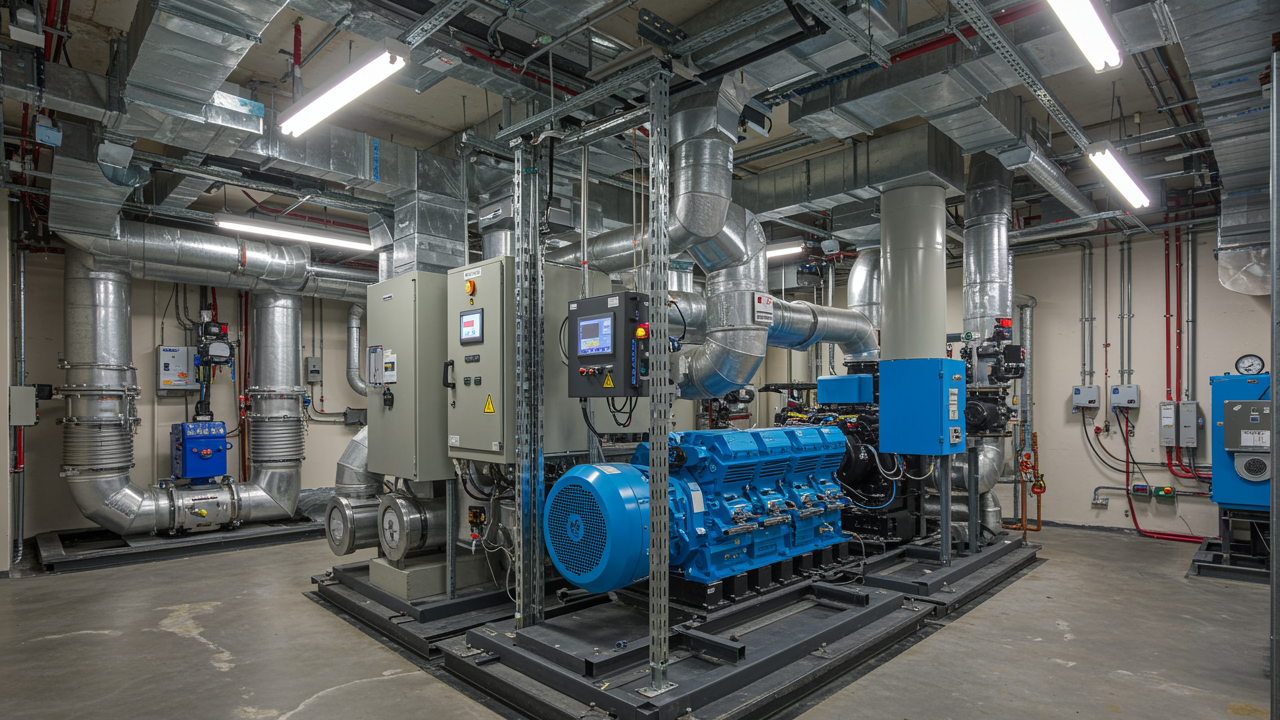
Replacing ageing circulation pumps rarely tops the priority list for facilities managers - until a catastrophic failure forces an emergency decision. Yet the financial argument for proactive pump system upgrades often delivers returns that exceed 30% annually when energy savings, maintenance reductions, and avoided downtime are properly quantified.
The challenge lies not in the technical merits of modern equipment, but in translating operational improvements into boardroom language. Finance directors respond to payback periods, net present value, and risk-adjusted returns - not vague promises of "improved efficiency."
This guide demonstrates how to construct a business case pump investment that secures approval for pump system upgrades by quantifying costs, calculating returns, and presenting data in formats that resonate with decision-makers.
Understanding the True Cost of Existing Systems
Most organisations dramatically underestimate the total cost of operating outdated pump systems because they focus exclusively on visible expenses like electricity bills and reactive repairs. A comprehensive financial analysis must capture five distinct cost categories.
Energy Consumption and Maintenance Expenditure
Energy consumption represents the most obvious expense. A 15-year-old fixed-speed circulator operating 8,760 hours annually at 3kW costs approximately £2,630 in electricity at current commercial rates (assuming £0.30/kWh). Modern variable-speed alternatives performing the same duty typically consume 40-60% less energy, delivering immediate savings of £1,050-£1,580 annually per pump.
Maintenance expenditure accumulates through planned preventive work and unplanned interventions. Ageing pumps require more frequent seal replacements, bearing services, and motor repairs. Facilities typically spend £400-£800 annually maintaining pumps beyond their design life, compared to £150-£300 for equipment under warranty with modern materials and manufacturing tolerances.
Downtime and System Inefficiency
Downtime costs prove harder to quantify but often dwarf direct expenses. When a circulation pump fails in a commercial office building, the impact extends beyond discomfort. Tenant complaints escalate, lease agreements face scrutiny, and emergency callouts command premium rates. A single weekend emergency repair involving contractor callout, parts sourcing, and expedited delivery can exceed £3,000 - before considering lost rental income or contractual penalties.
System inefficiency losses occur when mismatched or oversized pumps force entire heating systems to operate suboptimally. Excessive flow rates increase heat losses, cause control issues, and waste energy throughout the distribution network. These systemic inefficiencies can add 15-25% to overall heating costs yet remain invisible in standard energy audits.
Capital depreciation reflects the declining asset value and increasing replacement risk. Pumps approaching end-of-life carry a higher failure probability each year, creating contingent liabilities that financial planning should acknowledge. The probability of catastrophic failure increases exponentially after 12-15 years of continuous operation.
Calculating Energy Savings From Modern Pump Technology
Energy savings provide the most quantifiable and defensible element of any business case pump investment. The calculation requires baseline data, projected consumption, and realistic operating assumptions.
Establishing Baseline Consumption
Start by establishing current energy consumption through sub-metering or nameplate calculations. For pumps without dedicated monitoring, multiply motor power rating by operating hours and apply a load factor (typically 0.75-0.85 for fixed-speed circulators running continuously). A 4kW pump operating 8,000 hours annually at 80% load consumes 25,600 kWh.
Modern variable-speed pumps with ECM motors and optimised hydraulics reduce consumption through three mechanisms. Motor efficiency improvements deliver 10-15% savings by replacing older induction motors with permanent magnet designs achieving IE4 or IE5 efficiency ratings. Variable-speed operation cuts energy use by 30-50% by matching pump output to actual system demand rather than running continuously at maximum capacity. Hydraulic optimisation through improved impeller design and reduced internal losses contributes another 5-10% improvement.
Projecting Long-Term Savings
The combined effect typically reduces energy consumption by 40-65% depending on system characteristics and control strategies. Using conservative assumptions, the 4kW pump replacement might achieve 50% savings, reducing annual consumption from 25,600 kWh to 12,800 kWh - a reduction of 12,800 kWh worth £3,840 at £0.30/kWh.
Project these savings across the expected equipment lifespan (typically 15-20 years for quality central heating equipment) and apply modest escalation factors for electricity price inflation. At 3% annual energy cost increases, cumulative 15-year savings from a single pump replacement exceed £70,000 in nominal terms.
Quantifying Maintenance and Reliability Benefits
Maintenance cost reductions strengthen business cases but require careful documentation to avoid appearing speculative. Finance teams accept these projections when supported by historical data and manufacturer specifications.
Historical Maintenance Analysis
Compile maintenance records for existing pumps covering the past 3-5 years. Include planned preventive maintenance, reactive repairs, parts costs, labour charges, and contractor callouts. Calculate annual average expenditure per pump, adjusting for any anomalous years. Facilities typically spend £450-£900 annually maintaining pumps beyond their 12-year design life.
Modern pumps under manufacturer warranty require minimal maintenance beyond annual inspections. Ceramic bearings, improved seal designs, and corrosion-resistant materials extend service intervals and reduce failure rates. Budget £200-£350 annually for routine maintenance of new equipment - a reduction of £250-£550 per pump.
Reliability Improvement Value
The reliability improvement delivers additional value through avoided emergency repairs and reduced downtime risk. Calculate the average cost of emergency pump failures including callout fees, expedited parts, overtime labour, and business disruption. A single emergency replacement typically costs £2,500-£4,000 when completed outside normal hours.
Estimate failure probability for existing equipment based on age and condition. Pumps operating 15+ years face 15-25% annual failure probability. New equipment under warranty carries less than 2% annual failure risk. The expected value of avoided failures equals probability multiplied by consequence: (20% - 2%) × £3,000 = £540 annual risk reduction per pump.
Incorporating Lifecycle Cost Analysis
Net present value (NPV) calculations transform annual savings into comparable investment metrics that finance directors understand. This approach accounts for the time value of money and enables direct comparison with alternative capital allocation options.
NPV Calculation Example
The NPV formula discounts future cash flows to present value using the organisation's weighted average cost of capital (WACC) or hurdle rate. Most commercial organisations apply discount rates between 6-10% for building services investments.
Initial investment: £3,500 (equipment, installation, commissioning) Annual energy savings: £3,840 (year 1, escalating 3% annually) Annual maintenance savings: £400 (constant) Annual avoided failure risk: £540 (constant) Equipment lifespan: 15 years Discount rate: 8%
Total annual benefit in year 1 equals £4,780, growing with energy price inflation. Discounting these cash flows over 15 years yields NPV of approximately £38,500, representing substantial value creation from a £3,500 investment.
Simple payback period - calculated by dividing initial investment by first-year savings - delivers 0.73 years (less than 9 months). Internal rate of return (IRR) exceeds 135%, dramatically outperforming most capital projects.
Building the Risk and Opportunity Framework
Financial business cases gain credibility when they acknowledge risks and quantify opportunity costs. Decision-makers appreciate balanced presentations that demonstrate thorough analysis rather than advocacy.
Addressing Downside Risks
Downside risks include technology changes, energy price fluctuations, and operational disruptions during installation. Address each explicitly with mitigation strategies. Technology risk remains minimal for established pump manufacturers like Grundfos and Wilo with decades of market presence. Energy price volatility affects absolute savings but doesn't eliminate the consumption differential between old and new equipment. Installation disruption can be managed through phased replacement during planned maintenance windows.
Opportunity Costs and Regulatory Considerations
Opportunity costs represent the foregone returns from delaying investment. Each year that facilities continue operating inefficient pumps wastes £4,000-£6,000 in avoidable energy and maintenance costs. Over a typical 2-3 year capital planning cycle, deferred pump system upgrades sacrifice £12,000-£18,000 in cumulative savings per unit.
Regulatory and compliance considerations increasingly favour proactive upgrades. Building Regulations Part L sets minimum efficiency standards for building services, and future revisions will likely tighten requirements. Early adoption of high-efficiency equipment future-proofs facilities against regulatory changes and demonstrates environmental commitment.
Structuring the Financial Proposal
Presentation format significantly influences approval probability. Finance directors scan executive summaries before examining detailed calculations, so front-load key metrics and conclusions.
Executive Summary Format
The executive summary should state the investment request, simple payback period, NPV, and primary benefits in the opening paragraph. Example: "This proposal requests £28,000 to replace eight circulation pumps, delivering 0.8-year payback, £310,000 15-year NPV, and eliminating high-risk equipment approaching end-of-life."
Structure the detailed analysis in discrete sections: current state assessment, proposed solution, financial analysis, risk evaluation, and implementation plan. Use tables and charts to present numerical data clearly. Include sensitivity analysis showing how results vary with different assumptions about energy prices, discount rates, and equipment lifespan.
Support financial projections with technical specifications from manufacturers, energy consumption data from similar installations, and maintenance cost benchmarks from industry sources. National Pumps and Boilers provides technical documentation and performance data that strengthens business case pump investment credibility.
Presenting Non-Financial Strategic Benefits
Quantified financial returns provide the foundation, but strategic benefits often tip marginal decisions toward approval. Frame these advantages in business terms rather than technical language.
Tenant Satisfaction and Carbon Reduction
Tenant satisfaction and retention improve when building services operate reliably without temperature complaints or service disruptions. In competitive commercial property markets, superior environmental control differentiates buildings and supports premium rental rates. Quantify this through reduced tenant complaints, improved lease renewals, or benchmarking against comparable properties.
Carbon reduction and ESG credentials matter increasingly to organisations with sustainability commitments. Modern pump systems reduce carbon emissions by 3-5 tonnes CO₂e annually per unit. Multiply across multiple pumps to demonstrate a meaningful contribution toward corporate net-zero targets. Some organisations can monetise these reductions through carbon accounting frameworks or sustainability-linked financing arrangements.
Operational Resilience
Operational resilience strengthens when critical building services utilise modern equipment with predictable maintenance requirements and readily available spare parts. Ageing pumps face parts obsolescence and extended lead times for specialist components. New equipment from established manufacturers like Lowara ensures parts availability and technical support for decades.
Addressing Common Objections and Concerns
Anticipate and preemptively address the objections that typically derail capital requests for building services upgrades.
"The Existing Pumps Still Work"
"The existing pumps still work" represents the most common pushback. Counter by quantifying the opportunity cost of continuing with inefficient equipment and highlighting the increasing failure risk. Present data showing that operational capability doesn't equal cost-effectiveness - functioning equipment can still waste thousands of pounds annually.
"We Should Wait Until Failure"
"We should wait until failure" ignores the premium costs of emergency replacements and the business disruption from unplanned downtime. Emergency pump replacements cost 40-60% more than planned upgrades due to expedited procurement, overtime labour, and rushed decision-making. Planned replacements during maintenance windows avoid tenant impact and allow proper system optimisation.
Budget and Payback Concerns
"Capital budget constraints" require creative solutions. Explore phased implementation, replacing the highest-consumption or highest-risk units first. Some organisations use operating budget savings from early replacements to fund subsequent phases. Energy performance contracts or equipment financing can eliminate upfront capital requirements entirely.
"Payback period too long" rarely applies to pump system upgrades, given typical sub-12-month payback periods, but may arise in organisations with very short investment horizons. Emphasise that few capital projects deliver comparable returns, and that delaying replacement wastes money every month.
Implementation Planning and Success Metrics
Business cases strengthen when they include clear implementation roadmaps and measurable success criteria. This demonstrates project readiness and facilitates post-implementation validation.
Project Timeline and Success Metrics
Outline the procurement process, installation timeline, commissioning requirements, and stakeholder communication plan. Specify any building access requirements, utility shutdowns, or tenant notifications needed. Identify the project team, including internal facilities staff, contractors, and commissioning specialists.
Define success metrics aligned with business case pump investment assumptions. Commit to measuring actual energy consumption before and after replacement, tracking maintenance costs, and monitoring system performance. This accountability builds credibility for future capital requests and validates the business case methodology.
Plan for post-installation optimisation, including control system adjustments, system balancing, and operator training. Modern variable-speed pumps deliver maximum savings only when properly commissioned and integrated with building management systems. Budget 5-10% of equipment cost for commissioning and optimisation services.
Conclusion
Financial business cases for pump system upgrades succeed when they translate technical improvements into quantified business value using metrics that resonate with decision-makers. Energy savings, maintenance reductions, and avoided downtime typically deliver sub-12-month payback periods and NPV exceeding ten times the initial investment.
The key lies in thorough documentation of current costs, conservative projection of future savings, and transparent presentation of assumptions and risks. Supporting technical data from manufacturers and industry benchmarks strengthens credibility, while sensitivity analysis demonstrates robust returns across various scenarios.
Organisations that master this business case pump investment methodology unlock substantial value from building services upgrades that might otherwise languish in capital planning queues. The financial returns justify investment even in budget-constrained environments, whilst strategic benefits around reliability, sustainability, and operational resilience provide additional decision-making support.
For technical guidance on pump selection, system sizing, or performance specifications that strengthen your business case, contact us for expert advice tailored to your specific application.