

How to Calculate Cold Water Demand for Multi-Storey Commercial Buildings
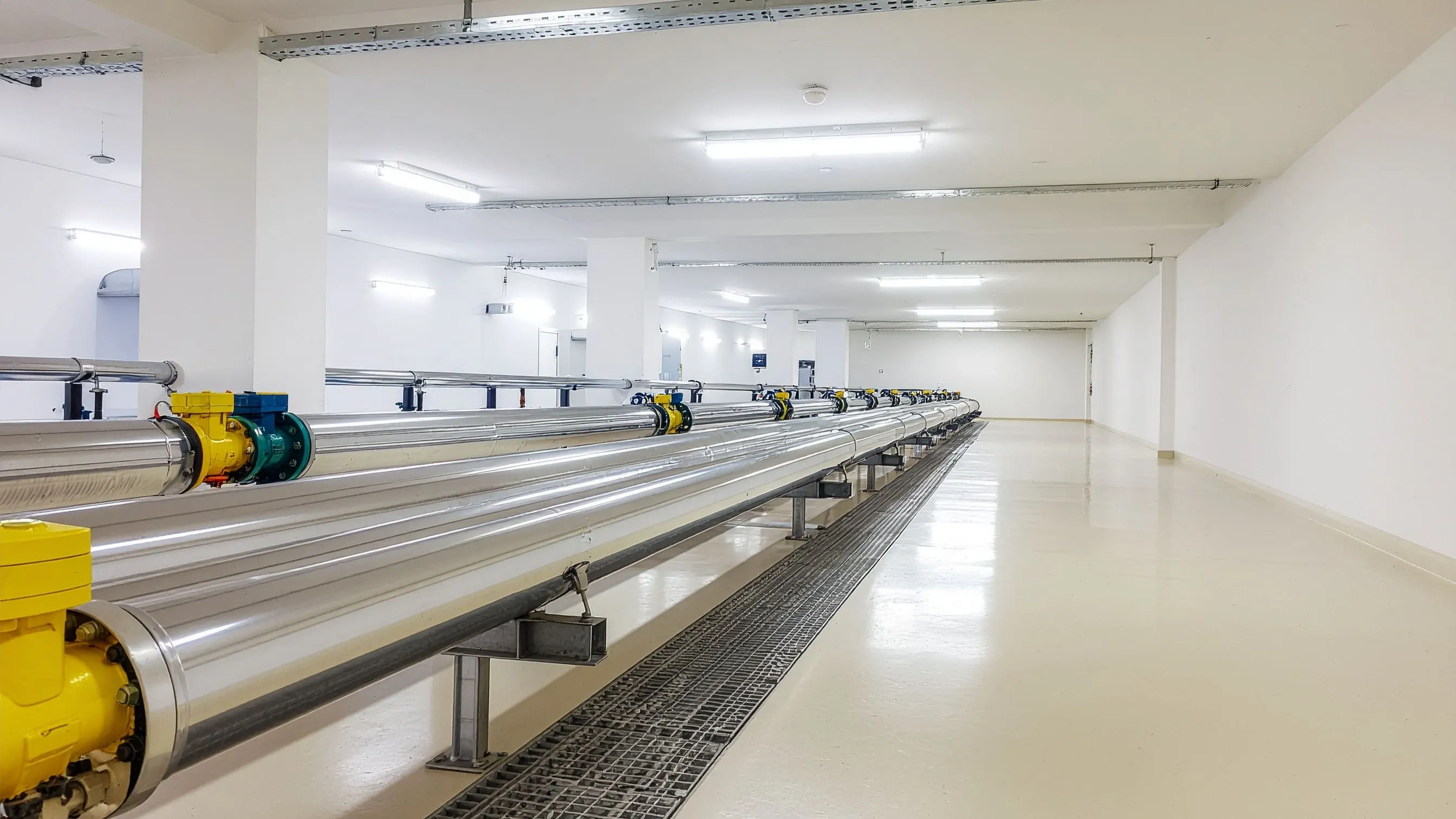
Undersized cold water systems cause disruption that ripples through entire commercial buildings - from inadequate pressure on upper floors to booster pumps running continuously under strain. A 12-storey office development in Manchester required a complete system redesign after commissioning revealed insufficient supply to floors 8-12, costing the developer £180,000 in remedial works and delayed occupancy. The root cause traced back to incorrect demand calculations that failed to account for simultaneous usage patterns.
Accurate cold water demand calculation for multi-storey buildings requires understanding simultaneous usage, applying British Standards correctly, and accounting for pressure losses across vertical distribution. This technical process determines pump sizing, break tank capacity, and pipe diameters that form the backbone of reliable water supply systems. Getting the cold water demand multi-storey building calculation right at design stage is far less costly than remedial works after commissioning.
Understanding Simultaneous Demand in Commercial Buildings
The fundamental principle behind cold water demand calculations centres on diversity - the statistical reality that not all fixtures operate simultaneously. A 10-storey office building might contain 200 WC cisterns, but peak demand never reaches 200 cisterns filling at once. Calculating for total connected load would result in grossly oversized pumps, pipework, and storage tanks, whilst underestimating diversity leads to the pressure failures and supply interruptions that derail projects.
Loading units provide the standardised method for quantifying fixture demand. Each fixture type receives a loading unit value based on flow rate and frequency of use. A WC cistern typically rates 2 loading units, a washbasin 1.5 units, and a shower 3 units. These values account for both the water volume required and typical usage duration.
British Standards recognise that adding fixtures does not produce linear demand increases. The first 10 WC cisterns in a system create higher proportional demand than cisterns 50-60, because the probability of simultaneous operation decreases as fixture count rises. This diversity effect becomes more pronounced in larger installations and is central to achieving accurate simultaneous demand calculation for commercial multi-storey water supply systems.
BS 8558:2015 - The Primary Calculation Standard
BS 8558:2015 "Guide for the design, installation, testing and maintenance of services supplying water for domestic use within buildings and their curtilages" provides the authoritative framework for cold water demand calculations in the UK. This standard replaced earlier guidance and introduced refined loading unit values based on contemporary fixture performance.
Standard loading unit values under BS 8558:2015 are as follows:
- WC cistern (9 litres): 2 units
- Washbasin: 1.5 units
- Shower (mixer valve): 3 units
- Urinal (per bowl): 0.3 units
- Kitchen sink: 3 units
- Washing machine: 3 units
For multi-storey commercial buildings, calculations proceed floor-by-floor. A typical office floor containing 8 WC cisterns, 8 washbasins, and 2 kitchen sinks generates: (8 × 2) + (8 × 1.5) + (2 × 3) = 34 loading units per floor.
BS 8558 provides conversion tables translating total loading units into design flow rates. These tables incorporate diversity factors automatically. For example, 340 loading units (10 identical floors) converts to approximately 1.9 litres/second, not the 3.4 l/s that simple multiplication would suggest. This is the BS 8558 calculation method in action - accounting for realistic usage through diversity, not theoretical maximum load.
Central heating risers and plant rooms frequently share building cores with cold water distribution systems. Coordinating both services at design stage prevents clashes and optimises riser space - exploring the central heating equipment range helps specify compatible components across both services from the outset.
The CIBSE Method for Demand Calculation
The Chartered Institution of Building Services Engineers publishes CIBSE Guide G, which offers an alternative calculation methodology particularly suited to complex mixed-use developments. Where BS 8558 uses loading units, CIBSE Guide G employs probability-based calculations considering fixture type, occupancy patterns, and usage frequency. The primary variables include:
- Number of occupants per floor
- Occupancy type (office, residential, retail)
- Peak occupancy periods
- Fixture usage frequencies per occupant
For a 10-storey office building with 50 occupants per floor (500 total), CIBSE methodology calculates probable simultaneous demand based on occupant behaviour patterns. Office environments typically show peak demand during mid-morning and mid-afternoon breaks, with usage frequencies of approximately 0.03 uses per person per hour for WCs and 0.05 for washbasins.
This approach proves particularly valuable for mixed-use developments where a single building contains offices, retail units, and residential apartments - each with distinct usage patterns. A ground-floor restaurant creates different demand profiles than eighth-floor offices, and CIBSE calculations capture these variations more precisely than loading unit methods alone.
Key Variables Affecting Multi-Storey Calculations
Building height introduces pressure-related complications absent from single-storey installations. Every metre of vertical rise requires approximately 0.1 bar pressure to overcome gravitational head. A 30-metre tall building needs 3 bar just to deliver water to the roof, before accounting for dynamic losses or fixture operating pressures.
Most fixtures require minimum operating pressures: WC cisterns need 1.0 bar, mixer taps 1.5 bar, and showers 1.0-3.0 bar depending on type. The highest floor must receive adequate cold water pressure calculation results during peak demand periods, which typically means providing 2.5-3.0 bar at the topmost fixtures. Failing to account for this when determining booster pump sizing leads directly to the kind of pressure failures that require expensive remedial works.
Storage capacity calculations depend on supply reliability and peak demand duration. Buildings with reliable mains supply might use break tanks sized for 30 minutes peak demand, whilst those in areas with supply interruptions require 24-hour storage. A building with 2.0 l/s peak demand needs a minimum break tank capacity of 3,600 litres for 30-minute storage (2.0 l/s × 60 seconds × 30 minutes).
DHW systems in commercial buildings operate in parallel with cold water supply and share similar booster infrastructure. Reviewing the DHW pumps range at the equipment selection stage helps ensure cold and hot water circuits are matched for compatible performance throughout the building.
Step-by-Step Calculation Process
The following worked example covers a 10-storey commercial office building.
Step 1: Fixture Survey and Loading Unit Assignment
Per floor: 8 WCs, 8 washbasins, 1 kitchen sink, 1 cleaner's sink. Ground floor additionally: 4 urinal bowls, 2 kitchen sinks.
Total building: 80 WCs, 80 washbasins, 12 kitchen sinks, 10 cleaner's sinks, 4 urinals.
- WCs: 80 × 2 = 160 units
- Washbasins: 80 × 1.5 = 120 units
- Kitchen sinks: 12 × 3 = 36 units
- Cleaner's sinks: 10 × 3 = 30 units
- Urinals: 4 × 0.3 = 1.2 units
- Total: 347.2 loading units
Step 2: Convert to Design Flow Rate
Using BS 8558 conversion tables, 347 loading units translates to approximately 1.95 litres/second design flow rate. This represents peak simultaneous demand with diversity already factored.
Step 3: Calculate Pressure Requirements
- Static head: 30m × 0.1 bar/m = 3.0 bar
- Friction losses in risers: approximately 0.5 bar
- Minimum fixture pressure: 2.0 bar
- Total pressure required: 5.5 bar
Step 4: Size Break Tank
For 30-minute storage at peak demand: 1.95 l/s × 60 × 30 = 3,510 litres minimum capacity. Specify a 4,000-litre sectional tank allowing for safety margin and future expansion.
Step 5: Determine Pump Duty
Flow rate: 1.95 l/s (7.0 m³/h). Head: 55 metres (5.5 bar). This duty point feeds directly into booster pump sizing, where manufacturer performance curves confirm suitability.
Grundfos booster sets are a well-proven choice for multi-storey commercial applications, with inverter-driven pumps maintaining constant pressure despite varying demand - the full range is available through National Pumps and Boilers for duty-matched selection against calculated specifications.
Pressure and Head Calculations
Static pressure represents the force required to lift water vertically against gravity. Dynamic pressure accounts for friction losses as water flows through pipes, fittings, and valves. Total system pressure equals static head plus dynamic losses plus minimum fixture operating pressure - this combined cold water pressure calculation determines the final pump duty point.
Dynamic losses depend on pipe diameter, flow velocity, and pipe material. For a 100mm rising main carrying 1.95 l/s over 30 metres, friction losses approximate 0.3-0.5 bar using copper pipe. Reducing pipe diameter to 80mm would increase losses to 0.8-1.0 bar, demonstrating why proper pipe sizing is as critical as accurate demand calculations.
Pressure losses occur at every fitting, valve, and direction change. A 90-degree elbow creates equivalent resistance to approximately 1 metre of straight pipe. Buildings with complex pipework layouts accumulate significant fitting losses - a riser with 10 floors, each containing isolation valves and tees, might add 15-20 equivalent metres of pipe length to total friction calculations.
Wilo variable speed booster sets are designed specifically for multi-storey applications where pressure consistency across all floors is non-negotiable - the range covers duty points from small commercial installations through to large-scale developments requiring high-head performance.
For installations where twin-pump redundancy is a specification requirement, Lowara multi-pump booster sets offer duty/standby configurations with integrated controls, balancing energy efficiency with reliability for critical commercial water supply systems.
National Pumps and Boilers supplies pressure-boosting equipment specifically designed for multi-storey applications, with controls that maintain constant pressure despite varying demand and height-related challenges - making it a practical first point of contact for both equipment supply and technical specification support.
The pump valves integrated into booster sets require correct specification to prevent backflow, enable isolation for maintenance, and protect against pressure surges during pump operation.
Common Calculation Errors
Underestimating simultaneous demand creates the most frequent calculation error. Designers sometimes apply excessive diversity, assuming unrealistically low coincidence factors. A building where occupants arrive simultaneously - offices at 9:00 AM, for instance - experiences genuine peaks that calculations must accommodate. BS 8558 diversity factors already account for typical patterns; applying additional reductions often proves counterproductive.
Ignoring pressure losses in horizontal distribution pipework represents another common oversight. Calculations often focus on vertical risers whilst neglecting the 30-metre horizontal run from riser to furthest fixture. These horizontal sections create measurable pressure drops, particularly at peak flow rates, and must be included in any complete cold water demand multi-storey building assessment.
Inadequate storage provision causes problems in buildings where mains supply pressure fluctuates or where incoming main diameter limits fill rates. Break tanks must refill during off-peak periods to maintain capacity for next-day peaks. A tank receiving only 1.0 l/s from the incoming main but supplying 2.0 l/s at peak gradually depletes, eventually causing supply failures.
Temperature expansion in stored cold water requires consideration. A 4,000-litre tank experiences approximately 40 litres expansion between winter and summer temperatures. Without proper expansion accommodation or overflow provision, this expansion creates pressure surges or tank overflow.
Armstrong pump systems include integrated pressure management controls that compensate for temperature-related pressure variations and demand fluctuations - worth specifying on projects where storage tanks and booster sets operate within the same plant room arrangement.
Practical Example: 12-Storey Office Building
Consider a 12-storey office building, 36 metres tall, with 60 occupants per floor:
- Floors 1-11: 10 WCs, 10 washbasins, 2 kitchen sinks per floor
- Floor 12 (reduced occupancy): 5 WCs, 5 washbasins, 1 kitchen sink
- Ground floor plant room: 1 hose union tap
Loading Unit Totals:
- WCs: (11 × 10) + 5 = 115 units × 2 = 230 units
- Washbasins: (11 × 10) + 5 = 115 units × 1.5 = 172.5 units
- Kitchen sinks: (11 × 2) + 1 = 23 units × 3 = 69 units
- Hose tap: 1 × 3 = 3 units
- Total: 474.5 loading units
Design Flow Rate: BS 8558 conversion - 475 loading units = approximately 2.4 litres/second.
Pressure Requirements:
- Static head: 36m = 3.6 bar
- Riser friction losses: 0.6 bar
- Horizontal distribution losses: 0.4 bar
- Minimum fixture pressure: 2.0 bar
- Total: 6.6 bar (66m head)
Storage Sizing: For 45-minute peak storage: 2.4 l/s × 60 × 45 = 6,480 litres. Specify 7,000-litre capacity using sectional GRP tanks.
Pump Selection: Duty point: 2.4 l/s (8.6 m³/h) at 66m head. Recommendation: triple pump booster set with 2 duty + 1 standby configuration.
DAB manufactures packaged booster sets matched to demanding duty points like these, complete with variable speed drives, pressure transducers, and control panels pre-programmed for multi-storey applications - a ready-specified solution that reduces both commissioning time and installation complexity.
Verification and Professional Standards
Building Regulations Approved Document G mandates adequate cold water supply to all fixtures, with sufficient flow rates and pressures for intended use. Whilst the regulations do not specify calculation methodologies, demonstrating compliance requires documented calculations following recognised standards like BS 8558. The multi-storey water supply system must be verifiable on paper before a single pipe is installed.
Complex installations benefit from hydraulic modelling software that simulates system performance under various demand scenarios. These programmes account for simultaneous demands across multiple floors, pressure variations during pump start-up, and transient conditions that manual calculations might miss.
Third-party verification by Building Services Engineers provides quality assurance for critical installations. Professional review catches calculation errors, identifies potential system weaknesses, and ensures specifications meet both current demands and reasonable future expansion. The worked examples in this guide follow the same structured approach that professional reviews assess.
Conclusion
Accurate cold water demand calculations form the foundation of reliable multi-storey water supply systems. The systematic approach outlined - from fixture surveys through loading unit assignment, flow rate conversion, pressure calculations, and equipment sizing - provides the technical framework for successful installations.
The 347 loading units in the 10-storey example, converting to 1.95 l/s with 5.5 bar pressure requirements, demonstrates how methodical calculations translate building requirements into specific equipment specifications. These calculations prevent both undersized systems that fail during peak demand and oversized installations that waste capital and energy. Understanding the cold water demand multi-storey building process from first principles is what separates reliable systems from costly remedial projects.
Multi-storey buildings present unique challenges: height-related pressure demands, simultaneous usage across multiple floors, and the need for reliable supply despite varying occupancy patterns. British Standards provide proven methodologies that account for these factors through loading units, diversity factors, and cold water pressure calculation methods refined over decades of industry experience.
For technical support with cold water system calculations, booster pump selection, or storage tank sizing for multi-storey applications, Contact Us to discuss specific project requirements and ensure installations meet both performance expectations and regulatory compliance.