

How to Choose the Correct Strainer Mesh Size for Your Application
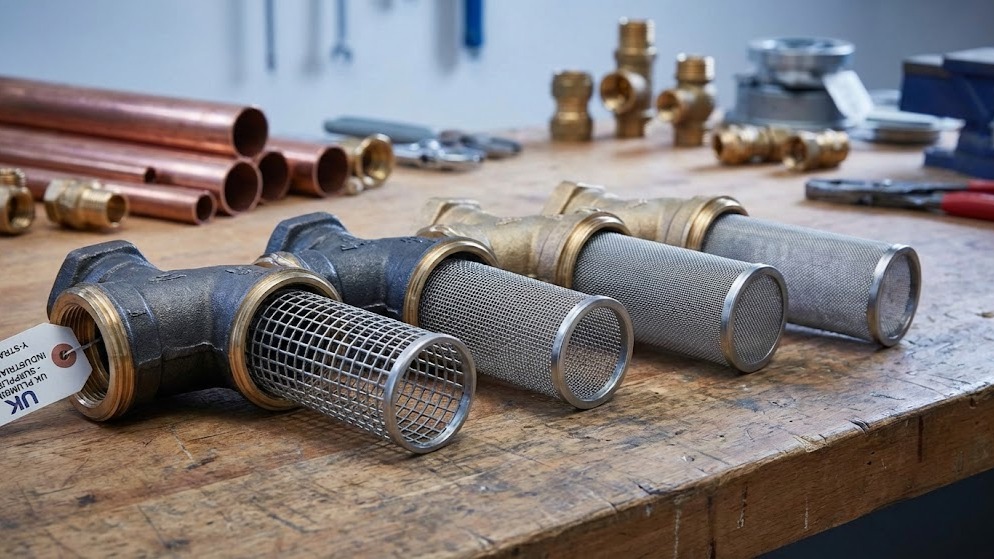
Selecting the wrong strainer mesh size can cost heating engineers thousands in pump failures, system blockages, and emergency callouts. A strainer that is too coarse allows debris through to damage pump impellers and seals, whilst one that is too fine restricts flow and creates excessive pressure drop across the system.
The mesh size determines which particles pass through and which get trapped, a decision that directly impacts pump longevity, system efficiency, and maintenance frequency. Getting proper strainer mesh size selection right requires understanding particle sizes in different applications, flow rate requirements, and the relationship between mesh aperture and pressure loss. Screen perforation sizing affects both protection effectiveness and system hydraulics.
Understanding Strainer Mesh Specifications
Strainer mesh size refers to the number of openings per linear inch of screen material. A 40-mesh strainer contains 40 openings per inch, creating apertures of approximately 0.42mm. As the mesh number increases, the opening size decreases: an 80-mesh strainer has 80 openings per inch with apertures around 0.177mm.
British Standard BS 410 defines test sieve specifications used across UK heating and plumbing applications. These standards ensure consistency when specifying pump valves and filtration equipment for commercial and domestic installations.
The mesh aperture size determines the smallest particle that can pass through the strainer. Particles larger than the aperture get trapped in the basket or screen, protecting downstream equipment from damage. However, trapped debris creates resistance to flow, increasing pressure drop across the strainer and potentially reducing pump performance. Proper strainer mesh size selection balances these competing factors.
Common Mesh Sizes and Their Applications:
- 8-20 mesh (2.38mm - 0.85mm): Coarse filtration for large debris in open systems, cooling towers, and industrial applications
- 20-40 mesh (0.85mm - 0.42mm): Standard protection for central heating equipment and commercial boiler systems
- 40-80 mesh (0.42mm - 0.177mm): Fine filtration for sensitive pumps, heat exchangers, and closed-loop systems
- 80-200 mesh (0.177mm - 0.075mm): Very fine filtration for precision equipment and high-purity applications
Identifying Contaminants in Your System
Different heating and plumbing systems contain different types and sizes of debris. Identifying what needs filtering determines the appropriate screen perforation sizing for effective protection without excessive pressure loss.
New Installation Debris includes welding slag, pipe thread cuttings, flux residue, and fabrication debris typically ranging from 0.5mm to 5mm. These larger particles require coarse to medium mesh strainers (8-40 mesh) during commissioning, with potential upgrade to finer mesh after initial flushing.
Operational System Debris accumulates during normal operation and includes corrosion products (iron oxide, magnetite), scale deposits from hard water, biological growth in open systems, and degraded system inhibitor particles. These contaminants typically measure 0.1mm to 1mm, requiring 40-80 mesh filtration for adequate protection.
Closed-Loop Central Heating Systems develop magnetite particles from internal corrosion, typically 0.05mm to 0.5mm in size. Systems without proper inhibitor treatment generate significantly more particulate matter, potentially requiring 80-mesh or finer strainers to protect Grundfos pumps and other circulation equipment.
Open Systems and Cooling Applications face additional contamination from airborne dust, biological organisms, and mineral deposits. These systems benefit from 20-40 mesh strainers that balance protection with manageable maintenance intervals.
Water quality significantly affects debris generation. Hard water areas experience more scale formation, requiring finer mesh strainers or water treatment equipment. Systems with poor inhibitor maintenance develop corrosion products faster, necessitating more frequent strainer cleaning or finer mesh specifications.
Calculating Pressure Drop Across Strainer Mesh
Pressure drop increases as mesh size becomes finer because smaller apertures create more resistance to flow. This relationship between filtration effectiveness and system pressure must be carefully balanced to maintain adequate pump performance. Screen perforation sizing directly influences hydraulic losses.
Clean strainer pressure drop depends on mesh aperture size, flow velocity through the strainer, and the total open area of the straining element. A clean 40-mesh strainer typically creates 0.05-0.15 bar pressure drop at normal flow rates, whilst an 80-mesh strainer under the same conditions might generate 0.15-0.35 bar pressure loss.
As debris accumulates on the strainer mesh, pressure drop increases progressively. A partially blocked strainer can create 0.5-1.0 bar additional pressure loss, forcing the pump to work harder and potentially reducing flow throughout the system. This explains why Wilo pumps and other circulation equipment may struggle to maintain design flow rates when strainers are not cleaned regularly.
Pressure Drop Calculation Factors:
- Flow velocity: Higher velocities through the mesh create exponentially greater pressure loss
- Mesh aperture size: Finer mesh creates more resistance per unit area
- Open area percentage: More open area reduces velocity and pressure drop
- Debris loading: Accumulated particles progressively restrict flow
Strainer sizing should account for acceptable pressure drop across the device. Building Services Engineers typically design for maximum 0.2-0.3 bar clean pressure drop, allowing headroom for debris accumulation before cleaning becomes critical.
Oversized strainers with larger body diameters and greater mesh surface area reduce flow velocity through the screen, minimising pressure drop whilst maintaining fine filtration. A 50mm strainer body with 80-mesh screen provides finer filtration than a 25mm body with 40-mesh at similar pressure drop, because the larger mesh area reduces velocity through each aperture.
Matching Mesh Size to Pump Requirements
Different pump types tolerate different particle sizes before experiencing damage or performance degradation. Matching mesh specification to pump clearances ensures adequate protection without unnecessary pressure loss.
Centrifugal Circulation Pumps used in heating systems typically tolerate particles up to 0.3-0.5mm without immediate damage, though smaller particles (0.1-0.3mm) cause gradual wear to impeller surfaces and mechanical seals. A 40-60 mesh strainer (0.42mm - 0.25mm aperture) provides appropriate protection for DHW pumps and standard central heating circulators.
Close-Coupled Pumps with minimal clearances between impeller and volute require finer filtration. These compact designs suffer damage from particles as small as 0.2mm, necessitating 60-80 mesh strainers for reliable operation.
Commercial and Industrial Pumps handling larger volumes often feature more robust construction with greater clearances, allowing coarser 20-40 mesh strainers. However, expensive Lowara pumps in commercial applications still benefit from finer filtration to maximise service life and minimise maintenance costs.
Pump Manufacturer Recommendations should guide strainer specification. Grundfos typically recommends maximum particle size of 0.4mm for standard circulators, whilst Wilo specifies 0.5mm for many commercial models. These recommendations translate to minimum 40-mesh strainers for Grundfos equipment and 30-40 mesh for specified Wilo applications.
Seal Protection represents a critical consideration. Mechanical seals fail prematurely when abrasive particles enter the seal faces, causing rapid wear and leakage. Fine particles (0.1-0.3mm) prove most damaging because they penetrate seal clearances whilst remaining abrasive enough to erode sealing surfaces. Systems with expensive seal assemblies justify finer 60-80 mesh strainers despite higher pressure drop and more frequent cleaning.
Strainer Mesh Selection for Different Applications
Domestic Central Heating Systems typically specify 40-mesh (0.42mm) strainers as standard protection for circulation pumps and system components. This aperture size captures the majority of magnetite particles and debris whilst maintaining acceptable pressure drop in residential installations.
Systems with magnetic filters may use coarser 30-mesh strainers because the magnetic filter captures fine ferrous particles before they reach the strainer. This approach reduces strainer pressure drop whilst maintaining excellent pump protection through the magnetic filtration stage.
Commercial Heating Systems with higher flow rates and larger pipe diameters benefit from oversized strainers with 40-60 mesh screens. The larger strainer body provides greater mesh surface area, reducing velocity through the screen and minimising pressure drop despite fine filtration.
Boiler Feed Applications require fine 60-80 mesh strainers to protect boiler heat exchangers from scale deposits and debris. Blocked boiler waterways reduce efficiency and can cause dangerous overheating, justifying the additional pressure drop from fine mesh filtration.
Open Cooling Systems face higher contamination levels from airborne debris, biological growth, and mineral deposits. These applications typically use 20-30 mesh strainers with frequent cleaning intervals rather than very fine mesh that would block rapidly.
Pressurisation and Filling Systems including Mikrofill systems benefit from 60-100 mesh strainers to prevent debris from entering the system during filling operations. Fine filtration at the point of water entry prevents contamination that would circulate throughout the system.
Heat Exchanger Protection requires fine 60-80 mesh strainers to prevent fouling of narrow waterways. Plate heat exchangers prove particularly sensitive to debris because their narrow channels (typically 3-5mm) block easily. A 0.25mm mesh aperture (60-mesh) provides adequate protection for most plate heat exchanger applications.
Temporary vs Permanent Strainer Mesh Specifications
System commissioning often requires different filtration than ongoing operation. This two-stage approach optimises protection during debris-heavy initial operation whilst minimising pressure drop during normal service.
Commissioning Phase Filtration uses coarse 20-30 mesh strainers to capture large fabrication debris without excessive pressure drop during initial filling and flushing. These coarse strainers tolerate high debris loading whilst protecting pumps from damaging large particles.
Power flushing during commissioning removes the majority of loose debris, preparing the system for finer operational filtration. National Pumps and Boilers supplies both temporary commissioning strainers and permanent operational units to support proper system preparation.
Operational Phase Filtration upgrades to finer 40-80 mesh strainers after commissioning flush completion. These finer meshes capture corrosion products and small debris generated during normal operation, providing long-term pump and component protection.
Some installations use dual strainers with isolation valves, allowing strainer cleaning without system shutdown. This arrangement proves particularly valuable in commercial applications where continuous operation is essential.
Y-Strainer Basket Exchange provides another approach to staged filtration. Installing a coarse basket during commissioning, then replacing it with a fine mesh basket after initial flushing, optimises protection throughout system lifecycle without requiring separate strainer bodies. This screen perforation sizing strategy maximises flexibility.
Maintenance Intervals and Mesh Size Relationship
Finer mesh strainers require more frequent cleaning because smaller apertures block faster under equivalent debris loading. Balancing filtration effectiveness with practical maintenance intervals ensures reliable system operation without excessive service requirements.
Pressure Differential Monitoring provides the most reliable indication of strainer condition. Installing pressure gauges before and after the strainer allows monitoring of pressure drop increase as debris accumulates. A pressure differential increase of 0.3-0.5 bar typically indicates cleaning is required.
Visual Inspection Intervals depend on system type and mesh size. New installations may require weekly inspection during the first month, extending to monthly or quarterly intervals once debris generation stabilises. Fine mesh strainers (60-80 mesh) typically need more frequent inspection than coarse mesh (20-40 mesh) in equivalent applications.
Seasonal Variations affect debris generation in some systems. Heating systems generate more corrosion products during the heating season when water temperatures and flow rates increase. Planning strainer maintenance before and during peak operational periods prevents mid-season blockages.
Magnetic Filtration Integration significantly extends strainer cleaning intervals in ferrous systems. Magnetic filters capture iron oxide particles before they reach the strainer, allowing the strainer to focus on non-ferrous debris. This combination permits fine mesh strainer specification without excessive maintenance frequency.
Strainer Mesh Material Selection
Mesh material affects durability, corrosion resistance, and compatibility with system fluids and inhibitors. Stainless steel mesh dominates heating and plumbing applications because of excellent corrosion resistance and mechanical strength.
304 Stainless Steel provides adequate corrosion resistance for most closed-loop heating systems with proper inhibitor treatment. This material offers good strength and durability at moderate cost, making it standard for domestic and light commercial applications.
316 Stainless Steel delivers superior corrosion resistance in aggressive environments including coastal locations, swimming pool heating, and systems with poor water quality. The additional cost proves justified in applications where premature mesh failure would cause expensive pump damage or system downtime.
Brass and Bronze Mesh appears in some older installations but has largely been superseded by stainless steel. These materials offer good corrosion resistance in potable water applications but lack the strength and durability of stainless steel mesh.
Perforated Plate Strainers use drilled stainless steel plate instead of woven mesh. These robust strainers suit applications with large debris and high flow rates, though they provide coarser filtration than equivalent mesh strainers. Perforated plate with 2-5mm holes provides adequate protection for robust industrial pumps whilst tolerating high debris loading.
British Standards and Regulatory Considerations
Building Regulations Part L requires heating systems to include adequate filtration to protect efficiency-critical components. Whilst specific strainer mesh sizes are not mandated, the regulations emphasise maintaining system efficiency throughout operational life, an objective that requires effective filtration.
BS 7593 covers the treatment of water in domestic hot water central heating systems, recommending debris filtration as part of comprehensive system protection. The standard emphasises that filtration should be appropriate to the pump and component tolerances in the specific system.
Water Supply (Water Fittings) Regulations apply to strainers in potable water systems, requiring materials that do not contaminate drinking water. Stainless steel mesh meets these requirements, whilst some brass materials may require specific approval.
Manufacturer Warranty Requirements often specify minimum filtration standards. Grundfos pumps and other premium equipment may require documented evidence of appropriate strainer installation to maintain warranty coverage. Heating engineers should verify manufacturer requirements before finalising strainer specifications.
Practical Specification Process
Step 1: Identify Maximum Acceptable Particle Size based on the most sensitive component in the system. If a close-coupled circulator tolerates 0.2mm particles, specify strainer mesh that captures particles larger than 0.2mm (60-80 mesh minimum).
Step 2: Calculate Available Pressure Drop by determining total system pressure and pump capability. Reserve 0.2-0.3 bar for clean strainer pressure drop, allowing headroom for debris accumulation before cleaning.
Step 3: Size Strainer Body to achieve acceptable pressure drop with required mesh size. Larger strainer bodies with more mesh surface area reduce flow velocity and pressure loss whilst maintaining fine filtration.
Step 4: Consider Maintenance Access and cleaning frequency. Fine mesh strainers in accessible locations with regular maintenance prove more practical than coarse mesh in difficult-to-service positions that get neglected.
Step 5: Verify Compatibility with system pressure, temperature, and fluid chemistry. Ensure strainer pressure rating exceeds maximum system pressure with appropriate safety margin, typically 1.5x operating pressure minimum. Thorough specification ensures long-term system reliability.
Conclusion
Strainer mesh size selection balances pump protection against pressure drop and maintenance requirements. Fine mesh provides superior filtration but creates higher pressure loss and requires more frequent cleaning, whilst coarse mesh reduces maintenance but allows potentially damaging particles through to pumps and components.
Most domestic central heating applications perform well with 40-mesh (0.42mm) strainers that capture magnetite and debris whilst maintaining acceptable pressure drop. Commercial systems benefit from oversized strainer bodies with 40-60 mesh screens, combining fine filtration with manageable pressure loss through increased mesh surface area.
Matching strainer specification to pump clearances, system contamination levels, and maintenance capabilities ensures reliable long-term operation. New installations may require coarse temporary strainers during commissioning, upgrading to finer operational mesh after initial flushing removes fabrication debris.
Pressure differential monitoring provides the most reliable indication of strainer condition, allowing maintenance before excessive blockage reduces system performance. Regular inspection and cleaning, combined with proper system inhibitor treatment, maximises strainer effectiveness and pump longevity.
For technical guidance on strainer selection for specific applications, contact the team for expert advice on protecting pumps and heating equipment.