

How to Choose the Right Air-to-Water Heat Pump for Your Facility
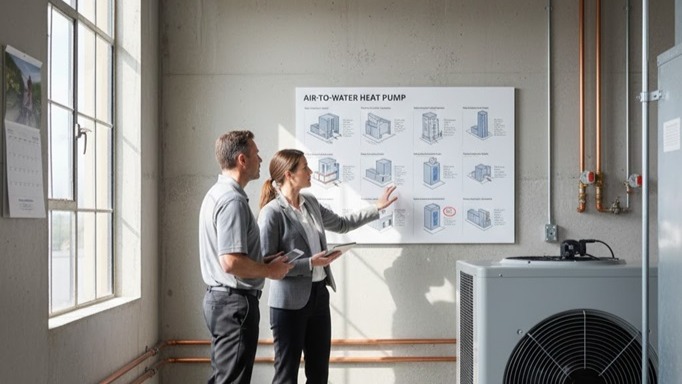
Selecting the appropriate air-to-water heat pump for your commercial or industrial facility represents a significant investment in energy efficiency and sustainability. With rising energy costs and increasing environmental responsibilities, facility managers must navigate complex technical specifications, efficiency ratings, and compatibility requirements to make informed decisions. This comprehensive heat pump selection guide provides a structured framework for evaluating options and choosing a system that delivers reliable heating performance whilst minimising operating costs.
Understanding Air-to-Water Heat Pump Technology
Air-to-water heat pumps extract thermal energy from ambient air and transfer it to water-based heating distribution systems. Unlike traditional gas or oil boilers that generate heat through combustion, these systems move existing heat from one location to another, achieving remarkable efficiency levels. The technology operates on the refrigeration cycle, using a compressor, evaporator, condenser, and expansion valve to elevate low-grade heat to useful temperatures for space heating and domestic hot water production.
Modern air-to-water systems deliver between three and four units of heat energy for every unit of electricity consumed, even during cold weather conditions typical of the UK climate. This efficiency advantage translates directly into reduced operating costs and carbon emissions. For facilities with existing hydronic heating infrastructure - including radiators, underfloor heating, or fan coil units - air-to-water technology integrates seamlessly, often without requiring extensive modifications to distribution networks.
The versatility of these systems extends beyond heating alone. Many commercial models provide reversible operation for summer cooling, as well as continuous domestic hot water production. National Pumps and Boilers specialises in air-to-water heat pump solutions for commercial applications, offering expert guidance on system selection and design.
Assessing Your Facility's Heating Requirements
Accurate assessment of heating requirements forms the foundation of successful heat pump selection. Undersized systems struggle to maintain comfortable temperatures during peak demand periods, whilst oversized equipment cycles inefficiently and incurs unnecessary capital expenditure. Professional heat load calculations account for building fabric thermal performance, glazing areas, ventilation rates, internal heat gains, and climate data specific to your geographical location.
Building heat loss varies significantly based on construction standards, insulation levels, and age of the property. Facilities constructed to modern building regulations typically exhibit much lower heat loss per square metre than older structures with single-glazed windows and limited insulation. Heat load calculations must also consider operational patterns - offices with daytime-only occupancy have different profiles compared to manufacturing facilities running continuous shifts or healthcare buildings requiring 24-hour heating.
Beyond basic heat loss figures, facility managers should evaluate distribution system compatibility. Existing radiators sized for high-temperature boiler systems (75-80°C flow temperatures) may require upsizing or supplementation when operating with heat pumps producing 45-55°C flow temperatures. Conversely, underfloor heating systems designed for low-temperature operation represent ideal pairings with air-to-water technology, maximising efficiency and comfort.
Key Selection Criteria for Air-to-Water Heat Pumps
Capacity and Output Ratings
Heat pump capacity, measured in kilowatts (kW), must align with calculated peak heat demand whilst providing adequate modulation range for varying load conditions. Fixed-speed systems operate at full capacity or switch off completely, leading to temperature fluctuations and reduced efficiency. Modern inverter-driven heat pumps modulate output continuously between minimum and maximum capacity, matching precisely to building requirements.
For larger facilities, multiple smaller units often prove more efficient and reliable than a single large system. This approach provides redundancy during maintenance or equipment failure, allows phased installation to match budget constraints, and improves part-load efficiency through lead-lag sequencing. When evaluating how to select a heat pump for multi-unit configurations, consider control integration and hydraulic balancing requirements.
Capacity ratings vary with outdoor temperature conditions. Manufacturers specify output at standardised test conditions (typically 7°C outdoor, 35°C flow temperature for heating), but real-world performance differs significantly during cold snaps when heating demand peaks. Examine capacity data across the full operating temperature range relevant to your location, paying particular attention to performance below 0°C when commercial heating pumps work hardest.
Energy Efficiency Performance Metrics
The Coefficient of Performance (COP) quantifies instantaneous efficiency - a COP of 3.5 means the system delivers 3.5 kW of heating for each 1 kW of electricity consumed. However, instantaneous COP figures measured at mild temperatures present an incomplete picture. Seasonal Coefficient of Performance (SCOP) provides a more realistic efficiency indicator, accounting for varying outdoor temperatures, defrost cycles, and standby consumption throughout a typical heating season.
SCOP values between 3.0 and 4.0 represent good performance for commercial air-to-water systems in UK climate conditions. Higher SCOP ratings directly reduce electricity consumption and operating costs. However, achieving optimal efficiency requires proper system design including correctly sized circulation pumps, buffer vessels where appropriate, and weather compensation controls that adjust flow temperatures based on outdoor conditions.
Energy Performance Certification and ErP (Energy-related Products) labelling help compare different models objectively. A+ rated systems typically deliver superior efficiency compared to A or B rated alternatives, though higher upfront costs may apply. Calculate long-term operating cost savings to justify any premium for high-efficiency equipment. Remember that central heating pumps supporting the distribution system also impact overall system efficiency.
Operating Temperature Range and Climate Suitability
Air-to-water heat pumps maintain heating capacity down to specific minimum outdoor temperatures, typically ranging from -10°C to -25°C for commercial models. Standard systems experience significant capacity reduction as temperatures drop, potentially requiring supplementary heating during extreme cold periods. Enhanced vapour injection (EVI) technology extends operational capability whilst maintaining better efficiency in cold weather compared to conventional designs.
UK climate conditions generally remain moderate, but facilities in exposed locations or northern regions should prioritise models with robust low-temperature performance. Review manufacturer data showing capacity and COP at -5°C, 0°C, and 7°C outdoor temperatures. Systems maintaining COP above 2.5 at -5°C deliver acceptable winter performance without excessive reliance on backup electric resistance heaters.
Defrost cycles occur when outdoor coils accumulate frost during humid, near-freezing conditions. Frequent defrosting temporarily reverses operation to melt ice accumulation, reducing net heating output. Modern systems employ intelligent defrost algorithms that minimise cycle frequency whilst ensuring coils remain clear. Excessive defrosting indicates poor control logic or inadequate coil design - examine independent test data rather than relying solely on manufacturer claims.
Comparing Heat Pump Brands and Technologies
Leading European and Japanese manufacturers dominate the commercial air-to-water market, each offering distinct advantages. Grundfos pumps complement many installations by providing efficient circulation, whilst dedicated heat pump brands focus on refrigeration system optimisation. Premium manufacturers typically provide superior warranty coverage, extensive technical support networks, and comprehensive spare parts availability - crucial considerations for critical commercial applications.
Inverter technology represents standard specification for modern systems, enabling precise capacity modulation and improved efficiency compared to fixed-speed alternatives. DC inverter compressors operate at variable speeds controlled by sophisticated algorithms, responding dynamically to changing load conditions. This technology reduces electrical consumption, extends equipment lifespan through gentler operation, and maintains stable indoor temperatures without the temperature swings associated with on-off cycling.
Advanced control features separate premium models from budget alternatives. Weather compensation automatically adjusts flow temperatures based on outdoor conditions, maintaining comfort whilst maximising efficiency. Building management system integration enables centralised monitoring, remote diagnostics, and coordinated operation with other HVAC equipment. Smart connectivity allows facility managers to track performance, identify issues proactively, and optimise settings based on actual operational data.
Installation Considerations and Site Requirements
Outdoor unit placement requires careful planning to balance technical requirements with aesthetic and acoustic concerns. Air-to-water systems need adequate airflow clearance around the unit - typically 500mm on fan discharge sides and 300mm on remaining sides. Inadequate clearance causes recirculation of discharged air, reducing efficiency and potentially causing premature component failure.
Noise emissions deserve attention in noise-sensitive environments. Heat pumps produce sound from compressor operation, fan rotation, and refrigerant flow. Quality manufacturers specify sound power levels (LWA) and sound pressure levels (LPA) at specific distances. Position outdoor units away from windows, boundary walls adjacent to neighbouring properties, and areas where people congregate. Acoustic enclosures or screening provide mitigation where necessary, though these must not impede airflow.
Structural support must accommodate equipment weight, particularly for rooftop installations. Large commercial units can exceed 500kg, requiring reinforced pads or structural frames. Consider maintenance access requirements - units need sufficient space for technicians to access components, recover refrigerant, and replace parts. Restricted access sites may necessitate modular systems that fit through standard doorways or can be crane-lifted to rooftop locations.
Integration with Building Systems
Successful heat pump integration depends on optimising the entire heating system, not merely installing efficient generation equipment. Lower flow temperatures characteristic of heat pump operation - typically 45-55°C compared to 70-80°C for boilers - require larger heat emitters to deliver equivalent heating output. Existing radiators may suffice if originally oversized, but heat loss calculations should verify adequate output at reduced temperatures.
Underfloor heating represents the ideal heat emitter for air-to-water systems, operating efficiently at flow temperatures between 35-45°C. The larger surface area provides comfortable radiant heating whilst allowing heat pumps to operate at peak efficiency. For facilities considering heating system upgrades, combining air-to-water heat pumps with underfloor heating delivers optimal performance and comfort.
Buffer vessels smooth system operation by providing thermal storage that reduces short cycling, accommodates minimum flow rate requirements, and enables heat pumps to operate at steady state for maximum efficiency. Buffer sizing depends on system volume, heat pump minimum runtime requirements, and distribution system characteristics. Hydraulic separation between primary (heat pump) and secondary (distribution) circuits simplifies system balancing and allows independent optimization of each zone.
Weather compensation controls continuously adjust flow temperature based on outdoor temperature, indoor feedback, and learned building characteristics. Colder outdoor conditions trigger higher flow temperatures to maintain comfort, whilst mild weather allows reduced temperatures that improve efficiency. This automatic optimization requires no user intervention yet delivers substantial energy savings compared to fixed temperature setpoints.
Financial Considerations and Return on Investment
Capital costs for commercial air-to-water heat pumps vary considerably based on system capacity, sophistication, and installation complexity. Budget £800-£1,500 per kW of heating capacity as a rough guide, though this excludes potential infrastructure upgrades such as electrical supply enhancements, distribution system modifications, or acoustic treatment. Obtain detailed quotations from multiple installers, ensuring specifications include identical scope for meaningful comparison.
Operating cost analysis should compare projected electricity consumption against current fuel expenditure. Calculate annual energy costs using SCOP figures and anticipated heating degree days for your location. Factor in electricity tariff structures - time-of-use tariffs that offer cheaper overnight rates can significantly improve economics for facilities with thermal storage capability or flexible heating schedules.
Government incentives and support schemes reduce capital costs and improve payback periods. The Non-Domestic Renewable Heat Incentive provides quarterly payments over 20 years for eligible renewable heating installations, though closure to new applicants affects current projects. Future schemes will likely support heat pump adoption as part of decarbonisation objectives. Additionally, reduced carbon emissions help organisations meet sustainability commitments and prepare for potential carbon taxation.
Maintenance costs for air-to-water systems typically run lower than equivalent gas boiler systems. Annual service requirements include refrigerant charge verification, electrical connection inspection, filter cleaning, and control system checks. Budget £400-£800 annually for comprehensive maintenance contracts. Quality systems from reputable manufacturers routinely operate 15-20 years with proper maintenance, providing long-term reliability and predictable whole-life costs.
Making the Final Selection Decision
Shortlisting suitable heat pump options requires systematic evaluation against established criteria. Develop a weighted scoring matrix addressing key factors: capacity match to building requirements, efficiency ratings, manufacturer reputation, warranty terms, local installation expertise, acoustic performance, physical size constraints, and total cost of ownership. This structured approach prevents decisions based on initial price alone whilst ensuring all stakeholders' concerns receive appropriate consideration.
Reference installations provide valuable insights into real-world performance and manufacturer support quality. Request site visits to facilities with similar applications and operating conditions. Discuss system performance, installation experience, ongoing support, and any challenges encountered. Most satisfied customers willingly share experiences, whilst reluctance to provide references raises potential concerns.
Professional design services offered by heat pump specialists optimise system performance and ensure compliance with building regulations. Detailed design includes refrigerant pipework sizing, electrical specifications, hydraulic calculations, control schematics, and commissioning procedures. This investment pays dividends through improved efficiency, reliable operation, and straightforward troubleshooting if issues arise. Cutting corners on design to reduce initial costs frequently results in disappointing performance and expensive remediation.
Commissioning represents a critical phase where theoretical design meets practical reality. Qualified engineers should verify correct refrigerant charge, confirm electrical connections and safety devices, balance hydraulic flows, calibrate controls, and demonstrate operation to facility staff. Thorough commissioning documentation provides baseline performance data for monitoring system health and identifying deterioration over time.
Selecting the right air-to-water heat pump involves balancing technical requirements, financial constraints, and operational priorities. Follow this heat pump selection guide framework to evaluate options systematically, focusing on whole-life value rather than initial cost alone. Engage experienced heat pump specialists early in the process to benefit from their application knowledge and design expertise. With proper selection, sizing, and installation, air-to-water heat pumps deliver decades of efficient, reliable heating whilst reducing energy costs and environmental impact. For expert assistance with heat pump selection and installation, contact us to discuss your facility's specific requirements.