

How to Choose the Right Hydronic Heating System for Your Building
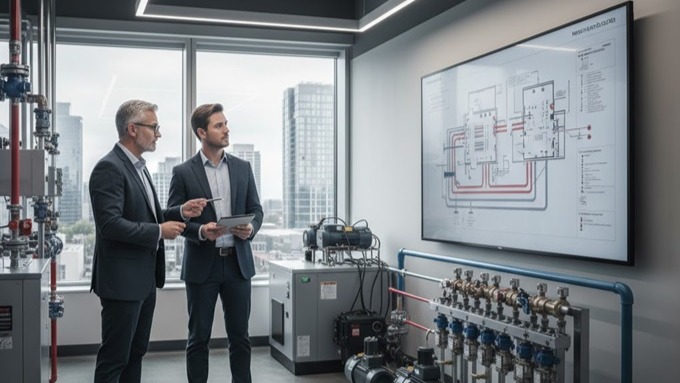
Selecting appropriate hydronic heating options determines long-term comfort, efficiency, and operating costs for commercial buildings. With multiple system types, heat sources, distribution configurations, and control strategies available, building owners and facilities managers face complex decisions requiring careful analysis. This comprehensive guide provides a systematic framework for evaluating types of hydronic heating systems and selecting optimal solutions matching specific building requirements.
Understanding Your Building Requirements
Assessing Current Heating Needs
Heat load calculations form the essential foundation for choosing appropriate hydronic heating options. Professional heat loss assessments account for building fabric losses through walls, roofs, floors, and glazing, ventilation requirements, and internal heat gains from occupants, lighting, and equipment. Accurate calculations prevent undersized systems struggling during cold weather or oversized equipment cycling inefficiently.
Occupancy patterns significantly influence system selection decisions. Buildings occupied continuously require different types of hydronic heating systems compared to facilities with intermittent use. Offices heating primarily during weekday business hours benefit from responsive systems with effective setback controls. Hotels, hospitals, and manufacturing facilities operating 24/7 need reliable baseload capacity with minimal temperature fluctuation.
Usage profiles reveal heating distribution requirements informing zoning strategies and emitter selection. Open-plan offices may need uniform heating throughout, whilst mixed-use buildings require independent zones serving diverse areas including offices, storage, loading docks, and amenity spaces. Understanding usage patterns ensures selected systems deliver appropriate comfort whilst avoiding wasteful heating of unoccupied spaces.
Future-Proofing Considerations
Planned expansions should influence initial system capacity and configuration decisions when evaluating hydronic heating options. Buildings anticipating capacity increases within 5-10 years benefit from modular systems designed for straightforward expansion. Specifying boilers, pumps, and distribution networks with 20-30% excess capacity accommodates future growth without complete system replacement.
Changing requirements including evolving occupancy, process modifications, or building envelope improvements affect long-term heating needs. Flexible types of hydronic heating systems adapt to changing conditions through reconfiguration rather than replacement. Multiple smaller boilers enable capacity adjustments by adding or removing units. Zoned distribution allows selective heating matching actual usage patterns as buildings evolve.
Technology evolution considerations ensure selected systems remain serviceable throughout 15-25 year design lives. Choosing equipment from established manufacturers with strong UK support networks ensures parts availability and technical assistance decades after installation. Selecting control systems with standard communication protocols enables future upgrades without complete control system replacement.
Budget and Timeline Constraints
Capital investment planning balances upfront costs against long-term value when selecting hydronic heating options. Initial budgets constrain equipment choices, though lifecycle cost analysis often justifies higher-efficiency equipment through operating savings. Condensing boilers cost 20-40% more than conventional units but deliver 10-15% energy savings justifying premiums through 3-5 year payback periods.
Installation scheduling affects system selection, particularly for occupied buildings requiring heating throughout installation periods. Phased installations enable continued operation whilst new systems install progressively. Retrofit projects benefit from selecting types of hydronic heating systems integrating readily with existing infrastructure, minimising disruption and installation duration.
Operating cost projections over system lifetimes inform selection decisions by revealing total cost of ownership. Low-cost equipment with high operating expenses often costs more over 20-year periods than premium-efficiency alternatives with higher initial prices. Comprehensive economic analysis comparing capital costs, energy consumption, maintenance expenses, and replacement timing guides optimal decisions.
Evaluating Hydronic Heating Options
Low-Temperature vs High-Temperature Systems
Temperature requirements determine suitable types of hydronic heating systems for specific applications. Low-temperature systems operating at 35-50°C supply temperatures suit underfloor heating, oversized radiators, and fan coils, enabling maximum condensing boiler efficiency and heat pump compatibility. High-temperature systems at 60-80°C serve conventional radiators and industrial processes requiring elevated temperatures.
Emitter compatibility influences temperature selection decisions. Existing buildings with conventional radiators may require high-temperature operation unless radiators can be oversized or replaced. New construction projects specifying underfloor heating or large panel radiators benefit from low-temperature systems achieving superior efficiency and renewable energy integration.
Efficiency implications favour low-temperature hydronic heating options whenever feasible. Condensing boilers achieve 95-98% efficiency serving low-temperature systems compared to 85-90% at high temperatures. Heat pumps deliver coefficients of performance (COP) of 4-5 at low temperatures versus 2.5-3.5 at high temperatures, substantially reducing operating costs through improved efficiency.
Single-Zone vs Multi-Zone Configurations
Building layout considerations determine appropriate zoning complexity for types of hydronic heating systems. Compact single-use buildings may perform adequately with whole-building controls, whilst large or diverse facilities require multiple zones serving different areas independently. Perimeter zones with extensive glazing benefit from separate control versus interior zones with equipment heat gains.
Control flexibility needs balance sophistication against complexity and cost. Simple single-zone systems suit straightforward applications, whilst sophisticated multi-zone configurations enable precise comfort control and energy optimisation in complex buildings. Individual room thermostats provide maximum flexibility but increase installation costs and control system complexity.
Cost-benefit analysis compares zoning investment against achievable energy savings. Multi-zone systems typically cost £2,000-£10,000 more than single-zone alternatives for commercial buildings, depending on zone quantity and control sophistication. Energy savings of 15-30% through effective zoning often justify investments through 2-5 year payback periods, making zoning economically attractive for most applications.
New Installation vs Retrofit Applications
Existing infrastructure assessment determines feasible hydronic heating options for retrofit projects. Buildings with serviceable distribution piping and emitters can upgrade heat sources and controls economically. Facilities requiring complete distribution replacement face costs approaching new installations, potentially favouring alternative heating technologies.
Integration challenges in retrofit projects include space constraints for new equipment, structural limitations affecting piping routes, and maintaining operations during installation. Selecting types of hydronic heating systems designed for retrofit applications simplifies installation and reduces disruption. Compact wall-mounted boilers, pre-fabricated pipework assemblies, and wireless controls facilitate retrofit projects.
Optimisation opportunities arise when retrofitting enables simultaneous efficiency improvements beyond basic equipment replacement. Upgrading from high-temperature to low-temperature distribution through emitter replacement or addition unlocks condensing boiler efficiency gains. Adding zone controls during retrofits improves comfort whilst reducing energy consumption. Professional designers identify optimisation opportunities maximising retrofit investment value.
Heat Source Selection
Boiler Types and Technologies
Condensing versus conventional boilers represent fundamental choices when selecting hydronic heating options. Condensing boilers extract additional heat by cooling exhaust gases below their dew point, achieving 95%+ efficiency compared to 80-85% for conventional units. Higher initial costs of £3,000-£8,000 per boiler (depending on capacity) typically payback within 3-6 years through fuel savings.
Fuel type considerations include natural gas, LPG, oil, and electricity availability and costs. Natural gas offers lowest operating costs in grid-connected locations. Grundfos pumps work efficiently with all fuel types, though fuel selection significantly impacts long-term operating expenses. Rural locations without gas connections may favour oil or LPG, whilst renewable electricity enables heat pump operation.
Capacity sizing determines whether single large boilers or multiple smaller units provide optimal solutions. Multiple boilers totalling 120-150% of peak load offer redundancy, improved part-load efficiency through staging, and maintenance flexibility. Single boilers suit smaller buildings with limited space and budget, accepting reduced redundancy and part-load efficiency compared to multiple-boiler configurations.
Heat Pump Integration
Air source versus ground source selection depends on available space, ground conditions, and installation budgets. Air source heat pumps cost £8,000-£15,000 per installation for commercial capacities, require no ground works, but achieve lower efficiency during coldest weather. Ground source units cost £12,000-£25,000 including ground loops but deliver more consistent year-round performance.
Coefficient of performance (COP) varies significantly between heat pump types and operating conditions. Modern air source heat pumps achieve seasonal COPs of 3.0-3.5, meaning each kW of electricity generates 3.0-3.5 kW of heat output. Ground source units achieve COPs of 3.5-4.5 through stable ground temperatures. COP directly determines operating costs, making it crucial for economic evaluation.
Operating cost comparisons must account for electricity versus gas prices and equipment efficiency. Heat pumps with COP 3.5 operating on electricity at 20p/kWh deliver heating at 5.7p/kWh equivalent cost. Gas condensing boilers at 95% efficiency burning gas at 6p/kWh deliver heating at 6.3p/kWh. These calculations inform fuel source and technology decisions.
Renewable Energy Options
Solar thermal feasibility depends on available roof area, orientation, and hot water demand profiles. Buildings with substantial year-round hot water requirements including hotels, leisure centres, and healthcare facilities achieve excellent solar thermal economics. Evacuated tube collectors perform well in UK climates, providing 40-60% of annual hot water requirements whilst integrating readily with hydronic heating options.
Biomass suitability requires adequate fuel storage space, delivery access, and heating loads justifying automated fuel handling equipment. Rural locations with sustainable wood fuel sources achieve lowest operating costs. Modern biomass boilers delivering 90%+ efficiency integrate seamlessly with conventional hydronic distribution, though regular fuel delivery and ash removal requirements suit organisations with dedicated maintenance personnel.
Hybrid system benefits combine multiple heat sources maximising strengths whilst minimising limitations. Solar thermal supplements conventional boilers during summer, reducing fossil fuel consumption. Heat pumps provide efficient baseload heating with gas boiler backup during extreme weather. These hybrid types of hydronic heating systems achieve 50-80% renewable fractions whilst maintaining reliability regardless of weather conditions.
Distribution System Design
Piping Material Selection
Steel, copper, or plastic options each suit specific applications within hydronic heating options. Steel pipes dominate large distribution mains in commercial buildings, offering strength, durability, and fire resistance essential for risers and plant rooms. Copper provides excellent thermal conductivity, corrosion resistance, and straightforward jointing for medium-sized distribution and final connections to emitters.
Application suitability varies by location, temperature, and pressure requirements. Central heating pumps work effectively with all pipe materials, though material selection affects installation costs, longevity, and maintenance requirements. Plastic pipes suit underfloor heating and low-temperature applications where flexibility simplifies installation and corrosion resistance eliminates water treatment concerns.
Longevity considerations favour copper and steel for visible and accessible locations where extended 30-50 year service lives justify higher material costs. Plastic pipes embedded in concrete floors or walls offer 25-30 year design lives at a fraction of metallic pipe costs. Professional designers specify appropriate materials balancing initial costs, installation requirements, and expected service lives.
Primary-Secondary Loop Configurations
Hydraulic separation benefits emerge through primary-secondary loop designs isolating heat generation from building distribution. Primary loops maintain constant flow through boilers or heat pumps optimising equipment efficiency. Secondary loops vary flow based on building demands without affecting heat source operation. This separation improves part-load efficiency and protects equipment from flow variations potentially causing cycling or damage.
System complexity increases with primary-secondary configurations requiring additional pumps, piping, and controls compared to simple direct distribution systems. Added costs of £3,000-£15,000 depending on building size prove worthwhile for larger commercial installations, multiple heat sources, or applications requiring precise temperature control. Small buildings with single boilers rarely justify primary-secondary complexity.
Performance advantages include improved condensing boiler efficiency through consistent return temperatures, enhanced heat pump operation through stable flow rates, and simplified system balancing with independent adjustment of generation and distribution circuits. These benefits particularly suit types of hydronic heating systems serving diverse loads or integrating multiple heat sources including renewables.
Expansion and Pressurisation
Expansion vessel sizing accommodates water volume changes as systems heat and cool. Vessels must store expanded water volume whilst maintaining system pressure within acceptable limits. Expansion vessels sized for system water volume, maximum temperature, and pressure range prevent pressure relief valve discharge and ensure long-term reliability.
Pressure control methods maintain stable system pressure throughout operation. Closed systems with properly sized expansion vessels and automatic fill valves maintain pressure automatically. Large commercial installations may employ nitrogen-charged pressurisation units providing precise pressure management regardless of system volume or temperature variations.
Safety requirements include pressure relief valves preventing over-pressure conditions, high-limit thermostats protecting against excessive temperatures, and air vents eliminating trapped air causing circulation problems. Professional designers specify safety equipment meeting British Standards and building regulations, ensuring systems operate safely throughout design lives.
Heat Emitter Selection
Radiator Options
Panel radiators offer excellent price-performance balance for hydronic heating options in commercial buildings. Steel panel radiators with integrated convection fins deliver high outputs from compact units suitable for wall mounting beneath windows. Standard sizes accommodate most applications, whilst custom designs serve unusual space requirements. Costs range from £100-£600 per radiator depending on size and specification.
Column radiators provide traditional aesthetics with generous heat output suitable for high-ceiling spaces or applications requiring substantial heating capacity. Cast iron columns deliver excellent thermal mass maintaining warmth after circulation stops, whilst steel columns offer lighter weight and faster response times. Heritage buildings often specify column radiators matching original architectural character.
Designer radiators balance heating performance with aesthetic appeal for visible installations in premium commercial spaces. Vertical, horizontal, and sculptural designs accommodate diverse architectural requirements. Premium materials including stainless steel and aluminium offer corrosion resistance and modern appearance. Costs ranging from £300-£3,000+ per unit reflect design sophistication and material quality.
Underfloor Heating Systems
New build applications benefit most from underfloor heating specification, as installation during construction costs only marginally more than conventional radiators whilst delivering superior comfort and efficiency. Low-temperature operation at 35-45°C supply temperatures enables maximum condensing boiler efficiency and heat pump compatibility. Floor construction includes insulation beneath heating pipes minimising downward heat losses.
Retrofit feasibility depends on floor construction and available height. Solid floors can accommodate wet underfloor heating through new screed layers adding 50-100mm height. Suspended floors accept underfloor heating within structural depths or through low-profile overlay systems adding 15-30mm. Height restrictions sometimes preclude underfloor heating retrofits, favouring alternative emitter types.
Comfort and efficiency advantages include even temperature distribution without cold spots, reduced air movement minimising dust circulation, and lower operating temperatures reducing heat losses through building fabric. Underfloor heating creates comfortable conditions at 18-20°C air temperatures compared to 20-22°C required with radiators, reducing energy consumption by 10-15%.
Radiant Panels and Fan Coils
Ceiling and wall panels provide invisible heating leaving floor and wall surfaces available for furniture, equipment, and finishes. Warehouse and industrial facilities benefit from overhead radiant heating warming occupants and work surfaces directly without heating entire air volumes. Radiant panels respond quickly to thermostatic control, improving comfort whilst reducing energy waste.
Fan coil units combine hydronic heating options with forced air delivery, offering heating and cooling capabilities within compact units. Hotels, hospitals, and office buildings employ fan coils for individual room control. Four-pipe systems enable simultaneous heating and cooling in different zones, particularly valuable in buildings with diverse internal loads and solar exposure.
Application-specific advantages guide emitter selection for particular building types and usage patterns. High-bay warehouses favour radiant panels, whilst office buildings benefit from panel radiators or underfloor heating. Retail spaces specify low-profile emitters maintaining clear sight lines. Professional designers match emitter types to specific requirements optimising comfort, aesthetics, and efficiency.
Control System Specification
Basic vs Advanced Controls
Thermostat types range from simple mechanical units to sophisticated programmable and learning thermostats adapting to occupancy patterns. Basic thermostats cost £20-£80 providing adequate control for straightforward applications. Programmable thermostats at £80-£250 enable scheduled setbacks reducing energy waste. Smart learning thermostats at £200-£300 optimise operation automatically whilst providing remote access.
Weather compensation represents the most effective control upgrade improving efficiency by 10-20% through adjusting supply temperatures based on outdoor conditions. Weather compensation controllers cost £300-£800 including outdoor sensors, delivering payback within 1-3 years through energy savings. Colder weather triggers higher supply temperatures whilst mild conditions enable reduced temperatures improving condensing efficiency.
Optimisation features including optimum start-stop controls, load compensation, and adaptive setback algorithms maximise efficiency whilst maintaining comfort. Advanced building management systems incorporating these features cost £2,000-£10,000+ depending on building size and control sophistication. Energy savings of 15-30% justify investments in most commercial applications through 2-5 year payback periods.
Zoning Strategies
Individual room control provides maximum flexibility enabling precise comfort management and energy optimisation. Thermostatic radiator valves offer simple room-level control at £30-£80 per radiator. Programmable zone valves with room thermostats cost £150-£400 per zone providing scheduled control and remote management capabilities.
Area-based zoning divides buildings into separately controlled sections based on orientation, usage, or occupancy patterns. Perimeter zones with high heat losses receive separate control from interior zones benefiting from equipment heat gains. North-facing areas heat independently from south-facing spaces with solar gains. Area-based zoning typically requires 3-8 zones for commercial buildings, balancing flexibility against system complexity.
Occupancy sensing enables automatic heating provision only when spaces are occupied, reducing waste by 20-40% in buildings with variable usage patterns. Motion sensors or scheduling systems activate heating based on actual or anticipated occupancy. Conference rooms, training facilities, and break areas particularly benefit from occupancy-based control preventing wasteful heating of empty spaces.
Sizing and Capacity Planning
Accurate Heat Load Determination
Calculation methodologies including software-based heat loss analysis ensure accurate capacity requirements for types of hydronic heating systems. Professional calculations account for building fabric, ventilation losses, internal gains, and solar contributions. Detailed room-by-room analysis reveals heating distribution requirements informing emitter sizing and zoning strategies.
Safety factors prevent undersized systems whilst avoiding wasteful oversizing. Designers typically specify total capacity 10-20% above calculated peak loads accommodating calculation uncertainties and extreme weather conditions. Multiple smaller boilers totalling 130-150% of calculated loads provide redundancy and improved part-load efficiency through staging.
Seasonal variations affect heating requirements substantially. Design loads represent extreme winter conditions occurring perhaps 1% of annual hours. Systems operate at 30-70% capacity during typical conditions. Specifying equipment optimised for part-load performance rather than peak output delivers better seasonal efficiency and operating economics.
Equipment Capacity Selection
Boiler sizing principles favour multiple smaller units over single large boilers for commercial applications above 100 kW capacity. Two 60 kW boilers totalling 120 kW provide redundancy, staging efficiency, and maintenance flexibility superior to single 100 kW units. Additional units enable capacity matching to building requirements through selective operation.
Pump capacity planning ensures adequate flow delivery whilst minimising electrical consumption. Wilo pumps sized for design flow rates at calculated system pressure drops provide reliable performance. Variable speed pumps modulate output matching actual system demands, reducing electricity consumption 30-60% compared to constant-speed alternatives operating continuously at full speed.
Redundancy considerations particularly important for critical facilities including hospitals, data centres, and manufacturing operations requiring reliable heating. Specifying N+1 capacity ensures continued operation during equipment maintenance or failures. Dual-boiler configurations provide inherent redundancy, whilst single-boiler systems require backup provisions or accept outage risks.
Storage and Buffer Requirements
Thermal storage benefits include buffering short-term load variations, enabling heat pump operation at optimal output levels, and facilitating renewable energy time-shifting. Storage tanks sized at 15-25 litres per kW heating capacity improve system efficiency and equipment longevity. Large commercial systems benefit from 500-5,000 litre storage volumes depending on application requirements.
Buffer tank sizing calculations consider boiler minimum output, system thermal mass, and cycling frequency targets. Undersized buffers fail to prevent short-cycling reducing efficiency and equipment life. Oversized tanks increase costs without proportional benefits. Professional designers optimise storage volumes balancing performance advantages against capital costs.
Performance optimisation through proper storage integration improves seasonal efficiency by 5-15% depending on system characteristics and operating patterns. Storage enables heat pumps and biomass boilers to operate at optimal steady-state output whilst buffering building load variations. Solar thermal systems require adequate storage capturing available solar energy for later use.
Energy Efficiency Considerations
Efficiency Ratings and Performance
Seasonal efficiency accounts for real-world operation including part-load performance, cycling losses, and standby heat losses. Modern condensing boilers achieve seasonal efficiencies of 90-95% depending on return temperatures and operation patterns. Conventional boilers typically deliver 75-82% seasonal efficiency. This 10-15 percentage point difference substantially impacts operating costs over system lifetimes.
Part-load performance determines efficiency during typical operation when systems deliver 30-70% of peak capacity. Modulating condensing boilers maintain 90%+ efficiency across wide output ranges. Multiple smaller boilers achieve excellent part-load efficiency through staging, operating individual units near full output whilst others remain off. Single large boilers cycling frequently at low loads suffer efficiency penalties of 5-15%.
Real-world expectations should temper manufacturer ratings based on laboratory test conditions. Actual installed efficiency depends on system design, installation quality, water temperatures, and maintenance. Well-designed systems achieve performance within 3-5% of rated efficiency, whilst poorly designed or maintained installations may fall 10-20% below ratings.
Conclusion
Selecting optimal hydronic heating options requires systematic evaluation of building requirements, available technologies, and economic considerations. Understanding types of hydronic heating systems including temperature ranges, distribution configurations, heat sources, and control strategies enables informed decisions delivering long-term value through enhanced comfort, reduced operating costs, and reliable performance.
Professional guidance simplifies complex selection decisions whilst ensuring specified systems meet specific building requirements optimally. The heating specialists at National Pumps and Boilers bring comprehensive experience evaluating hydronic heating options and designing solutions across diverse commercial applications. From initial consultation through detailed specification, installation, and ongoing support, expert assistance ensures your heating investment delivers maximum performance and value.
Making confident heating system decisions requires thorough analysis balancing technical requirements, budget constraints, and long-term operating considerations. Begin your selection process with professional consultation identifying types of hydronic heating systems best suited to your specific building characteristics and requirements. Contact us today to discuss your project and receive expert guidance ensuring optimal heating system selection for your building.