

How to Identify and Prevent Dry Running in Pump Systems
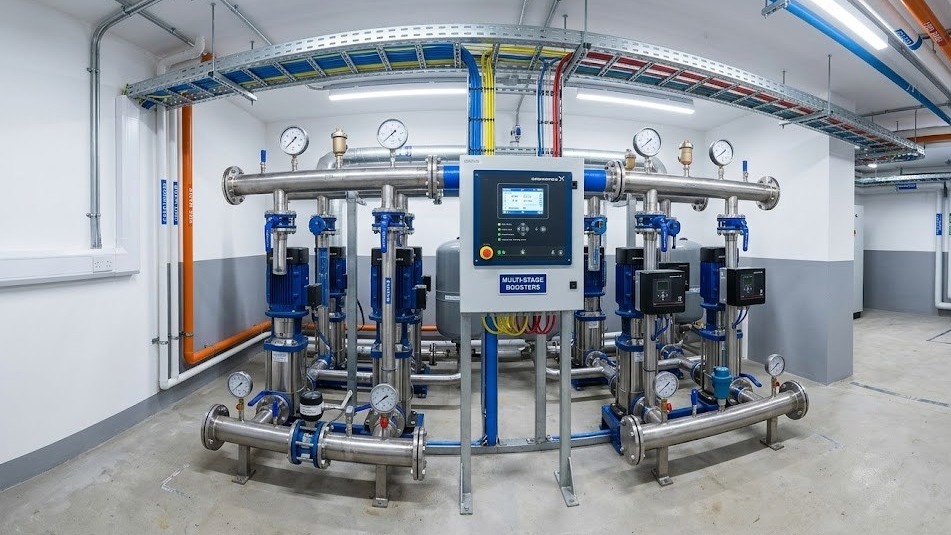
Dry running destroys circulation pumps faster than any other operational fault. When a pump operates without adequate liquid flow through its casing, internal temperatures spike within seconds, seals fail, bearings seize, and impellers warp beyond repair. For heating engineers and facilities managers, a single dry-running incident can mean emergency callouts, system downtime, and replacement costs exceeding £500 for domestic circulators or several thousand pounds for commercial equipment.
The challenge lies in detection. Unlike mechanical failures that announce themselves with noise or vibration, dry running often occurs silently until catastrophic damage forces a shutdown. Understanding the warning signs, root causes, and proven strategies to prevent dry-running pumps separates reactive maintenance from proactive system management.
What Happens During Dry Running
Circulation pumps rely on the liquid they move to perform three critical functions: cooling the motor and bearings, lubricating internal components, and transferring heat away from friction surfaces. When liquid flow stops or drops below minimum requirements, this protective mechanism fails.
Within 30 seconds of dry running, bearing temperatures in a standard central heating pump can exceed 150°C. Mechanical seals designed to operate at 60-80°C begin to degrade immediately. Carbon faces crack, elastomer O-rings harden and shrink, and seal faces lose contact pressure. Once seal integrity fails, the pump cannot maintain pressure even after liquid flow resumes.
Centrifugal Pump Vulnerabilities
Centrifugal pumps suffer particularly severe damage because their design depends on continuous liquid presence. The impeller creates pressure by accelerating fluid outward, but without fluid to move, the mechanical energy converts directly to heat. Magnetic drive pumps face additional risk because the liquid provides the only cooling path for the magnetic coupling - without flow, the coupling can demagnetise permanently.
Early Warning Signs of Dry Running
Experienced heating engineers recognise subtle indicators before complete failure occurs. Unusual motor noise represents the most common early warning - a high-pitched whine or grinding sound indicates bearing distress from inadequate lubrication. This differs from the normal operational hum of a healthy circulator.
Temperature changes provide another diagnostic clue. A pump casing that feels excessively hot to touch during normal operation suggests insufficient liquid flow for cooling. Standard Grundfos circulators typically run warm but not uncomfortably hot - if the casing temperature makes sustained contact painful, investigate immediately.
Performance Degradation Indicators
Performance degradation often precedes total failure. Systems that struggle to reach temperature, radiators that heat unevenly, or domestic hot water that takes longer to arrive all indicate reduced pump output. Flow rate drops by 20-30% as internal clearances open from wear, allowing liquid to recirculate internally rather than moving through the system.
Vibration patterns change as bearings deteriorate. A pump that previously ran smoothly but now transmits noticeable vibration through pipework has likely experienced bearing damage. This vibration increases progressively as the bearing clearance widens, creating an audible rattle in severe cases.
Common Causes of Dry Running in Heating Systems
Understanding what triggers dry-running conditions helps engineers prevent dry-running pumps through proper system design and maintenance protocols. Three categories account for most failures: design flaws, maintenance deficiencies, and operational errors.
System Design Flaws
Undersized expansion vessels create the conditions for dry running during heating cycles. As the system water heats and expands, pressure rises. If the expansion vessel cannot accommodate the volume increase, the pressure relief valve opens, discharging water. After multiple cycles, the system loses enough water volume that air enters the pump - particularly problematic in systems where the pump sits at a high point.
Incorrect pump positioning represents another design weakness. Pumps installed on the flow side of a system boiler, before the expansion vessel connection, face a higher risk of cavitation and air ingestion. The pumping-over effect in open-vented systems causes similar problems when the pump pushes water up the open vent pipe instead of circulating through the system.
Maintenance Deficiencies
Blocked strainers and filters starve pumps of liquid flow. A Y-strainer filled with installation debris or magnetite sludge creates enough resistance to drop the flow below the pump's minimum requirement. The pump continues running but moves insufficient liquid for self-cooling. This scenario occurs frequently in systems without adequate filtration or regular service intervals.
Air accumulation in pump chambers develops gradually in systems without automatic air vents at high points. Each time the system cools and contracts, microscopic air bubbles come out of solution. These bubbles migrate to the pump if it sits at the system's highest point, eventually forming a vapour lock that prevents liquid circulation.
Operational Issues
Isolation valve errors cause immediate dry running. A heating engineer closing the wrong valve during maintenance or a facilities manager isolating a section without shutting down the pump creates zero-flow conditions. The pump continues operating against a dead head, generating maximum heat with no liquid flow for cooling.
Leaks that develop slowly drain the system volume until the pump starts drawing air. A weeping radiator valve or a pinhole leak in buried pipework might lose only 100ml daily, but over weeks this depletes the system. The first indication often comes when the pump makes unusual noises during startup as it tries to circulate an air-water mixture.
Technical Detection Methods
Implementing effective pump dry run protection requires monitoring systems that detect abnormal operating conditions before damage occurs. Multiple detection technologies provide layered protection for critical installations.
Flow Monitoring
Installing flow switches on critical pump circuits provides positive confirmation of liquid movement. These devices use a paddle or thermal sensor to detect flow velocity. When flow drops below a preset threshold - typically 0.1-0.3 metres per second - the switch opens a contact that can trigger an alarm or shut down the pump.
Differential pressure monitoring offers similar protection for larger commercial systems. Pressure sensors on the pump inlet and outlet measure the pressure rise the pump generates. If this differential drops below the expected value for the current speed setting, it indicates either flow restriction or dry running conditions.
Temperature Sensing
Bearing temperature sensors built into premium Wilo pumps and other commercial units provide direct monitoring of the component most vulnerable to dry-running damage. These thermistors or PT100 sensors trigger warnings when bearing temperature exceeds safe operating limits - typically 90-110°C depending on the pump design.
Motor winding temperature protection comes standard on most modern circulators through thermal overload devices. However, these respond to motor temperature, not bearing or seal temperature. By the time the motor overheats enough to trip the thermal protection, bearing and seal damage have often already occurred.
Vibration Analysis
Portable vibration meters detect bearing wear patterns before catastrophic failure. A baseline vibration reading taken on a new or recently serviced pump provides a reference. Quarterly measurements that show increasing vibration amplitude indicate progressive bearing deterioration - often the result of previous dry running episodes.
Permanent vibration sensors on critical pumps in commercial buildings provide continuous monitoring. These accelerometers detect changes in vibration frequency and amplitude, triggering maintenance alerts when patterns deviate from normal operation. The technology prevents unexpected failures in applications where pump downtime causes significant operational disruption.
Prevention Strategies for Domestic Systems
Effective strategies to prevent dry-running pumps in domestic installations focus on proper system setup, adequate venting, and pressure maintenance. These measures eliminate the conditions that allow dry running to occur.
System Filling and Venting
Proper initial fill procedure eliminates the majority of dry-running risks in new installations. The process requires filling the system slowly from the lowest point, allowing air to escape through radiator vents and automatic air valves. Rushing this process traps air pockets that migrate to the pump during operation.
Automatic air vents installed at system high points continuously remove air that comes out of solution during heating cycles. These spring-loaded valves open when air pressure builds, releasing gas while remaining sealed against water. Quality brass vents from manufacturers like Flamco or Spirotrap rarely fail, while cheaper alternatives can stick open or closed.
Expansion Vessel Sizing and Maintenance
Calculate expansion vessel size based on system water volume and temperature range. A 100-litre system with a 60°C temperature rise requires approximately an 8-litre expansion vessel at 1.5 bar cold fill pressure. Undersizing by even 20% leads to pressure relief valve discharge and gradual water loss.
Check expansion vessel pre-charge pressure annually using a tyre pressure gauge on the Schrader valve. The pre-charge should sit 0.2-0.3 bar below the system cold fill pressure. A vessel that has lost pre-charge pressure cannot accommodate expansion, forcing water out through the pressure relief valve.
System Protection Devices
Install a pressure gauge where it can be easily monitored during routine inspections. A gauge showing gradual pressure decline over weeks indicates a slow leak or expansion vessel failure - both conditions that lead eventually to dry running if uncorrected.
Low-pressure switches provide automatic pump dry run protection in systems prone to water loss. These devices cut power to the pump when system pressure drops below 0.5-0.8 bar, preventing operation in low-water conditions. The switches cost £40-60 installed, but prevent pump replacement costs ten times higher.
Prevention Strategies for Commercial Systems
Commercial installations require more sophisticated pump dry run protection strategies due to higher system complexity and the significant costs associated with downtime. Multiple protection layers ensure reliable operation.
Monitoring and Control Integration
Building management systems should monitor pump status through multiple parameters: runtime hours, power consumption, differential pressure, and flow confirmation. Algorithms that compare these values against baseline performance detect anomalies, indicating developing problems.
Integrate pump controls with system pressure sensors and makeup water meters. If system pressure drops and makeup water consumption increases, the BMS should generate alerts for facilities management. This early warning allows investigation before water loss becomes severe enough to cause pump damage.
Maintenance Protocols
Establish quarterly inspection routines for critical pump installations. Check for unusual noise, vibration, or temperature. Verify that system pressure remains stable and that expansion vessels maintain proper pre-charge. Document findings to track trends over time.
Annual strip-down inspection of pumps in critical applications identifies wear before failure occurs. Bearing clearance, seal condition, and impeller wear all indicate whether the pump has experienced dry running or cavitation. Replacing worn components during planned maintenance costs far less than emergency failure response.
Redundancy and Backup Systems
Duty-standby pump configurations eliminate single points of failure in critical applications. Automatic changeover controls switch to the standby pump if the duty pump fails or if flow monitoring detects a problem. This approach maintains system operation while allowing time for repair.
Variable-speed drives on commercial circulators provide additional protection through current monitoring. The VFD tracks motor current draw and can detect the reduced load that indicates loss of liquid flow. Sophisticated drives reduce speed or shut down the pump when the current drops below expected values.
Emergency Response Procedures
When dry running occurs despite prevention measures, implementing proper pump dry run protection protocols limits damage. Immediate action prevents minor issues from escalating into complete pump failure requiring expensive replacement.
Initial Assessment Steps
Check system pressure first. If pressure has dropped below 0.5 bar, investigate for leaks before refilling. A leak that caused the initial dry-run event will simply cause recurrence if not repaired. Inspect visible pipework, valve glands, and pump connections for water traces.
Refill the system slowly, venting air from radiators and high points. Run the pump in short bursts while monitoring for unusual noise or vibration. If the pump makes grinding sounds or fails to develop normal pressure, internal damage has likely occurred, and replacement becomes necessary.
Damage Inspection
Inspect the pump for obvious damage, even if it appears to run normally after refilling. Remove the pump head and examine the impeller for heat discolouration (blue or straw-coloured metal indicates overheating). Check that the shaft rotates freely without excessive play. Replace mechanical seals as a precaution - they rarely survive dry running without damage, even if not immediately leaking.
Long-Term System Reliability
Implementing comprehensive strategies to prevent dry-running pumps requires systematic attention to system design, installation quality, and ongoing maintenance. Systems designed with properly sized expansion vessels, adequate venting, and appropriate pump positioning rarely experience dry-run failures.
Water quality affects long-term reliability significantly. Systems with high oxygen content or inadequate inhibitor treatment develop corrosion products that clog filters and strainers, restricting flow to pumps. Annual water testing and treatment adjustment prevent the gradual degradation that leads to flow restriction.
Enhanced Protection Features
Pump selection matters for applications with a higher dry-run risk. Models with pump dry run protection features - thermal sensors, flow detection, or enhanced bearing systems - cost 20-30% more than basic circulators but provide insurance against the operational conditions that destroy standard pumps. For critical applications or systems with a history of water loss, this investment pays for itself by avoiding emergency failures.
Documentation of system parameters creates the baseline necessary for condition monitoring. Record system pressure, pump differential pressure, and flow rates during commissioning. Quarterly comparison against these baselines reveals developing problems before they cause damage. A pressure drop of 0.2 bar over six months indicates either a slow leak or expansion vessel failure - both requiring attention before they cause pump damage.
Protecting Critical Infrastructure
Dry running represents a preventable failure mode that destroys circulation pumps through operator error, maintenance deficiencies, or design flaws rather than normal wear. The warning signs appear early - unusual noise, excessive temperature, or reduced performance - but require active monitoring to detect before catastrophic damage occurs.
Effective prevention combines proper system design with monitoring technology and disciplined maintenance routines. Expansion vessels sized for actual system volume, automatic air vents at high points, and low-pressure cutoff switches address the most common failure mechanisms. For commercial installations where downtime carries significant cost, flow switches and temperature monitoring provide additional protection layers.
National Pumps and Boilers provides specification support for pump protection systems and guidance on selecting equipment with enhanced dry-run protection for critical applications. Whether specifying new installations or upgrading existing systems with monitoring technology, contact us for technical advice tailored to specific system requirements and risk profiles.